A high top fade can make a haircut instantly recognizable, but there is much more variety to this classic style than a single tall, squared shape. From rounded afros and textured tops to twists, curls, sharp edges, and different fade heights, the look can be adapted to match different textures and personal styles. Some versions feel clean and understated, while others are deliberately bold.
The interesting part is how much the top and sides can change the overall appearance. A small difference in height, shape, or fade placement can turn the same basic haircut into something completely different. That makes the style worth exploring if you want a haircut with personality without relying on complicated styling every day.
In this guide, we’ll look at 15 timeless variations, starting with some of the most recognizable versions and then exploring how to choose a shape that works naturally with your hair.
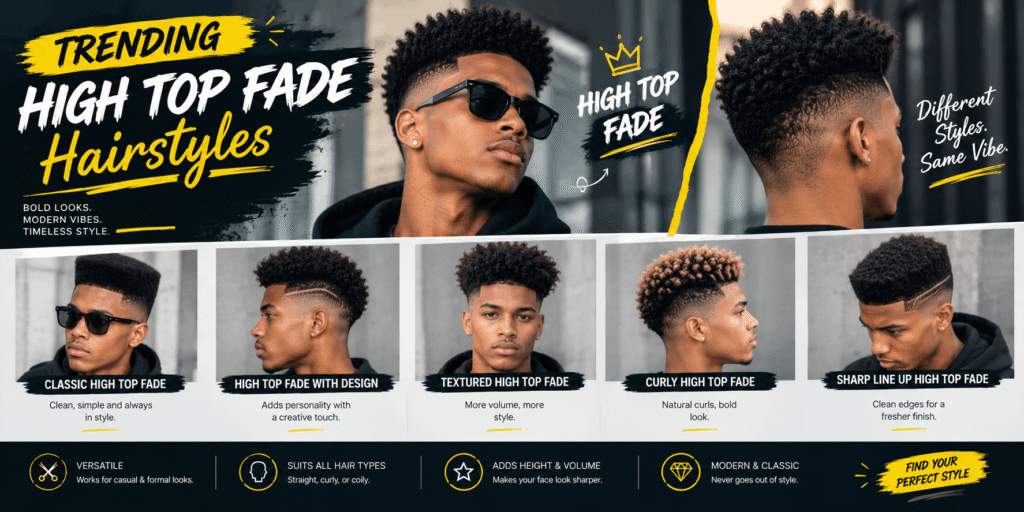
Trending High Top Fade Hairstyles
High Top Fade With Beard
Combining a high top fade with a beard creates a strong contrast between the structured hair on top and the facial hair below. The top can be shaped into a traditional flat or slightly rounded silhouette, while the sides gradually transition into the beard area. Keeping the proportions balanced can make the entire look feel intentional rather than like two separate styles.
The beard does not have to be extremely long for this combination to work. Even shorter facial hair can provide enough contrast to complement the height of the haircut. The key is allowing the top, sides, and beard to flow together visually while maintaining the clean character that makes this style recognizable.
Blocked High Top Fade
A blocked high top has a more defined silhouette, with the top shaped to create clear corners and a noticeable outline. This variation takes inspiration from classic high-top styles while giving the haircut a particularly structured appearance.
The shape of the top becomes the main focus, so the sides can remain relatively simple. A gradual fade underneath the top helps emphasize the height and makes the silhouette easier to notice from different angles.
This version of the high top fade is especially appealing if you like hairstyles with strong geometric character. However, the exact shape can be adjusted to work with the natural density and texture of the hair rather than forcing every head of hair into exactly the same form.
Flat Top With High Drop Fade
A flat top already creates a distinctive horizontal shape, while a high drop fade adds another layer of contrast around the sides and back. The combination produces a dramatic silhouette without requiring the top to be extremely complicated.
The drop fade follows a curved path toward the back of the head, which can give the haircut more visual movement than a traditional straight fade. Meanwhile, the flat top keeps the upper portion crisp and recognizable.
This high top fade variation is a good example of how changing the fade alone can completely alter the personality of the haircut while keeping the familiar high-top shape.
Sponged High Top With Bald Fade
A sponged high top focuses more on texture than perfectly smooth edges. The hair on top can have a textured appearance, while the bald fade creates a very noticeable transition along the sides.
The contrast between the textured top and closely faded sides gives this hairstyle a modern edge. It also allows the natural texture of the hair to become part of the design instead of hiding it beneath a heavily shaped finish.
Because the fade is so noticeable, the top does not necessarily need additional accessories or complicated styling. The combination of texture and contrast can already create a complete look.
Rounded High Top
Not every high top needs sharp corners. A rounded version softens the traditional silhouette while still keeping enough height to make the hairstyle recognizable.
This shape can work particularly well with natural curls and coils because the rounded outline can follow the way the hair naturally grows. Instead of forcing the top into a rigid shape, the barber can create a more curved silhouette that feels connected to the texture.
A rounded high top fade can also be easier to personalize because the height and width can be adjusted according to the desired appearance. Someone who prefers a subtle version can keep the top lower, while someone who enjoys more height can build a taller silhouette.
High Top Twists
Adding twists to the top creates a completely different interpretation of the classic high-top shape. The sides can remain faded while the twisted hair adds texture and movement above them.
The contrast between the clean sides and detailed texture on top makes the haircut visually interesting without requiring a complicated fade pattern. The twists can also change the overall shape depending on how they are arranged.
This variation demonstrates how a high top fade does not have to rely on one specific texture. The fade can remain consistent while the top becomes the area where you experiment with different styling ideas.
High Flat Top Fade
The high flat top is one of the most recognizable versions of this haircut family. Its defining feature is the relatively level top surface, which creates a strong horizontal silhouette.
The sides are generally kept shorter to make the top appear even more prominent. Depending on the desired look, the transition can be softer or more dramatic.
Because the top shape is so important, communication with the barber matters. Describing the amount of height and the preferred shape can help create a result that feels proportionate to the rest of the haircut.
Curly Short Top
A curly short top offers a softer alternative to the taller versions. Rather than creating maximum height, this variation keeps enough length to showcase curls while using the fade to frame the texture.
The result can feel modern and relatively easygoing. The curls remain the visual focus, while the faded sides provide definition around the overall shape.
For someone interested in a high top fade but not ready for a very tall silhouette, a shorter curly version can offer a useful middle ground. It keeps the basic contrast between textured hair and faded sides without making height the only defining feature.
Choosing the Right High-Top Shape for Your Hair
The best high top fade is not necessarily the tallest or sharpest version. Your natural hair texture, density, growth pattern, and preferred level of styling should all influence the final shape. Hair that naturally has plenty of volume may create height more easily, while other textures may look better with a lower or more rounded silhouette.
The shape of the top can also make a major difference. A squared top creates a stronger geometric appearance, while a rounded top can feel softer and more natural. Curly or textured versions allow the hair’s natural pattern to become part of the hairstyle rather than simply being shaped away.
The fade itself is another important consideration. A high fade creates more contrast and draws attention toward the top, while a mid or lower fade can make the transition feel less dramatic. Choosing the fade height together with the top shape can help the haircut look balanced from the front, sides, and back.
It is also worth considering how often you want to maintain the haircut. A sharply defined silhouette and clean edges may need more frequent barber visits to preserve their original appearance. A softer shape can gradually grow out while still looking intentional.
How to Shape the High Top Naturally
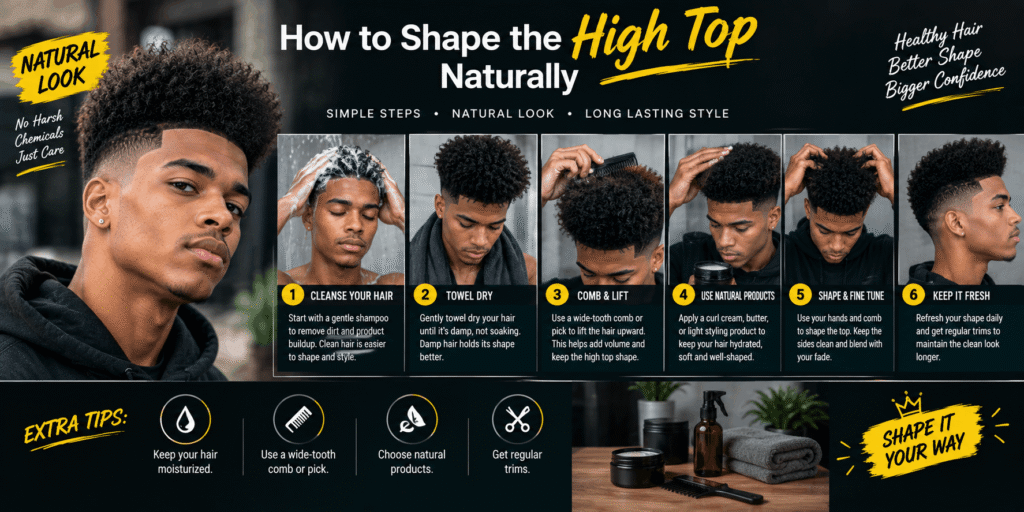
When working with natural texture, the goal should be to create a shape that complements the way the hair grows rather than fighting against it. The top can be shaped while considering its natural volume and direction, allowing the final silhouette to look more consistent.
For curls and coils, a rounded or textured finish can often highlight the natural pattern. For denser hair that holds a structured shape, a flatter or more geometric top may create a stronger appearance.
The sides should also support the top rather than overpower it. A well-balanced fade helps frame the upper section and gives the haircut its recognizable contrast.
A high top fade can therefore be customized considerably without losing its identity. The height, top shape, fade placement, edge definition, and texture can all change while the basic concept remains intact.
More High Top Fade Styles to Try
9. Thick High Top With Low Skin Fade and Edge
A thick high top paired with a low skin fade creates a strong contrast between the fuller hair above and the cleaner sides. The style works especially well when the top has plenty of natural texture because the height becomes the main feature. A carefully shaped edge can make the overall haircut look sharper without taking away from the natural character of the hair. This version of the high top fade can be styled in a relatively simple way while still giving the haircut a bold, structured appearance. It is also flexible enough to work with different beard lengths, accessories, and personal styling preferences.
10. Afro High Top With Skin Fade and Line Up
An afro high top with a skin fade and line up combines natural volume with clearly defined sides. The top can remain rounded or slightly squared depending on the desired finish, while the fade creates a cleaner transition around the lower portion of the haircut. The result is a high top fade that feels both traditional and contemporary. This style particularly highlights the contrast between texture and precision, making the shape of the haircut easy to notice from different angles. Keeping the overall silhouette balanced is important because the height and width of the top can dramatically change how the finished style looks.
11. High Top Fade With Twists
Twists add another layer of texture to the classic high top silhouette. Instead of relying entirely on a solid shape, this version brings visible separation and movement across the top. The sides can be kept shorter to make the twists stand out, while the top remains high enough to preserve the recognizable character of the haircut. A high top fade with twists can look relaxed and creative at the same time, making it a useful choice for someone who wants a hairstyle with more personality. The twists can also change the overall impression of the cut depending on whether they are kept compact, medium-sized, or allowed to create more volume.
12. Round High Fade Afro Top
The round high fade afro top uses the natural shape of textured hair to create a smooth, rounded silhouette. Rather than creating extremely sharp corners, the top follows a softer curve that gives the haircut a balanced appearance. The high fade keeps the sides noticeably shorter, allowing attention to remain on the volume above. This variation is especially appealing when the goal is to celebrate natural texture while still maintaining a recognizable haircut shape. Because the rounded top is such an important part of the style, consistency in the overall silhouette can make the difference between a polished result and one that looks uneven.
13. High Top Fade With Long Beard
Combining a high top with a longer beard creates a strong vertical balance between the hair and facial hair. The contrast can make the overall look feel fuller and more substantial, while the faded sides prevent the style from becoming visually heavy. The beard does not have to be extremely long to create this effect; even a fuller, well-maintained beard can complement the height of the hairstyle. This version of the high top fade works particularly well for people who enjoy a more noticeable appearance and want their haircut and beard to feel like parts of one coordinated style.
14. High Top With Mid Fade
A mid fade provides a middle ground between the dramatic appearance of a high fade and the subtle transition of a low fade. When combined with a high top, it creates enough contrast to emphasize the height without making the sides look extremely bare. This makes the style relatively versatile and easy to adapt to different preferences. The top can be rounded, squared, textured, or slightly tapered depending on the natural hair pattern. Among the different high top fade variations, this one can be a good option when someone wants noticeable structure without an overly dramatic side transition.
15. Blown-Out High Top With Low Skin Fade
A blown-out high top gives the classic shape a softer and more voluminous appearance. Instead of looking extremely rigid, the hair can have visible texture and movement while still maintaining the height that defines the style. Pairing it with a low skin fade creates a gradual contrast around the sides and keeps the focus on the top. This version can feel modern because it combines the recognizable high-top silhouette with a less formal, more textured finish. The final appearance can vary considerably depending on the natural density and curl pattern of the hair.
Keeping a High Top Fade Looking Sharp
A great haircut is only part of maintaining a high top fade. The shape can gradually lose its definition as the hair grows, particularly around the sides and hairline. Regular trims can help maintain the intended silhouette, while the top may need occasional shaping to keep its height and proportions consistent. How frequently someone needs a refresh depends on how quickly their hair grows and how precise they want the haircut to remain.
Daily styling does not necessarily need to be complicated. The most important factor is working with the natural texture rather than trying to completely change it. Lightweight styling products can help with definition and control, while moisturizing products can help keep textured hair feeling comfortable and looking healthy. The exact product choice depends on whether the desired result is soft, defined, textured, or more structured.
Choosing the Right High Top for Your Style
The best high top fade is not necessarily the tallest or most dramatic one. Face shape, hair density, curl pattern, lifestyle, and personal preference can all influence which version feels right. Someone who prefers a classic appearance may enjoy a rounded or flat top, while someone looking for something more expressive might prefer twists, patterns, or a more noticeable contrast between the top and sides.
It is also worth thinking about maintenance before choosing a particular variation. A very precise shape may require more frequent barber visits to keep its structure looking fresh. A softer, textured version may offer more flexibility as it grows out. Looking at several examples from the front, side, and back can also make it easier to understand how the finished silhouette will appear.
How to Describe Your High Top to a Barber
Instead of simply saying you want a high top fade, describe the features that matter most to you. Mention whether you want the top rounded, squared, textured, twisted, or flat, and explain how noticeable you want the fade to be. You can also show reference pictures so the barber can understand the overall shape you have in mind.
A useful conversation should include the amount of height you want, the general appearance of the sides, and whether you want a defined hairline or a softer finish. If your natural texture behaves differently from the reference photo, a barber can help adapt the shape rather than copying an unsuitable style exactly.
Final Thoughts
The high top fade has remained a standout hairstyle because it gives natural texture, volume, and shape a chance to become the main focus. What makes the style even more interesting is how easily it can be personalized. A classic flat top can create a clean, structured appearance, while a rounded afro top can feel softer and more natural. Twists, curls, sharp edges, different fade levels, and even a fuller beard can completely change the overall character of the haircut.
Choosing the right style is less about following one specific trend and more about finding a shape that works with your natural hair texture and personal preferences. The amount of height, the shape of the top, and how noticeable the sides are can all influence the finished look. Someone who prefers a classic appearance may choose a simple rounded or flat style, while someone who enjoys experimenting can explore twists, textured tops, or stronger contrasts.
Maintenance is another important part of keeping the haircut looking its best. A well-defined shape can gradually change as the hair grows, so regular trims may help preserve the original appearance. At the same time, working with your natural texture instead of constantly fighting it can make everyday styling easier.
With so many variations available, there is no single way to wear this timeless haircut. Whether you prefer something bold, clean, textured, or relaxed, the right high top fade can turn natural volume into a distinctive hairstyle that feels completely your own.
8 Comments