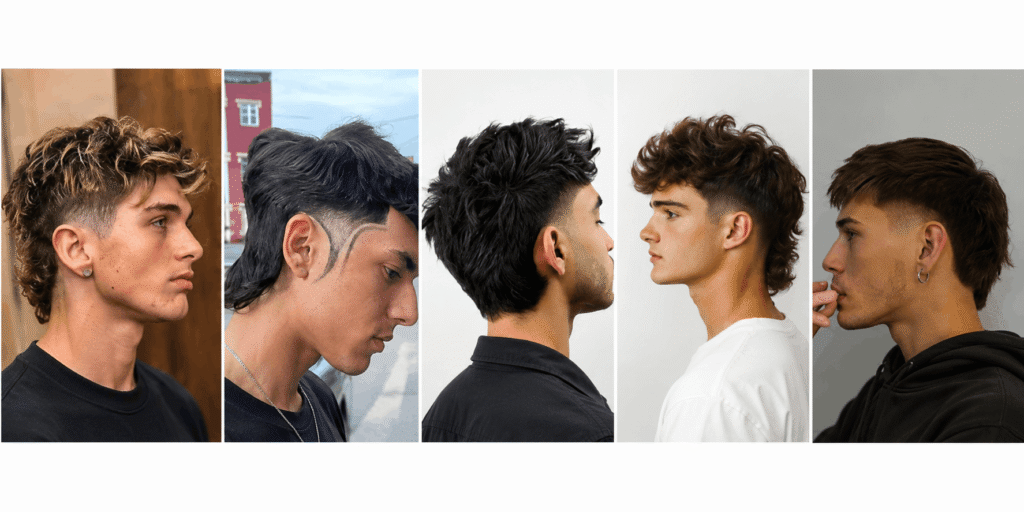
A taper fade mullet combines the classic mullet shape with the clean, gradual finish of a taper fade. It offers a modern way to wear a longer back while keeping the sides and neckline neat and controlled. This combination has become a popular choice for people who want a haircut that feels distinctive without looking overly complicated.
The appeal of the taper fade mullet comes from its versatility. The top can be kept textured, messy, curly, wavy, or relatively smooth, while the back can vary from a subtle length difference to a more noticeable mullet shape. The taper around the sides and neckline creates a cleaner transition and can make the overall haircut feel more polished.
Unlike a traditional fade that may remove a significant amount of hair from the sides, a taper generally focuses on gradually shortening the hair around specific areas such as the temples, sideburns, and neckline. This creates a softer transition while preserving more of the natural hair around the sides.
A taper fade mullet can also be customized according to hair texture and personal preference. Straight hair can create a sharp, defined silhouette, while curly or wavy hair can give the back additional movement and volume. You can also choose a low taper for a subtle appearance or a more noticeable taper if you want stronger contrast.
This guide explores different taper fade mullet styles, how to choose the right version, what to tell your barber, styling tips, maintenance, and ideas for different hair types.
What Is a Taper Fade Mullet? ✂️
A taper fade mullet combines two recognizable haircut elements. The taper gradually shortens the hair around the temples, sideburns, and neckline, while the mullet keeps more length toward the back.
The result is a hairstyle with a cleaner front and sides and a longer, more noticeable back.
Taper vs. Fade
Although the terms are sometimes used interchangeably, a taper and a fade are not exactly the same.
A taper usually focuses on specific areas and leaves more hair around the sides. A fade generally creates a more extensive transition from longer hair to very short or nearly skin-level hair.
A taper fade mullet therefore tends to have a softer appearance than a heavily faded mullet.
Popular Taper Fade Mullet Styles 🔥
There are many ways to customize this haircut. The best option depends on how dramatic or subtle you want the final result to be.
Low Taper Fade Mullet
A low taper keeps the transition relatively low around the ears and neckline. This creates a subtle version of the style while maintaining the longer back.
It can be a good choice if you want to experiment with a mullet without choosing an extremely dramatic haircut.
Mid Taper Mullet
A mid taper provides a more noticeable transition while still keeping the overall shape balanced.
It can work well with textured hair because the taper creates contrast between the shorter sides and fuller top and back.
Curly Taper Fade Mullet
Curly hair can give a mullet plenty of natural volume and movement. A taper around the sides can help define the shape while leaving the curls visible.
The length at the back can be adjusted depending on how much curl and volume you want.
Wavy Taper Fade Mullet
Wavy hair can create a softer and more relaxed version of the haircut. The natural movement of the waves can make the longer back appear textured without requiring excessive styling.
Textured Taper Fade Mullet
A textured top can give the haircut a modern, casual appearance. A barber can use appropriate cutting techniques to create movement while maintaining the overall shape.
Taper Fade Mullet for Straight Hair 💇
Straight hair can create a more defined mullet silhouette. The longer back may appear smoother and more structured, while the taper creates contrast around the sides.
A small amount of styling product can help control the top without making it look excessively slick.
For a more relaxed appearance, you can leave the top slightly messy and allow the natural texture of the hair to create movement.
Taper Fade Mullet for Thick Hair 🧔
Thick hair can provide plenty of volume for this haircut. However, excessive bulk may make the style harder to control.
Your barber can remove some weight while preserving enough length for the mullet shape. This can make the haircut easier to style and maintain.
Taper Fade Mullet for Thin Hair 🎯
A shorter, textured top can work well if your hair is naturally fine. The haircut can be adjusted to avoid creating unnecessary weight differences.
Rather than trying to copy a particular reference photo exactly, show your barber the overall shape you like and let them adapt it to your natural hair.
How to Ask Your Barber for a Taper Fade Mullet 💈
Communication is important because the term “mullet” can describe many different shapes.
Bring a reference photo showing the approximate length and silhouette you want. Then explain whether you prefer a low, medium, or stronger taper.
You should also discuss:
- How much length you want in the back
- How short you want the sides
- How much texture you want on top
- Whether you want the neckline natural or defined
- How much daily styling you are willing to do
Your barber can then adjust the haircut according to your hair type and head shape.
Styling a Taper Fade Mullet 🧴
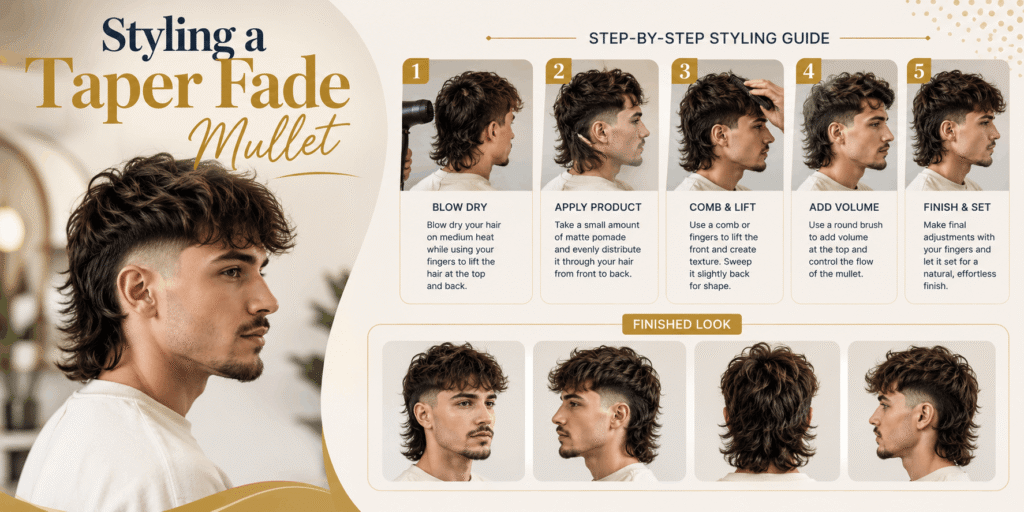
The styling method depends on your hair texture and the finish you want.
For a textured appearance, use a small amount of styling cream, clay, or paste and work it through the top. Avoid using too much product because it can make the hair appear heavy.
For curly or wavy hair, a lightweight product designed for your hair texture can help define the natural pattern.
Messy Taper Fade Mullet
For a casual look, allow the top and back to retain some natural movement. A small amount of matte styling product can help separate sections without making the hair look overly polished.
Slicked-Back Mullet
If your hair is long enough, you can brush the top backward for a more structured appearance. A suitable styling product can provide control and definition.
Maintaining a Taper Fade Mullet 🧼
Because the taper is an important part of the haircut, regular trims can help maintain its shape.
The exact schedule depends on how quickly your hair grows and how sharp you want the taper to remain. If you prefer a very clean appearance around the temples and neckline, you may need more frequent barber visits.
The longer back can generally be maintained with regular trimming to prevent uneven or damaged ends.
The taper fade mullet can be customized in many ways, which makes it suitable for people who want either a subtle haircut or something more noticeable. The basic structure stays the same, but changes to the top, back, neckline, and taper can completely change the final appearance.
A shorter back can create a cleaner interpretation of the mullet, while a longer back produces a stronger contrast. The top can also be kept neat or heavily textured depending on the look you prefer.
Short Taper Fade Mullet 💇
A short version keeps the back relatively close while maintaining enough length to create the mullet shape. This can be a practical option if you like the style but do not want an extreme difference between the front and back.
Long Taper Fade Mullet ✂️
A longer back creates a more noticeable silhouette. This version can be especially effective with thick, curly, or wavy hair because the natural texture adds movement.
Messy Taper Fade Mullet 🌪️
A messy version focuses on natural-looking texture. The top and back can be styled loosely rather than being shaped into a very precise finish.
This can work well for casual outfits and everyday wear.
Clean Taper Fade Mullet ✨
For a more polished appearance, keep the taper neat and the top controlled. The back can still remain longer while the overall haircut looks structured.
Taper Fade Mullet With a Part 🔹
Adding a part can create more structure on top. A side part can make the haircut look more traditional, while a less defined part can create a relaxed appearance.
The part should work with your natural growth pattern rather than being forced into an uncomfortable direction.
Taper Fade Mullet With Designs 🎨
Some people choose to add shaved lines or other decorative elements to the tapered section.
Simple Line Designs
One clean line near the taper can add a subtle detail without overwhelming the haircut.
More Creative Designs
More elaborate patterns can make the haircut more distinctive, although they usually require more frequent maintenance because the design becomes less visible as the hair grows.
Taper Fade Mullet With a Beard 🧔
A beard can complement a taper fade mullet by creating continuity around the sides of the face.
A neatly trimmed beard combined with a clean taper can produce a balanced appearance. The beard does not need to match the hair length exactly.
Short Beard
A short beard can work well with a subtle taper and a moderate-length mullet.
Longer Beard
A fuller beard can create a stronger, rugged appearance when combined with a longer back.
Taper Fade Mullet for Different Occasions 🎯
Although the mullet has a distinctive appearance, it can be adapted for different settings.
For everyday wear, a low taper with a moderately long back can provide a more understated appearance.
For concerts, festivals, or casual events, you can experiment with stronger texture, longer length, or creative details.
For more formal environments, keeping the taper clean and the top controlled can make the overall hairstyle appear more polished.
How to Style the Top 💈
The top of the haircut often determines whether the final appearance looks neat, textured, or relaxed.
For straight hair, a small amount of styling cream or matte paste can help control the shape. For curly hair, a product designed to define curls may help maintain the natural pattern.
Apply styling products gradually. Too much product can make the hair look heavy or greasy.
Natural Finish
A natural finish allows your hair texture to remain visible with minimal styling.
Textured Finish
A textured finish separates sections and can create more volume and movement.
Sleek Finish
A sleek finish uses more control and can create a cleaner appearance, especially for formal occasions.
How to Maintain the Taper Fade Mullet 🧴
Regular maintenance helps preserve the shape of the haircut.
The taper around the temples and neckline usually loses its definition as the hair grows. If you want a consistently sharp appearance, regular trims may be necessary.
The longer sections also need attention. Trimming the ends when necessary can help keep the back looking intentional instead of uneven.
Maintain the Neckline
The neckline is particularly important because it can change how the longer back looks.
A clean but natural neckline can provide a better transition between the mullet and the neck.
Keep the Sides Balanced
As the taper grows out, the sides may begin to look fuller. A barber can restore the original shape during a maintenance appointment.
Hair Care for a Taper Fade Mullet 🌿
A good haircut still benefits from a sensible hair-care routine.
Wash your hair according to your hair type and lifestyle. Use conditioner when appropriate, especially if the longer sections feel dry or difficult to manage.
Avoid unnecessary heat styling, and use suitable heat protection if you regularly use styling tools.
For curly or textured hair, choose products designed to support your natural pattern rather than trying to force the hair into a different texture.
Common Mistakes to Avoid ⚠️
One common mistake is asking for a taper fade mullet without explaining how much length you want in the back. Since mullets can vary widely, your barber may interpret the request differently from what you had in mind.
Another mistake is choosing a reference image that has a completely different hair texture from your own. A haircut can look different depending on whether the hair is straight, wavy, curly, thick, or fine.
Overusing styling products is another issue. A small amount is often enough to control texture.
Finally, neglecting maintenance can cause the taper to lose its clean appearance.
Final Thoughts
A taper fade mullet is a flexible haircut that combines the distinctive longer-back shape of a mullet with the cleaner finish of a taper. Because both elements can be adjusted, the style can range from subtle and practical to bold and highly noticeable.
You can choose a low taper, keep the back moderately long, add natural texture, or create a stronger contrast with a more dramatic mullet shape. Curly, wavy, straight, thick, and fine hair can all be adapted to the style with the right cut.
Before your appointment, think about how much time you want to spend styling your hair and how often you are willing to visit the barber. Show a reference photo, explain the back length you want, and discuss your natural hair texture.
With the right proportions and regular maintenance, the taper fade mullet can be a modern, distinctive, and customizable hairstyle that works for a wide range of personal styles.

3 Comments