Hair clips are some of the simplest and most useful accessories in a hair-care and styling routine. They can hold sections of hair in place, create quick hairstyles, add decorative details, or make an ordinary look feel more polished. From the familiar claw clip to small snap clips and elegant French barrettes, there is a huge variety of designs available for different hair types, lengths, and styling needs.
One reason hair clips remain popular is their versatility. A single clip can sometimes be used in several different ways, making it possible to create a half-up hairstyle, secure a bun, hold back loose pieces, or simply keep hair away from the face. Some clips are designed primarily for function, while others are chosen mainly because they look beautiful.
The right clip can also depend on your hair texture. Thick or long hair may need a stronger grip and a larger accessory, while fine or shorter hair may work better with smaller clips. The shape of the clip matters too. A claw clip, bobby pin, French hair pin, and duck bill clip all work differently, so understanding their purpose can make styling much easier.
In this guide, we will explore the most popular hair clips, explain what each type is designed for, and share practical ways to use them. You will also learn how to select clips according to hair thickness, length, hairstyle, and everyday needs.
Hair Clips 101
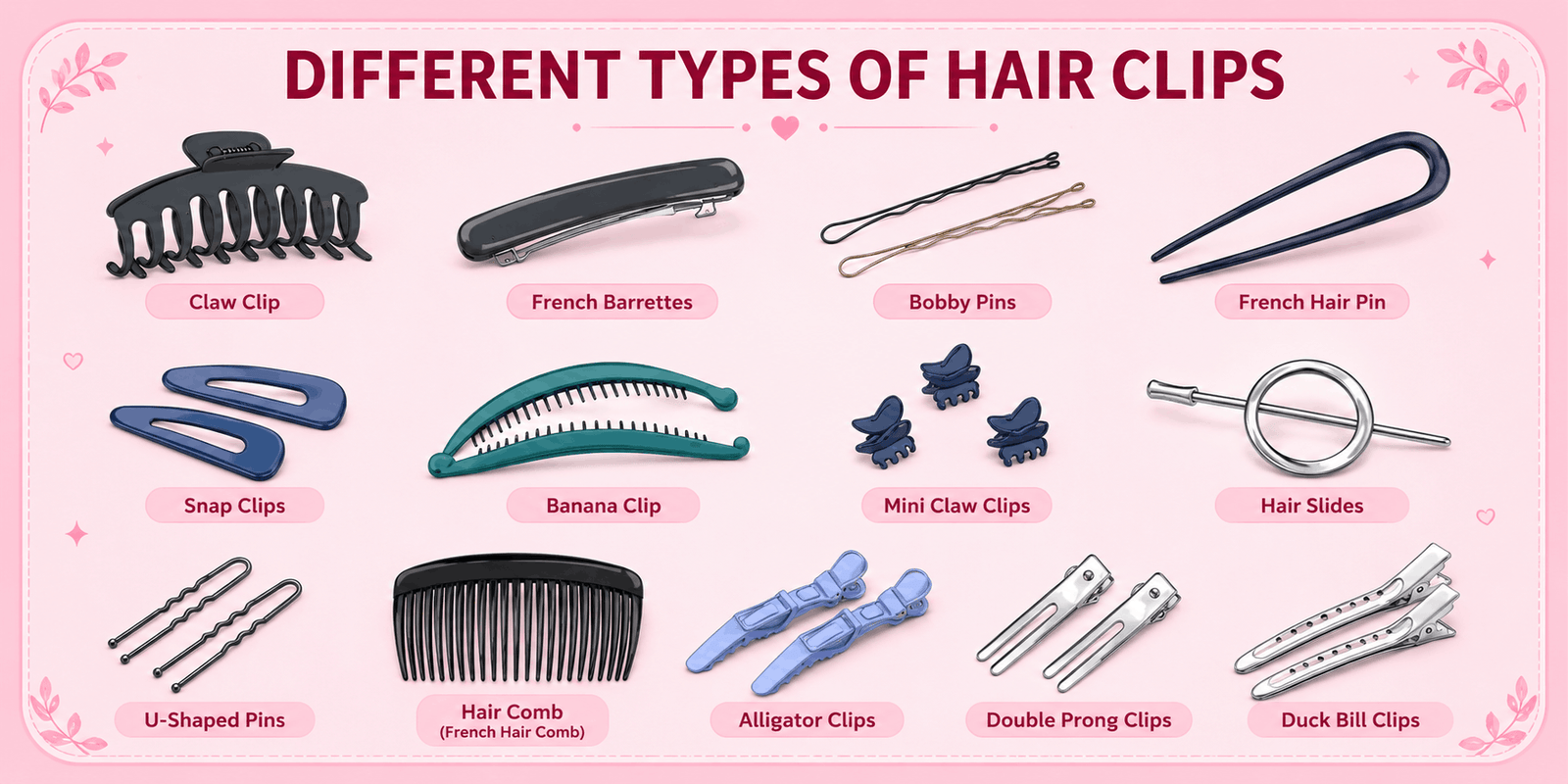
Hair clips are styling accessories designed to secure, separate, or decorate the hair. They come in many materials, including plastic, metal, acetate, fabric, and other decorative materials.
Some styles have simple mechanisms that open and close, while others rely on tension or the shape of the accessory to keep hair in place.
What Are Hair Clips Used For?
Hair clips can be useful for both everyday styling and more elaborate hairstyles. You can use them to keep hair away from your face, divide sections while styling, secure an updo, or add a decorative accent.
They are also useful when you do not want to use a hair tie. Certain clips can create a softer-looking hairstyle because they do not require the hair to be tightly gathered into an elastic.
Choosing Hair Clips by Hair Type
Hair thickness is one of the biggest factors to consider.
Thick hair often benefits from clips with strong construction and enough space to hold a substantial amount of hair. Fine hair may need smaller clips that do not easily slide out. Curly hair can work well with larger clips that accommodate volume without compressing the curls excessively.
Hair length matters too. Longer hair generally requires more room, while short hair can often be secured with compact styles.
Claw Clips
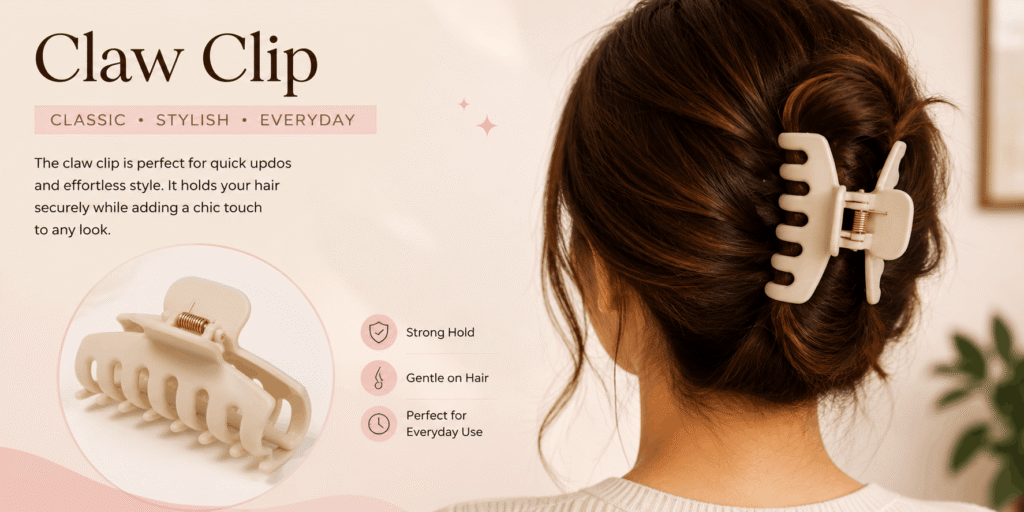
Claw clips have two interlocking sides with teeth that grip the hair when the clip is closed. They are one of the most recognizable types of hair clips and are popular because they can create a hairstyle quickly.
Best Hairstyles for Claw Clips
Claw clips can be used for messy buns, French twists, half-up styles, and low gathered hairstyles. Larger versions can hold substantial amounts of hair, while smaller claw clips can secure a half-up section or a few loose pieces.
A claw clip can also be useful when you want a casual hairstyle that does not require a lot of preparation.
How to Use a Claw Clip
Gather the hair into the position you want, twist or fold it according to the hairstyle, and place the open clip around the section. Release the clip gently so the teeth hold the hair.
Avoid forcing a clip that is too small because excessive pressure can make the style uncomfortable or cause the clip to break.
French Barrettes
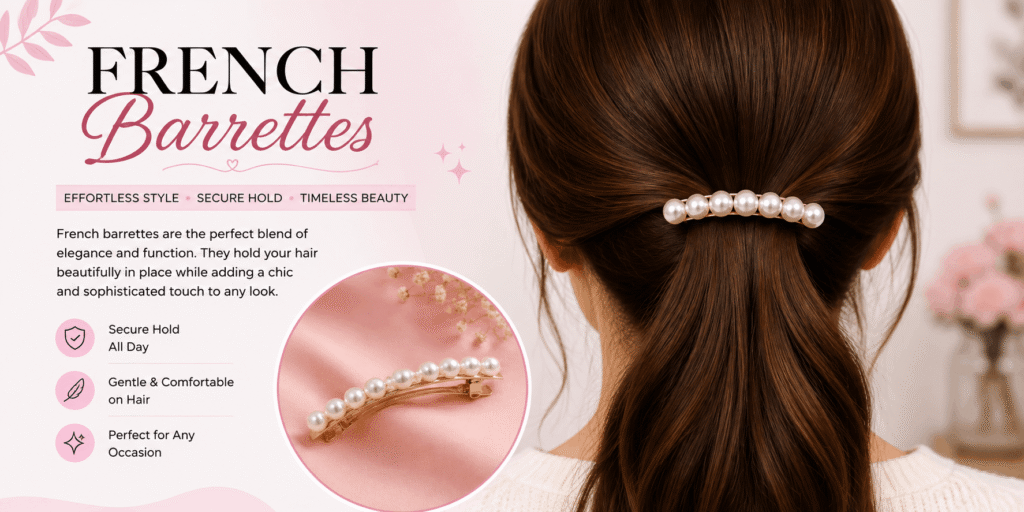
French barrettes are decorative clips that typically include a hinged closure designed to hold a section of hair securely.
They can create a more polished appearance than some casual clip styles, making them suitable for work, dinners, events, or everyday outfits.
Best Hair Types for French Barrettes
French barrettes can work well with straight, wavy, and moderately thick hair. For very thick hair, choose a larger barrette with a strong closure.
Styling Ideas
Use a French barrette to create a half-up hairstyle, secure a low ponytail section, or hold the hair at the back of the head.
Decorative barrettes can also act as a statement accessory when paired with a simple hairstyle.
Bobby Pins
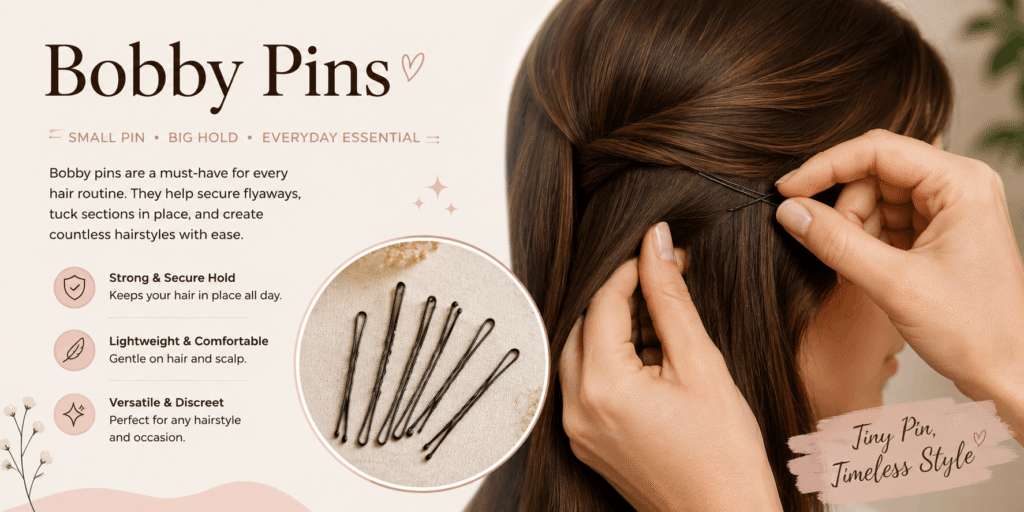
Bobby pins are small metal or plastic-coated pins designed to hold hair securely.
They are especially useful for creating updos, controlling flyaways, and securing individual sections.
Best Uses for Bobby Pins
Bobby pins can be hidden inside buns and braids or placed visibly as part of a decorative hairstyle.
For a secure hold, insert the pin so that it catches a small amount of hair close to the scalp.
How to Use Bobby Pins Correctly
The wavy side of many traditional bobby pins is designed to provide grip. Positioning the pin appropriately can help it stay in place.
Avoid using too many pins in one area, particularly if the hairstyle begins to feel uncomfortable.
French Hair Pins
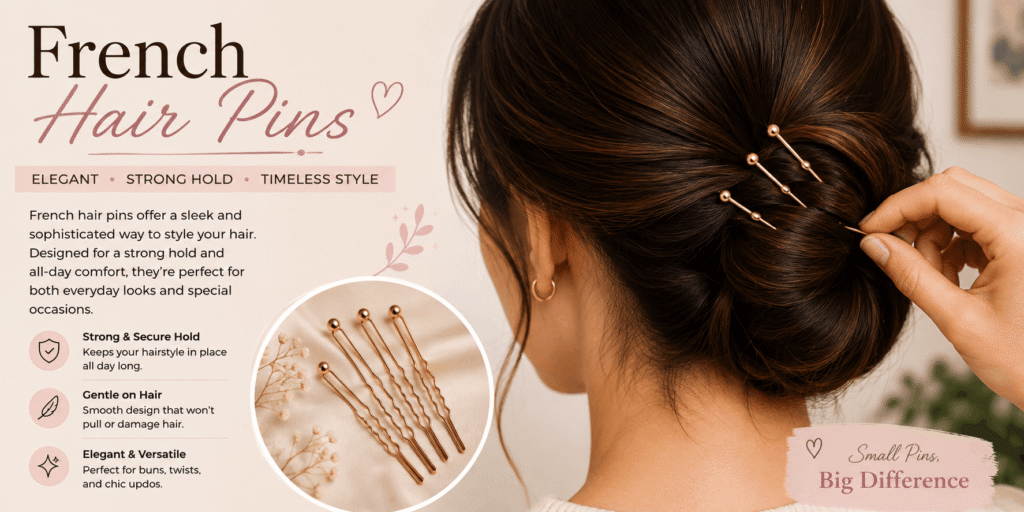
French hair pins are typically long, open-ended pins designed to secure twists, buns, and other updos.
They can look complicated, but once you learn the basic technique, they can provide a secure and elegant way to style longer hair.
How French Hair Pins Work
Twist or fold the hair into the desired shape, then insert the pin through a section of the hairstyle and catch some of the hair underneath before bringing the pin back through.
The goal is to secure both the hairstyle and a small amount of hair underneath it.
Hairstyles to Try
French hair pins work particularly well with low buns, French twists, and relaxed updos.
They can create a more minimalist appearance because there is less visible hardware than with some other clips.
Snap Clips
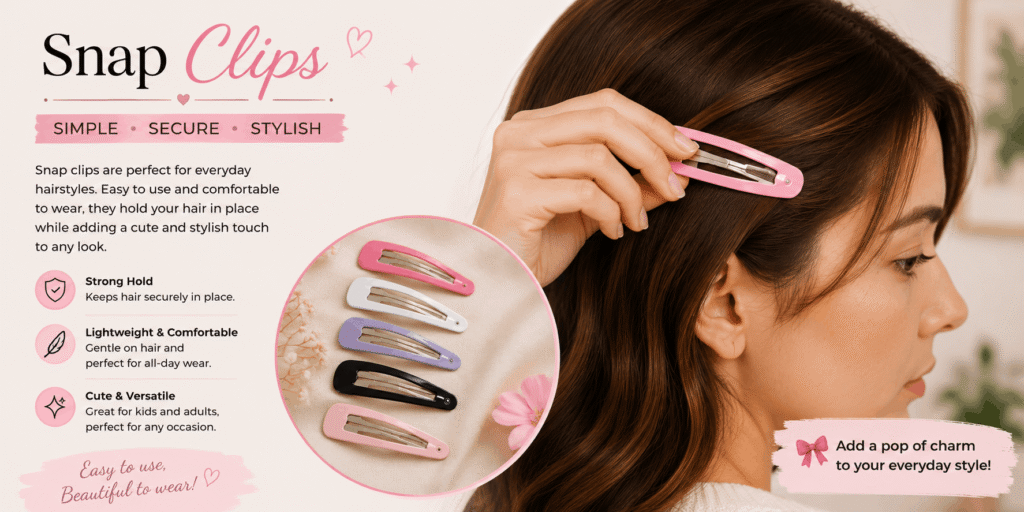
Snap clips open and close with a simple snapping mechanism. They are often small and easy to use, making them popular for securing short sections of hair.
Everyday Hairstyles
Snap clips can hold bangs or shorter front sections away from the face.
They can also be used in pairs for symmetrical hairstyles or combined with other accessories.
Choosing the Right Size
Small snap clips work well for fine or short sections, while larger versions can hold more hair.
If the clip slides out quickly, try a slightly larger size or place it closer to the base of the section.
Banana Clips
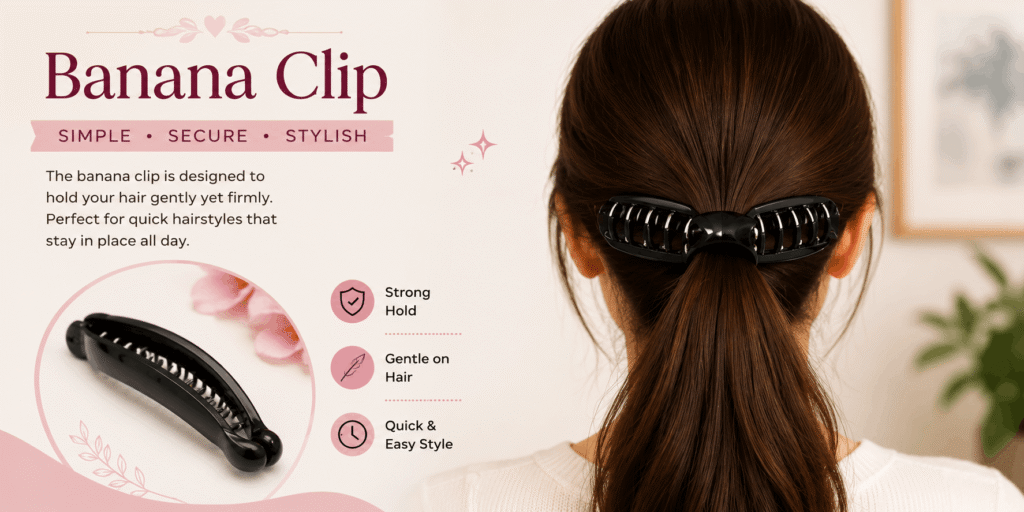
Banana clips are curved accessories that allow you to gather hair into a ponytail-like shape while keeping a softer, more elongated silhouette.
How to Use a Banana Clip
Open the clip, gather your hair, and place it along the curve. Close the mechanism so that the hair is held without excessive tension.
Best Hair Lengths
Banana clips generally work best with medium to long hair because the design needs enough length to wrap around the accessory.
They can create additional volume and a more relaxed ponytail appearance.
Mini Claw Clips
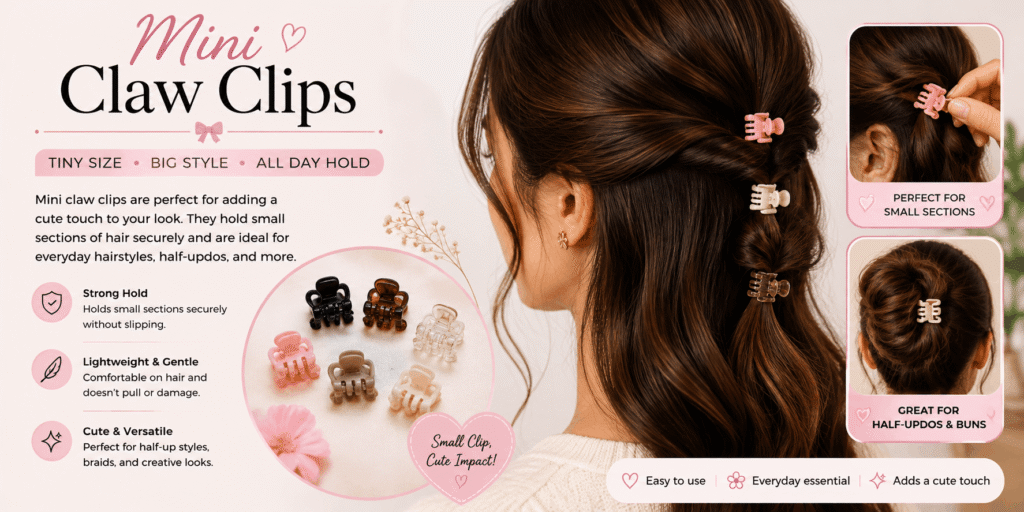
Mini claw clips are smaller versions of traditional claw clips. They are useful when you want to secure a small section rather than your entire hairstyle.
Half-Up Hairstyles
Several mini claw clips can be arranged across the back of the head for a decorative half-up look.
Best Uses for Short Hair
Because they are compact, mini claw clips can be practical for short hair, layers, bangs, and small sections that larger clips cannot hold comfortably.
Hair Slides
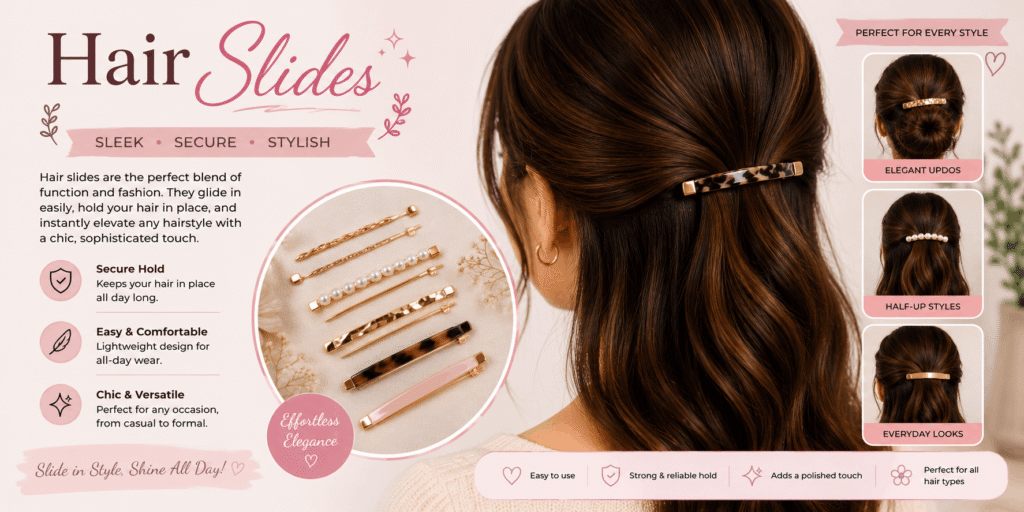
Hair slides are decorative accessories designed to secure a section of hair while adding a polished detail.
They can range from simple metal designs to colorful, embellished, or pearl-inspired styles.
Decorative Hair Slides
A decorative slide can become the focal point of a simple hairstyle. Place one on the side of the head or use a pair for a symmetrical appearance.
Everyday Styling
For daily wear, choose a lightweight slide that holds the hair comfortably without pulling.
U-Shaped Pins
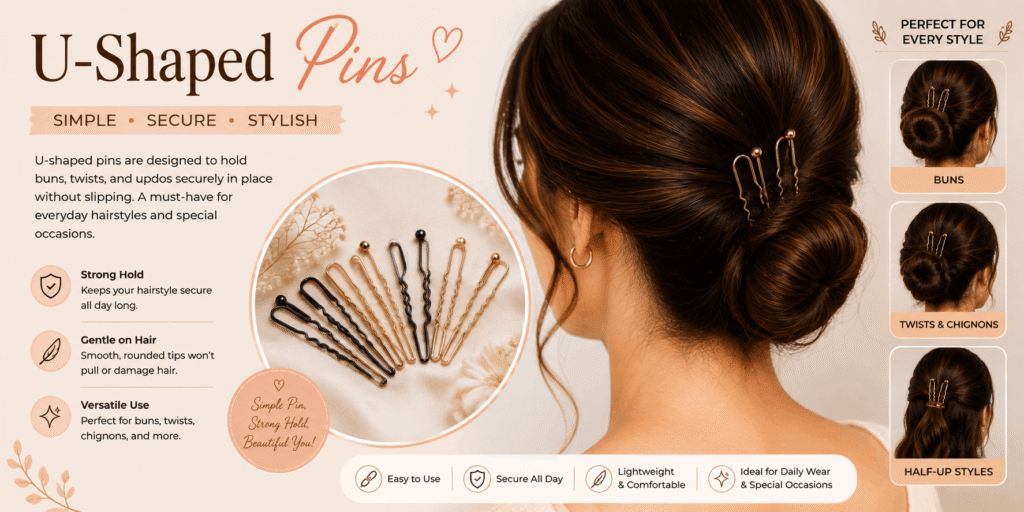
U-shaped pins are commonly used for securing buns and structured updos.
Their shape allows them to be inserted into the hairstyle and anchored against the surrounding hair.
How to Secure an Updo
Insert the pin into the edge of the bun, catch a small amount of hair underneath, and push the pin back into the hairstyle.
Using several strategically positioned pins can help distribute the hold rather than putting all the pressure on one spot.
Tips for Better Hold
U-shaped pins tend to work best when the hairstyle has enough structure for the pin to grip.
Avoid forcing the pin into a very tight hairstyle if it becomes uncomfortable.
Hair Combs
Hair combs can be decorative or functional. They are often used to secure buns, twists, and half-up hairstyles.
Decorative Hair Combs
Decorative combs can add elegance to special-event hairstyles. Pearls, metallic finishes, floral designs, and jeweled details are common options.
How to Wear Hair Combs
Create the hairstyle first and slide the comb into the section you want to secure. Make sure the teeth are positioned firmly enough to hold without pulling.
Alligator Clips
Alligator clips have a hinged design with a long, narrow shape. They are especially useful for holding sections of hair while styling.
Sectioning Hair
They are commonly used to divide hair into manageable sections during blow-drying, curling, straightening, or other styling processes.
Styling Uses
Alligator clips can also hold bangs, front sections, or temporary updos.
Double Prong Clips
Double prong clips have two long prongs that provide additional grip.
Strong-Hold Hairstyles
They can be useful for securing thicker sections or keeping specific parts of an updo in place.
When to Use Them
Double prong clips are especially useful when a standard small clip does not provide enough hold.
Duck Bill Clips
Duck bill clips have a long, flat shape and are widely used for sectioning hair.
They can hold hair away from the face or divide sections while you work on another part of the hairstyle.
Best for Sectioning
Duck bill clips are practical when applying products, blow-drying, curling, or creating detailed hairstyles.
Salon and At-Home Uses
Although commonly associated with professional hair styling, they can also be useful at home when you need to keep sections organized.
Tips for Choosing and Using Hair Clips
Choose clips according to the amount of hair you need to hold rather than choosing based only on appearance. A clip that is too small may not stay in place, while a clip that is too large can feel bulky.
It is also useful to keep several types available. A claw clip may be ideal for a quick everyday updo, while bobby pins are better for securing small sections and duck bill clips are more practical for sectioning during styling.
Pay attention to comfort. If a clip pulls, pinches, or puts uncomfortable pressure on your scalp, remove it and try a different size or style.
Keeping your clips clean can also help maintain them. Wipe decorative surfaces and plastic clips according to the material and manufacturer’s instructions, and replace damaged accessories rather than continuing to use broken pieces.
Choosing Hair Clips for Your Hair Type
The right hair clips can make styling much easier, but the best option depends on your hair’s thickness, texture, and length. A clip that works beautifully for fine hair may not provide enough hold for thick hair, while a large claw clip may overwhelm a very short hairstyle.
For thick or long hair, look for clips with a strong grip, wider teeth, and enough space to hold the amount of hair you want to gather. Large claw clips, banana clips, double-prong clips, and sturdy French barrettes can be useful choices.
Fine hair often works better with smaller accessories that do not weigh the hair down. Mini claw clips, snap clips, bobby pins, and lightweight hair slides can hold smaller sections without creating unnecessary bulk.
Curly and textured hair may need clips with enough room to accommodate natural volume. A clip that is too small can compress the hair or fail to hold it securely. Larger claw clips can work well for loose updos, while smaller clips can be useful for separating sections.
Short hair does not mean you have fewer options. Mini claw clips, snap clips, bobby pins, hair slides, and small alligator clips can help manage shorter layers and create creative hairstyles.
Hair Clips for Different Hairstyles
Different hairstyles naturally work better with certain clips. Choosing the accessory according to the hairstyle can make the finished result more secure and comfortable.
Half-Up Hairstyles
Half-up hairstyles are easy to create with claw clips, French barrettes, snap clips, and mini claw clips. Gather the upper section of your hair and secure it at the back of your head.
For a more decorative appearance, choose a statement barrette or several mini clips arranged in a pattern.
Buns and Updos
Buns can be secured with bobby pins, U-shaped pins, French hair pins, or decorative combs. The best option depends on the size and structure of the bun.
For a relaxed bun, a French hair pin can create a minimal appearance. For a more structured updo, several bobby pins or U-shaped pins can provide additional support.
Quick Everyday Styles
When you are short on time, a claw clip can turn loose hair into a simple updo within seconds. A banana clip can also create a quick ponytail-like style.
Snap clips and slides are useful when you simply want to keep hair away from your face.
How to Choose the Right Clip Size
Clip size should match the amount of hair you are trying to hold.
A small clip is useful for a narrow section, such as bangs or hair around the temples. A medium clip can work for half-up styles, while larger clips may be needed to gather most of the hair.
Using the correct size can also improve comfort. If you repeatedly have to force a small clip around too much hair, it may pull unnecessarily or break.
Match the Clip to the Hairstyle
Think about where the clip will sit before choosing it. A decorative side clip may need to be small and lightweight, while a clip intended to hold a full bun needs greater capacity and grip.
Hair Clips for Everyday Wear
For everyday use, comfort and reliability are often more important than decoration.
A neutral claw clip can work with casual outfits, workwear, or even relaxed evening looks. Simple French barrettes can provide a more polished finish without requiring a complicated hairstyle.
Bobby pins are useful to keep in your bag because they take up very little space and can help with unexpected loose sections.
Creating a Simple Hair-Clip Collection
You do not need dozens of accessories. A small collection can cover most styling needs.
Consider keeping one large claw clip, a few mini clips, several bobby pins, one decorative barrette, and a couple of sectioning clips. This gives you options without filling an entire drawer.
Hair Clips for Special Occasions
Special events offer an opportunity to use more decorative accessories.
A pearl hair comb can add a sophisticated touch to an updo, while a jeweled barrette can become the focal point of a simple hairstyle.
For weddings, formal dinners, parties, or celebrations, consider matching the clip’s finish to your other accessories. Gold, silver, pearls, and decorative stones can coordinate with jewelry without requiring an exact match.
Keep the Hairstyle Balanced
If your clip is highly decorative, keep the hairstyle relatively simple. A detailed hairstyle combined with an oversized statement accessory can sometimes look visually crowded.
A simple bun with one elegant comb or barrette can often create a polished result.
Hair Clips for School and Work
School and workplace hairstyles often benefit from accessories that are secure and practical.
Small claw clips, snap clips, French barrettes, and simple slides can keep hair organized without creating an overly elaborate appearance.
For longer hair, a medium claw clip or banana clip can create a quick updo that stays away from the face.
Choose accessories that feel comfortable throughout the day, especially if you will be wearing them for several hours.
Hair Clips and Hair Health
A good accessory should hold the hair without creating unnecessary pulling or pressure.
Avoid clips that feel painful or that repeatedly catch and tug at strands. If an accessory constantly slips, do not automatically make it tighter. Try a different size, shape, or style.
Removing clips gently is also important. Open the clip fully before taking it out rather than pulling it through the hair.
Avoid Excessive Tension
Very tight hairstyles and accessories can place stress on the hair and scalp. Give your hair breaks from highly secured styles and choose looser options when appropriate.
Cleaning and Caring for Hair Clips
Like other personal accessories, hair clips can collect hair products, oils, and dust over time.
Plastic clips can often be wiped with a damp cloth and mild cleaning solution when suitable for the material. Decorative metal or embellished clips may need gentler care.
Always follow the manufacturer’s care instructions, especially for clips made from acetate, delicate metals, pearls, or fabric.
Organize Your Clips
Keeping clips in a small container can prevent them from becoming tangled or damaged.
You can organize them by size or purpose so that your most-used accessories are easy to find.
Common Hair Clip Mistakes
One of the most common mistakes is using a clip that is too small for the amount of hair you are gathering. This can cause the clip to pop open or slip out.
Another mistake is choosing an accessory only because it looks attractive. A decorative clip may not be suitable for a hairstyle that requires strong support.
Using damaged clips is another problem. Broken teeth, sharp edges, or loose mechanisms can catch on hair.
Don’t Force a Clip
If a clip does not close comfortably around your hair, choose a larger or stronger style instead of forcing it.
How to Make Hair Clips Stay in Place
If your clip keeps slipping, consider whether your hair is too smooth, the section is too large, or the clip is not suitable for the hairstyle.
For some styles, creating a small twist before attaching the clip can provide additional structure. Sectioning clips should also be positioned close enough to the roots to provide support without causing discomfort.
The type of accessory matters too. A snap clip may work better for a small section, while a claw clip may be more appropriate for a larger gathered hairstyle.
Final Thoughts
Hair clips may seem like small accessories, but the right one can completely change how quickly and easily you style your hair. A claw clip can create a quick updo, a French barrette can add a polished finishing touch, bobby pins can secure detailed styles, and mini clips can make short sections easier to manage.
The best accessory depends on your hair type, length, hairstyle, and personal preference. Thick hair may need larger and stronger clips, while fine or short hair can often benefit from lightweight designs. Comfort is just as important as appearance, especially when you plan to wear a clip for several hours.
Instead of buying every style available, start with a few practical options that match your routine. A versatile claw clip, some bobby pins, a decorative barrette, and smaller clips can provide a strong foundation for everyday hairstyling.
Most importantly, use clips gently. Avoid accessories that pull, pinch, or snag your hair, and replace damaged clips before they become a problem. With the right selection, hair clips can make simple hairstyles easier while also adding a little personality to your everyday look.
One Comment