
A cleansing balm can completely change the way you remove makeup at the end of the day. Instead of repeatedly rubbing at foundation, sunscreen, long-wearing makeup, or stubborn eye products, a balm transforms as you massage it into the skin, helping loosen makeup and surface buildup before rinsing away. The result can feel much more comfortable than aggressive rubbing with cotton pads or wipes.
But choosing a cleansing balm is not as simple as picking the one with the fanciest packaging. Different formulas can feel completely different on the skin. Some are rich and buttery, some become lightweight oils, while others emulsify into a milky texture when mixed with water. Skin type matters too. Someone with dry skin may prefer a nourishing formula, while someone with oily or combination skin may want a lighter-feeling balm that rinses clean.
Ingredients also deserve attention, particularly when the product is used around the eyes and on sensitive facial skin. Fragrance, essential oils, emulsifiers, plant oils, and preservatives can all vary between formulas. A product that feels wonderful for one person may not suit someone else.
In this guide, we will compare seven popular cleansing balms and explain what makes each one interesting, who may prefer it, and what to consider before buying. We will also cover how cleansing balms differ from traditional cleansers, the correct way to use one, common mistakes, and questions worth asking before adding a balm to your skincare routine.
Our Top Cleansing Balms
The seven products in this guide represent different approaches to cleansing, including classic makeup-removing formulas, richer balms for dry-feeling skin, calming options, creamier textures, and more budget-friendly choices.
Rather than treating one formula as perfect for everyone, consider what you want from a first cleanse. A good cleansing balm should be comfortable to use, appropriate for your skin, and effective at removing the makeup, sunscreen, and everyday buildup you need to take off.
1. Clinique Take the Day Off Cleansing Balm
Clinique’s Take The Day Off Cleansing Balm is designed to dissolve long-wearing makeup, sunscreen, and surface pollutants. The brand says the solid balm transforms into a silky oil during application and is intended to cleanse without stripping the skin.
This makes it a strong option for someone who wants a straightforward first cleanse without a heavily complicated routine. The application method is also simple: Clinique recommends using a small amount on dry skin with dry hands, massaging it across the face, and then rinsing.
Take The Day Off Cleansing Balm
The texture is one of the product’s defining characteristics. It begins as a solid balm and changes as it is worked into the skin, helping loosen makeup before rinsing.
If you prefer a classic cleansing balm experience and want something designed specifically for makeup removal, this is a useful product to consider.
2. Elemis Pro-Collagen Cleansing Balm
The Elemis Pro-Collagen Cleansing Balm is positioned as a richer, sensory cleansing experience and is particularly associated with mature-skin-focused skincare routines.
Its balm format makes it suitable for people who enjoy a luxurious texture rather than a very lightweight cleanser. When evaluating a rich cleansing balm, think about how comfortable you are with oils and emollient textures and whether you prefer a more nourished feeling after cleansing.
Pro-Collagen Cleansing Balm
This type of formula can fit particularly well into an evening routine when removing makeup and sunscreen is the main goal. Massage gently rather than rubbing aggressively, especially around the eyes.
If your skin is sensitive to fragrance or essential oils, check the current ingredient list before purchasing because formulations can change.
3. Origins Youthtopia Apple Butter Cleansing Balm
Origins’ Youthtopia Apple Butter Cleansing Balm is a newer-style cleansing balm with a buttery texture designed to melt makeup and impurities without leaving the skin feeling stripped. The current formula features apple seed oil, shea butter, plant-based emollients, and glycerin. Origins describes it as transforming from a solid to an oil and then into a lightweight milk when water is added.
The brand currently lists it as vegan, dermatologist-tested, non-comedogenic, and suitable for all skin types.
Youthtopia Apple Butter Cleansing Balm
This is particularly interesting for people who like a rich, buttery texture and want a cleansing step that feels more moisturizing.
Origins recommends applying it to dry skin, massaging gently, and rinsing thoroughly.
4. Dr. Althea Pure Grinding Cleansing Balm
The Dr. Althea Pure Grinding Cleansing Balm takes a packaging-focused approach by using a dispensing system designed to make getting the product out of the container more controlled.
That can be useful if you dislike repeatedly scooping product from an open jar.
Pure Grinding Cleansing Balm
The grinding-style packaging can also help make the amount you use easier to manage. As with any cleansing balm, apply gently and follow the manufacturer’s directions rather than using a large amount.
Before buying, check the current ingredient list if you have sensitivities, particularly because facial skincare can contain fragrance or botanical ingredients that do not suit everyone.
5. Banila Co. Clean It Zero Calming Cleansing Balm
Banila Co.’s Clean It Zero range is widely associated with makeup-removing cleansing balms, and the Calming version is intended for a gentler-feeling cleansing experience.
Clean It Zero Cleansing Balm Calming
This type of formula can appeal to people who prefer a softer first-cleanse experience, particularly when their skin feels easily uncomfortable after makeup removal.
As with any “calming” product, the name should not be interpreted as a guarantee that it will calm every person’s skin. Check the ingredients and discontinue use if the product causes significant irritation.
6. Then I Met You Living Cleansing Balm
Then I Met You’s Living Cleansing Balm is designed around a rich cleansing texture and sensory experience. It can be used as the first step of a double-cleansing routine to loosen makeup and other oil-soluble buildup.
Living Cleansing Balm
A cleansing balm like this can be useful for people who enjoy taking a little more time with their evening skincare routine.
Massage gently over dry skin, paying attention to areas with long-wearing makeup. Avoid aggressive rubbing, especially around the eyes.
7. e.l.f. Jelly Pop Makeup Melting Cleansing Balm
For shoppers looking for a more accessible option, a budget-focused cleansing balm can make the category easier to try without immediately investing in a premium product.
Jelly Pop Makeup Melting Cleansing Balm
The main appeal of a product in this category is convenience: it can provide the familiar balm-to-oil cleansing experience while keeping the overall routine relatively simple.
Check the current product directions and ingredient list before purchase, particularly if you have sensitive skin or known cosmetic sensitivities.
What Makes a Cleansing Balm Different?
A cleansing balm is generally designed as an oil-rich first cleansing step. The balm helps loosen substances such as makeup and sunscreen that may be difficult to remove with water alone.
Many balms emulsify when water is added, creating a milky texture that can then be rinsed away. This transformation is one of the characteristics that distinguishes many cleansing balms from traditional water-based facial cleansers.
A balm can be especially useful as the first step in a double-cleansing routine. However, not everyone needs to double cleanse every day. Your routine should depend on how much makeup, sunscreen, and other products you use.
How to Use a Cleansing Balm
Using a cleansing balm correctly can make the removal process easier and reduce unnecessary rubbing.
Start With Dry Hands and Skin
Many cleansing balms are designed to be applied directly to dry skin. Take a small amount and gently massage it over your face.
Massage Gently
Work the balm across areas where makeup, sunscreen, and other products have accumulated. Around the eyes, use gentle movements rather than rubbing aggressively.
Add Water
Once the balm has been massaged into the skin, add a little water. Many formulas will emulsify and turn into a milky texture.
Rinse Thoroughly
Rinse the product away according to the manufacturer’s instructions. If your routine includes a second cleanser, you can follow with it as appropriate.
Cleansing Balm vs. Facial Cleanser
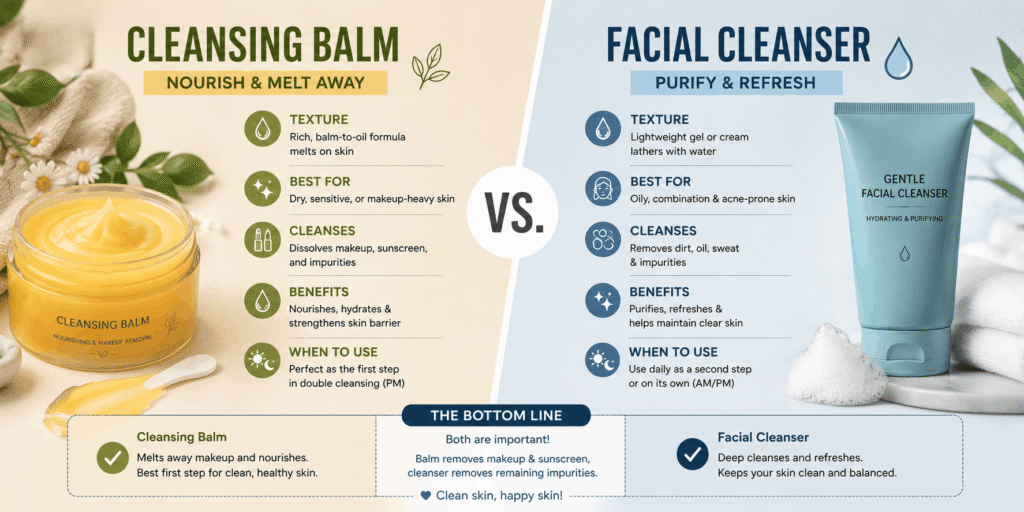
Although both products are designed to cleanse the skin, they can serve different purposes.
A cleansing balm is commonly used as a first cleanse to loosen makeup, sunscreen, and oil-soluble buildup. A traditional water-based cleanser is generally used to cleanse the skin after that or as the only cleanser when a first cleanse is unnecessary.
The right choice depends on your routine. Someone who wears long-lasting makeup every day may find a balm particularly useful, while someone with a very simple routine may prefer a traditional cleanser alone.
Choosing the Right Cleansing Balm for Your Skin
The best cleansing balm is one that suits your skin, preferences, and daily routine.
For Dry-Feeling Skin
A richer balm with a comfortable, emollient texture may appeal to people who dislike a tight feeling after cleansing.
For Oily or Combination Skin
A formula that emulsifies and rinses thoroughly may be preferable if you dislike a heavy residue.
For Sensitive Skin
Check the ingredient list carefully and consider avoiding ingredients that you already know irritate your skin. A simple formula may be easier to evaluate than one containing numerous potential irritants.
For Heavy Makeup
If you regularly wear long-lasting foundation, waterproof eye makeup, or other durable cosmetics, look for a balm specifically designed for makeup removal and follow the manufacturer’s directions.
Common Cleansing Balm Mistakes
One common mistake is using too much pressure while removing makeup. The purpose of a balm is to help loosen products, so aggressive rubbing is generally unnecessary.
Another mistake is applying a balm without checking its instructions. Some formulas are designed for dry skin, while others may have different application recommendations.
Leaving too much residue behind can also be uncomfortable. If the product does not rinse cleanly for you, consider whether you are using the appropriate amount or whether a second cleansing step would better suit your routine.
What to Look for Before Buying
Before choosing a cleansing balm, consider the texture, ingredients, packaging, intended use, and how the product fits into your existing skincare routine.
If you frequently travel, a controlled dispensing system may be more convenient than an open jar. If you have known cosmetic sensitivities, carefully review the current ingredient list.
It is also worth checking the manufacturer’s latest product information because formulas, packaging, shade names, and ingredient lists can change over time.
How to Use a Cleansing Balm Effectively
Using a cleansing balm correctly is surprisingly simple, but the order and technique can make a noticeable difference. Most cleansing balms are designed to be applied to dry skin with dry hands so the balm can properly dissolve makeup, sunscreen, and excess oil before water is introduced.
Start with a small amount and gently massage it over the face using your fingertips. Spend a little extra time around areas with heavier makeup, but avoid aggressive rubbing, particularly around the eyes. Once the makeup and surface buildup have loosened, add a little water and continue massaging. Many cleansing balms will turn milky or emulsify at this stage.
Rinse thoroughly with lukewarm water or follow the specific instructions provided by the manufacturer. If your routine includes a second cleanser, use it afterward. You do not necessarily need to double cleanse every time, but it can be useful when you have been wearing heavier makeup or water-resistant sunscreen.
How Much Cleansing Balm Should You Use? 🧴
You usually do not need a large scoop. Start with the amount recommended by the brand and add slightly more only when necessary.
Using too much product can make rinsing more difficult without necessarily improving cleansing.
Should Your Face Be Wet or Dry? 💧
Many cleansing balms are designed for dry skin, but always check the instructions for your particular product. Starting with dry skin allows the balm to interact directly with makeup and other oil-based buildup before it emulsifies with water.
Benefits of Cleansing Balms ✨
The biggest reason people choose a cleansing balm is convenience. A single product can help loosen foundation, sunscreen, lipstick, and other long-wearing cosmetics without requiring repeated rubbing.
A balm can also make makeup removal feel more comfortable because the product provides slip as you massage it over the skin.
Useful for Makeup Removal
A cleansing balm can be especially helpful if you regularly wear long-lasting foundation, waterproof-style makeup, or several layers of complexion products.
Convenient for Sunscreen Removal
Daily sunscreen can be stubborn to remove with water alone. A balm can provide a useful first cleansing step at the end of the day.
Comfortable Texture
Many people enjoy the rich texture because it turns cleansing into a more relaxing evening ritual.
Cleansing Balm for Different Skin Types 🌿
Not every balm feels the same on every skin type. Your ideal formula may depend on whether your skin tends to feel dry, oily, combination, or sensitive.
Cleansing Balm for Dry Skin
A richer balm can feel comfortable on dry-feeling skin, particularly when the formula contains emollient ingredients.
Look for a texture that leaves your skin feeling clean but not excessively tight afterward.
Cleansing Balm for Oily Skin
People with oily skin can still use cleansing balms. Oil-based cleansing products do not automatically make skin more oily.
The main consideration is how well the formula emulsifies and rinses. A balm that leaves a heavy residue may not be your preferred option.
Cleansing Balm for Combination Skin
Combination skin may benefit from a balm that removes makeup effectively while leaving the skin comfortable.
Focus on the overall feel rather than assuming that combination skin automatically needs a very strong cleanser.
Cleansing Balm for Sensitive Skin
Sensitive skin requires more careful ingredient selection. Check the ingredient list and consider avoiding formulas containing ingredients you already know cause irritation.
A product marketed as “calming” is not guaranteed to work for every person, so your own skin response matters.
Cleansing Balm vs. Cleansing Oil
Cleansing balms and cleansing oils serve similar purposes, but their textures are different.
A cleansing oil starts as a liquid, while a cleansing balm usually begins as a solid or semi-solid texture and melts as it is massaged into the skin.
The choice often comes down to personal preference. Some people enjoy the richness of a balm, while others prefer the lighter pouring texture of an oil.
Both can be useful first-cleansing products when formulated to emulsify and rinse properly.
Cleansing Balm vs. Micellar Water
Micellar water is often used with cotton pads to remove makeup and surface products, while a cleansing balm is generally massaged directly onto the face.
Micellar water can be convenient for quick makeup removal, while a balm may be more appealing when you want to dissolve heavier makeup or sunscreen in a single massage-based step.
Some people use micellar water for an initial makeup removal and then cleanse, while others prefer a balm alone or as part of double cleansing.
Do You Need a Second Cleanser?
Not necessarily.
If your cleansing balm emulsifies properly and rinses clean, you may not always feel the need to use another cleanser. However, people who wear heavy makeup, water-resistant sunscreen, or experience noticeable residue may prefer a second cleansing step.
The goal is clean, comfortable skin rather than using as many products as possible.
When Double Cleansing May Be Useful
Double cleansing can be practical after a day when you have worn several products that need thorough removal.
Start with your balm, rinse, and then use a gentle water-based cleanser if it fits your routine.
Common Cleansing Balm Mistakes
One of the biggest mistakes is applying the balm over wet skin when the product instructions call for dry skin. Water can cause the product to emulsify too early and may make it less effective at dissolving makeup.
Another common mistake is rubbing the skin too aggressively. A cleansing balm should provide enough slip to allow gentle massage.
Some people also rinse too quickly. Give the balm enough time to dissolve makeup before emulsifying it with water.
Using Too Much Pressure
There is no need to scrub around the eyes or lips. Gentle massage is usually enough to loosen makeup.
Forgetting to Rinse Thoroughly
If your balm is designed to emulsify, add water and rinse until the product is removed according to the manufacturer’s directions.
Cleansing Balm for Eye Makeup 👁️
Many cleansing balms can help dissolve eye makeup, but the eye area should always be treated carefully.
Close your eyes and massage gently rather than pulling at the lashes or rubbing the eyelids aggressively.
If the product gets into your eyes and causes ongoing discomfort, follow the product’s safety instructions and seek medical attention when appropriate.
How Often Should You Use a Cleansing Balm? 📅
How often you use one depends on your routine.
If you wear makeup or sunscreen daily, you may choose to use a balm as part of your evening cleanse. If you rarely use makeup, you may not need one every day.
There is no requirement to use a cleansing balm simply because it is popular. Choose products based on what your skin and routine actually require.
How to Store a Cleansing Balm
Keep the container closed when not in use and follow the manufacturer’s storage instructions.
Avoid allowing water to enter the container unnecessarily. This is particularly important with jar-style products.
Keep the Applicator Clean
If your balm includes a spatula or scoop, keep it clean and dry between uses.
Avoid repeatedly dipping wet fingers into the product.
What to Look for When Buying a Cleansing Balm 🔍
When choosing a cleansing balm, consider the formula, texture, packaging, ingredients, and rinse-off experience.
A product that melts easily but leaves a heavy film may not be ideal for everyone. On the other hand, a very lightweight balm may feel insufficient if you enjoy a richer cleansing ritual.
Packaging
A jar can provide quick access but requires you to scoop the product. Pump or grinding-style packaging can offer a different experience and may appeal to people who prefer less direct contact with the product.
Ingredient Preferences
If you avoid fragrance, essential oils, or other ingredients because of sensitivity, check the current ingredient list before buying.
Rinse-Off Experience
A good cleansing balm should be easy to emulsify and remove according to its instructions.
Final Thoughts
A cleansing balm can make the evening makeup-removal step feel easier, smoother, and more enjoyable. Its rich texture can help dissolve makeup, sunscreen, and other surface buildup while reducing the need for aggressive rubbing.
The best product depends on your skin type, preferred texture, ingredient preferences, and how much makeup or sunscreen you normally wear. A richer balm may appeal to dry-feeling skin, while a formula that emulsifies and rinses clean may be more comfortable for oily or combination skin.
Remember that not everyone needs a cleansing balm every day. It is a tool that can fit into your routine when it provides a genuine benefit. Use it as directed, massage gently, rinse thoroughly, and introduce a second cleanser only when it makes sense for your skincare habits.
Whether you choose a classic formula like Clinique Take The Day Off, a richer option such as Elemis Pro-Collagen, or a more budget-conscious balm, focus on how the product performs on your own skin rather than relying only on popularity or marketing claims. A good cleansing balm should leave your skin feeling clean, comfortable, and ready for the rest of your skincare routine.




2 Comments