
What makes a skincare ingredient truly worth adding to your routine—its natural label, or what it can actually do for your skin? Natural skincare products often feature familiar ingredients such as aloe vera, honey, plant oils, clays, and botanical extracts, but “natural” does not automatically mean gentle or suitable for everyone.
The right ingredient depends on your skin type, the way the ingredient is formulated, and how often you use it. Some ingredients are mainly used to moisturize and soften the skin, while others are included for cleansing, soothing, exfoliating, or improving the appearance of dryness.
In this guide, we’ll explore 20 commonly used natural skincare ingredients, explain what they are typically used for, and highlight important things to know before adding them to your beauty routine.
Natural Skincare: What Does “Natural” Really Mean?
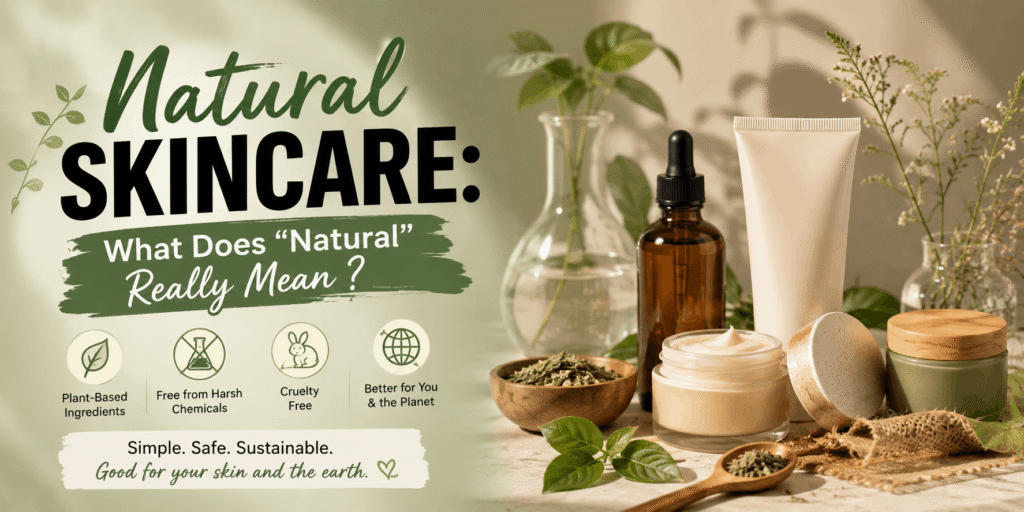
The term “natural skincare” does not have one universal meaning. A product may contain naturally derived ingredients, plant extracts, minerals, or oils while also containing other cosmetic ingredients needed for stability, preservation, texture, or performance.
That is why it is useful to look beyond front-label claims and check the complete ingredient list. The source of an ingredient matters, but so do its concentration, formulation, and how your skin responds to it.
Coconut Oil
Coconut oil is a rich plant oil commonly used in body creams, cleansing products, and moisturizers. It can help soften the feel of dry skin and is especially common in richer formulations.
Because it can feel heavy for some people, it may be more appealing for body care than facial skincare, particularly if you are prone to clogged pores. A product containing coconut oil is not automatically problematic, but your individual skin type matters.
Tea Tree Oil
Tea tree oil is a botanical ingredient frequently found in skincare products designed for blemish-prone skin. It has a strong, distinctive scent and is usually incorporated into a formulated product rather than applied in concentrated form.
Pure essential oils can be irritating, so tea tree oil should be used only as directed in a product formulated for skin. Applying undiluted essential oil directly to the face is not a good DIY shortcut.
Apple Cider Vinegar
Apple cider vinegar, often shortened to ACV, is sometimes promoted in DIY skincare because of its acidic nature. However, its concentration and acidity are not standardized for facial use in the same way as professionally formulated skincare products.
Using undiluted vinegar on the skin can cause irritation. If you are interested in products containing ACV, a properly formulated cosmetic product is a safer approach than experimenting with concentrated vinegar at home.
Raw Honey
Honey is a naturally occurring ingredient that is often used in moisturizing masks and skincare formulations. It can help the skin feel softer and more comfortable, particularly when included in a well-formulated product.
Raw honey is also popular in homemade skincare recipes, but “natural” does not guarantee that a DIY mixture will be appropriate for everyone. People with sensitivities should be cautious and avoid using any ingredient that has previously caused a reaction.
Sea Salt
Sea salt is primarily used in body scrubs and exfoliating products. Its larger particles can help physically remove surface buildup, but aggressive scrubbing can irritate the skin.
For the face, especially sensitive or easily irritated skin, coarse salt may be unnecessarily harsh. A professionally formulated exfoliating product may provide a more controlled experience.
Avocado
Avocado contains oils and other components that are commonly used in moisturizing skincare products. Avocado oil and avocado-derived ingredients can contribute to a rich, emollient texture.
You may see avocado included in creams, masks, and body-care products designed for dry-feeling skin.
Lemon Essential Oil
Lemon essential oil is used in some cosmetic products for its citrus scent and botanical appeal. However, essential oils can be irritating, and certain citrus-derived ingredients may increase sensitivity to sunlight depending on how they are formulated.
This is an ingredient where formulation matters considerably. Avoid applying concentrated lemon essential oil directly to the skin, and follow the instructions for products that contain it.
Argan Oil
Argan oil is a plant-derived oil commonly used in moisturizers, facial oils, and hair products. It has a lightweight-to-medium emollient feel and can help soften the skin.
Because it is often easier to spread than some heavier oils, argan oil can appeal to people who want nourishment without an extremely thick texture.
Aloe Vera
Aloe vera is one of the most familiar botanical ingredients in skincare. It is commonly found in gels, after-sun products, moisturizers, and lightweight formulas designed to leave skin feeling refreshed.
Its cooling, soothing feel is one reason it remains popular. Look for products that clearly identify aloe as an ingredient and follow the product’s intended use.
Jojoba Oil
Jojoba oil is technically a liquid wax derived from the seeds of the jojoba plant. It is widely used in facial oils, moisturizers, cleansing products, and body care.
Its texture is often described as lightweight and smooth, making it a versatile ingredient in many formulations. It can be particularly useful in products designed to soften and condition dry-feeling skin.
Almond Oil
Almond oil is another plant-derived oil frequently used in moisturizers, body oils, and cleansing products.
It provides an emollient feel and can help make dry skin feel softer. However, people with nut allergies should check product information carefully and discuss concerns with an appropriate professional before using products containing almond-derived ingredients.
Shea Butter
Shea butter is a rich plant-based butter commonly used in creams, body butters, lip products, and other moisturizing formulas.
Its thick texture makes it particularly popular in products intended for dry or rough-feeling skin. It can also help create a protective, comfortable feel on the skin.
Castor Oil
Castor oil is a thick vegetable oil used in a variety of cosmetics, especially lip products, cleansing formulas, and richer moisturizers.
Because of its dense texture, it can be useful in products designed to provide a more substantial emollient feel. It is less likely to be chosen when someone wants an ultra-light finish.
Plant-Based Ingredients With a Place in Everyday Skincare
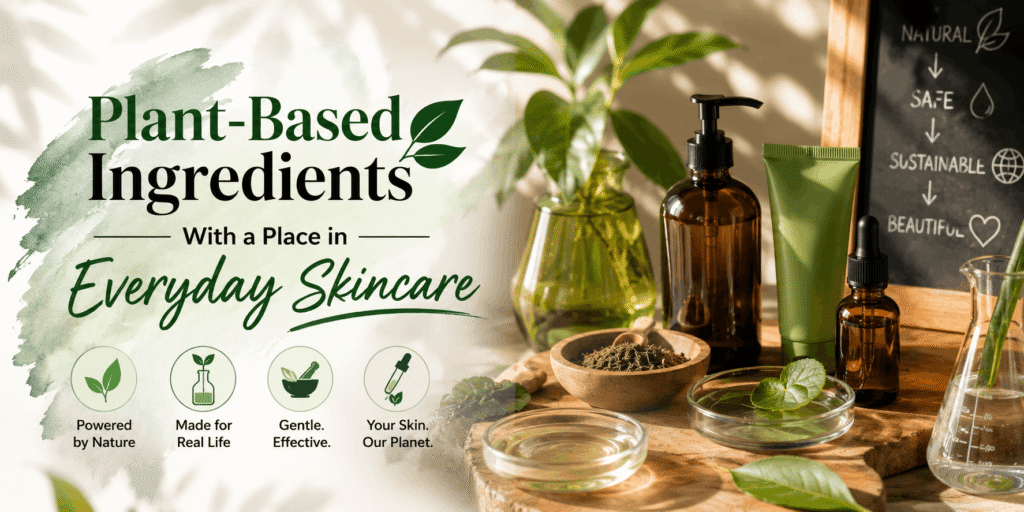
Many natural skincare products rely on combinations of oils, butters, botanical extracts, and humectants rather than a single ingredient. This is important because one ingredient rarely determines whether a product will suit your skin.
For example, an aloe-based gel and a shea-butter cream may both be considered natural-ingredient skincare, but they provide very different textures and experiences. Similarly, a facial oil containing argan or jojoba may feel very different from a heavier body product containing shea butter.
When choosing between products, think about the full formula, not just the ingredient highlighted on the packaging.
Vitamin C Extract
Vitamin C is a well-known skincare ingredient used in products aimed at improving the appearance of dull or uneven-looking skin. In cosmetic formulations, different forms of vitamin C may be used because the ingredient can be sensitive to factors such as light and air.
Because formulation and stability matter, a professionally formulated vitamin C product is generally more predictable than trying to mix raw ingredients yourself.
Witch Hazel
Witch hazel is a botanical ingredient often found in toners and products marketed toward oily or combination skin.
It can provide a fresh, astringent sensation, but some formulations may be drying or irritating for certain skin types. Check the complete formula rather than assuming that every witch hazel product will feel the same.
Cocoa
Cocoa-derived ingredients are used in various skincare and body-care formulations. Cocoa butter in particular is valued for its rich, emollient texture and is common in creams and body moisturizers.
Cocoa-based skincare can be especially appealing when you want a richer, more comforting texture rather than a lightweight gel.
Natural Ingredients for Cleansing and Exfoliation 🧼
The final group of ingredients shows just how varied natural skincare products can be. Some ingredients are mainly included to soften and moisturize, while others are used to cleanse, improve the feel of the skin, add texture to a formula, or gently remove surface buildup.
Beeswax
Beeswax is commonly used in skincare because it has a thick, protective texture. You may find it in lip balms, creams, salves, and other products that are designed to create a comfortable layer over the skin.
It can also help give a product structure, particularly in thicker formulas. Because beeswax is not simply a moisturizer on its own, its main value often comes from how it works alongside oils and other ingredients.
If you prefer vegan skincare, remember that beeswax is an animal-derived ingredient, so check the label before purchasing.
Cucumber
Cucumber is a familiar ingredient in skincare and is often used in gels, masks, creams, and other lightweight products. Its fresh association and high water content make it particularly popular in products designed to create a refreshing skincare experience.
Cucumber-based products may feel especially pleasant after cleansing or during warm weather. As with other botanical ingredients, the exact effects depend on the complete formulation rather than the ingredient alone.
Glycerin
Glycerin is a humectant commonly used in moisturizers and other skincare products. Humectants help attract and hold water, which is one reason glycerin appears so frequently in formulas designed for hydration.
Unlike some richer oils and butters, glycerin generally has a lighter texture. It can therefore be useful in products designed to moisturize without creating a heavy, oily finish.
Kaolin Clay
Kaolin clay is a mineral-based ingredient commonly used in masks and cleansing products. It can help absorb excess oil and provide a gentle cleansing sensation.
Clay masks are often marketed toward oily or combination skin, but the right frequency depends on the individual. Overusing oil-absorbing products may leave some skin feeling dry or uncomfortable.
What to Know Before Using Natural Skincare Products 🌿
Choosing natural skincare products requires a little more thought than simply looking for words such as “natural,” “clean,” or “plant-based” on a label.
A natural ingredient can be beneficial in one formulation and irritating in another. Concentration, processing, supporting ingredients, preservatives, fragrance, and the overall product design can all affect how your skin responds.
Understanding Ingredient Labels
The ingredient list is often more useful than the front of the package. Ingredients are generally listed according to specific labeling rules, and looking at the complete list helps you understand what else is included in the formula.
You may also notice terms such as “naturally derived,” “organic,” “botanical,” or “plant-based.” These terms can describe different aspects of a product and should not automatically be treated as interchangeable.
When comparing two products, look at their complete formulations rather than choosing based on a single highlighted ingredient.
Natural Does Not Always Mean Gentle
This is one of the most important things to remember. Essential oils, botanical extracts, acidic ingredients, and other naturally sourced substances can still irritate the skin.
For example, lemon essential oil may sound appealing because it is plant-derived, but concentrated essential oils can be irritating. Similarly, apple cider vinegar is natural but can be too harsh when used incorrectly.
A professionally formulated product is generally a better choice than applying concentrated kitchen or household ingredients directly to your skin.
Risks and Side Effects
Even carefully formulated skincare products may not suit everyone. Your skin type, allergies, sensitivities, and previous reactions to ingredients can all affect how you respond.
Patch testing a new product according to the manufacturer’s directions can be a sensible precaution, especially when trying something unfamiliar.
Skin Irritation and Sensitivity
Redness, itching, burning, dryness, or discomfort can indicate that your skin is not tolerating a product well.
If you experience significant irritation, stop using the product rather than applying more in an attempt to make your skin adjust. Persistent or severe symptoms should be discussed with an appropriate healthcare professional.
Essential Oils and Sun Exposure
Some essential oils, particularly certain citrus oils, require additional caution around sun exposure depending on their specific constituents and formulation.
Do not assume that an essential oil is safe to apply directly to the skin simply because it comes from a plant.
Patch Testing New Ingredients
If you are trying a new skincare product, follow its instructions for testing. This can help you identify potential sensitivity before applying the product more broadly.
Patch testing does not guarantee that a reaction will never occur, but it can provide an additional precaution when introducing unfamiliar products.
How to Choose Natural Skincare Products for Your Skin
Instead of choosing products based on a long list of natural ingredients, start with your actual skincare needs.
For dry-feeling skin, richer ingredients such as shea butter, argan oil, jojoba oil, and certain plant oils may be appealing. Lightweight hydrating formulas containing glycerin or aloe vera may suit people who prefer a less heavy texture.
Oily or combination skin may respond better to lighter formulations, while kaolin clay or carefully formulated botanical ingredients may be useful in products designed for cleansing.
Sensitive skin requires greater caution. Look for simple formulas and avoid ingredients you already know cause irritation.
Natural Skincare Products vs. DIY Skincare
DIY skincare may seem appealing because the ingredients are easy to recognize, but homemade mixtures can be difficult to formulate safely and consistently.
Kitchen ingredients are not automatically suitable for facial use. Lemon juice, undiluted vinegar, salt, and concentrated essential oils can cause irritation or other problems when applied improperly.
Professionally formulated natural skincare products offer more control over ingredient concentrations, preservation, texture, and stability.
Why Formulation Matters
Two products may contain the same headline ingredient but behave very differently because of the rest of the formula.
An aloe gel, for example, can contain a range of supporting ingredients that affect its texture, stability, and feel. The same applies to oils, clays, and botanical extracts.
Final Thoughts
Natural skincare products can be a great option for people who enjoy plant oils, botanical extracts, mineral ingredients, and familiar naturally sourced components in their beauty routine. Coconut oil, aloe vera, jojoba oil, argan oil, shea butter, glycerin, honey, kaolin clay, and many other ingredients can play useful roles in different formulations.
But the word “natural” should never be the only factor guiding your decision. Natural ingredients can still cause irritation, and some ingredients require particular care around the face and eyes. What matters most is the complete formula, how it is intended to be used, and how your own skin responds.
Whenever possible, choose professionally formulated products rather than applying concentrated kitchen ingredients or essential oils directly to your skin. Read ingredient labels, introduce new products gradually, and follow the manufacturer’s instructions.
The best skincare routine is not necessarily the one with the most natural ingredients. It is the one that keeps your skin comfortable, fits your needs, and is simple enough to use consistently. By understanding what individual ingredients do and looking beyond the marketing on the front of the package, you can make smarter choices when exploring natural skincare products.


2 Comments