
Bio Oil is one of those skincare products that has become familiar to people looking for a simple way to care for scars, stretch marks, dryness, uneven-looking skin, and other texture concerns. Its lightweight oil texture makes it easy to spread over larger areas, while its blend of oils and other ingredients is designed to leave skin feeling moisturized and looking smoother.
What makes this product particularly interesting is its versatility. It is often used as part of body-care routines rather than being limited to one specific skin concern. However, expectations matter. A skincare oil can moisturize and improve the appearance of skin, but it cannot completely erase scars or other permanent changes in the skin.
If you are considering adding Bio-Oil to your routine, understanding what it contains, how it is commonly used, and what it realistically can and cannot do is more useful than simply looking at a list of promised benefits.
What Is Bio-Oil?
Bio Oil is a topical skincare oil formulated for use on areas of skin where people want to improve the appearance of scars, stretch marks, uneven tone, dryness, or uneven texture. Rather than functioning like a traditional water-based moisturizer, it uses an oil-based formula that spreads across the skin and helps reduce moisture loss.
One reason the product is popular is its flexibility. You can use a small amount over specific areas instead of applying a heavy cream across the entire body. The oil is designed to absorb into the skin, although the amount of time it takes can vary depending on how much is applied and the individual’s skin type.
For someone with dry skin, the main appeal may simply be the softer feeling it leaves behind. Someone concerned about the appearance of an old scar may use it more consistently over that particular area. Others may include it in a body-care routine after bathing.
It is important to separate improving appearance from actually removing a skin concern. Scars, stretch marks, and pigmentation can have different causes and may not respond in the same way to a cosmetic product. Bio-Oil should therefore be viewed as a skincare product that may support the appearance and feel of skin rather than as a guaranteed scar-removal treatment.
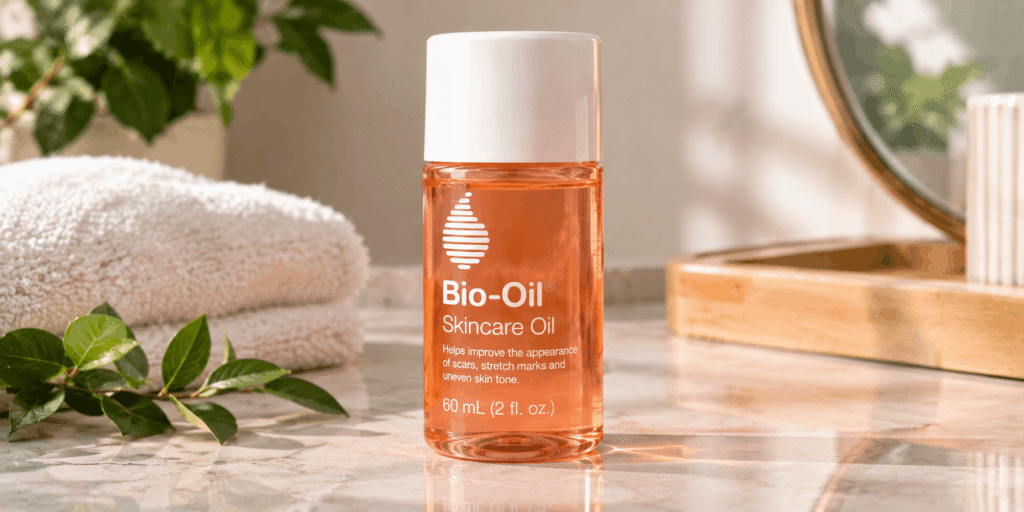
Understanding the Ingredients and Formulation
The formulation is an important part of understanding how the product fits into skincare. Bio-Oil contains a mixture of oils and other ingredients intended to condition the skin and improve its overall feel. One of the ingredients commonly associated with the product is PurCellin Oil, which is designed to give the formula a lighter, less greasy texture while helping the oil spread easily.
The formula also includes ingredients such as vitamin E and plant-derived oils. These components are generally used in skincare because they can help condition and moisturize the skin. The exact formulation can vary by market or product version, so checking the ingredient list on the bottle you actually purchase is always a smart step.
Because it is an oil-based product, application technique matters. Using too much does not necessarily mean better results. A thin layer is usually easier to spread and gives the skin enough product without leaving an unnecessarily heavy surface.
People with sensitive skin should also remember that natural or botanical ingredients are not automatically suitable for everyone. Fragrance and individual ingredient sensitivities can matter, particularly when the product is applied regularly.
16 Ways Bio-Oil May Support Healthier-Looking Skin
Bio Oil is usually discussed in connection with scars and stretch marks, but its moisturizing properties explain why people use it for several other skin-care purposes. The following benefits should be understood as potential cosmetic or conditioning benefits rather than guaranteed medical results.
1. Helps Improve the Appearance of Scars
Scars can change in color, texture, and visibility over time. Regular moisturizing can help keep the surrounding skin feeling softer and more comfortable, which may make a scar look less dry or noticeable.
Bio-Oil is commonly massaged over healed scar areas as part of a consistent skincare routine. However, it should not be applied to an open, fresh, or actively healing wound unless a healthcare professional has specifically recommended it.
Older scars may also behave differently from newer ones. A cosmetic oil cannot completely remove scar tissue, so realistic expectations are important.
2. Helps Reduce the Look of Stretch Marks
Stretch marks develop when the skin changes rapidly and the deeper layers of skin are affected. They can appear during periods of growth and other natural body changes.
Moisturizing the skin can make the area feel smoother and less dry, while consistent use may help improve the overall appearance of the skin. However, stretch marks are a type of scar and there is no guarantee that a topical oil will make them disappear.
Their appearance can also naturally change with time, becoming less noticeable as they mature.
3. Supports a More Even-Looking Skin Tone
Uneven-looking pigmentation can occur for many reasons, including previous irritation, sun exposure, and changes following skin inflammation. A moisturizing product may help improve the overall look and texture of dry or dull areas.
However, Bio Oil should not be treated as a dedicated treatment for significant hyperpigmentation. Persistent or changing dark patches may have an underlying cause that requires professional evaluation.
Sun protection remains particularly important when uneven pigmentation is a concern because UV exposure can make some types of discoloration more noticeable.
4. Adds Moisture to Dry Skin
This is one of the more straightforward ways an oil can fit into a skincare routine. Bio-Oil can help condition dry-feeling skin and leave it feeling smoother after application.
It can be especially convenient for larger body areas where applying a small amount of oil is easier than using a thick cream. Applying it after bathing while the skin is still slightly damp can also make the routine feel more comfortable.
If your skin is extremely dry, you may prefer layering an oil with a suitable moisturizer rather than relying on oil alone.
5. Helps Soothe Dry or Irritated Skin
Dryness can leave skin feeling tight, rough, or uncomfortable. Adding a conditioning product may help reduce that dry feeling by supporting the skin’s moisture barrier.
That does not mean Bio-Oil should be used to treat every irritated skin condition. Red, painful, swollen, infected, or persistently itchy skin can have many causes and may require appropriate medical care.
For simple dryness, however, a small amount of a moisturizing oil can be a useful addition to a body-care routine.
6. Softens the Look of Fine Lines
As skin becomes drier, fine lines can sometimes appear more noticeable. Moisturizing can temporarily make the surface of the skin look smoother by reducing the appearance of dryness.
Bio-Oil can therefore be used as a conditioning product when the goal is softer-looking skin. This should not be confused with reversing the biological aging process or permanently removing wrinkles.
A broader skincare routine, including daily sun protection, generally matters much more for long-term skin care than relying on one oil.
7. Can Be Used to Remove Makeup
Because oils can loosen certain makeup products, some people use facial oils as part of their makeup-removal routine. A small amount can help break down makeup before the skin is cleansed.
However, whether this works comfortably depends on your skin type and the product formulation. If you are prone to breakouts or irritation, it is better to patch-test first and follow with an appropriate facial cleanser.
Avoid getting the product directly into your eyes.
8. Softens Cuticles and Conditions Nails
Dry cuticles can make the skin around the nails feel rough. A small amount of conditioning oil can help soften this area and make the hands look more cared for.
Bio-Oil can be massaged around the cuticles and onto the surrounding skin as part of a nail-care routine. It is not a replacement for treating an actual nail infection or significant nail problem, but it can be useful for ordinary dryness.
Regular hand moisturizing can also help prevent the skin around the nails from becoming excessively dry.
9. Supports Skin Care During Pregnancy
Pregnancy can bring significant changes to the skin, including stretching and increased dryness. Many people use moisturizing products during this period to keep changing areas feeling comfortable and conditioned.
Bio-Oil is commonly marketed for use during pregnancy, particularly around areas where stretch marks may develop. However, no cosmetic product can guarantee that stretch marks will be prevented.
Pregnant users should always check the current product ingredients and follow medical advice if they have unusually sensitive skin or a specific skin condition.
10. Helps Keep Hands Looking Soft and Smooth
Hands are exposed to frequent washing, weather changes, and everyday activities, so they can become dry quickly. A small amount of oil can provide additional conditioning when hands feel rough.
Rather than applying a large quantity, a few drops can be worked into the backs of the hands and around dry areas. It can be particularly useful as part of an evening routine when there is more time for the product to sit on the skin.
For daytime use, pairing hand care with sunscreen can also help protect the skin from ongoing sun exposure.
11. Provides Moisture After Sun Exposure
Skin can feel dry after spending time outdoors, particularly after exposure to heat and environmental conditions. A moisturizing product may help improve that dry feeling.
However, Bio Oil should not be considered a treatment for sunburn. If skin is actively burned, painful, blistered, or significantly irritated, appropriate sunburn care is more important than applying a cosmetic oil.
Once the skin has recovered and is simply feeling dry, a gentle moisturizing routine may be more appropriate.
12. Works as a Body or Bath Oil
The lightweight texture makes Bio-Oil easy to incorporate into a body-care routine. Some people use it after bathing, while others add body oil as the final moisturizing step.
If using any oil around a bathtub or shower, remember that it can make surfaces slippery. Care should be taken to prevent falls, and the product should be used according to its label directions.
For everyday body care, using a small amount is generally more practical than heavily coating the skin.
13. Helps Care for the Appearance of Surgical Scars
Once a surgical incision has completely healed and a healthcare professional has confirmed that topical products are appropriate, moisturizing the scar area may become part of a cosmetic care routine.
Bio-Oil is often used by people who want to improve the appearance of healed scars. Gentle application can help keep the surrounding skin conditioned.
Fresh surgical wounds are different. Do not treat an open incision or recently closed surgical area with a cosmetic product unless your medical professional has advised you to do so.
14. Helps Soothe Skin After Shaving
Shaving can leave some areas feeling dry or uncomfortable. Applying a suitable moisturizing product afterward may help reduce that dry feeling.
However, if shaving causes persistent bumps, significant irritation, or recurring ingrown hairs, simply applying oil may not solve the underlying issue. Changing shaving habits and using appropriate skin care may be more helpful.
Always avoid applying products to severely irritated or damaged skin.
15. Conditions Dry Hair Ends
Although Bio-Oil is primarily associated with skincare, a tiny amount can sometimes be used to condition dry-looking hair ends.
The key is moderation. Hair ends need very little oil, and applying too much can make the hair appear heavy or greasy. It can be spread between the fingertips first and then lightly worked through the ends.
It is better viewed as a finishing or conditioning step rather than a treatment that repairs damaged hair permanently.
16. Helps Keep Skin Feeling Supple
Well-conditioned skin generally feels softer and more flexible than extremely dry skin. An oil can help reduce that rough, tight feeling by providing conditioning and supporting the skin’s moisture-retaining routine.
This is one reason people may continue using Bio-Oil even when they are not specifically targeting scars or stretch marks. It can simply become another step in a body-care routine.
Still, more product is not necessarily better. A small amount applied consistently is usually more practical than using a heavy layer occasionally.
How to Use Bio-Oil for Different Skin Concerns
For Scars and Stretch Marks
When using an oil for the appearance of scars or stretch marks, consistency is more important than applying a large amount at once. Apply a small quantity to clean, healed skin and massage it gently until distributed.
The appearance of these concerns can change naturally over time, so it may take patience to notice any cosmetic difference. Avoid using the product on broken skin, and stop if significant irritation develops.
For newer or particularly noticeable scars, especially following surgery or injury, professional advice can help determine whether an oil is appropriate.
For Dry Skin and Uneven Texture
For general dryness, applying the oil after bathing can be a convenient approach. Pat the skin gently rather than completely drying it, then spread a small amount over the desired area.
This approach can make the product easier to distribute while helping your routine focus on retaining moisture. If your skin remains very dry, combining suitable moisturizing products may provide more effective hydration than using an oil alone.
For Fine Lines and Hands
When using Bio-Oil on hands or areas where dryness makes fine lines more visible, use a light layer and massage it gently into the skin.
For daytime routines, remember that sunscreen is still important. An oil can condition the skin, but it does not replace sun protection.
Side Effects, Safety & Things to Know Before Using It
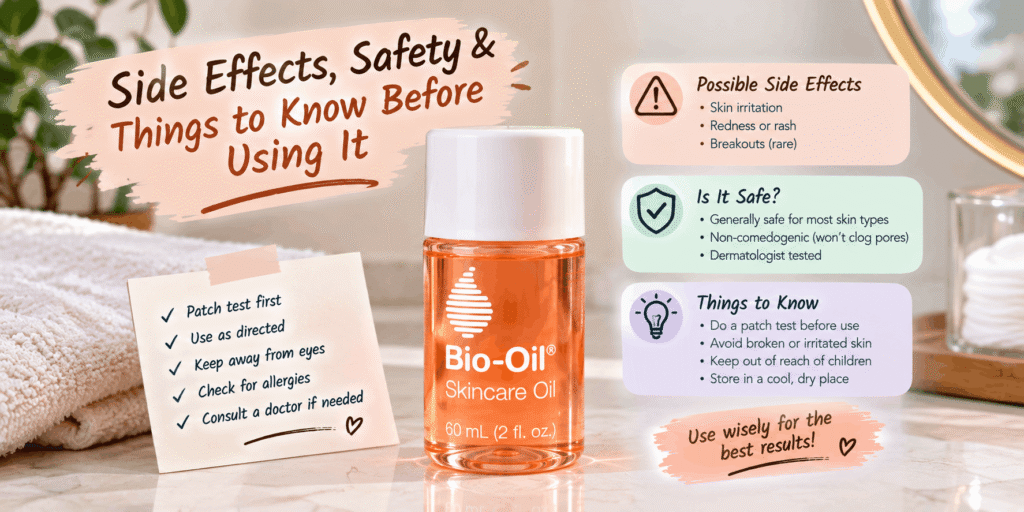
Bio Oil is designed for topical skincare, but like any cosmetic product, it may not suit everyone. Skin can react differently to oils, fragrances, and botanical ingredients, so paying attention to how your skin responds is important. A product that feels comfortable for one person may cause irritation or breakouts for another.
For that reason, it is sensible to start with a small amount, particularly if you have never used the product before. Applying it to a limited area first gives you an opportunity to see how your skin reacts before making it part of your regular routine.
Possible Skin Reactions
Some people may experience redness, itching, stinging, dryness, or irritation after applying a skincare product. If you notice an unusual reaction after using Bio-Oil, stop applying it and allow the skin to settle.
Fragrance can also be an important consideration for people with sensitive skin. Even when a product contains ingredients commonly used in skincare, individual sensitivities can still occur.
It is also worth remembering that oily products may not feel comfortable on every face. If your skin is prone to breakouts, test the product carefully rather than assuming that it will work like a lightweight facial moisturizer.
Pregnancy and Sensitive Skin Considerations
Pregnancy can bring changes in skin sensitivity, dryness, and texture. Bio-Oil is commonly used by people during pregnancy as part of a moisturizing routine, especially on areas where the skin is changing.
However, using an oil cannot guarantee that stretch marks will be prevented. Genetics, skin changes, and other factors can influence whether stretch marks appear.
If you are pregnant and have unusually sensitive skin, an existing skin condition, or concerns about a particular ingredient, discussing your skincare routine with a healthcare professional is the safest approach.
When to Stop Using It
A little temporary adjustment in how a product feels is different from a clear adverse reaction. If you develop persistent burning, significant redness, swelling, itching, or another concerning reaction, stop using the product.
You should also avoid applying cosmetic oils to open wounds or severely damaged skin unless a healthcare professional has specifically advised you to do so.
How to Apply Bio-Oil for Better Results
Using the right amount and applying it consistently can make a skincare routine easier to manage. One of the most common mistakes with facial or body oils is assuming that applying more will automatically produce better results. Usually, a thin, even layer is enough to cover the intended area.
For body care, clean skin provides a convenient starting point. After bathing, gently pat the skin rather than rubbing it aggressively. A small amount can then be spread over the desired area and massaged gently until distributed.
If you are focusing on a particular scar or stretch mark, concentrate the application on that area rather than covering a much larger section with unnecessary product. The goal is consistent conditioning, not creating a thick oily layer.
How Much Should You Use?
There is no universal amount that works for every person or every body area. A few drops may be enough for a small area, while a larger area may require more.
Start with less and add a little if needed. This approach can prevent the skin from feeling excessively greasy and also makes the product easier to spread.
When using it on the face, extra caution is useful because facial skin can react differently from the skin on the body. Avoid the eye area and discontinue use if it causes irritation or breakouts.
How Often Should You Apply It?
Consistency is generally more practical than occasional heavy application. Follow the directions on the specific product packaging you have, since recommendations can vary between products and markets.
For a body-care routine, many people prefer applying an oil after bathing because it fits naturally into an existing routine. If you are using it for the appearance of a scar or stretch mark, regular application over time is more realistic than expecting an immediate visual change.
Remember that scars and stretch marks naturally change with time, so it can be difficult to attribute every improvement to one product.
Tips for Making It Part of Your Routine
The easiest skincare routine is usually the one you can maintain without making it unnecessarily complicated. If dryness is your main concern, you can incorporate the oil into your regular moisturizing routine. If you are focusing on a particular area, keeping the bottle somewhere you already perform your skincare can make consistent application easier.
Avoid excessive rubbing, especially around sensitive areas. Gentle application is enough to distribute the product.
It is also useful to give the product enough time to absorb before putting on tight clothing. This can make the routine more comfortable and reduce the amount of oil transferred onto fabric.
Is Bio-Oil Worth Adding to Your Routine?
Whether Bio Oil is worth trying depends largely on what you expect from it. If your main goal is to moisturize dry skin, soften rough areas, or add a conditioning step to your body-care routine, an oil may be a convenient option.
For scars and stretch marks, expectations should be more realistic. These concerns involve changes in the skin that cannot simply be erased by applying a cosmetic product. Bio-Oil may help improve the way the skin feels and may make certain areas appear smoother or more conditioned, but results can vary considerably.
The product may also appeal to people who prefer having one versatile product that can be used across several parts of their routine. Instead of purchasing separate products for every small dryness concern, an oil can sometimes serve multiple cosmetic purposes.
On the other hand, it may not be the right choice if you dislike oily textures, have skin that reacts easily to fragranced products, or prefer water-based moisturizers. People who are prone to facial breakouts may also want to be particularly cautious about introducing an oil to the face.
Ultimately, the best skincare product is not necessarily the one with the longest list of claimed uses. It is the one that fits your skin, your routine, and your expectations. Patch testing, following the product directions, and stopping when irritation occurs are simple ways to make experimentation more sensible.
Final Thoughts
Bio-Oil can be a versatile addition to a skincare routine, particularly when the goal is to condition dry skin and improve the appearance of areas such as scars, stretch marks, or uneven texture. Its oil-based formula makes it useful for body care, while its lightweight feel can make application relatively simple.
Still, it is important to keep cosmetic claims in perspective. Scars, stretch marks, pigmentation, and signs of aging can have different causes, and no single skincare product is guaranteed to produce the same results for everyone.
Using a small amount consistently, following the product directions, and paying attention to your skin’s response can help you decide whether it deserves a place in your routine. For persistent, painful, changing, or concerning skin problems, professional medical advice is more appropriate than relying on a cosmetic oil alone.

One Comment