
Facial balancing is no longer just a celebrity trend—it’s one of the fastest-growing aesthetic treatments for people who want subtle, natural-looking improvements without changing their identity. Instead of focusing on a single feature like the lips or nose, facial balancing looks at the face as a whole, improving harmony between the chin, cheeks, jawline, lips, and profile.
Whether you’re considering dermal fillers, facial contouring, or simply want to understand how facial proportions influence attractiveness, this guide explains everything in simple language. You’ll learn how facial balancing works, who it’s best for, treatment options, recovery, costs, risks, and expert tips to help you make an informed decision.
What’s Inside This Guide
- What facial balancing really means
- The science behind facial harmony
- Common treatment areas
- Non-surgical vs. surgical facial balancing
- Facial balancing for different face shapes
- Recovery and aftercare
- Benefits and possible risks
- How long results last
- Frequently asked questions
- Expert tips and final thoughts
What Is Facial Balancing?
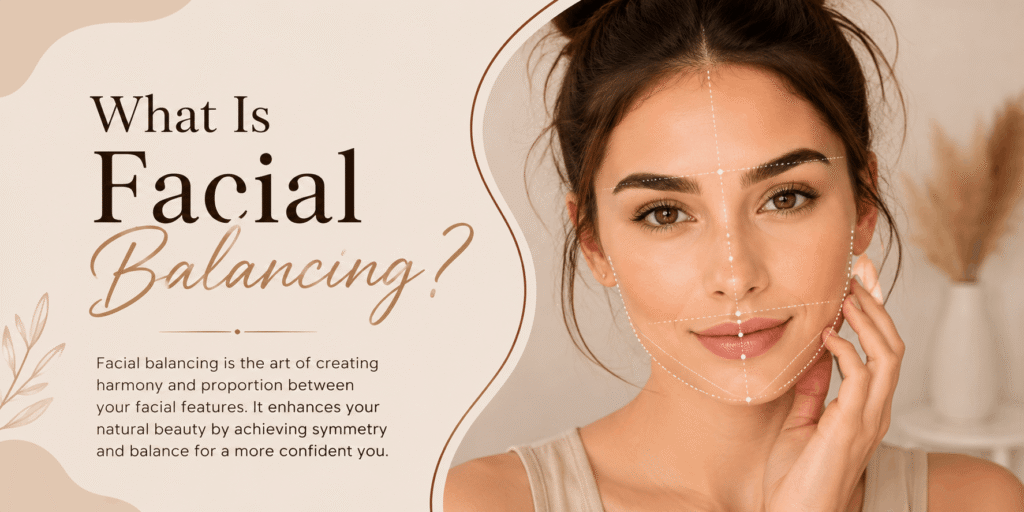
Facial balancing is a personalized cosmetic approach that improves the proportions between different facial features instead of treating only one area. Rather than making dramatic changes, the goal is to create a more symmetrical, harmonious, and natural appearance.
A provider carefully evaluates how your forehead, nose, cheeks, lips, chin, and jawline work together. Small adjustments in one area can significantly improve the balance of your entire face.
Unlike beauty trends that aim to make everyone look the same, facial balancing enhances your unique features while preserving your natural identity.
Why Facial Harmony Matters More Than Perfection
Perfect symmetry is rare. In fact, nearly everyone has slight differences between the left and right sides of their face. Facial balancing doesn’t aim for perfection—it focuses on creating proportions that look pleasing and natural.
Balanced facial features can:
- Improve profile appearance
- Enhance facial definition
- Create a more youthful look
- Increase confidence
- Produce natural-looking results in photos and real life
Many aesthetic professionals follow proportion guidelines, but every treatment plan is customized to the individual.
How Facial Balancing Works✨
Before recommending any treatment, a qualified provider typically evaluates several factors, including:
Facial Proportions
The relationship between the upper, middle, and lower thirds of the face is assessed to identify areas that may benefit from subtle enhancement.
Profile Assessment
Your side profile often reveals how the nose, lips, chin, and jawline work together. Improving one feature may create better overall balance without altering the others.
Skin Quality and Volume
Loss of collagen and facial fat over time can affect harmony. Restoring volume in targeted areas may help create smoother contours.
Personal Goals
Some people want a sharper jawline, while others prefer fuller lips or better chin projection. The treatment plan should align with your goals while maintaining natural-looking results.
Facial Balancing for Different Face Shapes
Although facial balancing follows the same principles of symmetry and proportion, every face is unique. Your bone structure, facial width, chin projection, and cheek volume all influence the best treatment approach. Instead of copying celebrity features, experienced providers create a plan that enhances your natural appearance.
Oval Face
An oval face is naturally balanced, so treatments usually focus on maintaining harmony rather than making dramatic changes.
Common recommendations include:
- Light cheek enhancement
- Chin refinement
- Lip balancing
- Jawline definition
The goal is subtle enhancement while preserving natural proportions.
Round Face
People with round faces often want more facial definition.
Treatment plans may include:
- Chin projection
- Jawline contouring
- Mid-face support
- Cheek sculpting
These adjustments can create the illusion of a slimmer, more structured face.
Square Face
Square faces typically have a strong jawline and broad lower face.
Depending on your aesthetic goals, treatments may focus on:
- Softening sharp angles
- Restoring cheek volume
- Improving chin proportion
- Creating smoother facial transitions
Heart-Shaped Face
Heart-shaped faces usually have a wider forehead and a narrower chin.
Facial balancing may include:
- Chin enhancement
- Lower-face contouring
- Lip proportion correction
- Jawline support
These treatments help balance the upper and lower portions of the face.
Long Face
For longer faces, providers often avoid adding unnecessary facial length.
Instead, they may recommend:
- Cheek volume restoration
- Temple support
- Horizontal contouring
- Conservative chin enhancement
The objective is creating a more proportionate appearance.
Non-Surgical vs. Surgical Facial Balancing (🩺v💉)
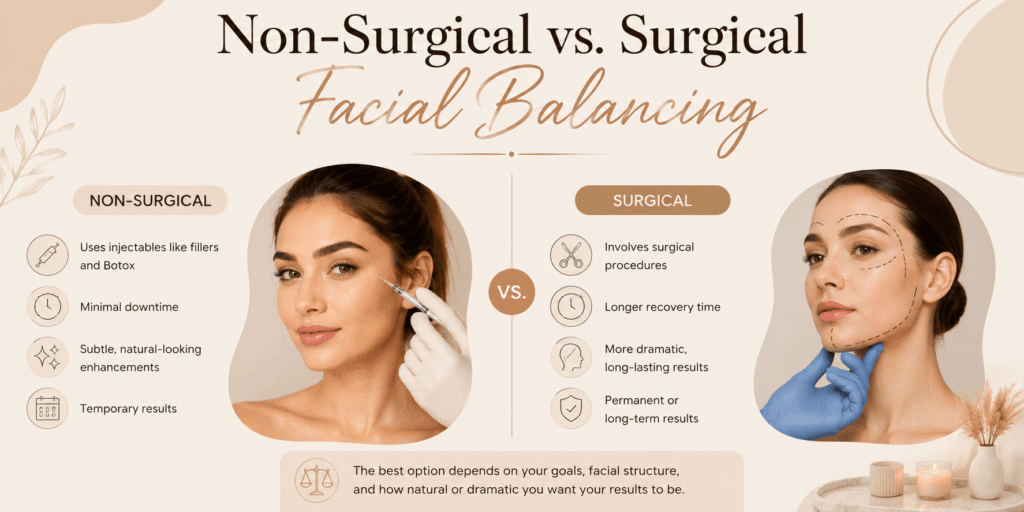
Facial balancing can be achieved through either minimally invasive procedures or surgical treatments. The right choice depends on your goals, anatomy, and desired longevity.
| Feature | Non-Surgical | Surgical |
| Downtime | Minimal | Several weeks |
| Results | Temporary | Long-lasting |
| Recovery | Faster | Longer |
| Cost | Lower upfront | Higher upfront |
| Reversible | Often yes | Usually no |
Most first-time patients begin with non-surgical treatments because they offer flexibility and little downtime.
Common Non-Surgical Treatments
Modern facial balancing often combines multiple treatments for the most natural-looking outcome.
Dermal Fillers
Hyaluronic acid fillers are commonly used to restore lost volume and improve facial proportions.
They may be placed in the:
- Chin
- Jawline
- Cheeks
- Lips
- Temples
- Under-eye area (when appropriate)
Results are immediate, although mild swelling can temporarily affect the final appearance.
Botulinum Toxin (Botox® and Similar Products)
Neuromodulators help relax targeted muscles and may improve facial balance by:
- Softening forehead lines
- Reducing frown lines
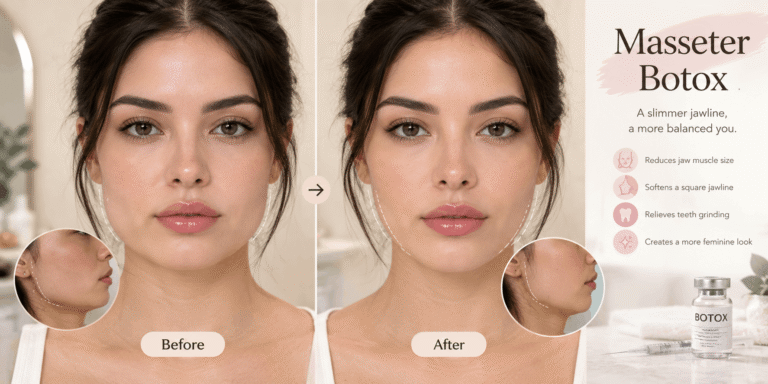
- Slimming the jaw in selected cases
- Creating a subtle brow lift
These treatments typically begin working within several days.
Biostimulatory Injectables
Unlike traditional fillers, these products encourage your body to produce more collagen over time.
They are often chosen for:
- Gradual volume restoration
- Skin firmness
- Long-term rejuvenation
Results develop progressively over several months.
Surgical Facial Balancing Options🩺
People seeking permanent structural changes may consider surgery after consulting a qualified facial plastic surgeon.
Common procedures include:
Chin Augmentation
A chin implant or surgical advancement can improve profile balance, especially when the chin appears recessed.
Rhinoplasty
Reshaping the nose may improve overall facial harmony when combined with other proportional changes.
Jaw Surgery
Orthognathic surgery may be recommended when functional bite problems affect facial balance.
Fat Grafting
Your own body fat can be transferred to areas that have lost volume, providing longer-lasting facial rejuvenation.
Who Is a Good Candidate for Facial Balancing?⚖️
You may be a good candidate if you:
- Want more balanced facial proportions
- Have realistic expectations
- Are in good overall health
- Understand that subtle improvements often produce the best results
- Prefer natural enhancement over dramatic changes
A consultation with an experienced provider is the best way to determine the right treatment plan.
Benefits of Facial Balancing🌟
Many people choose facial balancing because it enhances multiple features at once instead of focusing on a single concern.
Benefits may include:
- Improved facial harmony
- Better side profile
- Enhanced jawline definition
- Balanced lip-to-chin proportions
- More youthful facial contours
- Increased confidence
- Natural-looking results
- Personalized treatment plans
When performed conservatively, the improvements often look refreshed rather than obvious.
Preparing for Your Consultation
Before your appointment:
- Gather photos that show your aesthetic preferences.
- Make a list of your concerns and goals.
- Bring details about previous cosmetic procedures.
- Tell your provider about medications, allergies, or medical conditions.
- Avoid comparing yourself to heavily edited social media images.
A thorough consultation allows your provider to develop a treatment plan tailored to your facial anatomy.
Recovery and Aftercare💡
Recovery depends on the treatment performed.
Most injectable procedures involve only mild downtime.
Immediately After Treatment
You may experience:
- Mild swelling
- Temporary redness
- Bruising
- Tenderness at injection sites
These effects usually improve within a few days.
Aftercare Tips
For the best recovery:
- Stay hydrated.
- Follow your provider’s instructions.
- Avoid strenuous exercise for the recommended period.
- Sleep with your head slightly elevated if advised.
- Protect your skin from excessive sun exposure.
- Avoid touching treated areas unnecessarily.
Following aftercare instructions can help optimize your results.
Final Thoughts
Facial balancing isn’t about chasing perfection—it’s about enhancing the unique proportions that make your face your own. By evaluating the relationship between your cheeks, chin, jawline, lips, nose, and overall profile, providers can create subtle improvements that make the entire face appear more harmonious.
Whether you’re interested in non-surgical fillers, collagen-stimulating treatments, or simply learning more about facial aesthetics, understanding the principles of facial balance helps you make informed decisions. Choosing an experienced provider, maintaining realistic expectations, and focusing on natural-looking results are the keys to achieving facial enhancements that remain timeless rather than trendy.

One Comment