
CO2 laser resurfacing is one of the most effective cosmetic treatments for improving skin texture, reducing wrinkles, minimizing acne scars, and reversing signs of sun damage. If you’ve been searching for CO2 laser before and after results, you’ve probably seen dramatic transformations that make the treatment look almost magical. While the improvements can be impressive, understanding what happens before, during, and after treatment is essential for setting realistic expectations.
Unlike creams and serums that work only on the skin’s surface, a CO2 laser reaches deeper layers of the skin. It creates controlled microscopic injuries that stimulate the body’s natural healing process. As new collagen forms over the following weeks and months, the skin gradually becomes smoother, firmer, and more even in tone.
One of the biggest advantages of modern fractional CO2 laser technology is that it treats only a fraction of the skin at a time. This allows healthy surrounding tissue to speed up healing while still delivering significant skin rejuvenation. Depending on the treatment settings, some patients achieve excellent results after a single session, while others benefit from multiple treatments for deeper scars or advanced signs of aging.
In this complete guide, you’ll learn what realistic CO2 laser before and after results look like, how outcomes vary depending on skin concerns, the difference between fractional and fully ablative CO2 laser treatments, factors that influence success, and answers to the most frequently asked questions.
CO2 Laser Before and After: Results by Skin Concern & Treatment Type
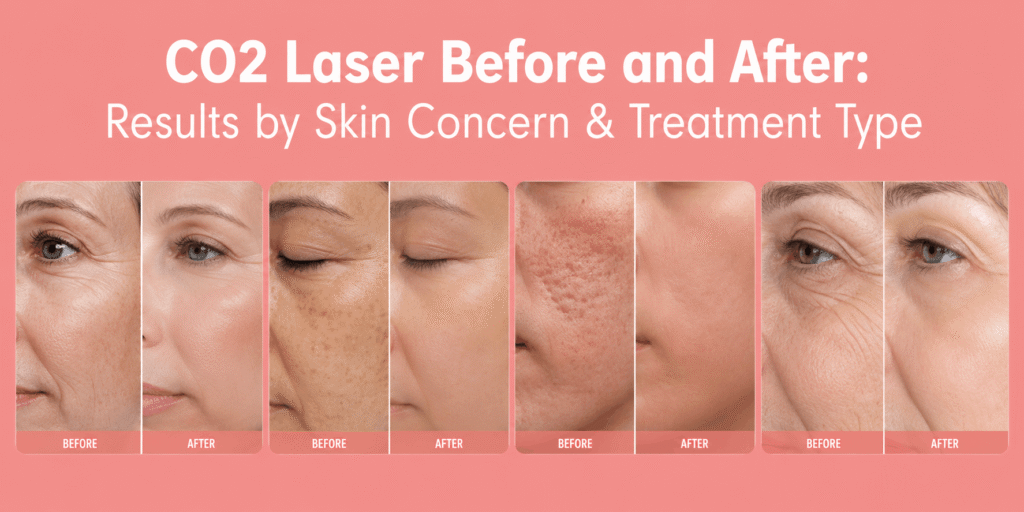
No two patients experience exactly the same transformation. The final outcome depends on your skin condition, treatment intensity, age, collagen production, and how well you follow post-treatment care instructions.
Most patients notice gradual improvements rather than overnight changes. During the first few weeks, redness fades while fresh collagen begins rebuilding the skin from within. Over the next three to six months, the skin continues improving as collagen remodeling progresses.
Common improvements include:
- Reduced acne scars
- Softer wrinkles
- Smaller-looking pores
- Smoother skin texture
- More even skin tone
- Firmer skin
- Reduced pigmentation
- Healthier overall appearance
People often report that their skin looks refreshed rather than dramatically altered, making CO2 laser one of the most natural-looking skin rejuvenation treatments available today.
CO2 Fractional Laser Before and After: What to Expect
Fractional CO2 laser has become the preferred choice for many dermatologists because it balances impressive results with a shorter recovery period than traditional fully ablative treatments.
Instead of removing the entire outer layer of skin, the laser creates thousands of microscopic treatment zones while leaving healthy skin untouched between them. These untreated areas accelerate healing and reduce downtime.
Single Session — Light to Medium Intensity
A light to medium fractional treatment is ideal for people with early signs of aging or mild skin imperfections.
After one session, patients commonly notice:
- Brighter skin tone
- Improved texture
- Softer fine lines
- Slight reduction in acne scars
- Smaller-looking pores
- More radiant complexion
Recovery generally takes around one week, although mild redness may continue for a little longer depending on skin sensitivity.
Series of 2–3 Sessions
People with moderate acne scars, deeper wrinkles, or uneven skin texture often achieve better results through multiple treatments spaced several weeks apart.
After completing a treatment series, improvements may include:
- Noticeably smoother skin
- Reduced scar depth
- Better collagen density
- More even pigmentation
- Firmer facial contours
- Significant improvement in pore appearance
Since collagen production continues after every session, results usually become more visible over several months.
Aggressive Single Session (High Density or Fully Ablative)
Some patients choose an aggressive treatment to achieve maximum improvement in one session.
This approach can produce dramatic results, including:
- Deep wrinkle reduction
- Significant scar improvement
- Tighter skin
- More youthful appearance
- Improved skin elasticity
However, stronger treatments also involve:
- Longer downtime
- Increased redness
- More swelling
- Extended healing
- Greater need for professional aftercare
Because recovery is more demanding, this option is generally recommended only after consultation with an experienced dermatologist.
CO2 Laser Before and After Scars: What the Evidence Shows
One of the most common reasons people undergo CO2 laser resurfacing is to improve scars.
Clinical studies and dermatologist experience consistently show that fractional CO2 laser can significantly improve various types of scars by stimulating collagen remodeling beneath the skin.
Patients commonly seek treatment for:
- Acne scars
- Surgical scars
- Injury scars
- Chickenpox scars
- Traumatic scars
The degree of improvement depends largely on the type and depth of the scar.
Rolling acne scars often respond particularly well because collagen stimulation helps lift depressed areas of the skin. Boxcar scars may also improve considerably after several treatments, while deep ice-pick scars sometimes require combination therapies alongside CO2 laser resurfacing.
It’s important to understand that laser treatment usually improves scars rather than completely removing them. Most dermatologists describe realistic improvement rather than perfection, with many patients seeing a noticeable reduction in scar visibility after a customized treatment plan.
CO2 Laser Treatment Before and After by Skin Concern
Different skin concerns respond differently to CO2 laser resurfacing. Understanding these differences helps patients develop realistic expectations before treatment.
Wrinkles and Fine Lines
CO2 laser is widely regarded as one of the most effective non-surgical options for reducing facial wrinkles.
Common treatment areas include:
- Crow’s feet
- Forehead lines
- Smile lines
- Fine lines around the mouth
- Neck wrinkles
As collagen production increases, the skin becomes firmer and smoother, making wrinkles appear less noticeable.
Patients with mild to moderate wrinkles usually experience the most dramatic improvements.
Skin Texture and Pore Size
Uneven skin texture is another concern that responds exceptionally well to CO2 laser resurfacing.
Many patients notice:
- Smoother skin
- More refined texture
- Reduced roughness
- Smaller-looking pores
- Better makeup application
- More even complexion
Large pores cannot physically shrink, but improved collagen support around the pores often makes them appear significantly smaller.
Sun Damage and Hyperpigmentation
Years of UV exposure can leave behind uneven pigmentation, rough patches, and premature aging.
CO2 laser helps improve:
- Sunspots
- Age spots
- Uneven pigmentation
- Rough sun-damaged skin
- Dull complexion
As damaged skin is replaced with healthier tissue, patients often enjoy a brighter and more youthful appearance.
Skin Laxity
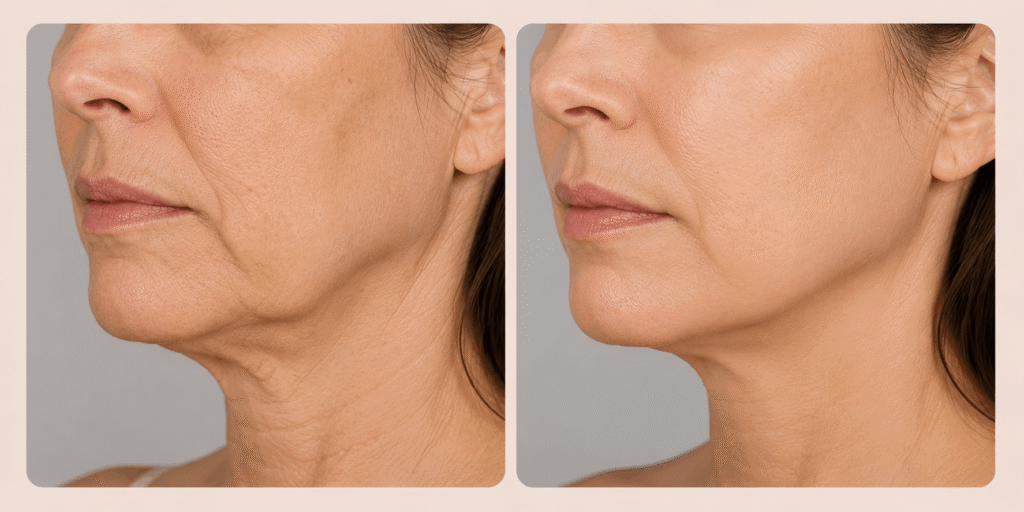
As we age, our skin gradually loses collagen and elastin, causing it to become looser and less firm. While a CO2 laser isn’t a replacement for a surgical facelift, it can noticeably improve mild to moderate skin laxity by stimulating new collagen production.
Many patients notice:
- Firmer-looking skin
- Better facial definition
- Improved jawline appearance
- Reduced crepey skin
- Increased skin elasticity
- A smoother overall complexion
The tightening effect develops gradually over several months as collagen remodeling continues beneath the skin.
Before and After: Fractional vs. Fully Ablative CO2
Choosing between fractional and fully ablative CO2 laser depends on your skin concerns, recovery time, and desired results. Both treatments stimulate collagen production, but they differ significantly in intensity and downtime.
Fractional CO2 Laser
Fractional CO2 laser creates tiny treatment zones while leaving healthy skin between them untouched. This speeds up healing and reduces recovery time.
Best for:
- Mild to moderate wrinkles
- Acne scars
- Enlarged pores
- Uneven texture
- Sun damage
- First-time laser patients
Advantages:
- Faster healing
- Less downtime
- Lower risk of complications
- Gradual, natural-looking improvement
- Suitable for multiple treatment sessions
Fully Ablative CO2 Laser
Fully ablative CO2 laser removes the entire outer layer of skin within the treated area, making it a much more intensive procedure.
Best for:
- Deep wrinkles
- Severe sun damage
- Advanced skin aging
- Significant scarring
- Patients seeking dramatic improvement
Advantages:
- More noticeable improvement after one treatment
- Greater wrinkle reduction
- Stronger skin tightening
- Significant collagen stimulation
Because recovery is longer and the procedure is more aggressive, fully ablative CO2 laser should only be performed by experienced professionals.
Factors That Determine Your CO2 Laser Before/After Results
Not everyone experiences identical results. Several important factors influence how much improvement you achieve after treatment.
Starting Skin Condition
Your skin’s condition before treatment has one of the biggest impacts on your final results.
Patients with:
- Mild acne scars
- Early wrinkles
- Slight pigmentation
- Minimal sun damage
often see faster improvements than individuals with severe scarring or advanced skin aging.
However, even people with more significant concerns can achieve excellent results through a customized treatment plan.
Treatment Parameters
The laser settings selected by your provider also affect your outcome.
Important treatment variables include:
- Laser energy level
- Density
- Pulse duration
- Number of passes
- Treatment depth
More aggressive settings generally produce stronger improvements but require longer recovery.
Experienced dermatologists adjust these settings based on your skin type and treatment goals.
Skin Tone and Fitzpatrick Type
Skin tone plays an important role when planning CO2 laser treatments.
Patients with lighter Fitzpatrick skin types often have a lower risk of post-inflammatory pigmentation.
Individuals with darker skin tones can still undergo treatment, but providers typically:
- Use more conservative settings
- Perform careful skin evaluations
- Recommend pre-treatment skincare
- Monitor healing closely
Working with a provider experienced in treating diverse skin tones significantly improves safety and results.
Post-Treatment Collagen Remodeling Time
One of the biggest misconceptions is that CO2 laser results appear immediately.
Although initial improvements become visible after healing, collagen production continues for several months.
Most patients experience:
- Early improvements after 2–4 weeks
- Continued collagen production for 3–6 months
- Progressive skin tightening
- Ongoing texture refinement
- Long-lasting rejuvenation
Patience is essential because the skin continues rebuilding itself long after the procedure is complete.
What Good Before/After Photos Should Show
Before-and-after photos can be extremely helpful when evaluating a provider’s work, but it’s important to know what makes a comparison reliable.
Look for photos that show:
- Consistent lighting
- The same facial angle
- Natural facial expressions
- No heavy makeup
- High-resolution images
- Clear close-up views
- Similar camera distance
- Results taken after complete healing
Be cautious of photos with dramatic lighting changes, heavy editing, or filters, as these may exaggerate treatment results. Reliable before-and-after photos should demonstrate realistic improvements rather than unrealistic perfection.
For Clinics: Equipment That Delivers Strong Before/After Results
Successful CO2 laser treatments depend not only on practitioner skill but also on the quality of the equipment being used.
Many professional clinics invest in advanced fractional CO2 laser systems that provide:
- Adjustable treatment settings
- Precise energy delivery
- Consistent laser output
- Enhanced patient safety
- Faster recovery
- Predictable clinical outcomes
Modern laser platforms also allow practitioners to customize treatments based on each patient’s skin type, scar severity, wrinkles, and overall goals.
Regular equipment maintenance, proper calibration, and operator training are equally important for achieving excellent before-and-after results.
Final Takeaway
CO2 laser resurfacing remains one of the most effective non-surgical treatments for improving skin texture, reducing wrinkles, minimizing acne scars, and reversing signs of sun damage. While CO2 laser before and after photos often showcase dramatic transformations, the best results come from realistic expectations, proper treatment planning, and patience throughout the healing process.
Whether you’re considering fractional CO2 laser for mild skin rejuvenation or a more intensive fully ablative treatment for deeper concerns, choosing a qualified provider is essential. Factors such as your starting skin condition, skin type, treatment settings, and aftercare routine all play a major role in determining your final outcome.
With proper care and enough time for collagen remodeling, many patients enjoy smoother, firmer, and healthier-looking skin that continues to improve for months after treatment. If you’re looking for a proven solution to address wrinkles, acne scars, uneven texture, or sun damage, CO2 laser resurfacing can offer long-lasting, natural-looking results when performed by an experienced professional.
One Comment