
A 4 carat diamond ring is more than just a beautiful piece of jewelry—it’s a symbol of luxury, sophistication, and timeless elegance. Whether you’re shopping for the perfect engagement ring, celebrating a milestone anniversary, or investing in a high-value gemstone, a 4 carat diamond commands attention with its remarkable brilliance and impressive size.
While larger diamonds have always been associated with prestige, advances in diamond cutting and the rapid growth of lab-grown diamonds have made owning a 4 carat diamond more attainable than ever before. However, selecting the right ring involves far more than simply choosing the biggest stone. Factors such as cut, color, clarity, shape, setting, certification, and metal type all play an important role in determining both beauty and value.
Many first-time buyers are surprised to discover that two diamonds with the same 4 carat weight can look noticeably different depending on their proportions and shape. Likewise, prices can range from a few thousand dollars for some lab-grown diamonds to well over six figures for rare natural stones with exceptional quality.
In this comprehensive guide, you’ll learn everything you need to know about buying a 4 carat diamond ring, including its size, average price, the best diamond shapes, popular settings, buying tips, and how to choose the perfect ring with confidence.
Table of Contents:
- What Is a 4 Carat Diamond Ring?
- How Big Is a 4 Carat Diamond?
- 4 Carat Diamond Size Comparison
- Does Diamond Shape Affect Size?
- How Much Does a 4 Carat Diamond Ring Cost?
- Natural vs. Lab-Grown Diamond Prices
- Factors That Affect the Price
- Popular 4 Carat Diamond Ring Styles
- Best Diamond Shapes for a 4 Carat Ring
- How to Choose the Perfect 4 Carat Diamond Ring
- Diamond Quality: Understanding the 4Cs
- Natural vs. Lab-Grown Diamonds
- Best Metals for a 4 Carat Diamond Ring
- Is a 4 Carat Diamond Ring Worth It?
- How to Care for Your Ring
- Common Buying Mistakes
- Frequently Asked Questions
- Final Thoughts
- Related Posts
What Is a 4 Carat Diamond Ring?
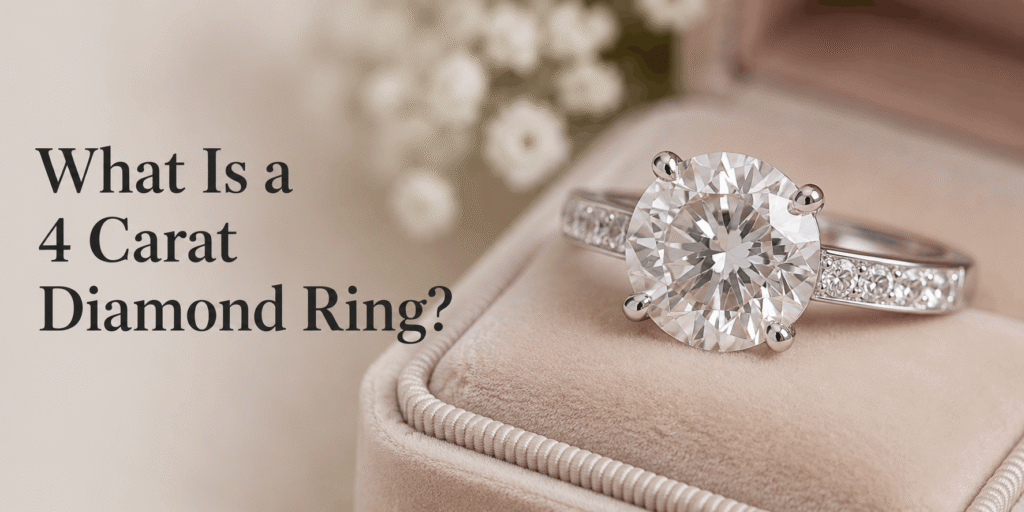
A 4 carat diamond ring features a diamond that weighs 4 carats, or approximately 0.8 grams. Although this may seem surprisingly light, it’s important to remember that carat measures weight—not physical size.
Because diamonds are incredibly dense, a 4 carat stone appears substantially larger than its weight might suggest. This size is considered a luxury diamond and is significantly larger than the average engagement ring, which typically ranges between 1 and 2 carats.
A well-cut 4 carat diamond delivers extraordinary brilliance and naturally becomes the centerpiece of any ring design.
People commonly purchase a 4 carat diamond ring for:
- Engagement rings
- Wedding anniversaries
- Luxury gifts
- Milestone celebrations
- Investment jewelry
- Family heirlooms
Its exceptional size and sparkle make it one of the most eye-catching pieces in any jewelry collection.
How Big Is a 4 Carat Diamond?
One of the first questions buyers ask is whether a 4 carat diamond is considered large.
The answer is yes.
A 4 carat diamond is widely regarded as a luxury-size gemstone that makes a bold visual statement. On most fingers, it covers a significant portion of the finger’s width while maintaining an elegant appearance.
The exact measurements depend on the diamond’s shape and cut proportions. A well-cut Round Brilliant diamond generally measures around 10.2–10.5 mm in diameter, while elongated shapes may appear even larger.
Although moving from a 3 carat to a 4 carat diamond sounds like a small increase, the visible difference is much more dramatic because surface area grows rapidly as carat weight increases.
When combined with an excellent cut, a 4 carat diamond reflects more light and appears even larger because of its exceptional brilliance.
4 Carat Diamond Size Comparison
Comparing different carat weights helps buyers visualize the difference.
| Diamond Weight | Appearance |
| 1 Carat | Elegant everyday size |
| 2 Carats | Noticeably larger |
| 3 Carats | Luxury appearance |
| 4 Carats | Bold premium statement |
| 5 Carats | Exceptional luxury |
Although each additional carat increases weight by the same amount, the visual impact becomes increasingly dramatic as diamonds grow larger.
Does Diamond Shape Affect Size?
Absolutely.
Two diamonds can both weigh 4 carats while appearing noticeably different in size.
Certain diamond shapes spread more of their weight across the surface, creating the illusion of a larger stone.
Shapes That Usually Look Larger
- Oval
- Pear
- Marquise
- Emerald
- Radiant
These elongated cuts maximize finger coverage and often appear larger than round diamonds of the same weight.
Shapes That May Look Slightly Smaller
- Round Brilliant
- Cushion
- Asscher
Round diamonds offer unmatched sparkle but tend to carry more weight beneath the surface, making them appear slightly smaller than elongated cuts.
If your goal is maximum visual size, oval and pear-shaped diamonds are excellent choices.
How Much Does a 4 Carat Diamond Ring Cost?
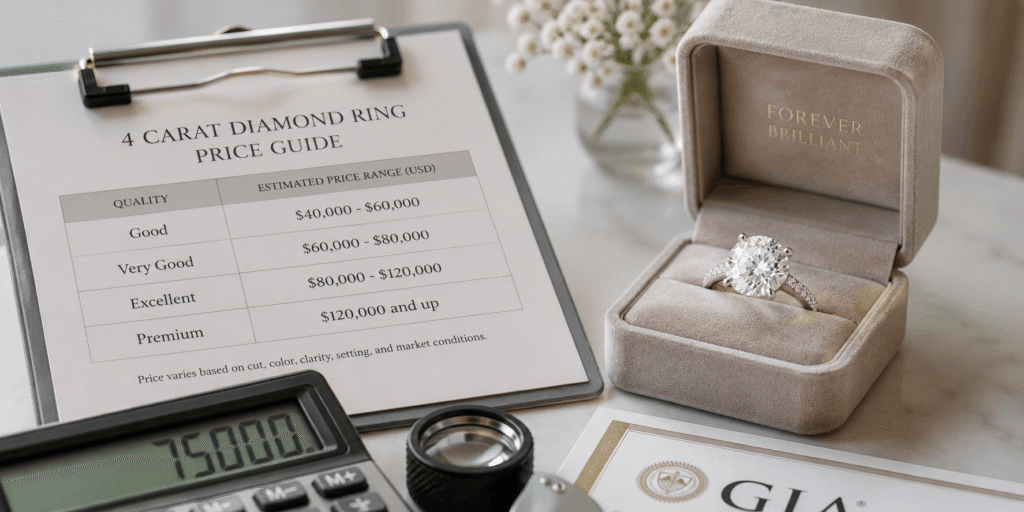
The price of a 4 carat diamond ring varies dramatically depending on several factors, including:
- Natural or lab-grown origin
- Cut quality
- Color grade
- Clarity grade
- Diamond shape
- Certification
- Ring setting
- Metal choice
- Brand
Because larger natural diamonds are extremely rare, their prices increase exponentially as carat weight rises.
Lab-grown diamonds, however, offer identical beauty at a significantly lower price.
Natural Diamond Price
A high-quality natural 4 carat diamond generally falls within these price ranges:
- $40,000–$60,000 for lower-quality combinations
- $60,000–$120,000 for premium-quality diamonds
- $150,000+ for exceptional color and clarity
Rare flawless diamonds with outstanding cut grades can easily exceed several hundred thousand dollars.
Lab-Grown Diamond Price
Lab-grown diamonds have transformed the jewelry industry by making larger stones far more affordable.
Typical prices include:
- $4,000–$8,000
- $8,000–$15,000
- $15,000+ for premium cuts and designer settings
For many shoppers, lab-grown diamonds offer the best balance between size, quality, and value.
Factors That Affect the Price
Several important characteristics determine how much a 4 carat diamond ring will cost.
These include:
- Cut quality
- Color grade
- Clarity grade
- Diamond shape
- Natural vs. lab-grown origin
- Certification
- Ring setting
- Metal type
- Brand reputation
Among all these factors, cut quality usually has the greatest impact on beauty.
A perfectly cut diamond reflects light more efficiently, producing superior sparkle even if it has slightly lower color or clarity grades.
Popular 4 Carat Diamond Ring Styles
The setting plays a crucial role in protecting your diamond while enhancing its brilliance and complementing your personal style.
Here are the most popular designs.
Solitaire Ring
The solitaire remains the most iconic engagement ring style.
It features a single center diamond with no surrounding stones, allowing the 4 carat diamond to take center stage.
Why Buyers Love It
- Timeless elegance
- Maximum brilliance
- Minimalist beauty
- Easy maintenance
- Never goes out of style
Halo Ring
A halo setting surrounds the center diamond with smaller accent diamonds.
Benefits
- Makes the center stone appear larger
- Adds incredible sparkle
- Enhances brilliance from every angle
- Creates a luxurious appearance
Halo rings remain one of the most popular engagement ring styles worldwide.
Three-Stone Ring
A three-stone setting features a large center diamond flanked by two smaller diamonds.
The design traditionally symbolizes:
- Past
- Present
- Future
Besides its sentimental meaning, it adds extra brilliance and creates a balanced appearance.
Hidden Halo Ring
One of today’s fastest-growing trends is the hidden halo.
Instead of surrounding the diamond from above, small accent diamonds sit beneath the center stone.
Advantages
- Modern look
- Hidden sparkle
- Elegant profile
- Makes the center stone appear elevated
Vintage Ring
Vintage-inspired rings feature intricate craftsmanship and timeless charm.
Common design elements include:
- Milgrain detailing
- Filigree patterns
- Floral accents
- Antique-inspired settings
These rings combine classic elegance with modern durability.
Pavé Band
A pavé setting features numerous tiny diamonds embedded along the band.
Benefits
- Continuous sparkle
- Luxurious appearance
- Enhanced brilliance
- Elegant finish
When paired with a 4 carat center diamond, a pavé band creates an exceptionally glamorous ring.
Best Diamond Shapes for a 4 Carat Ring
Choosing the right shape influences both appearance and perceived size.
Round Brilliant
The Round Brilliant remains the most popular diamond cut in the world.
Advantages
- Maximum sparkle
- Timeless design
- Outstanding light performance
- Classic beauty
Although it appears slightly smaller than elongated shapes, no other cut matches its brilliance.
Oval Diamond
Oval diamonds have become one of the biggest engagement ring trends.
Benefits
- Appears larger than round diamonds
- Creates the illusion of longer fingers
- Excellent brilliance
- Modern elegance
Many buyers choose oval diamonds because they maximize visual size.
Cushion Diamond
Known for its rounded corners and pillow-like shape, the cushion cut blends vintage charm with modern sparkle.
It’s perfect for buyers seeking a romantic yet timeless style.
Emerald Diamond
Unlike brilliant cuts, emerald diamonds emphasize clarity and elegance rather than intense sparkle.
Features
- Long step-cut facets
- Hall-of-mirrors effect
- Sophisticated appearance
- Exceptional finger coverage
Pear Diamond
Pear-shaped diamonds combine the brilliance of a round cut with the elegance of a marquise.
Benefits
- Unique silhouette
- Elongates the finger
- Appears larger
- Highly distinctive
Radiant Diamond
Radiant diamonds combine brilliant-cut sparkle with trimmed corners.
Advantages
- Exceptional brilliance
- Strong durability
- Modern appearance
- Outstanding fire
How to Choose the Perfect 4 Carat Diamond Ring
Buying a luxury diamond requires thoughtful planning.
Before making your purchase, consider:
- Your overall budget
- Preferred diamond shape
- Finger size
- Lifestyle
- Daily wear habits
- Ring setting
- Metal choice
- Certification
- Long-term value
Balancing these factors ensures you choose a ring that’s both beautiful and practical.
Diamond Quality: Understanding the 4Cs
No matter how beautiful the setting is, the quality of the diamond itself determines the ring’s brilliance, value, and overall appearance. Every diamond is graded using the internationally recognized 4Cs: Cut, Color, Clarity, and Carat Weight. Understanding these characteristics will help you choose a 4 carat diamond ring that offers the best balance of beauty and value.
Cut
Many buyers believe carat weight is the most important factor, but professional gemologists often consider cut to be the most influential characteristic.
A well-cut diamond reflects light efficiently, creating exceptional brilliance, fire, and sparkle. Even a large 4 carat diamond can appear dull if it has poor proportions.
Cut Grades
- Excellent
- Very Good
- Good
- Fair
- Poor
If your budget allows, choosing an Excellent or Very Good cut is one of the smartest investments you can make because it maximizes the diamond’s beauty.
Color
Diamond color measures how colorless a stone appears. Most grading laboratories use a scale ranging from D to Z.
Color Grades
- D–F: Colorless
- G–J: Near Colorless
- K–M: Faint Color
- N–Z: Noticeable Color
For most buyers, G or H color diamonds provide an excellent combination of beauty and value. They appear nearly colorless while costing less than higher color grades.
Clarity
Clarity refers to the number of natural inclusions inside the diamond and blemishes on its surface.
Common Clarity Grades
- Flawless (FL)
- Internally Flawless (IF)
- Very Very Slightly Included (VVS1–VVS2)
- Very Slightly Included (VS1–VS2)
- Slightly Included (SI1–SI2)
Many VS1 and VS2 diamonds appear perfectly clean to the naked eye while offering significant savings compared to flawless stones.
Carat Weight
Carat measures a diamond’s weight, not its dimensions.
A 4 carat diamond weighs approximately 0.8 grams, making it considerably larger than the average engagement ring diamond.
However, remember that carat weight alone doesn’t determine beauty. A slightly smaller diamond with an excellent cut often looks brighter than a larger stone with poor proportions.
Natural vs. Lab-Grown 4 Carat Diamond Ring
One of the biggest decisions buyers face is choosing between a natural diamond and a lab-grown diamond.
Although their origin differs, both are real diamonds with identical:
- Chemical composition
- Hardness
- Durability
- Sparkle
- Optical properties
The primary differences are rarity, origin, and price.
Natural Diamonds
Natural diamonds formed beneath the Earth’s surface over billions of years through extreme heat and pressure.
Advantages
- Naturally formed
- Extremely rare
- Traditional luxury appeal
- Higher resale potential
- Unique geological history
Disadvantages
- Significantly more expensive
- Limited availability in larger sizes
- Premium-quality stones command very high prices
Lab-Grown Diamonds
Lab-grown diamonds are created in controlled laboratory environments using advanced technology that replicates natural diamond formation.
Benefits
- More affordable
- Same brilliance as natural diamonds
- Physically and chemically identical
- Better value for larger carat sizes
- Increasingly popular among modern buyers
Many shoppers choose a lab-grown 4 carat diamond ring because it allows them to purchase a larger, higher-quality stone while staying within budget.
Best Metal for a 4 Carat Diamond Ring
The metal you choose influences both the appearance and durability of your ring.
White Gold
White gold remains one of the most popular choices for engagement rings.
Pros
- Bright, modern appearance
- Enhances diamond brilliance
- More affordable than platinum
- Complements every diamond shape
Cons
- May require occasional rhodium plating
Yellow Gold
Yellow gold has made a strong comeback in recent years.
Benefits
- Classic elegance
- Warm, rich tone
- Lower maintenance
- Beautiful contrast with white diamonds
It’s especially popular in vintage-inspired designs.
Rose Gold
Rose gold is known for its romantic and distinctive appearance.
Advantages
- Soft pink hue
- Vintage charm
- Unique personality
- Flatters many skin tones
It pairs beautifully with oval, pear, and cushion-cut diamonds.
Platinum
Platinum is considered the premium choice for luxury engagement rings.
Benefits
- Extremely durable
- Naturally white
- Hypoallergenic
- Excellent for securing larger diamonds
- Long-lasting
Although platinum generally costs more than gold, many buyers consider it the best option for protecting a valuable 4 carat diamond ring.
Is a 4 Carat Diamond Ring Worth It?
Whether a 4 carat diamond ring is worth the investment depends on your priorities, budget, and personal style.
A 4 carat diamond may be an excellent choice if you:
- Want a luxury statement piece
- Appreciate fine craftsmanship
- Prefer larger diamonds
- Plan to wear it for many years
- Have the budget for premium materials
If value is your main priority, a lab-grown diamond may offer the best balance of size, quality, and affordability.
How to Care for a 4 Carat Diamond Ring
Proper care helps preserve your ring’s brilliance for decades.
Clean Your Ring Regularly
Wash your ring using:
- Warm water
- Mild dish soap
- A soft toothbrush
Regular cleaning removes oils and dirt that can reduce sparkle.
Store It Properly
When not wearing your ring:
- Place it in a soft jewelry box.
- Store it separately from other jewelry.
- Avoid contact with harder gemstones.
Proper storage helps prevent scratches and damage.
Remove It During Heavy Activities
Take off your ring before:
- Weightlifting
- Gardening
- Swimming
- Cleaning
- Home improvement projects
Although diamonds are incredibly hard, the metal setting can still become damaged.
Schedule Professional Inspections
Visit a jeweler once or twice each year to check:
- Loose prongs
- Worn settings
- Surface scratches
- Overall security of the diamond
Routine inspections help prevent accidental stone loss.
Common Mistakes to Avoid When Buying
Buying a luxury diamond is a significant investment, so avoid these common mistakes.
Don’t:
- Focus only on carat weight.
- Ignore the cut grade.
- Purchase without certification.
- Skip comparing diamond shapes.
- Forget to consider finger size.
- Choose a weak setting for a heavy diamond.
- Buy based solely on price.
Taking time to compare multiple options often results in a better purchase.
Final Thoughts
A 4 carat diamond ring is a remarkable symbol of luxury, elegance, and lasting beauty. Whether you choose a rare natural diamond or a lab-grown alternative that offers exceptional value, selecting the right combination of cut, color, clarity, shape, and setting is far more important than focusing on carat weight alone.
Before making your purchase, compare different diamond shapes, review certified grading reports, and work with a reputable jeweler who can guide you through the buying process. Understanding the 4Cs and your personal preferences will help you choose a ring that remains stunning for years to come.
With proper care and regular maintenance, a 4 carat diamond ring can become a treasured heirloom that celebrates life’s most meaningful moments while retaining its brilliance for generations.
One Comment