Tinted sunscreen has become a popular choice for people who want sun protection without applying a separate layer of foundation or skin tint. It combines sunscreen with a subtle tint that can help even out the appearance of skin tone, soften the look of redness, and create a more natural-looking finish. Depending on the formula, it may also offer additional protection against visible light, which can be particularly relevant for people concerned about uneven pigmentation.
However, not every tinted sunscreen works the same way. Some provide sheer coverage that barely changes the appearance of the skin, while others offer a more noticeable complexion-enhancing effect. Their textures also vary, ranging from lightweight fluids to moisturizing creams and matte formulas designed for oilier skin.
Choosing the right option involves more than finding a shade that matches your complexion. You also need to consider SPF, UVA protection, ingredients, skin type, and how the product fits into your everyday routine. Understanding these differences can help you select a tinted sunscreen that feels comfortable, looks natural, and provides reliable protection when used correctly.
What Makes Tinted Sunscreen Different From Regular Sunscreen?
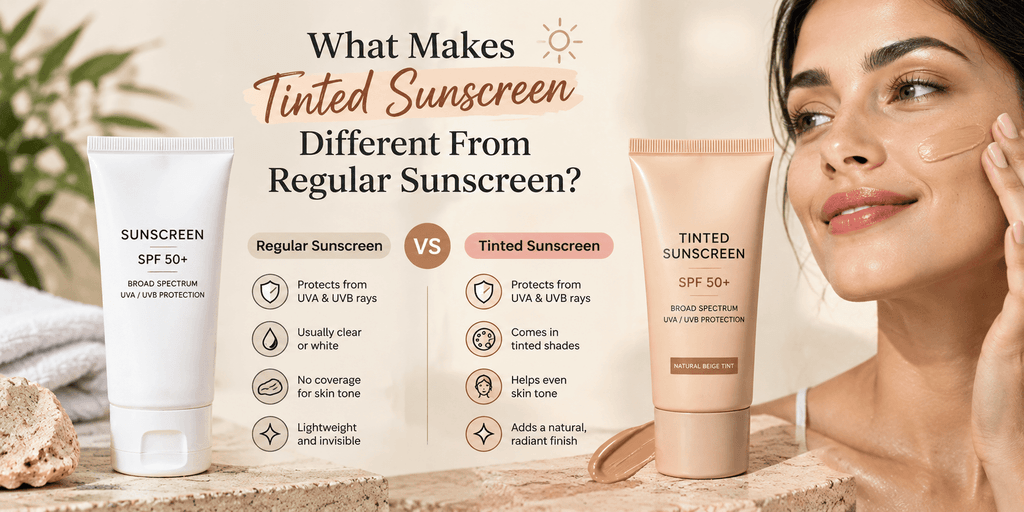
Tinted sunscreen is a sun-protection product that contains pigments, usually iron oxides, to give the formula its color. These pigments help the product blend into the skin rather than leaving the white or gray cast that some conventional sunscreens can produce. Depending on the formula, the tint may also provide light cosmetic coverage.
Unlike foundation or concealer, sunscreen is primarily designed to protect the skin from ultraviolet radiation. The tint is an additional feature, not a replacement for the protective ingredients. This distinction matters because a product can look beautiful on the skin but still be unsuitable for sun protection if it does not provide adequate SPF and UVA coverage.
How the Tint Changes the Finish
The pigments in tinted sunscreen help create a more skin-like appearance. They can soften the contrast between areas of redness and surrounding skin, make minor discoloration less noticeable, and add a touch of color without requiring a full makeup routine.
Coverage depends on the product. A sheer formula may leave freckles and natural skin texture visible, while a medium-coverage option may provide a more even complexion. Most tinted sunscreens are not intended to cover every mark or blemish as completely as a full-coverage foundation.
The finish also depends on the ingredients used in the formula. Some products leave a dewy appearance, others dry down to a natural satin finish, and some are designed to look more matte. Reading the product description and testing the formula on your skin can help you understand what to expect.
Why Iron Oxides Matter
Iron oxides are pigments commonly used to give tinted skincare and makeup products their shades. They can also help reduce the amount of visible light that reaches the skin when included in an appropriately formulated product.
Visible light is part of the light spectrum that people can see. Research suggests that certain portions of visible light can contribute to pigmentation, particularly in people prone to melasma and some other forms of hyperpigmentation. This is one reason dermatologists may recommend a tinted sunscreen containing iron oxides for people managing these concerns.
However, the level of protection varies between formulas. Not every tinted sunscreen has been tested or shown to provide the same degree of visible-light protection. A tint alone does not guarantee a specific level of protection, and it should not be assumed that every product containing pigments will prevent pigmentation equally well.
Tinted Sunscreen Versus Foundation With SPF
Foundation with SPF can provide sun protection, but it should not automatically replace a dedicated sunscreen. People often apply foundation more sparingly than the amount used in sunscreen testing, which can reduce the protection they receive.
Tinted sunscreen offers a practical middle ground because its main purpose is sun protection, while its pigment adds a cosmetic benefit. You can wear it alone for a simple everyday look or use it beneath other makeup if the formula works well with your routine.
If you prefer foundation, you can still apply it over your regular sunscreen. The important point is to use enough sunscreen first and allow it to settle before applying makeup. Neither a tinted moisturizer nor a foundation should be treated as adequate sun protection solely because its label mentions SPF.
The Benefits of Adding Tinted Sunscreen to Your Routine
Tinted sunscreen can simplify skincare and makeup, but its usefulness depends on the formula and your individual needs. The following benefits explain why it has become an appealing option for everyday wear.
It Helps Protect Against Sun Damage
The most important benefit of a tinted sunscreen is its ability to protect against ultraviolet radiation when it has suitable broad-spectrum labeling and is applied correctly. UV exposure contributes to sunburn, premature skin aging, and an increased risk of skin cancer.
For everyday use, choose a sunscreen labeled broad spectrum with SPF 30 or higher. Broad-spectrum protection means the product is designed to protect against both UVA and UVB radiation. SPF primarily indicates protection against UVB-related sunburn under standardized testing conditions; it does not tell you everything about UVA protection.
People who spend extended periods outdoors should also consider water resistance, shade, protective clothing, and a hat. Sunscreen is one part of a complete sun-protection routine, not a guarantee that the skin cannot be damaged by the sun.
It Can Make Uneven Tone Less Noticeable
The tint can provide an immediate cosmetic improvement by making the overall complexion appear more even. Depending on its shade and coverage, it may soften the appearance of redness, mild discoloration, and small areas of uneven tone.
This effect is temporary and cosmetic. Tinted sunscreen does not necessarily treat the underlying cause of discoloration, and it should not be expected to erase pigmentation. However, consistent sun protection can help prevent existing discoloration from becoming more noticeable due to additional UV exposure.
For people who want a little coverage without a separate foundation, this combination can make a morning routine easier.
It May Offer Additional Visible-Light Protection
Some tinted sunscreens containing iron oxides can provide protection against portions of visible light in addition to their UV protection. This may be useful for people who are prone to melasma or persistent pigmentation, particularly when visible light is one of their triggers.
The amount of protection depends on the formulation, pigment concentration, and how much product is applied. A product’s color alone cannot confirm how effectively it blocks visible light.
If pigmentation is a major concern, consider discussing sunscreen selection with a dermatologist. The most suitable product may depend on the type of pigmentation, your skin’s sensitivity, and whether you use other treatments.
It Can Replace a Separate Complexion Product
For some people, tinted sunscreen provides enough coverage to replace a light foundation, BB cream, or skin tint on ordinary days. This can reduce the number of products needed in a morning routine.
The result is usually a natural, skin-like finish rather than a completely perfected makeup look. If you need more coverage for a particular occasion, you can apply concealer or foundation over the sunscreen without relying on makeup to provide your main sun protection.
A simpler routine can also make daily sunscreen use more convenient, which matters because consistent use is more useful than owning several products that rarely get applied.
It Comes in Formulas for Different Skin Types
Tinted sunscreen is available in creams, lotions, gels, and fluid formulas. Some emphasize hydration, while others aim for a lighter feel or a less shiny finish.
People with dry skin may prefer formulas containing moisturizing ingredients, while those with oily skin may find a lighter lotion or a non-greasy finish more comfortable. Sensitive skin may benefit from a fragrance-free formula with a short, well-tolerated ingredient list.
These are starting points rather than strict rules. Skin types overlap, and a formula labeled for oily or dry skin is not guaranteed to work for everyone.
How to Choose a Tinted Sunscreen That Suits Your Skin
A product may have an attractive shade and texture but still fail to meet your needs if its sun protection, coverage, or wearability is unsuitable. Consider the following factors before making a choice.
Start With SPF and Broad-Spectrum Protection
Prioritize protection before cosmetic features. Look for broad-spectrum SPF 30 or higher for routine daily use. If you spend considerable time outdoors, have a history of significant sun exposure, or need protection during outdoor activities, a higher-SPF product may be a practical choice.
No sunscreen blocks every UV ray, and higher SPF does not mean you can apply less product or stay in the sun indefinitely. Correct application and reapplication remain essential.
Check the label for water resistance if you expect to swim or sweat. Water-resistant products are generally labeled for a specified period, such as 40 or 80 minutes, and still need to be reapplied as directed.
Find a Shade That Blends Naturally
Tinted sunscreen shades are not standardized across brands. One brand’s light shade may look different from another brand’s light shade, and the same product can appear warmer, cooler, or more orange depending on your complexion.
Whenever possible, test the shade along the jawline rather than judging it only from a photograph or the color inside the package. Allow the product to settle for several minutes because the finish can change slightly after application.
Consider the following characteristics when comparing shades:
- Undertone: Some formulas lean warm, cool, or neutral.
- Coverage: Sheer tints are more forgiving, while fuller-coverage products require a closer shade match.
- Oxidation: Certain formulas may darken slightly as they wear, so check the finish after some time.
- Blendability: The product should spread without leaving obvious lines around the jaw or hairline.
If a product comes in only one universal shade, check reviews from people with similar skin tones, but remember that online photographs can be affected by lighting and camera settings. A sample or in-store test is more reliable when available.
Choose a Texture Based on Your Skin’s Needs
The right texture can make the difference between a product you enjoy wearing and one that sits unused.
For Dry Skin
A moisturizing cream or lotion may feel more comfortable if your skin often feels tight or flaky. Ingredients such as glycerin and other humectants can help attract water to the outer layers of the skin, while emollients can support a smoother-feeling surface.
If you already use a moisturizer, you may not need a heavily moisturizing sunscreen. Avoid choosing a product that feels excessively rich or uncomfortable simply because it is marketed for dry skin.
For Oily or Combination Skin
A lightweight lotion or fluid with a natural or matte finish may be more comfortable if your skin becomes shiny during the day. Some formulas are marketed as oil-free, although that label alone does not guarantee that a product will suit your skin.
You may also prefer a formula that layers easily over moisturizer without feeling heavy. If your skin is oily in the T-zone but dry elsewhere, a balanced finish can be more practical than an extremely matte formula.
For Sensitive Skin
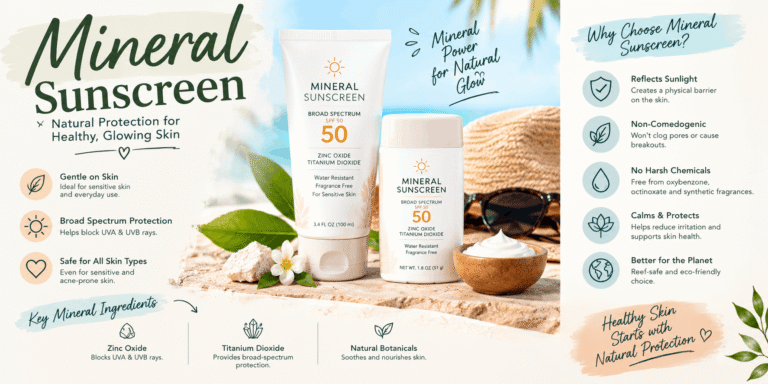
Look for products that your skin is likely to tolerate, such as fragrance-free options. Mineral UV filters, including zinc oxide and titanium dioxide, are often considered by people who find certain chemical sunscreen formulas irritating, although no ingredient type is guaranteed to suit every person.
Introduce a new product gradually and stop using it if it causes persistent burning, swelling, or a rash. A small-area test can help identify some reactions, but it cannot guarantee that the product will never irritate your skin.
Consider Whether You Need More Than Light Coverage
If your goal is simply to reduce the appearance of redness or create a more even finish, a sheer tint may be sufficient. If you want to cover more noticeable discoloration, you may prefer a product with greater coverage or use a small amount of concealer on specific areas.
Do not choose a sunscreen based only on how much it conceals. A product that looks flawless but feels uncomfortable or is difficult to apply in a sufficient amount may be a poor everyday choice.
Comfort, adequate protection, and a shade you are happy to wear should guide the decision together.
How to Apply Tinted Sunscreen for Reliable Protection
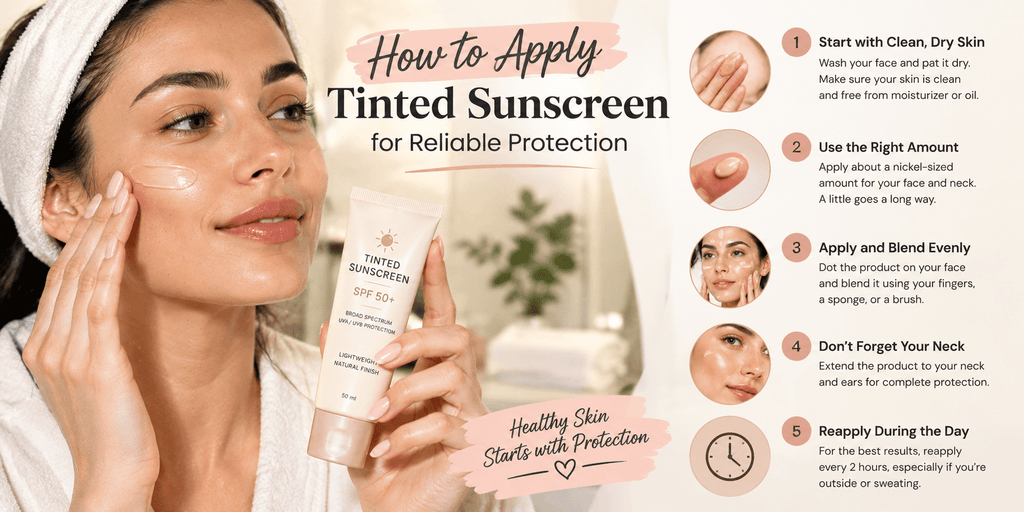
Even a well-formulated sunscreen cannot provide its intended level of protection if too little is applied. Application is particularly important with tinted products because people sometimes use a small amount to avoid a heavier makeup-like finish.
Apply It After Your Skincare
Start with clean skin and apply any products you normally use, such as moisturizer. Let those products settle before applying sunscreen so the layers are easier to spread.
Use tinted sunscreen as the final step of your morning skincare routine before makeup. Follow the instructions on the label, particularly if the product needs time to form an even layer before you apply other cosmetics.
Avoid mixing sunscreen directly with moisturizer, foundation, or face oil in your hand. Mixing can change how the sunscreen spreads and may interfere with the uniform film needed for protection.
Use Enough Product
Apply a generous, even layer to all exposed areas of the face. Do not rely on a few tiny dots of product or use only enough to achieve the desired makeup coverage. The SPF displayed on the label is based on standardized testing with a specified amount of sunscreen.
The familiar two-finger method is sometimes used as a rough guide for facial application, but the amount needed varies with the size of your face, the product’s consistency, and the areas being covered. The key is to follow the product directions and apply enough to form a complete layer.
Remember areas that are often missed, including the sides of the face, hairline, ears, and neck. If your lips will be exposed to sunlight, use a lip product with appropriate sun protection.
Blend Evenly Without Rubbing It All Away
Spread the sunscreen over the skin using the method recommended by the manufacturer. Make sure the tint is blended around the jawline and hairline so there are no obvious streaks or patches.
If you need to apply the product in sections to distribute it evenly, do so without leaving gaps. Avoid repeatedly wiping or removing the layer while trying to achieve a perfect cosmetic finish.
Give the product time to settle before applying additional makeup. If it pills, try allowing your skincare layers to dry more fully, reducing unnecessary layers, or choosing a sunscreen that works better with your other products.
Reapply Throughout the Day
Sunscreen wears away through normal activity, rubbing, sweating, and water exposure. When spending time outdoors, reapply at least every two hours and follow the label’s instructions for swimming or sweating. Water-resistant sunscreen still needs reapplication after the period specified on its label.
Reapplying tinted sunscreen over makeup can be tricky. Depending on the formula, you may be able to gently layer it over your existing products, but avoid spreading it so lightly that you no longer get meaningful protection. A compatible sunscreen stick or powder may be convenient for touch-ups, but do not assume a small amount of either product will replace a proper sunscreen layer.
For longer outdoor periods, plan reapplication in advance. Shade, hats, sunglasses, and protective clothing can help reduce exposure between applications.
Remove It at the End of the Day
Tinted sunscreen contains pigments that may remain on the skin alongside other ingredients. Cleanse your face at the end of the day using a cleanser that removes the product without leaving your skin uncomfortably dry.
If the formula is water-resistant or wears like makeup, an oil cleanser or cleansing balm followed by a gentle water-based cleanser may help remove it. A double cleanse is not essential for everyone; use the approach that removes your sunscreen comfortably without excessive scrubbing.
Avoid harsh exfoliation just to remove the tint. If your skin feels tight or irritated after cleansing, consider a gentler product or a less aggressive cleansing routine.
Common Tinted Sunscreen Mistakes to Avoid
A few simple habits can make tinted sunscreen easier to use and help you get more consistent protection.
Choosing shade over protection: A perfect color match is useful, but it should not take priority over broad-spectrum coverage and an appropriate SPF.
Applying too little: A thin layer may look more natural, but it can deliver less protection than the labeled SPF. Use enough sunscreen first and adjust your makeup routine around it.
Assuming the tint treats pigmentation: Tinted sunscreen may provide immediate cosmetic coverage, and some iron-oxide formulas offer visible-light protection. It does not automatically treat melasma, dark spots, or other underlying skin conditions.
Skipping reapplication: A morning application is not enough for a full day spent outdoors. Follow the product’s reapplication instructions and account for sweating, swimming, and rubbing.
Expecting every formula to suit every skin type: A product described as universal or suitable for all skin types may still feel too rich, too dry, or irritating on your skin. Personal comfort and tolerance matter.
Ignoring the neck and other exposed areas: Applying sunscreen only to the center of the face leaves other exposed skin less protected. Extend coverage to the sides of the face, ears, neck, and other exposed areas as appropriate.
Using sunscreen past its expiration date: Check the expiration date and storage instructions. Heat and improper storage can affect a product, so replace sunscreen that is expired or has changed noticeably in color, smell, or texture.
Final Thoughts
Tinted sunscreen can be a useful addition to an everyday skincare routine because it combines sun protection with a subtle complexion-enhancing finish. Depending on the formula, it may soften the appearance of redness, provide light coverage, and offer additional visible-light protection through pigments such as iron oxides.
The most suitable option is not necessarily the one with the most coverage or the most expensive ingredients. Look for broad-spectrum SPF 30 or higher, a shade that blends comfortably, a texture you enjoy wearing, and clear instructions for application and reapplication.
Apply enough product to protect exposed skin, reapply as directed, and use other sun-protection measures when outdoors. With the right formula and consistent use, tinted sunscreen can make daily sun protection more convenient without turning your skincare routine into a complicated process.
Tinted sunscreen protects the skin from the sun while providing light coverage to help even out the appearance of skin tone. Depending on the formula, it can also help reduce the appearance of redness and discoloration.
Tinted sunscreen is not automatically better than regular sunscreen. Both can protect your skin when they offer suitable broad-spectrum protection and are applied correctly. Tinted formulas containing iron oxides may provide additional protection against visible light.
Yes, tinted sunscreen can be used daily as part of your morning skincare routine. Choose a formula that suits your skin type and provides broad-spectrum SPF 30 or higher.