
A makeup routine can begin with a promising product and still produce an unexpected result. The foundation may look too pale near a window, gather around the mouth after lunch, or leave a visible boundary along the jaw. These problems are not always obvious when choosing a bottle from a shelf, which is why understanding the behavior of liquid foundation matters as much as understanding its color.
Foundation is often treated as a finishing layer for the complexion, but its performance depends on several conditions that change throughout the day. Facial expressions stretch the skin, natural oils accumulate, and environmental conditions affect how makeup feels. The result you see immediately after application may not be the result you see several hours later.
A useful way to approach liquid foundation is to look beyond its initial appearance. Consider how it responds to movement, how it combines with other cosmetics, and how much maintenance it requires during ordinary activities. These details can help you choose a product for your actual needs rather than for an idealized image on a package.
The First Few Minutes Do Not Tell the Whole Story
Freshly applied makeup can look different from makeup that has settled on the face. During application, foundation is still being spread and blended. As it dries, its surface appearance may change, and the skin’s natural oils can influence the finish.
This is one reason a quick shade test in a store may not provide enough information. A foundation that appears to match initially might become warmer or darker later. Another may look slightly shiny at first but settle into a more balanced finish.
When trying a new product, examine it at different points rather than making an immediate decision. Check the color after application, observe how the texture looks after it settles, and notice whether the product remains comfortable.
The goal is not to expect every foundation to remain completely unchanged. Cosmetics naturally interact with the conditions in which they are worn. Instead, look for a formula that changes in a way you find acceptable.
For example, a small amount of shine around the forehead may be easy to manage, while pronounced separation around the nose may make a product unsuitable for your routine.
How to Read the Texture of a Liquid Foundation
The texture of a liquid foundation can offer clues about how it will feel during application, although texture alone cannot predict its final performance.
Some formulas move quickly across the skin and spread with very little pressure. Others remain where they are placed and need more deliberate blending. Neither behavior is automatically better; the useful choice depends on your technique and preferred coverage.
When the Product Spreads Too Easily
A very fluid foundation may travel farther than expected when applied with a brush or fingers. This can make it difficult to control the amount placed around the nose, under the eyes, or near the hairline.
Work with a small quantity and apply it in separate sections. Instead of dispensing enough product for the entire face at once, add more only when necessary.
This approach also gives you an opportunity to observe the coverage before deciding whether another layer is needed.
When the Product Feels Thick
A dense formula may provide noticeable coverage, but it can be harder to distribute evenly if you apply too much at once.
Rather than rubbing repeatedly over the same area, use gentle, controlled movements. If the product begins to look heavy, remove some excess with a clean makeup sponge before adding powder or other complexion products.
A thick consistency does not automatically indicate high coverage, and a thin consistency does not automatically indicate low coverage. Pigment concentration and the overall formulation also influence the result.
Read the product description as a starting point, then judge the actual formula through careful testing.
Why Foundation Can Look Uneven Around the Mouth and Nose
The central areas of the face often present different challenges from the cheeks or forehead. The nose has contours and creases, while the area around the mouth moves repeatedly during talking, eating, and smiling.
These movements can cause makeup to collect in small lines or wear away in certain places. Applying extra foundation to those areas may make the problem more noticeable rather than solving it.
A better approach is to keep the initial layer thin around facial creases. Blend carefully around the nostrils, corners of the mouth, and other areas where product tends to accumulate.
After blending, make a natural facial expression and look at the result again. Smiling or moving your mouth can reveal excess product that was not obvious while your face was relaxed.
If the foundation continues to gather in the same area, consider testing a different formula or changing the amount of skincare applied underneath it. A product that works comfortably on the cheeks may not perform equally well around the mouth.
Building a Makeup Routine Around Different Skin Conditions
Skin does not always behave identically from morning to evening. Temperature, humidity, skincare habits, and changes in the environment can affect the way your complexion feels.
Instead of expecting one liquid foundation to solve every concern, consider which characteristics matter most to you.
When Your Skin Produces Excess Oil
If your face becomes shiny during the day, a foundation with a matte or natural-matte finish may be worth testing. However, a very drying formula can feel uncomfortable if your skin also has dehydrated areas.
You do not necessarily need to powder every part of your face. Concentrating powder on the forehead, nose, and chin may be enough to control the appearance of shine while allowing other areas to retain their natural finish.
Blotting excess oil gently before touching up makeup can also help prevent additional layers from building up.
When Your Skin Feels Tight or Rough
A foundation that emphasizes dry patches may not be the best match for your current skin condition.
Start with comfortable skincare and allow it to settle before applying makeup. Use a light hand and avoid repeatedly sweeping a brush over rough areas.
If the skin remains irritated or flaky, changing the foundation alone may not resolve the issue. Persistent symptoms may require attention to your skincare routine or professional advice.
When Different Areas Need Different Results
You might prefer less shine on your forehead but a softer finish on your cheeks. This does not necessarily mean you need two foundations.
A single product can sometimes be adjusted through placement and the use of complementary products. Apply foundation sparingly, then use powder selectively where required.
The objective is to respond to the actual differences across your face instead of applying an identical amount of every product everywhere.
The Difference Between a Good Shade and a Good Match
A foundation shade can appear attractive on its own but still be unsuitable for your complexion. The important question is not whether the color looks beautiful in the bottle; it is whether it blends naturally with the surrounding skin.
Skin depth and undertone both influence the result. A shade can be the correct depth but look too pink, yellow, orange, or gray when compared with your neck.
When possible, test several nearby shades along the jawline. Check them in indirect daylight and allow the formula to settle before deciding.
Do not assume that a shade with a familiar name will match a product from another brand. Manufacturers use different shade ranges and naming systems, so labels such as warm beige or natural ivory are not standardized across the industry.
If you are buying online, compare swatches from the exact product range rather than relying on a single promotional photograph. Images can provide helpful guidance, but screen settings and lighting limit their accuracy.
Also consider how you want your foundation to look in relation to your neck and chest. A face that appears noticeably lighter or darker than the surrounding skin may look less balanced, even when the foundation itself has been blended evenly.
What to Check Before Purchasing a New Bottle
A foundation purchase becomes easier when you evaluate the product against your own routine instead of relying entirely on advertising claims.
Before buying, consider the following:
- Coverage: Decide whether you need a subtle tint, moderate evening of skin tone, or more substantial concealment.
- Finish: Consider how much shine you prefer and how your skin usually looks after several hours.
- Application: Check whether the texture works with your preferred brush, sponge, or finger application.
- Wear: Think about how long you normally wear makeup and whether frequent touch-ups are practical.
- Skin compatibility: Review ingredients and product guidance, especially if you have known sensitivities.
- Shade availability: Make sure the range offers a color that suits both your skin depth and undertone.
A product does not need to excel in every category to be useful. You may prioritize comfortable everyday wear over maximum coverage, or choose a more covering formula specifically for special occasions.
What matters is knowing which compromises you are willing to make before spending money.
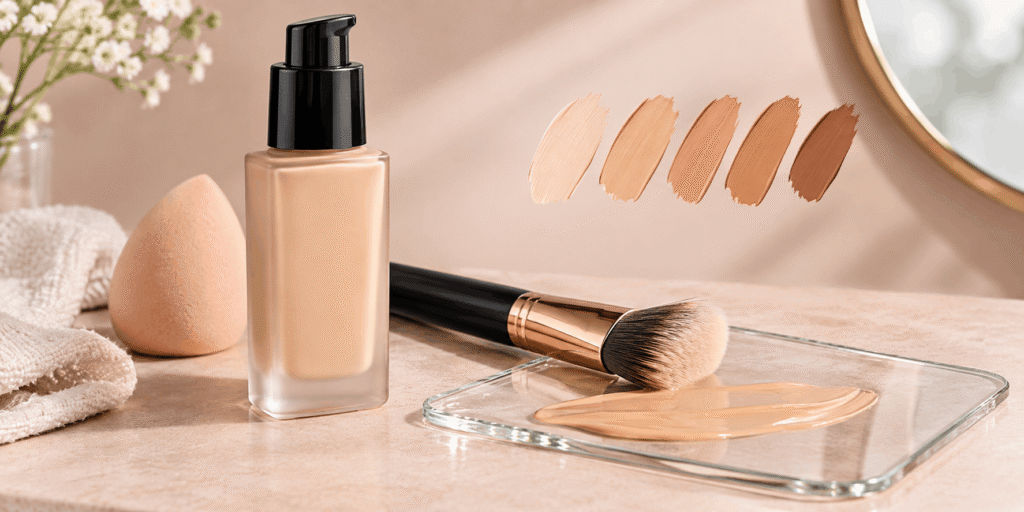
How to Keep Foundation From Changing Throughout the Day
The appearance of liquid foundation can shift as you go about your normal activities. Walking outdoors, sitting in an air-conditioned room, touching your face, or spending time in warm weather can affect how makeup looks and feels.
Instead of adding more foundation whenever the finish changes, identify what needs correcting. If your forehead becomes shiny, you may need to remove excess oil. If makeup fades around your nose, a small touch-up may be enough. If the skin feels dry, another layer of powder could make the texture more noticeable.
These situations call for different solutions, which is why a single touch-up method does not work for every problem.
Correct the Existing Makeup Before Adding More
When foundation begins to look uneven, avoid immediately covering the entire area with another layer. First, check whether the problem comes from excess oil, transferred makeup, or product collecting in facial lines.
For oily areas, gently press a clean blotting paper against the skin if needed. For makeup that has moved, use a clean sponge to soften the edges before applying a small amount of additional product.
This prevents repeated layers from creating a thick surface.
For instance, if foundation has faded around your nostrils after several hours, you may only need to blend that area again. Reapplying makeup across your cheeks and forehead would add product where no correction is necessary.
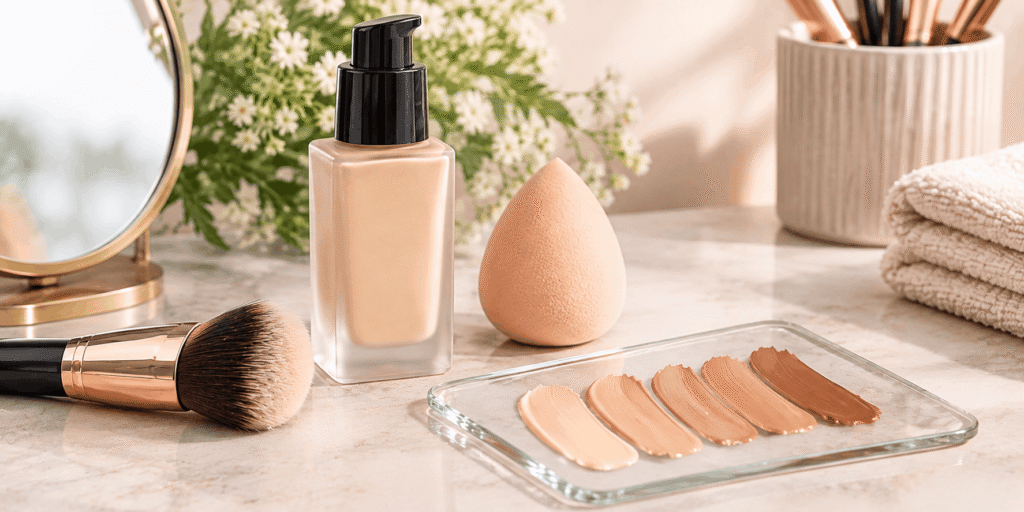
Combining Liquid Foundation With Other Makeup Products
Foundation rarely works alone in a complete makeup routine. Moisturizer, sunscreen, primer, concealer, powder, and setting spray may all influence the final appearance.
However, using more products does not automatically improve the result. Each additional layer creates another opportunity for the makeup to feel heavy, separate, or become difficult to blend.
Decide Whether You Actually Need Primer
Primer can serve a particular purpose, such as reducing visible shine or creating a smoother-looking surface. It is not an essential step for every person or every foundation.
If your makeup already spreads evenly over your usual skincare, adding primer may not provide a noticeable benefit. If foundation repeatedly moves around or emphasizes pores, testing a suitable primer may be worthwhile.
Introduce one product at a time so you can identify whether it improves the result. If your makeup becomes patchy after adding a primer, try the foundation without it before purchasing more products.
Apply Concealer With a Clear Purpose
Concealer is useful when a small area needs more coverage than the rest of the face. It can be applied to selected marks, localized discoloration, or areas where additional correction is desired.
For a natural makeup look, use foundation to create the general base and reserve concealer for areas that remain visible. Blend the edges carefully so the difference in coverage does not create obvious spots.
This approach can be particularly helpful when you want a light complexion routine without giving up the ability to cover individual imperfections.
Use Powder Where It Makes a Difference
Powder can reduce surface shine and help some foundations feel more settled. The amount required depends on your skin, the formula, and the finish you prefer.
If you like a luminous complexion, applying powder everywhere may remove the appearance you wanted. Instead, concentrate it on areas that tend to become shiny or where makeup moves easily.
For a more matte look, you may prefer a broader application. Even then, use a controlled amount and examine the result before adding more.
Liquid Foundation for Different Makeup Occasions
The same product can serve different purposes when you adjust how much you apply and how you finish the rest of your makeup.
For an ordinary day, a small amount of foundation may be enough to create the appearance you want. Pairing it with minimal concealer and a little blush can keep the overall look simple.
For a formal gathering, you may choose more coverage and spend additional time blending the edges. The difference does not have to come from applying a thick layer across the entire face. Targeted coverage can provide a more controlled result.
Photography introduces another consideration. Strong lighting can reveal uneven blending, while camera settings and flash can change how complexion products appear in pictures. If you are preparing for an important event, test your makeup beforehand under lighting similar to the conditions you expect.
Hot weather also deserves attention. If you expect to spend several hours outdoors, a comfortable, thinner application may be easier to maintain than multiple heavy layers. Sunscreen should still be applied according to its directions, regardless of the foundation you choose.
Final Thoughts
Choosing the right liquid foundation is about understanding what works for your skin rather than following every makeup trend. The right shade, suitable texture, and comfortable finish can make a noticeable difference in how your makeup looks throughout the day. Taking time to test a formula, apply small amounts, and observe how it wears can help you avoid unnecessary purchases and frustrating results.
Remember that foundation does not need to cover every natural feature to create a polished appearance. Focus on the areas where you want more evenness, adjust your application to suit your needs, and choose a product that feels comfortable on your skin. With a thoughtful approach, liquid foundation can become a reliable part of your makeup routine without requiring excessive layers or constant touch-ups.
Liquid foundation is used to create a more even-looking complexion by reducing the appearance of uneven skin tone, redness, and discoloration. Depending on its formula, it can provide light, medium, or full coverage.
Consider your skin’s behavior, preferred coverage, and desired finish. Look for a formula that feels comfortable and blends naturally. Test several shades along your jawline in natural light before making a final decision.
Yes, many liquid foundations can work well for oily skin. Formulas with a natural-matte or matte finish may help reduce the appearance of shine. Applying a small amount of powder to oily areas can also help manage excess shine during the day.
Yes. People with dry skin may prefer a comfortable formula with a natural or radiant finish. Applying moisturizer before makeup and avoiding excessive foundation can help prevent dry patches from becoming more noticeable.






4 Comments