
An exfoliating body wash can make a noticeable difference in how your skin feels, especially when it looks dull, feels rough, or has an uneven texture. Unlike an ordinary body cleanser, this type of wash combines cleansing with ingredients that help loosen dead skin cells, leaving the surface feeling fresher and smoother. When chosen correctly, it can become a useful part of a regular shower routine without requiring a complicated collection of skincare products.
However, exfoliation is not simply about scrubbing harder or using a stronger formula. Your skin needs the right balance of cleansing, gentle exfoliation, and moisture to maintain a comfortable appearance. Using an unsuitable product too frequently can leave the skin feeling dry, tight, or irritated.
Whether you want to improve rough elbows, soften bumpy upper arms, refresh dull-looking legs, or maintain smoother skin between showers, understanding how exfoliating body washes work can help you make better skincare decisions.
What Makes an Exfoliating Body Wash Different?
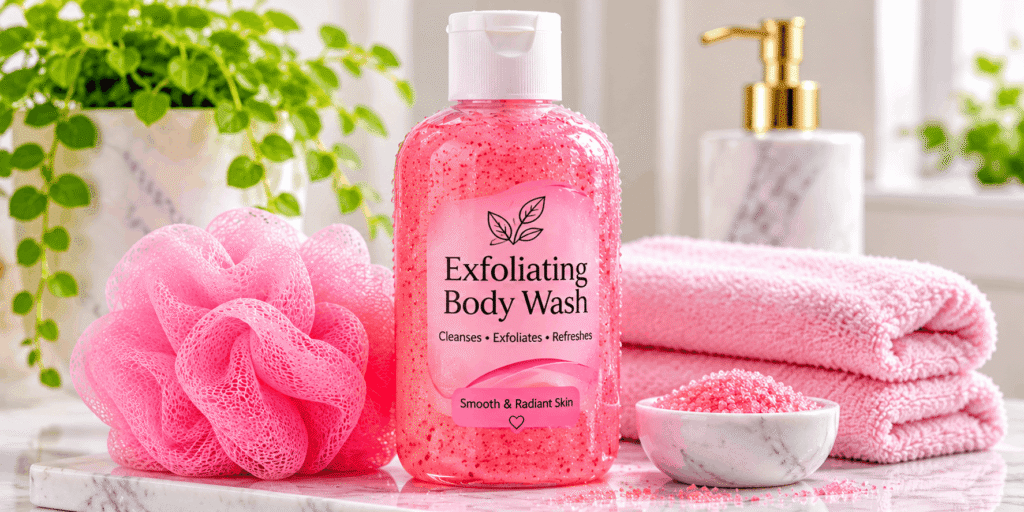
A traditional body wash mainly removes sweat, excess oil, dirt, and everyday buildup from the skin. An exfoliating body wash performs a similar cleansing job but also contains ingredients designed to remove dead skin cells from the outermost layer of the skin.
These products generally fall into two categories: physical exfoliants and chemical exfoliants.
Physical exfoliating washes contain small particles that help loosen dead skin cells through gentle friction. Depending on the formula, these particles may include finely ground plant materials, biodegradable exfoliating beads, or other textured ingredients.
Chemical exfoliating washes use skincare acids or enzymes to loosen the connections between dead surface cells. Common ingredients include salicylic acid, glycolic acid, and lactic acid.
The biggest difference is how these formulas approach exfoliation. Physical products work through contact and movement, while chemical formulas rely on ingredients that help release accumulated surface cells.
Some body washes combine both approaches, although a combination is not automatically more effective or suitable for every skin type.
Why Your Skin May Benefit From Regular Exfoliation
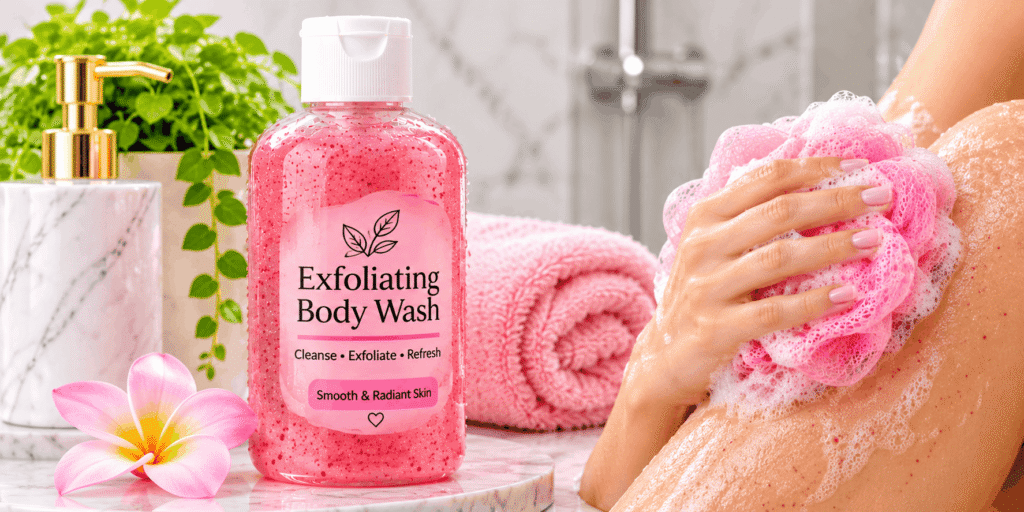
Your skin naturally sheds old cells as new ones develop. However, dead cells can sometimes accumulate on the surface, making the skin appear less radiant or feel uneven. This is particularly noticeable on areas that experience friction, dryness, or frequent exposure to environmental conditions.
A suitable exfoliating cleanser can help remove some of this surface buildup and improve the overall feel of your skin.
One noticeable benefit is smoother texture. Areas such as knees, elbows, heels, and upper arms often develop rough patches that regular cleansing alone may not fully address. Gentle exfoliation can help improve their appearance over time.
Another advantage is that exfoliation can make dry skin feel more manageable when followed by an appropriate moisturizer. Removing excess surface buildup may help skincare products spread more evenly across the skin.
People who struggle with dull-looking skin may also appreciate the refreshing effect of exfoliation. When accumulated dead cells are removed, the skin can appear more polished and feel cleaner.
However, exfoliation body wash does not need to happen every day to produce these benefits. A gentle, consistent routine is generally more useful than repeatedly applying strong products.
Understanding the Main Types of Exfoliating Body Wash
Not every exfoliating body wash works in the same way. Understanding the available formulas makes it easier to choose something that suits your skin concerns.
Physical exfoliating body wash
These cleansers contain tiny particles that provide mild friction during washing. They are particularly useful for people who enjoy a textured cleansing experience and want to concentrate on areas with rough surface buildup.
The important thing is particle size and texture. Large, sharp, or irregular particles may create unnecessary friction, especially when used on sensitive areas.
Chemical exfoliating body wash
Chemical exfoliants work without requiring vigorous rubbing. They contain ingredients that help loosen dead surface cells and are available in different strengths.
Glycolic acid is an alpha hydroxy acid that helps exfoliate the skin’s surface. Lactic acid is another AHA that can offer exfoliation while being included in formulas designed for dry skin.
Salicylic acid belongs to the beta hydroxy acid family. Because it is oil-soluble, it is commonly used in products intended for oily skin and clogged pores.
Enzyme-based body wash
Some exfoliating cleansers use enzymes derived from fruit or other sources. These ingredients help break down certain components associated with dead surface cells.
Enzyme-based products may appeal to people who prefer alternatives to traditional scrub particles or stronger acid formulations. Their suitability still depends on the complete formula and individual skin tolerance.
Choosing the Right Formula for Your Skin Type
Your skin type should influence which exfoliating body wash you purchase. A product that works comfortably for one person may feel too strong for someone with naturally dry or reactive skin.
For dry skin, look for formulas containing moisturizing ingredients such as glycerin, ceramides, or soothing emollients. Lactic acid may also be useful in appropriately formulated products because it provides exfoliating benefits while supporting moisture.
If your skin is oily, a salicylic acid body wash may be worth considering, particularly when clogged pores are a concern. It can help address oil-related buildup without requiring aggressive scrubbing.
Combination skin may benefit from a balanced cleanser that offers gentle exfoliation without leaving the skin feeling stripped. You can also focus on using exfoliating products only where they are needed rather than applying stronger formulas everywhere.
Sensitive skin requires extra care. Fragrance-free products with mild ingredients are often a sensible starting point. Avoid combining multiple exfoliating products until you know how your skin responds.
For normal skin, the options are generally broader. You can experiment with gentle physical or chemical formulas while monitoring dryness, redness, and irritation.
Remember that a product’s ingredient list matters more than its marketing claims. Labels such as deep cleansing, intensive resurfacing, and maximum exfoliation do not automatically indicate better results.
Ingredients Worth Looking For in an Exfoliating Body Wash
The ingredients inside a body cleanser determine much of its performance. Instead of selecting a product based only on its scent, packaging, or advertised benefits, pay attention to the formula.
Glycolic acid is commonly included in exfoliating body washes because it helps loosen dead cells on the skin’s surface. It may be useful for people dealing with uneven-looking texture and dullness.
Lactic acid provides another exfoliating option. It is often found in formulas designed to improve roughness while offering a more moisture-conscious approach.
Salicylic acid is particularly relevant for oily or blemish-prone body areas. It can penetrate into oil-containing pores, making it useful in cleansers formulated for clogged pores and certain types of body acne.
Glycerin is a humectant that attracts water and helps the skin maintain hydration. It is a valuable supporting ingredient in cleansers because exfoliation can sometimes leave the skin feeling dry.
Ceramides help support the skin barrier by contributing to its protective lipid structure. Their inclusion can be beneficial in products intended for people concerned about dryness.
Colloidal oatmeal is another ingredient worth recognizing. It is commonly used in skincare products designed to comfort dry or irritated skin.
Niacinamide may also appear in body cleansers. It supports the skin barrier and can help improve the appearance of uneven skin tone over time.
No single ingredient guarantees a perfect result. The overall formulation, concentration, contact time, and frequency of use all influence how a product performs.
How to Use an Exfoliating Body Wash Correctly
The way you use an exfoliating body wash can be just as important as the product itself. A good shower routine should remove impurities while avoiding unnecessary friction or prolonged exposure to potentially irritating ingredients.
Start by wetting your body with lukewarm water. Extremely hot showers may remove too much of the skin’s natural surface oil, leaving it feeling uncomfortable after cleansing.
Take a small amount of body wash and apply it using your hands or a soft, clean washcloth. If you are using a physical exfoliating formula, massage it gently over the skin without pressing too hard.
For a chemical exfoliating cleanser, follow the product’s instructions. Some formulas are designed to be rinsed off immediately, while others recommend a short contact period. Do not leave the product on longer than directed.
Pay attention to areas where roughness is more noticeable, such as elbows, knees, and the backs of your arms. Avoid aggressive scrubbing over delicate or irritated areas.
Rinse thoroughly to remove all cleanser residue. Leftover product may contribute to discomfort, particularly if the formula contains exfoliating acids or fragrance.
Once you finish showering, gently pat your skin with a clean towel. Avoid rubbing vigorously because freshly exfoliated skin may be more sensitive to friction.
Apply a suitable body moisturizer while your skin is still slightly damp. This helps reduce moisture loss and keeps your skin feeling comfortable.
How Often Should You Use an Exfoliating Body Wash?
There is no universal exfoliation schedule that works for everyone. The ideal frequency depends on the strength of the formula, your skin’s sensitivity, and the type of exfoliating ingredients involved.
If you are new to exfoliating body washes, starting once or twice a week is a reasonable approach. This gives you an opportunity to observe how your skin reacts before increasing usage.
People with normal or oily skin may tolerate more frequent use of a mild product, depending on its formulation. However, stronger acid-based cleansers may require less frequent application.
Dry or sensitive skin generally benefits from a more cautious routine. Using an exfoliating cleanser too frequently can weaken the skin barrier and increase discomfort.
You should reduce or stop exfoliation if you notice persistent redness, burning, tightness, unusual dryness, or peeling.
It is also important to understand that daily cleansing and daily exfoliation are not the same thing. You can shower regularly without using an exfoliating cleanser every time.
Common Body Skin Concerns That Exfoliating Cleansers Can Address
Different body areas experience different skincare challenges. An exfoliating body wash may help improve certain surface-related concerns, although it cannot treat every skin condition.
Rough upper arms
Small, rough bumps on the upper arms are sometimes associated with keratosis pilaris, a common condition involving keratin buildup around hair follicles. Gentle chemical exfoliants, especially lactic acid or salicylic acid, may help improve their appearance. Consistent moisturizing is equally important.
Dull-looking legs
Dryness and accumulated dead skin cells can make legs look less smooth. A mild exfoliating cleanser followed by a nourishing body lotion can help improve their surface appearance.
Uneven elbows and knees
These areas naturally experience repeated pressure and friction. Their skin may become thicker or rougher over time. Gentle exfoliation and regular moisturizing can help soften the appearance of these patches.
Body blemishes
Breakouts on the back, shoulders, and chest can be associated with clogged pores, sweat, and other factors. A salicylic acid body wash may help some people manage these concerns. Persistent or painful acne may require advice from a dermatologist.
Rough feet
The heels and soles experience considerable pressure throughout the day. While a body wash can help cleanse these areas, particularly thick calluses may require a dedicated foot-care routine rather than stronger body exfoliation.
Physical Scrubs vs. Chemical Exfoliating Body Washes
Choosing between physical and chemical exfoliation can feel confusing because both options promise smoother skin. However, their differences make them suitable for different preferences and concerns.
Physical scrubs provide an immediate textured sensation. Their particles create friction that helps remove some surface buildup during washing. They can be enjoyable for people who prefer a traditional exfoliating experience, provided the particles are gentle and the pressure remains light.
Chemical exfoliating cleansers work through ingredients rather than scrubbing motion. This can make them useful for addressing rough texture across areas where repeated friction would be uncomfortable.
For people with sensitive skin, neither category is automatically safe. A harsh physical scrub can cause irritation, while an overly concentrated acid cleanser can also be uncomfortable.
The better choice is the formula your skin can tolerate consistently. If you experience irritation with one type, switching to a gentler product may be more beneficial than trying to exfoliate more aggressively.
Mistakes That Can Make Your Skin Feel Worse
Even a high-quality exfoliating body wash can create problems when used incorrectly. Several common habits can interfere with the results you are trying to achieve.
One mistake is using too much product. A larger amount does not necessarily provide better exfoliation. Follow the recommended instructions and use enough cleanser to cover the intended area.
Another problem is scrubbing aggressively. Applying excessive pressure can irritate the skin and create small areas of damage. Gentle movements are generally sufficient when using physical exfoliants.
Combining several exfoliating products in the same routine is another habit worth avoiding. For example, using an acid-based body wash alongside a strong body scrub and a separate exfoliating treatment may expose the skin to unnecessary irritation.
Ignoring moisturizer can also make a difference. Exfoliation should be balanced with hydration, especially if your skin naturally feels dry after showering.
Some people also continue exfoliating when their skin is already irritated. If you have redness, scratches, sunburn, or active irritation, give the area time to recover before introducing exfoliating products again.
Finally, do not assume that a tingling or burning sensation means the product is working. Discomfort is not a reliable indicator of effectiveness.
Exfoliating Body Wash for Different Seasons
Your skin’s needs can change throughout the year. Temperature, humidity, clothing, and outdoor activities may influence how comfortable your body feels.
During summer, sweat, sunscreen, and increased outdoor exposure can make cleansing feel particularly refreshing. A gentle exfoliating body wash may fit into your routine when your skin tolerates it. However, sun-exposed or sunburned areas should not be exfoliated until they recover.
Winter often brings lower humidity and increased dryness. During this period, using strong exfoliating cleansers too frequently may make skin discomfort worse. Consider switching to a gentler formula and prioritizing moisturizing ingredients.
Spring and autumn can bring changing environmental conditions. Instead of automatically increasing or decreasing exfoliation, observe how your skin responds and adjust your routine accordingly.
Regardless of the season, sunscreen remains important for exposed skin. Some exfoliating ingredients can increase sensitivity to sunlight, particularly AHAs. Follow product guidance and use broad-spectrum sun protection.
Can You Use Exfoliating Body Wash Every Day?
Daily use depends on the formulation and your skin’s tolerance. Some mild cleansers may be suitable for frequent use, but that does not mean every exfoliating formula should become a daily shower product.
Strong acid-based body washes and textured scrubs may be too much for everyday application, particularly when your skin is dry or sensitive.
If you want to use an exfoliating cleanser regularly, choose a gentle formula specifically designed for frequent use and monitor your skin carefully.
For many people, alternating between an ordinary moisturizing body wash and an exfoliating cleanser offers a more balanced approach.
The goal is to maintain comfortable, smooth-looking skin rather than removing as many dead cells as possible.
How to Build a Simple Body-Care Routine Around Exfoliation
A successful body-care routine does not need numerous products or complicated steps. A few well-chosen essentials can help maintain clean, comfortable skin.
Begin with a gentle cleanser for everyday washing. On selected days, replace it with an exfoliating body wash that matches your skin type and concerns.
After showering, apply a body lotion or cream. Look for ingredients such as glycerin, ceramides, shea butter, or other moisturizing components that help reduce dryness.
If you experience roughness in particular areas, you may benefit from a targeted body moisturizer containing urea or lactic acid. However, avoid layering several strong exfoliating treatments without considering their combined effects.
For exposed areas, use broad-spectrum sunscreen during the day. This is particularly important when your routine includes AHAs.
Keep your routine consistent and introduce new products gradually. Changing multiple products at once makes it difficult to identify which ingredient is helping or causing irritation.
How to Choose a Quality Exfoliating Body Wash When Shopping
Shopping for body exfoliants can become overwhelming because brands often advertise similar benefits using different terminology.
Start by identifying your main concern. If you want to improve rough texture, consider a mild AHA-based cleanser. If clogged pores and oily body areas are your primary concern, a salicylic acid formula may be more appropriate.
Next, examine the supporting ingredients. A cleanser containing moisturizing and barrier-supporting ingredients may be a more comfortable option than one focused entirely on intensive exfoliation.
Pay attention to fragrance as well. Strongly scented products may not suit people with sensitive or reactive skin. Fragrance-free options are worth considering if you frequently experience irritation.
Read the product directions before purchasing. Look for information about how often the cleanser should be used, whether it is suitable for sensitive skin, and whether it contains physical particles or chemical exfoliants.
Packaging should not be the deciding factor. A luxurious bottle or attractive scent does not guarantee a well-formulated skincare product.
Finally, consider whether the product fits your budget and whether you can use it comfortably as part of a consistent routine. An expensive cleanser is not necessarily more effective than a simpler, well-formulated alternative.
Final Thoughts
An exfoliating body wash can be a useful addition to your skincare routine when your goal is to improve rough texture, refresh dull-looking skin, and maintain a smoother surface. The right formula can provide cleansing and exfoliating benefits without requiring an extensive collection of body-care products.
The most important part is choosing an option that matches your skin type and using it at an appropriate frequency. Physical exfoliants, chemical acids, and enzyme-based formulas each offer different approaches, so understanding their ingredients can help you make a more informed decision.
Remember that healthy-looking skin depends on more than exfoliation alone. Gentle cleansing, regular moisturizing, sun protection, and avoiding excessive friction all contribute to a comfortable body-care routine.
Rather than chasing instant results, give your skin time to respond. A gentle and consistent approach is often a better way to maintain soft, smooth, and naturally healthy-looking skin.



3 Comments