
The right nail drill can make filing, shaping, and removing nail products much more controlled—but choosing one is harder than it looks. Speed, vibration, handpiece comfort, battery life, rotation direction, and included bits can all change the experience.
Whether you are a professional nail technician or simply looking for an at-home electric file, you do not necessarily need the most powerful model. A drill that is comfortable, easy to control, and suited to the type of nail work you actually do can be a better choice than one with the highest RPM.
In this guide, we compare 15 nail drills across different features and use cases, then explain what to look for before buying one. We will also cover safe-use basics, maintenance, and common questions so you can make a more informed decision.
Our Top Nail Drill Picks
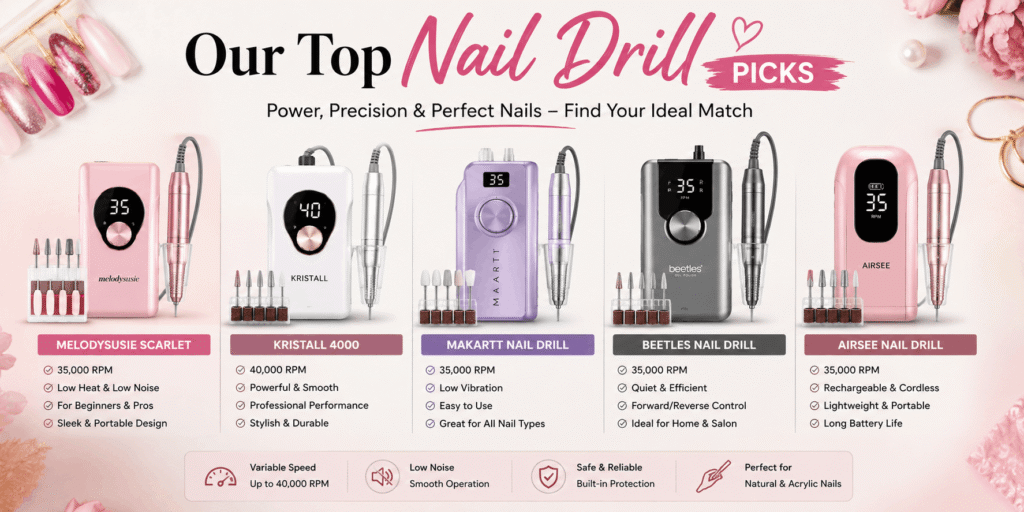
Nail drill range from compact rechargeable models to more powerful professional-style electric files. The models below represent different priorities, including portability, control, lighting, accessories, low vibration, and versatility.
Because product specifications, prices, and availability can change, check the manufacturer’s current listing before purchasing.
1. MelodySusie Portable Electric Nail Drill
MelodySusie currently offers a large range of electric nail drills, including rechargeable and corded models with different speed levels. Its current lineup includes models reaching 30,000, 35,000, and even 40,000 RPM, depending on the model.
For shoppers interested in a portable nail drill, the rechargeable models are particularly convenient because they can be used without being connected to an outlet during operation. The brand’s current MR5, for example, reaches up to 35,000 RPM, uses a standard 3/32-inch bit size, and offers forward and reverse rotation.
The important thing is not simply choosing the highest RPM. For someone learning to use an electric file, control and appropriate speed are more important than maximum power.
2. Makartt Nail Drill Electric Nail File Machine
Makartt has a broad selection of nail drills, including rechargeable and professional-oriented electric files. Its current range includes models from beginner-friendly portable drills to 35,000-RPM professional-style machines.
The variety is useful because it gives shoppers options at different levels rather than forcing everyone into one type of device. Makartt’s current Genesie professional electric nail drill, for example, is listed at 35,000 RPM and is sold as a kit.
If you are comparing Makartt models, focus on the exact model rather than assuming every drill from the brand has identical specifications.
3. Beurer Professional Manicure & Pedicure Nail Drill Kit
A manicure and pedicure kit can be useful when you want one device for multiple nail-care tasks. Beurer offers personal-care devices designed around nail grooming, with different attachments depending on the specific kit.
The main advantage of a complete kit is convenience because you do not necessarily have to purchase every accessory separately. However, make sure the included attachments actually match the type of nail work you expect to perform.
4. AIRSEE Portable Electric Nail Drill
A portable electric nail drill can be appealing when you want to move your setup easily or avoid being tied to a fixed workstation.
Compact designs are especially convenient for occasional at-home use, but portability should not come at the expense of handpiece comfort. A drill can be difficult to control if the handpiece feels awkward or uncomfortable during longer sessions.
5. UTILYZE 10-in-1 Professional Electric Manicure & Pedicure Set
Multi-piece kits can provide several attachments in one package, making them appealing to beginners who want to experiment with different filing and grooming functions.
However, having ten accessories does not automatically make a kit better. The quality and suitability of the individual bits are more important than simply counting how many are included.
6. Alle’s Professional Electric Nail Drill
A professional-style electric drill can be useful when control and sustained operation matter more than compact storage.
When considering this type of model, pay attention to ventilation, handpiece heat, speed adjustment, and how comfortably you can hold the device. These details can become more noticeable during longer sessions.
7. OVX Portable Electric Nail Drill Machine
Portable drills are useful when you want flexibility in where you work. A rechargeable design can reduce cable clutter and make setup easier.
For a portable nail drill, battery life should be considered alongside speed. A model with high maximum RPM is less useful if you frequently have to stop to recharge it.
8. Pure Enrichment PureNails Manicure and Pedicure Kit
Pure Enrichment’s PureNails Professional Manicure & Pedicure System includes a drill, seven attachments, a carrying case, two speed settings, and an LED grooming light. The company also states that the system supports clockwise and counterclockwise rotation.
This makes it particularly interesting for people who want a complete manicure and pedicure kit rather than a drill alone. The included case can also make storage more convenient.
Pure Enrichment also sells a separate PureNails Luxe rechargeable model with nine attachments, three speed settings, an LED light, and a claimed cordless runtime of up to three hours.
9. Medicool MED2191 Turbo File
Medicool is known for electric filing equipment designed for nail professionals and experienced users.
A professional-oriented file can be useful when you need more consistent control during regular nail work. However, a higher-powered drill is not automatically a better beginner choice. Proper technique and speed control should come first.
10. AZ GOGO Portable Nail Drill Machine
A portable rechargeable design can be practical for people who want an electric file without keeping it permanently connected to a workstation.
When comparing cordless models, look at battery capacity, charging time, handpiece weight, and whether the device allows speed and rotation adjustments.
11. Cadrim Portable Nail Drill Set
A portable set can be a convenient option when you want a compact device with multiple accessories.
Before choosing a kit, check the included bits and confirm that they are appropriate for the tasks you plan to perform. More attachments can be useful, but only when they are suitable and comfortable to use.
12. econoLED Electric Nail Drill
A lightweight nail drill can be easier to handle, particularly when you are still learning how to control an electric file.
Weight becomes more important during longer sessions because repeatedly holding an uncomfortable handpiece can make precise work more difficult.
13. Belle Professional Electric Manicure Nail Drill File Machine Set
A complete nail-drill set can be useful if you want the device and accessories together.
Look for features such as adjustable speed, comfortable grip, suitable bit compatibility, and easy controls rather than judging the set only by the number of included pieces.
14. JEWHITENY Professional Electric Nail Drill Machine
A model with a digital display can make it easier to see the selected speed or operating information at a glance.
This can be useful when you want more precise control instead of relying only on a basic dial or switch.
15. Bermunavy Electric Nail Drill
Rotation control is a useful feature when you want the ability to switch between forward and reverse operation.
The exact usefulness depends on your experience and the type of nail work being performed, so beginners should focus first on learning controlled, gentle filing techniques.
Choosing the Best Nail Drill
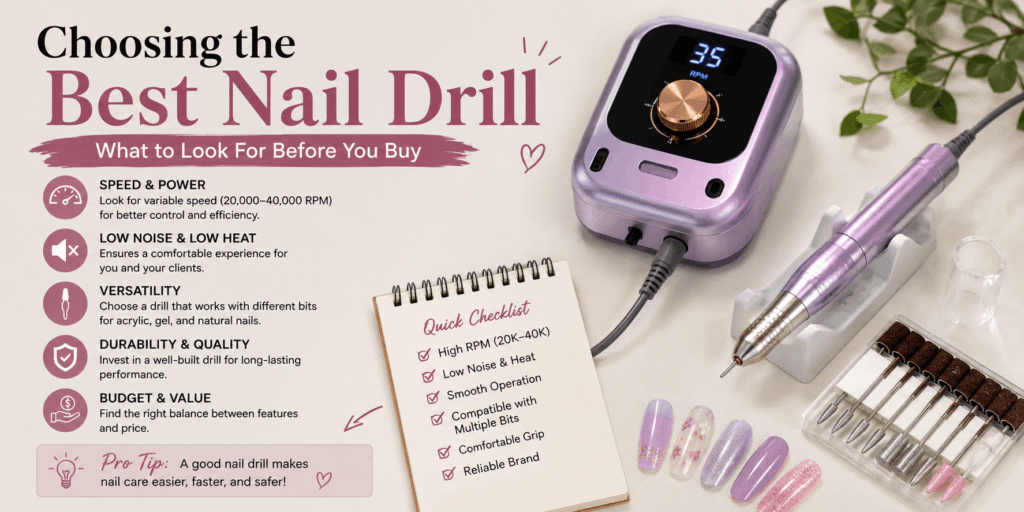
Choosing a nail drill is less about finding the most powerful model and more about finding one you can control comfortably. Think about where you will use it, how frequently you will use it, what type of nail work you need it for, and whether you prefer a corded or rechargeable design.
For occasional home use, a compact model with simple controls may be enough. For frequent professional use, durability, handpiece comfort, speed control, and consistent performance become more important.
Speed and RPM
RPM refers to revolutions per minute and indicates how quickly the drill bit rotates. Current electric nail drills can have very different maximum speeds, with some consumer and professional models reaching 30,000 to 40,000 RPM.
Maximum RPM should not be your only purchasing criterion. Higher speed requires greater control, and the appropriate speed depends on the task, bit, product, and experience level.
For beginners, start with the lowest comfortable setting recommended by the manufacturer and learn how the bit behaves before increasing speed.
Corded vs. Rechargeable
Corded drills can provide continuous operation without waiting for a battery to recharge. Rechargeable drills offer greater freedom of movement and can be easier to transport.
Makartt and MelodySusie both currently offer cordless rechargeable nail-drill options alongside other models.
Handpiece Comfort and Weight
The handpiece is the part you will physically control, so comfort matters greatly.
A lightweight, ergonomic handpiece can make detailed work easier, especially when you are using the drill for an extended period.
Vibration and Noise
Excessive vibration can make precise filing more difficult and may become uncomfortable during longer sessions.
When comparing models, look for user feedback concerning vibration and noise in addition to manufacturer specifications.
Bits and Accessories
Check which bits are included and whether replacements are readily available. Many nail drills use standard 3/32-inch bits, but always confirm compatibility with your specific model.
For example, MelodySusie’s current MR5 lists standard 3/32-inch bit compatibility.
Using a Nail Drill Safely
A nail drill can make filing and shaping much faster, but it should be handled carefully because the rotating bit can remove more material than you intend if used incorrectly. The goal is controlled, gentle movement rather than pressing hard or staying in one area for too long.
Before using any electric file, familiarize yourself with the controls, the appropriate bit, and the manufacturer’s instructions. If you are new to nail drills, practice on suitable training materials before attempting detailed work on natural nails.
Start With the Lowest Comfortable Speed
Speed should match the task and your level of control. Starting slowly gives you more time to understand how the bit moves and how much material it removes.
Do not assume that a drill with a higher maximum RPM will automatically produce better results. Higher speeds can require more precision, especially when working close to the natural nail.
Keep the Bit Moving
Avoid holding a rotating bit in one spot for an extended period. Move it steadily across the intended area and use light pressure.
Consistent movement helps reduce unnecessary friction and makes it easier to maintain control.
Avoid Excessive Pressure
Let the bit do the work. Pressing down harder does not necessarily make filing faster and can increase the chance of removing too much material.
If the bit catches, feels unusually hot, or becomes difficult to control, stop and reassess the technique.
Know When to Stop
A nail drill should not be used to chase a perfectly thin or perfectly smooth surface at the expense of comfort. Once the intended task is complete, stop rather than continuing to file.
If you experience pain, unusual heat, or irritation, discontinue use.
Nail Drill Care and Maintenance
Taking care of your nail drill can help preserve its performance and make it easier to work with over time. After use, remove dust from the handpiece and clean compatible attachments according to the manufacturer’s instructions.
Do not immerse an electrical handpiece in water unless the manufacturer specifically states that it is designed for that purpose. Different machines have different cleaning requirements.
Cleaning the Bits
Bits can collect nail dust and product residue, so they should be cleaned using the method recommended for the specific bit material.
Some bits can be disinfected using appropriate professional methods, while others may require different handling. Always follow the manufacturer’s guidance.
Keeping the Handpiece in Good Condition
Avoid dropping the handpiece or putting unnecessary pressure on the bit shaft. Keep the ventilation openings clear if the device has them, and avoid allowing dust to build up inside the unit.
If the machine begins vibrating unusually, making unfamiliar sounds, or losing power, stop using it and check the manufacturer’s troubleshooting instructions.
Storing the Drill Properly
Store the drill and bits in a clean, dry place where they will not be knocked over or exposed to unnecessary moisture.
A case or organizer can also keep individual bits from becoming damaged or lost.
Nail Drill Bits: Understanding the Basics
The bit is one of the most important parts of an electric file because different shapes and materials are designed for different tasks.
Common bit materials include carbide, ceramic, diamond, and sanding bands. The appropriate choice depends on what you are filing and the level of experience you have.
Diamond Bits
Diamond bits are commonly used for detailed filing and refining work. They come in different shapes and levels of abrasiveness.
Carbide Bits
Carbide bits can remove product efficiently and are often used by experienced professionals for enhancement work.
Because they can remove material quickly, they require careful control.
Ceramic Bits
Ceramic bits are another option for removing product and refining surfaces. Their exact performance depends on the shape and grit.
Sanding Bands
Sanding bands are commonly used with compatible mandrels and can be convenient for certain filing tasks. They are generally intended to be replaced rather than reused indefinitely.
Choosing a Nail Drill for Home Use
If you are buying a nail drill for occasional home use, simplicity can be more valuable than an extensive list of professional features.
Look for straightforward speed adjustment, a comfortable handpiece, compatible bits, and clear instructions.
A rechargeable machine can be useful if you want portability, while a corded model may be more appropriate if you always work in the same location.
Choosing a Nail Drill for Professional Use
Professional users may prioritize durability, consistent speed, handpiece ergonomics, vibration control, and the ability to use the machine for extended periods.
A professional should also consider whether replacement parts, compatible bits, and servicing are readily available.
The best machine is not necessarily the most powerful. Consistent performance and precise control can be much more valuable during a full day of appointments.
Common Nail Drill Mistakes to Avoid
One of the most common mistakes is using a high speed before developing proper control. A faster bit can remove material quickly, leaving less room to correct mistakes.
Another mistake is using the wrong bit for the task. Different bits have different levels of abrasiveness and intended applications.
Some users also hold the drill at an awkward angle or apply excessive pressure. A stable hand position and light touch can make control easier.
Filing Too Long in One Spot
Keeping the bit stationary can concentrate friction in one area. Use smooth, controlled movement instead.
Using Damaged Bits
A chipped, cracked, or excessively worn bit should not be used. Replace damaged accessories according to the manufacturer’s recommendations.
Ignoring Dust
Nail filing creates dust, so appropriate ventilation and protective practices are important, particularly in professional settings where filing occurs frequently.
Nail Drill for Natural Nails
Natural nails require especially careful handling because there is less material to remove.
If you are inexperienced, avoid using an aggressive bit or high speed directly on the natural nail surface. Many beginners are better off using manual files for simple shaping and reserving electric files for tasks they have learned to perform safely.
If you do use an electric file on natural nails, follow the manufacturer’s instructions and use a gentle technique.
Nail Drill for Artificial Nails
Electric files are commonly used in professional nail work involving enhancements such as gel or acrylic products.
These materials can generally require more filing than natural nails, but technique still matters. Use a bit appropriate for the product and avoid unnecessary contact with the surrounding skin.
Professionals should follow the training and safety procedures appropriate to their nail system and workplace.
When a Nail Drill Should Not Be Used
Do not use a nail drill over broken skin, open wounds, significant irritation, or areas that are painful or unusually sensitive.
A cosmetic nail drill is not intended to diagnose or treat medical nail conditions.
If you notice persistent discoloration, swelling, pain, unusual nail changes, or other concerning symptoms, consider getting advice from a qualified healthcare professional before continuing cosmetic nail work.
Final Thoughts
Choosing the right nail drill is less about finding the machine with the highest RPM and more about finding one that gives you the control, comfort, and features you actually need. Portable rechargeable models can be convenient for flexible setups, while professional machines may be better suited to frequent, extended use.
Before buying, consider speed adjustment, handpiece weight, vibration, noise, battery life if applicable, bit compatibility, and the availability of replacement accessories. A model with clear controls and a comfortable handpiece can be much easier to use than one overloaded with features you do not need.
Safe technique is just as important as the machine itself. Start slowly, use the correct bit, keep the bit moving, avoid excessive pressure, and never continue filing simply to achieve a perfectly smooth or thin surface.
Maintenance also matters. Clean compatible bits, keep the handpiece free from excessive dust, store everything properly, and replace damaged accessories when necessary.
Whether you are a beginner buying a nail drill for occasional home use or a professional looking for a dependable electric file, the best choice is the one that matches your experience and intended use. A reliable drill combined with good technique can make nail work more efficient while helping you maintain better control over each step.


2 Comments