
A perfect manicure can start with something as simple as the right nail supplies. The surprising part? Even the most beautiful polish can look disappointing when the file is wrong, the preparation is rushed, or the tools simply do not suit the job.
Whether you do your nails at home or work as a nail technician, having the right supplies can make the entire process smoother. From files and buffers to gel polish, nail tips, brushes, cuticle tools, lamps, and sanitation products, each item has a different role. The challenge is knowing what you actually need—and what is just taking up space in your kit.
A well-planned nail setup does not have to contain every product available. It should contain reliable essentials that match the services or styles you regularly create. Your nail length, preferred manicure type, experience level, and budget can all influence what belongs in your collection.
This guide takes a practical look at the supplies worth keeping in a nail kit, where each one fits into the manicure process, how to build a setup without unnecessary clutter, and which details deserve attention before you buy.
Build Your Nail Kit Around the Job
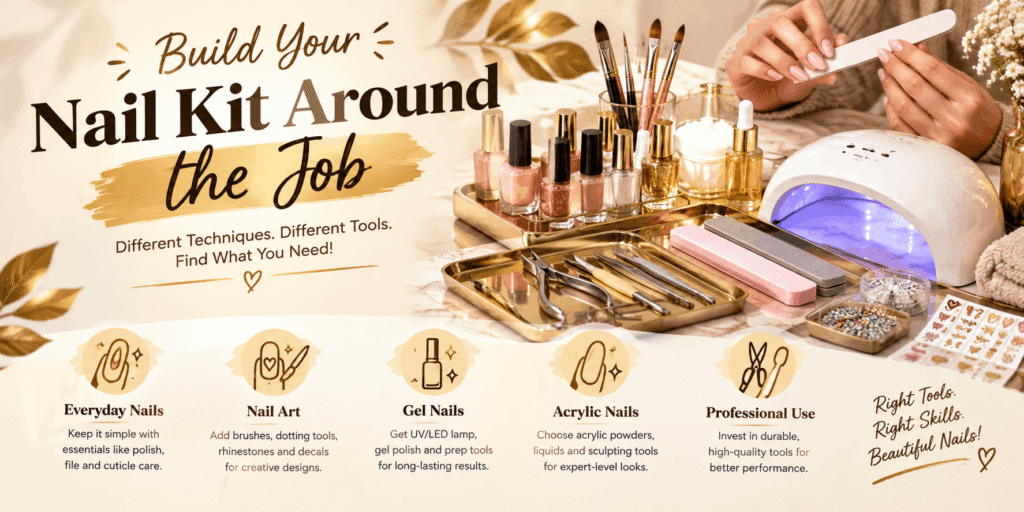
The easiest way to choose nail supplies is to start with the type of manicure you actually do. A basic natural-nail routine requires far fewer items than a setup for gel manicures, extensions, or detailed nail art.
Instead of buying a huge collection immediately, think about the steps you repeat most often. If you mainly shape natural nails and apply regular polish, high-quality files, buffers, clippers, cuticle tools, polish, and a top coat may cover most of your needs.
A gel setup adds more requirements, including compatible gel products and an appropriate curing system. Acrylic or extension work introduces additional products and tools for preparation, application, shaping, and finishing.
The Everyday Essentials
A basic kit can start with a nail file, nail clipper, cuticle pusher, buffer, base coat, polish, and top coat. These items can cover a surprising number of simple manicure needs.
The quality of the individual tools matters more than having a drawer full of duplicates.
Files Decide More Than You Think
Nail files may look like simple accessories, but they can dramatically affect how easily you shape the nail.
Different files have different levels of abrasiveness, often described by grit. A coarse file removes material more quickly, while a finer file is useful for refining the shape and smoothing edges.
Choosing the Right Grit
The ideal grit depends on whether you are shaping a natural nail, refining an enhancement, or finishing the edge. Always use the level of abrasiveness appropriate for the task.
A file that is too aggressive for a natural nail can remove more material than necessary. When in doubt, gentler is usually easier to control.
Give Your Prep Tools a Purpose
Good nail preparation creates the foundation for the rest of the manicure. Tools such as cuticle pushers and buffers can help prepare the nail surface, but they should be used with restraint.
The goal is to prepare the nail without aggressively scraping or thinning it.
Cuticle Pushers
A cuticle pusher can help gently move back non-living tissue from the nail plate area when appropriate. Use controlled pressure and avoid cutting or pushing into living skin.
Nail Buffers
Buffers can smooth the nail surface or remove minor roughness, depending on their design. Over-buffing is unnecessary and can weaken the natural nail.
When Gel Becomes Part of the Setup
For people who regularly wear gel manicures, nail supplies become more specialized.
A gel system may include a base coat, color gel, top coat, cleanser, appropriate lamp, and removal products. It is important to check that the products and curing system are designed to work together.
Using the correct curing method matters. Follow the manufacturer’s instructions for lamp type, curing time, and product application.
Keep Gel Off the Skin
Uncured gel should not be intentionally applied to surrounding skin. If product touches the skin, clean it according to the manufacturer’s instructions before curing.
This is one reason careful, controlled application is more important than simply applying thick layers.
Nail Tips, Forms, and Extensions
If you want to create longer nails, you will need additional supplies.
Nail tips can add length, while forms can be used with certain enhancement systems to build the nail into a desired shape. The correct choice depends on the technique being used and the experience of the person applying it.
Choosing Extension Supplies
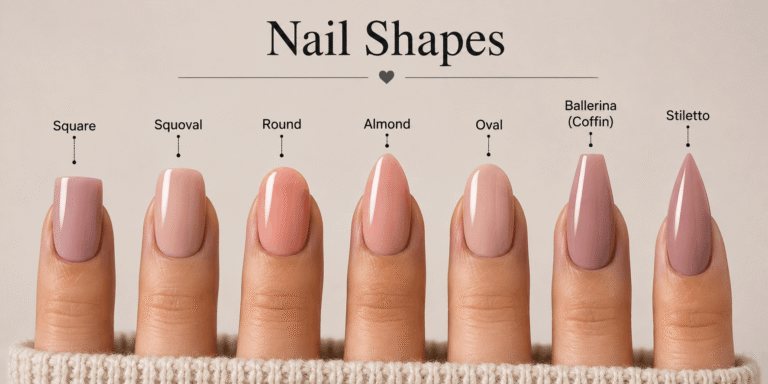
Think about the final shape and length before purchasing tips or forms. Almond, square, coffin, and other shapes require different proportions.
Do not choose extensions simply because they look attractive in the package. They should also work with the intended application method.
The Products Behind a Polished Finish
A manicure can involve several layers, and each serves a different purpose.
Base coats can provide a suitable foundation for polish, color products create the visible shade, and top coats help complete the finish. Using products according to their intended system can make application more predictable.
Base Coat
A base coat can help create a smoother surface and may be designed to improve how polish adheres.
Top Coat
A top coat can add shine or provide another type of finish depending on the formula. Some are designed to create a glossy appearance, while others offer a matte result.
Nail Art Supplies That Actually Earn Their Place
You do not need a professional art studio to create nail art at home. A small selection of useful tools can go a long way.
Detail brushes, dotting tools, striping brushes, fine tweezers, nail stickers, foils, and small decorative pieces can all expand your options.
Detail Brushes
Fine brushes can help create lines, flowers, abstract designs, and other small details.
Dotting Tools
Dotting tools are useful for creating consistent dots and simple decorative patterns.
Tweezers
Tweezers can make it easier to position stickers, tiny decorations, or other small nail-art elements.
The Supplies That Keep Your Setup Clean
Sanitation is an important part of any nail setup, particularly when tools are reused.
Keep reusable tools clean according to their material and intended use. Disposable items should be discarded appropriately rather than repeatedly reused.
A clean workspace also makes the process easier and more professional.
Separate Clean and Used Tools
Keeping freshly cleaned tools separate from used ones can reduce confusion and help you maintain a more organized setup.
Keep Products Closed
Close bottles, jars, and containers after use. This can help prevent contamination, spills, and unnecessary product exposure.
Choosing Supplies for Home vs. Professional Use
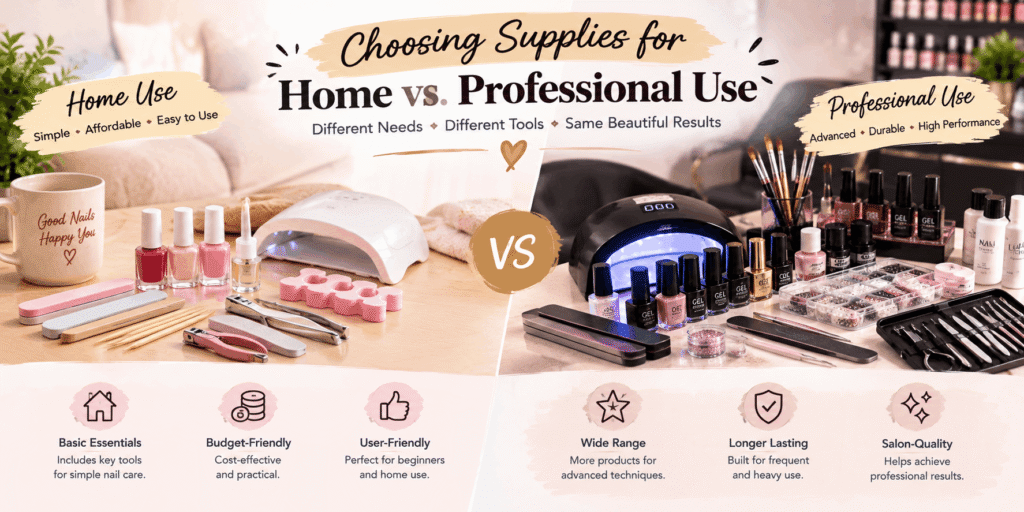
A home user and a working nail technician do not necessarily need the same quantity or type of supplies.
At home, you may prioritize portability, storage, simplicity, and a small number of multipurpose products. A professional may need duplicates, more shades, replacement bits, disposable items, and specialized equipment for multiple clients.
For Beginners
Start with essentials and learn how each product works before expanding your collection.
For Professionals
Durability, replacement availability, consistent performance, and efficient organization become much more important when supplies are used frequently.
Spend More Where It Matters
Not every item needs to be expensive. A budget-friendly nail file can be perfectly adequate, while a poorly made tool that affects comfort or precision may not be worth saving money on.
Think about how frequently you use each product. Items you reach for every day deserve more attention than specialty decorations used occasionally.
Quality Over Quantity
A smaller collection of reliable nail supplies can make your manicure routine easier than owning dozens of products that rarely get used.
The Right Lamp Can Change the Whole Routine
When gel products enter your nail setup, the curing lamp becomes one of the most important pieces of equipment. The lamp needs to be compatible with the gel system you are using, and curing time should always follow the product manufacturer’s instructions.
A lamp is not simply something that makes gel polish dry. Gel products cure through a light-activated process, so using an unsuitable lamp or incorrect curing time can affect the finished manicure.
Choosing a Nail Lamp
Look for a lamp that works with your chosen gel products and provides enough room for the nails you are treating. Features such as a timer, automatic sensor, removable base, and easy-to-clean interior can make the setup more convenient.
For professional use, durability and consistent performance matter even more because the equipment may be used repeatedly throughout the day.
Brushes Do More Than Create Nail Art
A good collection of brushes can make detailed nail work much easier. Different brush shapes are designed for different purposes, so there is no need to buy every brush you see.
A fine detail brush can help create tiny lines, while a longer liner brush can be useful for curves and fine designs. Flat brushes can be helpful for applying products or creating larger shapes.
Detail Brushes
Detail brushes are especially useful for small nail-art elements. They allow greater control when working with flowers, fine lines, outlines, and other decorative details.
Liner Brushes
A liner brush with a long, narrow tip can help create smooth lines and curves. The technique takes some practice, but the right brush can make precise designs easier.
Removers Belong in the Kit Too
It is easy to focus on application and forget about removal, but the right nail supplies should cover the entire manicure process.
Regular polish may require a conventional remover, while gel systems often require a specific removal process. Follow the manufacturer’s instructions for the product you are using and avoid peeling or forcefully scraping gel from the natural nail.
Don’t Rush Removal
Taking off a manicure should not become a race. Allow the appropriate remover or removal method enough time to work instead of forcing the product away.
Aggressive removal can affect the natural nail surface, so patience is often more useful than extra pressure.
Nail Forms, Tips, and Adhesives
If you work with extensions, your supplies will need to include products specifically suited to the technique you use.
Nail tips require appropriate sizing and adhesive, while forms are used with certain systems to create and extend the nail structure. Choosing between them depends on your preferred technique and experience.
Get the Size Right
A nail tip should fit the natural nail appropriately rather than being forced into place. Filing the sides may help achieve a better fit when the product allows it.
An unsuitable size can affect both appearance and application.
Don’t Forget the Finishing Details
Some of the smallest nail supplies can make a noticeable difference during a manicure.
Lint-free wipes can be useful for cleaning the nail surface without leaving fibers behind. Nail dust brushes can help clear filing residue, while disposable applicators can make certain product applications more convenient.
A professional-looking setup often comes from having these little essentials available when you need them.
Lint-Free Wipes
These can be useful during gel preparation and cleanup when you need a surface without loose fibers.
Dust Brushes
A soft dust brush can help remove filing residue before continuing with the next step.
Build a Setup That Fits Your Budget
You do not have to buy every type of nail supplies at once. Start with the items that match the manicure services or styles you actually perform.
A beginner may only need basic files, preparation tools, polish, and a few decorative accessories. Someone who wants to work with gel will need additional equipment, while someone interested in extensions may need an entirely different group of supplies.
Start With the Essentials
Prioritize tools that you use in almost every manicure. Files, basic preparation tools, appropriate polish or gel products, and cleaning supplies are usually more useful than large collections of specialty decorations.
Add Specialty Items Later
Once you know which techniques you enjoy, gradually add nail-art brushes, additional colors, chrome powders, stickers, charms, forms, or other accessories.
This approach can save both money and storage space.
How to Organize Your Nail Supplies
A well-organized nail setup can make the entire manicure process faster. Instead of keeping every product together in one large box, organize supplies according to when and how you use them.
Files and preparation tools can stay together, while polish and gel colors can be grouped separately. Nail-art decorations can be kept in smaller containers so that tiny pieces do not disappear.
Label Your Products
If you have several similar bottles or containers, labels can make them easier to identify quickly.
This becomes particularly useful when you have many colors or specialized products.
Keep Frequently Used Items Within Reach
Place your everyday essentials somewhere easy to access. Specialty items can be stored separately until they are needed.
Storage Matters More Than You Think
Heat, sunlight, moisture, and poor storage can affect certain cosmetic products and equipment.
Follow the manufacturer’s recommendations for storing polish, gel products, removers, adhesives, and other supplies. Keep containers properly closed and avoid exposing products to unnecessary heat or direct light.
Tools should also be stored where they will not become damaged or contaminated.
Protect Gel Products From Light
Many gel products are sensitive to light before curing. Keep them stored according to the manufacturer’s instructions and close containers immediately after use.
Nail Supplies for a Professional Setup
A professional nail station generally requires more planning than a home kit. Multiple clients mean you need reliable tools, backup supplies, disposable items, storage, and an efficient cleaning routine.
You may also need several shades and product systems depending on the services offered.
Keep Backup Supplies
Running out of a frequently used product during an appointment can be frustrating. Keep backups of essential items when practical.
Files, wipes, gloves, disposable tools, and popular polish shades are examples of supplies you may want readily available.
Keep Your Workspace Organized
A cluttered station can slow down the appointment and make it harder to keep track of clean and used items.
Arrange products so your most frequently used supplies are easy to access without crowding the work area.
Safety Should Be Part of the Setup
Good nail supplies are not only about colors and accessories. Safety-related items deserve space in the kit too.
Follow product instructions, use appropriate ventilation when required, protect your skin from accidental product contact, and keep electrical equipment away from water.
When filing or using electric tools, work at a controlled speed and avoid unnecessary pressure.
Protect Your Skin
Try to keep uncured nail products away from surrounding skin. Clean up accidental contact according to the manufacturer’s instructions before curing.
If a product causes significant irritation, discontinue use.
Products You Should Think Twice About
A large number of nail products are available online, but not every product is necessary just because it is trending.
Be cautious with unlabelled products, unclear ingredient lists, or equipment that does not provide reliable instructions.
A cheaper item is not necessarily a bad choice, but you should know what you are buying and how it is intended to be used.
Avoid Mystery Products
Choose products with clear labeling, usage instructions, and manufacturer information.
This is particularly important for gel systems, adhesives, removers, and electrical tools.
How to Build a Nail Kit Without Wasting Money
The easiest way to avoid overspending is to create your nail setup in stages.
Begin with basic supplies that you use consistently. Once you know which manicure styles you enjoy, invest in products that make those specific techniques easier.
A person who mainly creates French manicures has different needs from someone who regularly creates extensions or intricate nail art.
Buy According to Your Routine
Your supplies should reflect your actual nail routine rather than an imaginary one. If you rarely create detailed nail art, there is little reason to buy dozens of specialty brushes and decorations.
If you regularly create gel manicures, however, investing in a reliable lamp and compatible products may make more sense.
Final Thoughts
Building the right nail supplies collection does not mean buying every tool, color, and accessory available. A useful setup starts with the products you actually use and grows as your skills and interests develop.
For basic manicures, focus on reliable files, preparation tools, polish, and finishing products. For gel work, pay close attention to compatible products and curing requirements. For extensions and nail art, add specialized tools only when they serve a clear purpose.
Organization is just as important as selection. Keeping products clean, closed, labeled, and properly stored can make your routine faster and more manageable. Replacing damaged tools and disposing of single-use items appropriately also helps keep the setup in good condition.
Safety should remain part of every decision. Follow manufacturer instructions, avoid unnecessary exposure to uncured products, use electrical equipment carefully, and never treat professional nail products as though they all work the same way.
The smartest nail kit is not the biggest one. It is the one filled with dependable nail supplies that fit your routine, your skill level, and the kinds of manicures you actually enjoy creating.
3 Comments