
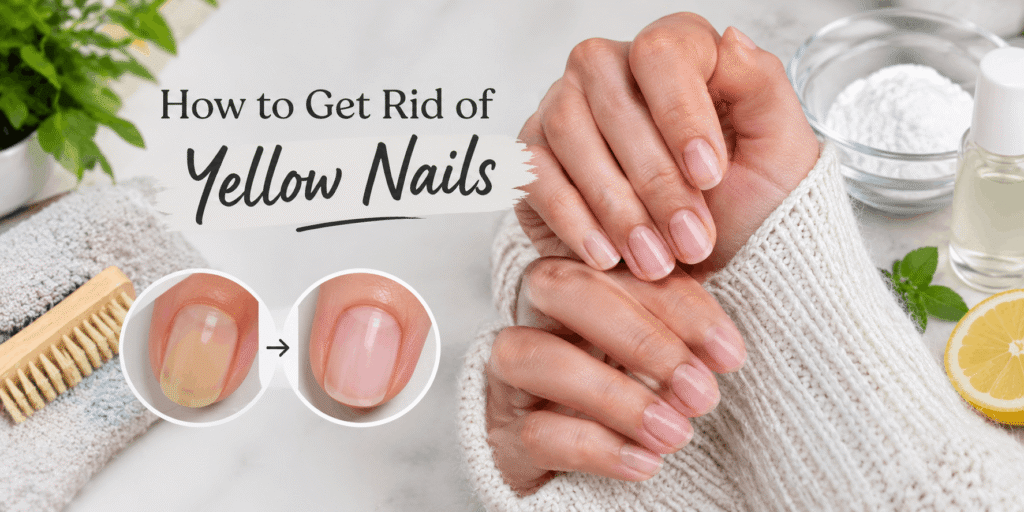
Yellow nails can be caused by something as simple as nail polish staining, but a change in nail color can also happen because of a fungal infection, an injury, certain skin conditions, or an underlying health issue. The appearance of the nail alone does not always reveal the exact cause, so persistent yellowing is worth paying attention to rather than automatically treating it as fungus.
The good news is that many causes of yellow nails can be addressed once the reason for the color change is identified. The right approach may involve changing nail-care habits, treating an infection, or getting medical advice when other symptoms are present.
What Can Cause Yellow Nails?

One of the most common explanations for yellow nails is staining. Frequent use of strongly pigmented nail polish can leave a yellowish tint on the nail, particularly when polish is applied repeatedly. Nail trauma, biting, picking, and prolonged exposure to water or cleaning products can also contribute to nail problems and changes in appearance.
A fungal nail infection is another important possibility. Fungal infections often begin with discoloration and may gradually cause the nail to become thicker, brittle, ragged, or separated from the nail bed. Although toenails are affected more frequently, fingernails can also develop fungal infections.
The pattern of the color change can provide clues, but it cannot reliably confirm the cause on its own. A nail that is simply stained by polish may remain relatively normal in thickness and texture, while a fungal infection can cause additional changes as it progresses.
Skin conditions can also affect the nails. Psoriasis, for example, may produce changes in nail texture, shape, or attachment. Other health conditions and some medicines can also be associated with nail changes, which is why unexplained discoloration should not automatically be assumed to be a cosmetic issue.
There is also a rare condition called yellow nail syndrome. In this condition, nails may become yellow, thicker, and slower-growing. It can occur alongside swelling in the limbs and certain lung conditions. This is very different from ordinary nail staining and requires professional assessment.
If only one nail has changed after being hit, squeezed, or otherwise injured, trauma may be responsible. Nails can change color or become loose following an injury and may gradually return to normal as the nail grows. Fingernails can take months to fully grow out, while toenails may take considerably longer.
Because several conditions can look similar, persistent yellowing is best considered in context. Pay attention to whether the nail has also become thick, crumbly, painful, misshapen, loose, or surrounded by irritated skin. These additional changes can provide useful information for a healthcare professional.
How to Address Yellow Nails
The first step is figuring out why the nails have changed. Trying to make a yellow nail look whiter without addressing the underlying cause may only hide the appearance temporarily.
If nail polish is responsible for staining, taking a break from heavily pigmented polish may allow the discolored portion to grow out naturally. Keeping the nails clean and avoiding unnecessary scraping can also help prevent additional damage.
Good nail hygiene is useful regardless of the cause. Keep nails clean and dry, trim them regularly, and avoid biting or picking around them. If your hands spend a lot of time in water or around cleaning products, protective gloves can reduce repeated exposure.
If a fungal infection is suspected, treatment is different. Antifungal medicines are available in topical and oral forms, but the appropriate option depends on factors such as the severity and location of the infection. Some nail treatments need to be used for many months because healthy nail has to grow out before the improvement becomes obvious.
It’s important not to assume that every yellow nail needs antifungal medication. Conditions such as psoriasis and other nail disorders can resemble fungal infections. A healthcare professional may examine the nail and, when necessary, take a nail clipping or scraping for testing before recommending treatment.
Be Careful With DIY Nail Remedies
Online advice often suggests ingredients such as baking soda, tea tree oil, oregano oil, or hydrogen peroxide for discolored nails. These ingredients are sometimes promoted as quick home solutions, but yellow nails have multiple possible causes, and household remedies should not be treated as a reliable substitute for diagnosis or proven treatment.
Repeatedly applying harsh substances to the nail or surrounding skin may also cause irritation. If the nail is already damaged, aggressive home treatments can make the surrounding area more uncomfortable without addressing the reason for the discoloration.
A gentler approach is to focus on basic nail care while watching for changes. If the yellow color persists, spreads to additional nails, or occurs alongside thickening, crumbling, pain, swelling, or separation from the nail bed, professional advice is more appropriate than repeatedly trying different DIY treatments.
When Treatment May Take Time
Nails grow slowly, so even when the underlying problem has been successfully addressed, the visible discoloration may not disappear immediately. The affected portion may need to grow out before the nail looks normal again.
This is particularly important with fungal nail infections. Treatment can take months, and improvement may first appear as healthier nail growing from the base rather than an instant change in the entire nail. NHS guidance notes that some antifungal nail medicines need to be used for six to twelve months.
Patience is therefore part of nail recovery. Constantly filing, scraping, or applying multiple products in an attempt to speed up the process can create additional problems.
Simple Habits That Can Help Prevent Nail Problems
Prevention starts with keeping nails clean and dry. Moist environments can encourage fungal growth, particularly around the feet, so changing damp socks and choosing breathable footwear can be helpful. Wearing footwear in shared wet areas such as public showers and pool areas can also reduce exposure to fungi.
Don’t share nail clippers, scissors, towels, shoes, or other personal items that come into contact with potentially infected nails or skin. If you visit a nail salon, make sure the tools are properly cleaned and avoid aggressive treatment of the cuticles.
Preventing Yellow Nails
Good nail habits can reduce staining, injury, and the conditions that allow fungal infections to develop. Keeping nails clean and dry is particularly important for toenails because fungi thrive in warm, moist environments.
Trim nails regularly without cutting them unnecessarily short. Avoid digging underneath the nail with sharp objects, since this can injure the nail bed and surrounding skin. If you get regular manicures or pedicures, make sure the tools are properly cleaned and avoid aggressive treatment of the cuticles.
If you use dark nail polish frequently, a base coat can help reduce direct contact between highly pigmented polish and the nail surface. Giving your nails occasional breaks from colored polish can also make it easier to notice genuine changes in color or texture.
For feet, choose footwear that allows enough room and avoid spending long periods in damp socks or shoes. Changing socks regularly and allowing footwear to dry can reduce excessive moisture. Wearing appropriate footwear in shared wet areas such as public showers and pools can also reduce exposure to fungal infections.
If you have athlete’s foot, treating it promptly is useful because fungal infections of the skin can spread to the nails. Sharing nail clippers, scissors, towels, or footwear can also increase the opportunity for infection to spread between people.
Another important prevention step is avoiding unnecessary picking, biting, or aggressive filing. Repeated trauma can weaken the nail and create additional problems that may be mistaken for infection.
When Yellow Nails Need Medical Attention
Not every yellow nails requires urgent care, but unexplained changes should not be ignored indefinitely. NHS guidance recommends medical evaluation when a nail changes color or shape without a known reason, particularly when the change persists.
You should consider seeing a healthcare professional if the nail becomes increasingly thick, brittle, separated from the nail bed, painful, or swollen. Redness, warmth, or swelling around the nail can also indicate an infection that needs assessment.
Several nails becoming affected at the same time is another reason to investigate the cause rather than treating each nail cosmetically. A dermatologist can distinguish between fungal infection, psoriasis, injury, and other nail disorders that may have similar appearances.
If a fungal infection is suspected, testing can sometimes be useful before prescription treatment is started. A dermatologist may examine the nail and take a small sample or scraping because conditions such as nail psoriasis or trauma can look similar to fungal disease.
People with diabetes or a weakened immune system should be particularly careful with possible fungal nail infections and seek appropriate medical advice rather than relying solely on home treatment.
Severe or Persistent Cases
A nail infection that has been present for a long time can become harder to manage because the nail may become substantially thicker and the affected area can extend deeper into the nail structure.
When fungal infection is confirmed, treatment may involve medication applied directly to the nail or prescription oral antifungal medication, depending on the situation. The appropriate choice is based on factors such as how much of the nail is affected, how many nails are involved, the suspected fungus, other health considerations, and potential medication risks.
A healthcare professional may recommend a nail sample before prescribing treatment because yellowing alone does not prove that fungus is responsible. This is especially important when the nail changes could have another explanation.
Treatment also requires patience. Even after the infection itself has been cleared, the damaged portion of the nail does not instantly become normal. Healthy nail needs to grow from the base and gradually replace the affected section. The American Academy of Dermatology notes that nails grow slowly and that visible discoloration can remain while the nail grows out.
For some fungal nail treatments, the treatment period can last several months. NHS guidance notes that topical treatments may need to be used for around 6 to 12 months, while prescription tablets may be considered when appropriate.
Because oral antifungal medicines can have important side effects and interactions, they should only be used according to a healthcare professional’s instructions. Some patients may also need testing before or during treatment.
Outlook
The outlook for yellow nails depends almost entirely on the underlying cause.
If the problem is simply surface staining from nail polish, the discoloration may gradually become less noticeable as the nail grows. If trauma caused the change, the affected portion may also move toward the edge as new nail develops.
Fungal infections can be treated, but improvement is usually gradual. The infection may clear before the nail looks completely normal because the damaged nail has to grow out. This is one reason people sometimes think a treatment has failed when the underlying infection is actually improving.
Fungal nail infections can also return after successful treatment. Paying attention to moisture, footwear, nail hygiene, and possible athlete’s foot can therefore remain important even after the nail looks healthy again.
The biggest mistake is assuming that every yellow nail needs the same remedy. A polish stain, fungal infection, injury, inflammatory nail condition, and less common medical disorder can require very different approaches.
Final Thoughts
Yellow nails are a symptom rather than a diagnosis. Sometimes the explanation is simple, but persistent yellowing combined with thickening, brittleness, lifting, pain, or other changes deserves a closer look.
Gentle nail care, keeping feet dry, avoiding unnecessary trauma, and using clean manicure tools can help protect nail health. If you suspect a fungal infection, professional evaluation can help confirm the cause before committing to a lengthy treatment routine.
Home remedies are often promoted as universal solutions, but evidence for many of them is limited. The American Academy of Dermatology notes that studies of remedies such as tea tree oil for nail fungus have been small, so their effectiveness and potential side effects are not fully established.
The most important thing is to treat the reason behind the color change rather than simply trying to bleach or cover the nail. Once the underlying issue is addressed and healthy nail has had time to grow, the natural appearance can gradually return.
Yellow nails can have several causes, including nail polish staining, fungal infections, repeated trauma, certain skin conditions, and less common health conditions. The appearance of the nail and any other symptoms can help determine the likely cause.
Yes. Dark or strongly pigmented nail polish can leave temporary yellow staining on the nail surface. The discoloration may gradually grow out as the nail grows.
No. A fungal infection is one possible cause, but yellowing can also result from staining, injury, psoriasis, or other nail changes. A healthcare professional may need to examine or test the nail to identify the cause.




One Comment