
Pink blush is one of the easiest makeup products to use when you want to add fresh, healthy-looking color to the face. It can brighten the overall appearance, add dimension to the cheeks, and help a makeup look feel more balanced. Depending on the shade, finish, and application technique, pink blush can create anything from a soft everyday flush to a more noticeable and glamorous look.
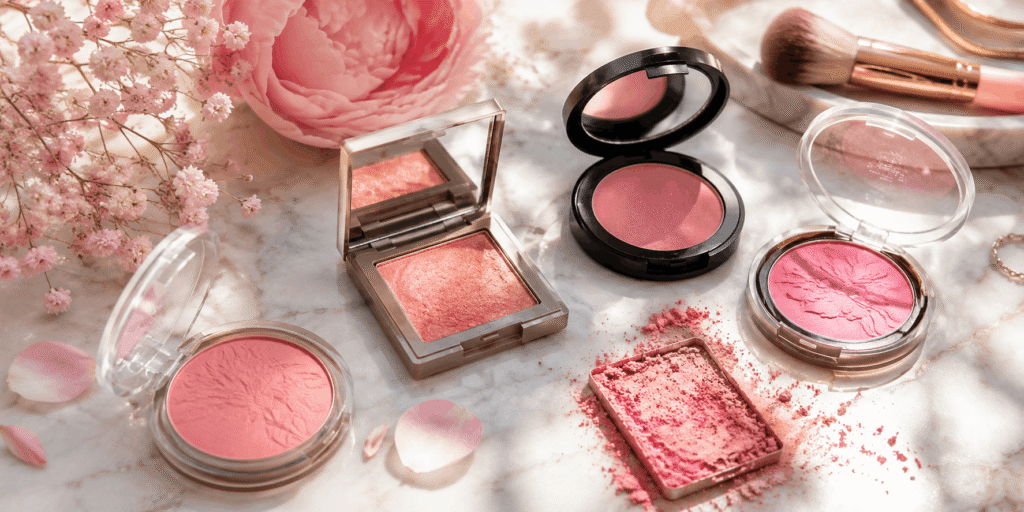
There are many different shades of pink blush, so choosing the right one can sometimes feel confusing. Soft baby pink, dusty rose, cool pink, warm pink, mauve, berry, and bright fuchsia can all produce very different results. Skin tone, undertone, makeup style, and personal preference can all influence which shade looks most flattering.
The texture of the blush also matters. Powder blush is convenient and easy to build, while cream and liquid formulas can create a more blended, skin-like finish. Some products have a matte appearance, while others contain shimmer or a subtle glow. The best choice depends on the look you want and how your skin responds to different textures.
Pink blush is also versatile because it can be used with many makeup styles. It can complement natural makeup, soft glam, bridal looks, monochromatic makeup, and even more colorful styles. You can apply a small amount for a subtle flush or gradually build the color for greater intensity.
In this guide, we will explore different pink blush shades, how to choose one for your skin tone and undertone, different formulas, application techniques, common mistakes, and ideas for creating beautiful makeup looks. Whether you are new to blush or looking for a new pink shade to add to your collection, these tips can help you make a more confident choice.
What Is Pink Blush? 🌸
Pink blush is a cosmetic product designed to add color to the cheeks. It comes in a variety of pink-based shades, ranging from very pale and subtle tones to deeper and more vibrant colors.
The main purpose is to bring some color and dimension back to the face after applying foundation or other complexion products. Blush can also help create the appearance of a more lively and balanced complexion.
Why Is Pink Blush So Popular?
Pink is naturally associated with a fresh and youthful-looking flush, which makes it a popular choice for everyday makeup.
It is also available in an enormous range of shades, allowing people with different skin tones and preferences to find something suitable.
Different Shades of Pink Blush 💗
Not every pink blush looks the same. The depth and undertone of the shade can make a major difference.
Baby Pink
Baby pink is soft, light, and delicate. It can create a subtle appearance and is often popular for fresh, natural makeup looks.
It can work beautifully as a light everyday shade, particularly when applied with a gentle hand.
Dusty Rose
Dusty rose contains a muted quality that can make it look more sophisticated than a very bright pink.
It can work well for both everyday and slightly more formal makeup.
Soft Rose Pink
Rose pink offers a balance between a natural flush and a more noticeable cheek color.
It is a versatile option for many makeup styles.
Mauve Pink
Mauve contains cooler, slightly purple or muted tones.
It can be useful when you want a sophisticated blush shade that does not look overly bright.
Berry Pink
Berry shades are deeper and more noticeable. They can add richness to the cheeks, especially in evening makeup.
Bright Pink
Bright pink blush can create a bold and energetic appearance. The key is to build the color gradually rather than applying a large amount at once.
Choosing Pink Blush for Your Skin Tone 🎨
Skin tone can help narrow down your choices, but there are no strict rules. Personal preference and the overall makeup look also matter.
Fair Skin
Very light pinks, soft rose shades, and delicate cool pinks can create a subtle flush on fair skin.
If a blush is extremely pigmented, use a small amount and blend it carefully.
Light to Medium Skin
A wide range of pink shades can work, including rose, soft warm pink, mauve, and medium pink.
You may have more flexibility to experiment with both soft and stronger shades.
Medium to Tan Skin
Medium pinks, warm rose shades, berry pinks, and richer blush colors can provide enough contrast to remain visible without looking overly harsh.
Deep Skin
Deeper pinks, berry shades, magenta-inspired blushes, and rich rose tones can create a beautiful effect.
Very pale pinks may appear less noticeable, although they can still work depending on the formula and desired finish.
Understanding Undertones 🌷
Your skin’s undertone can also influence which pink blush shades you prefer.
Cool Undertones
Cool undertones often pair well with pinks that have blue, mauve, or rosy qualities.
Warm Undertones
Warm undertones can work beautifully with peachy pinks, coral-pink shades, and warmer rose tones.
Neutral Undertones
Neutral undertones can often experiment with both warm and cool pink shades.
If you are unsure about your undertone, compare how different pink shades appear against your skin rather than relying on one fixed rule.
Cream vs. Powder Pink Blush ✨
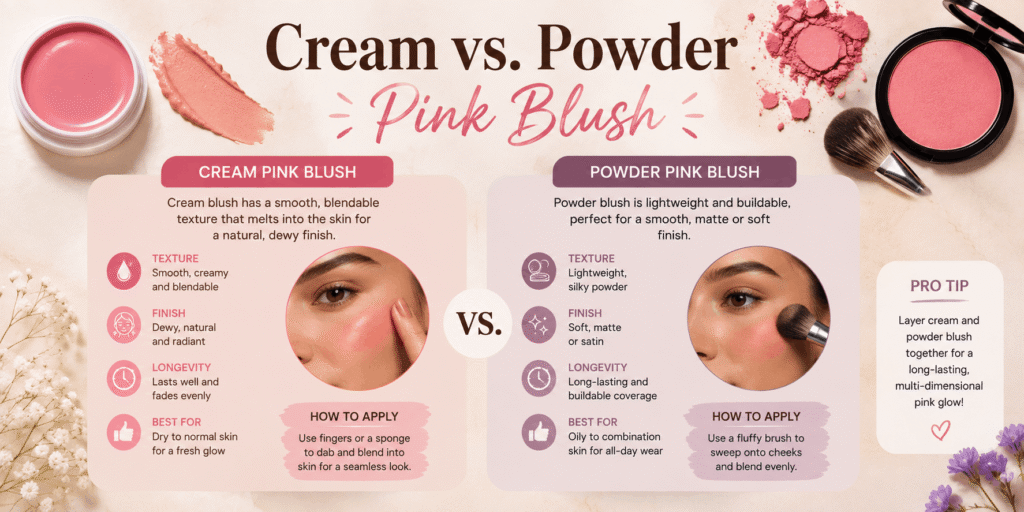
Formula is another major factor when choosing blush.
Powder Blush
Powder pink blush is easy to layer and can work particularly well over powder-based makeup.
It can provide anything from a soft matte finish to a more luminous appearance depending on the product.
Cream Blush
Cream blush can create a more seamless and skin-like finish. It can look especially natural when blended with the fingers, sponge, or appropriate brush.
Cream formulas are also useful for creating a dewy makeup look.
Liquid Blush
Liquid blush can be highly pigmented, so a very small amount may be enough.
Apply gradually and blend quickly according to the product’s formula and instructions.
How to Apply Pink Blush 💄
The placement of blush can change the overall appearance of your makeup.
Apply Gradually
Start with a small amount of product and build it slowly.
It is much easier to add more color than to remove too much blush once it has been applied.
Blend Carefully
Use a suitable brush, sponge, or clean fingertips depending on the formula.
Blend the edges so the blush transitions naturally into the surrounding makeup.
Placement
For a fresh appearance, many people place blush on the cheeks and blend slightly upward toward the outer face.
The exact placement can be adjusted according to personal preference and the shape of your face.
Pink Blush for Different Makeup Styles 💕
Pink blush can be adapted to many aesthetics.
Natural Makeup
Choose a sheer pink or soft rose and apply a small amount.
Pair it with neutral eyeshadow, a light lip color, and a natural-looking base.
Soft Glam
A medium pink or rose blush can add definition without overpowering the rest of the makeup.
Pair it with softly blended eye makeup and a coordinated lip.
Monochromatic Makeup
Use similar pink tones on the cheeks, lips, and eyes.
This creates a coordinated appearance and allows pink to become the main color theme.
Pink Blush and Lip Color 💋
Matching or coordinating blush with lipstick can make a makeup look feel more balanced.
A soft pink blush can work with pink, nude, rose, and even some berry lip colors.
You do not need to match the shades exactly. Instead, choose colors that belong to a similar tonal family.
Common Pink Blush Mistakes ⚠️
One common mistake is applying too much product at once.
Another is choosing a blush shade based solely on how it looks in the packaging. The actual color can appear different once applied to the skin.
Applying blush too low on the face can also change the appearance of the makeup. Experiment with placement and blend carefully.
Finally, using a formula that does not work well with the products underneath can lead to uneven application. Consider whether you are using cream, liquid, or powder complexion products before choosing your blush formula.
Pink Blush for Everyday Makeup ☀️
For daily makeup, a soft pink or rose shade is often easy to wear.
A lightweight application can add color without making the cheeks look overly dramatic. This can be especially useful for school, work, casual outings, or simple daytime makeup.
The goal is not necessarily to make the blush obvious. A softly blended flush can create a polished finish while keeping the overall makeup natural-looking.
Pink Blush for Special Occasions ✨
For weddings, parties, dinners, and celebrations, you can use a more noticeable pink shade.
A luminous or satin finish can add extra dimension, while a richer rose or berry shade can create stronger definition.
For formal events, make sure the blush blends well with your foundation, contour, bronzer, and highlighter so that the complexion looks balanced.
How to Make Pink Blush Look Natural
A natural-looking pink blush application usually comes down to using the right amount of product and blending it well. Rather than placing a large amount of blush onto the cheeks immediately, start with a small quantity and gradually build the color.
For a soft everyday look, apply the blush to the area where your cheeks naturally become flushed. Then blend the edges outward so there are no harsh lines between the blush and the rest of your complexion.
The goal is to create a smooth transition rather than an obvious patch of color. A well-blended blush can make the face look more lively while still allowing the foundation to remain visible underneath.
Use the Right Tool 🖌️
Powder blush can usually be applied with a soft blush brush. Cream formulas can work well with fingers, brushes, or makeup sponges, depending on the product.
Liquid blush often requires quick blending because some highly pigmented formulas can set relatively fast.
Always follow the product’s instructions and use clean tools.
Pink Blush Placement for Different Looks 💗
Blush placement can change the overall effect of your makeup.
For a youthful, fresh appearance, you can focus more color toward the center of the cheeks. For a lifted appearance, blend the blush slightly upward and outward toward the temples.
There is no single correct placement. Try different positions and see which one works best with your preferred makeup style.
Soft Cheek Placement
A small amount placed close to the natural cheek area can create an understated flush.
Lifted Blush Placement
Applying the color slightly higher on the cheeks and blending upward can create a more sculpted-looking finish.
Draped Blush
Blush can also be blended slightly toward the temples for a more editorial appearance. This works particularly well when the blush color is coordinated with the rest of your makeup.
Pink Blush With Bronzer and Highlighter ✨
Pink blush can be combined with other complexion products to create more dimension.
Bronzer can add warmth, while blush brings color to the cheeks. Highlighter can then add light to selected areas.
The key is keeping the transitions smooth. Products should complement each other rather than creating separate, heavily defined patches of color.
Pink Blush and Soft Bronzer
A warm bronzer paired with a soft rose blush can create a balanced everyday appearance.
Pink Blush and Highlighter
A luminous pink blush can sometimes provide enough glow on its own, but adding a small amount of highlighter can create a more noticeable finish.
Pink Blush for Different Seasons 🌸
Your preferred blush shades can change throughout the year.
In spring, soft pinks, rosy shades, and pastel-inspired colors can create a fresh appearance. Summer can be a good time for brighter pinks or lightweight cream formulas.
Autumn often works well with dusty rose, mauve, berry, and deeper pink shades. During winter, rich rose and berry tones can complement heavier makeup and darker clothing.
These are only seasonal suggestions. Any pink blush can be worn throughout the year if you enjoy the shade.
Choosing the Right Finish 💫
The finish of your blush can change the overall effect.
Matte Pink Blush
Matte blush creates a soft, non-shiny appearance. It can work well for everyday makeup or when you already use luminous products elsewhere on the face.
Satin Finish
A satin finish provides some subtle luminosity without looking extremely reflective.
Shimmer and Glow
Shimmery blush can add noticeable light to the cheeks. It can work especially well for evening makeup or special occasions.
How to Make Pink Blush Last Longer ⏳
Longevity depends on the formula, your skin type, the products underneath, and environmental conditions.
Start with an appropriate base and apply the blush according to its formula.
Layering a small amount of powder blush over a compatible cream or liquid blush can sometimes increase the intensity and longevity of the look, but make sure the products are compatible and blend them carefully.
Avoid excessive touching of your face throughout the day because this can disturb makeup.
Pink Blush for Different Skin Types 🧴
Your skin type can influence which blush formula feels most comfortable.
People with dry skin may enjoy cream or liquid blushes because they can create a softer, more skin-like finish. Those with oily skin may prefer powder formulas or long-wearing products.
Combination skin can work with either type depending on which areas of the face tend to become more oily or dry.
There is no universal formula that is best for everyone, so experimenting carefully can help you discover what works for you.
Common Pink Blush Mistakes to Avoid ⚠️
Using too much blush is one of the easiest mistakes to make. Highly pigmented products can look very strong when applied heavily.
Another mistake is failing to blend the edges. Even a beautiful shade can look uneven if the transition into the surrounding foundation is too sharp.
Applying powder blush over a wet or unset base can also create patchiness.
Choosing the Wrong Undertone
A pink shade can look completely different depending on its undertone. A very cool pink may appear bright against warm-toned makeup, while a warm pink can look more natural with peach or golden tones.
Ignoring Lighting
A blush that looks subtle indoors may appear much stronger in daylight. Check your makeup under more than one type of lighting when possible.
Pink Blush With Different Lip Colors 💄
Pink blush does not require pink lipstick. It can be paired with many lip colors.
Nude lipstick can create a soft, balanced appearance. Rose lipstick can create a coordinated monochromatic effect. Red lipstick can provide a classic, more dramatic combination.
Berry lipstick can complement deeper pink blush shades, while peachy or coral lips can work well with warmer pink blushes.
Pink Blush for Minimal Makeup 🌿
If you prefer minimal makeup, blush can be one of the most important color products in your routine.
A small amount of soft pink blush can add color after applying sunscreen or a lightweight complexion product. Add lip balm and simple eye makeup if desired.
The key is keeping the application light and well blended.
Pink Blush for Bridal Makeup 👰
Pink blush is a popular choice for soft bridal makeup because it can create a delicate and romantic appearance.
Soft rose, dusty pink, and muted blush shades can work with many bridal looks.
For photographs, the exact intensity may need to be slightly stronger than everyday makeup because some colors can appear less noticeable under bright lighting. A professional makeup artist can adjust the shade and placement according to the event, lighting, and overall look.
How to Choose Pink Blush Online 🛍️
Shopping for makeup online can make shade selection more difficult because screens display colors differently.
Look for several swatches taken under different lighting conditions. Pay attention to the product description and undertone rather than relying only on the name.
If the product has a return policy that covers cosmetic items, review the terms before purchasing.
Final Thoughts
Pink blush is one of the most versatile products in a makeup collection because it can create a subtle everyday flush or a more dramatic statement depending on the shade and application. From baby pink and soft rose to mauve, berry, and brighter pinks, there are countless options to explore.
When choosing your blush, consider your skin tone, undertone, preferred formula, finish, and overall makeup style. A soft cream blush can create a natural-looking glow, while a powder formula can offer easy layering and control.
Application matters just as much as shade. Start with a small amount, blend carefully, and build the intensity gradually. Pay attention to placement as well, because positioning the color differently can change the overall appearance of your makeup.
Most importantly, there is no single perfect pink blush for everyone. Makeup is personal, and the best shade is the one that makes you feel comfortable and confident. Experiment with different tones, finishes, and application techniques until you find the combination that works best for you.


4 Comments