A mustache can completely change the way a face looks without requiring a full beard. Whether you prefer something short and subtle or a thicker style that becomes the main feature of your look, there are plenty of mustache styles to choose from. The right option depends on your facial hair growth, face shape, personal style, and how much time you want to spend maintaining it.
Some mustaches look naturally neat with very little styling, while others need regular trimming, brushing, or even mustache wax to maintain their shape. A style that looks excellent on someone with thick facial hair may not create the same effect on someone with lighter or uneven growth. That does not mean one person cannot wear a particular style; it simply means the final appearance can vary.
Another advantage of experimenting with mustache styles is that you do not necessarily need to commit to a completely different beard. A mustache can be worn by itself, connected to a beard, combined with short stubble, or allowed to blend naturally into the surrounding facial hair. Even small changes in length and shape can create a noticeably different appearance.
Before choosing a style, consider how your facial hair grows naturally. Pay attention to the density above the upper lip, the direction of growth, the thickness at the corners, and whether the hair connects easily with your beard or stubble. Working with your natural growth pattern usually makes maintenance easier and produces a more balanced result.
Mustache Styles That Work With Different Facial Hair Looks
A standalone mustache style is not the only way to wear facial hair. Some men prefer combining their mustache with stubble or a beard because the additional hair creates more definition around the jaw and cheeks. Others like a mustache that remains the main focus while the rest of the facial hair stays very short.
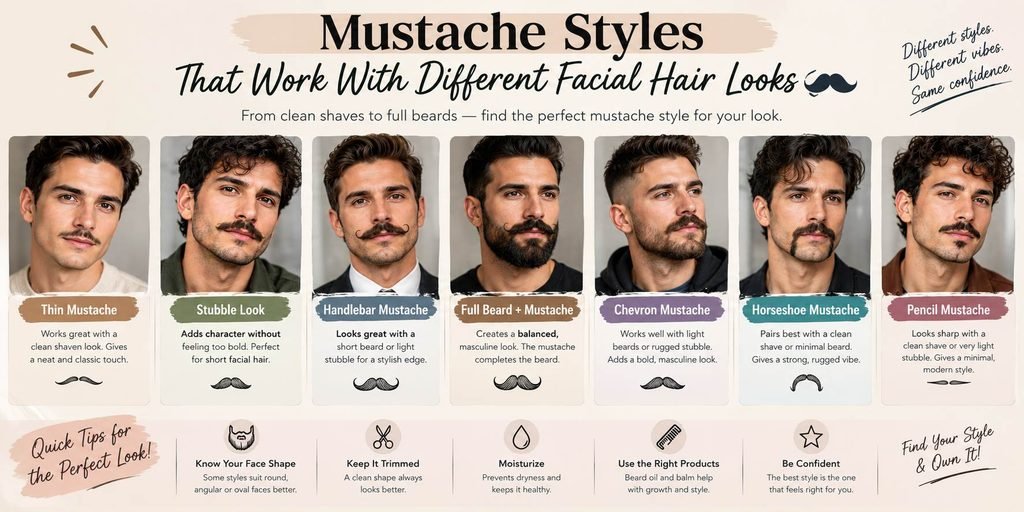
The best choice often comes down to how much contrast you want between the mustache and the rest of your face. A completely clean-shaven face puts all the attention on the mustache, while stubble creates a softer transition. A full beard makes the mustache part of a larger facial-hair shape.
The Anchored Mustache
An anchored mustache combines a defined mustache with facial hair that extends downward around the chin. The overall shape can resemble an anchor, which gives the style its name.
This look works particularly well for someone who wants more definition than a simple mustache but does not necessarily want the fullness of a traditional full beard. The mustache remains prominent while the chin area adds structure underneath it.
The exact shape can be adjusted depending on facial-hair density. Someone with strong growth around the chin can allow the lower section to become more noticeable, while someone with lighter growth can keep the chin hair shorter and more subtle.
Maintenance mainly involves keeping the edges controlled and preventing the different sections from becoming too uneven. Regular trimming around the cheeks and neck can make the overall style appear intentional rather than unkempt.
The Beard Mustache
A beard mustache is one of the easiest combinations because the mustache naturally becomes part of a larger beard. Instead of treating the mustache as an isolated feature, the beard creates a continuous frame around the lower face.
The style can be adapted to almost any beard length. A short beard with a slightly fuller mustache can create a neat everyday appearance, while a longer beard can make the mustache appear more substantial.
One of the biggest advantages of this combination is flexibility. You can gradually adjust the length rather than making a dramatic change all at once. If you decide that a full beard feels too heavy, trimming the beard shorter while leaving the mustache slightly longer can create an entirely different look.
The main challenge is maintaining proportion. If the mustache grows significantly faster than the beard, the two areas can start looking disconnected. Regular trimming can keep the transition natural.
The Shadow Mustache
The shadow mustache is an understated option that works well for someone who does not want a sharply defined or heavily styled mustache. It is essentially a very short layer of facial hair above the lip, often paired with similarly short stubble.
Rather than emphasizing the edges or creating dramatic volume, the shadow effect gives the face a slightly more rugged appearance while remaining subtle.
This style is particularly low-maintenance because it does not require the precision associated with longer mustaches. A trimmer can be used regularly to keep the hair at a consistent length.
The shadow mustache can also be a useful starting point for anyone experimenting with facial hair. Keeping the hair short allows you to see how your natural growth pattern looks before deciding whether to grow it longer.
11 Mustache Styles to Consider
Once you decide whether you want a standalone mustache or a combination with other facial hair, the next step is choosing a specific shape. Traditional mustache styles range from thick and bold designs to narrow, carefully trimmed shapes.
There is no universal style that suits everyone. Facial proportions, hair density, growth direction, and maintenance preferences all matter. The same mustache can also look different depending on its length and how sharply the edges are trimmed.
1. The Chevron Mustache
The Chevron is one of the most recognizable mustache styles. It is generally thick, full, and shaped so that the hair follows the natural line of the upper lip.
Instead of curling upward or creating extremely sharp edges, the Chevron tends to have a straightforward, substantial appearance. The hair is usually allowed to grow thick enough to create noticeable coverage across the upper lip.
One reason the style remains popular is that it does not require complicated shaping. Much of the appearance comes from allowing the natural density of the hair to create the shape.
Regular trimming is still important. Hair that grows too far over the upper lip can become inconvenient while eating or drinking and can make the mustache look less controlled. Keeping the bottom edge reasonably neat helps preserve the classic shape.
The Chevron can be worn alone or combined with short stubble or a beard. With a clean-shaven face, the mustache becomes a stronger focal point, while facial hair around the jaw creates a more blended appearance.
2. The Outlaw Mustache
The outlaw mustache has a rugged, confident appearance and generally works best when the hair is allowed to retain some natural fullness. It sits somewhere between a carefully sculpted style and a more relaxed facial-hair look.
Rather than trying to make every hair perfectly symmetrical, the style can embrace a slightly rougher character. However, “rugged” does not have to mean completely untrimmed. Cleaning up the edges can make the mustache look deliberate while allowing the central section to remain fuller.
This style can pair well with stubble or a short beard. The surrounding facial hair helps create a cohesive look and can make the mustache appear less isolated.
If your mustache grows unevenly during the early stages, patience can help. Different sections often grow at different speeds, and immediately trimming everything to match can prevent the mustache from reaching enough length to develop its eventual shape.
3. The Pyramid Mustache
The pyramid mustache gets its name from its shape. It is generally narrower toward the upper area and gradually becomes fuller toward the center and lower edge, creating a triangular or pyramid-like appearance.
This shape can look particularly clean when the lower boundary is carefully maintained. Unlike a completely natural mustache, the pyramid style benefits from deliberate trimming because the shape is one of its defining characteristics.
The style can be adapted to different lengths. A shorter version can look neat and understated, while additional length can create more definition.
For maintenance, a good trimmer and small grooming scissors can be useful. The objective is not necessarily to remove large amounts of hair but to keep the silhouette consistent.
Because the style emphasizes the area above the upper lip, it can be particularly noticeable when worn with a clean-shaven face. Pairing it with stubble creates a more relaxed transition and can make the overall look less formal.
4. The Handlebar Mustache
The handlebar is one of the most distinctive mustache styles because of its curled ends. The central portion usually remains fuller while the ends are grown longer and trained outward or upward.
This style requires more commitment than many shorter mustaches. Growing the ends to sufficient length takes time, and achieving a consistent curl generally requires regular grooming.
Mustache wax is often associated with the handlebar because it can help hold the ends in position. The amount needed depends on hair texture and the shape you want to create.
Training the hair is also part of the process. As the ends become longer, repeatedly brushing them in the desired direction can help make styling easier. However, hair growth patterns differ, so not every handlebar will naturally curl in exactly the same way.
The handlebar can be worn with a clean-shaven face, stubble, or a beard. Keeping the surrounding facial hair shorter can make the mustache stand out more dramatically.
Because the ends are the main feature, uneven trimming can quickly change the appearance. Small scissors can help remove individual stray hairs without taking away too much length.
5. The Half Horseshoe Mustache
The half horseshoe is a variation of the horseshoe style that gives the mustache a longer, more vertical appearance without extending the shape as far around the mouth.
The style generally involves hair extending downward from the mustache toward the corners of the mouth. The exact length can vary considerably, allowing the look to range from relatively subtle to much more dramatic.
This type of mustache style tends to work best when the facial hair grows strongly around the upper lip and mouth. If the surrounding growth is naturally sparse, achieving an even appearance may require more patience.
Maintenance focuses on keeping both sides reasonably symmetrical. Since the style draws attention toward the mouth and chin, uneven lengths can become noticeable.
A shorter version can provide a modern interpretation of the traditional shape, while a longer version creates a much bolder look. The choice largely depends on how much facial hair you want to maintain and how prominent you want the mustache to be.
6. The Horseshoe Mustache
The horseshoe mustache is a bold facial-hair style characterized by long sections that extend downward from the upper lip along the sides of the mouth.
It is considerably more noticeable than a short classic mustache and has historically been associated with rugged, distinctive looks. The shape creates strong vertical lines on either side of the mouth, making the mustache one of the dominant features of the face.
Because of its length and shape, the horseshoe requires more regular maintenance than a simple short mustache. The sides need to remain relatively even, and the area around the cheeks and neck may need to be trimmed depending on whether you are wearing it with additional facial hair.
Someone considering this style should also think about how it fits with the rest of their grooming routine. If you prefer a five-minute routine with minimal maintenance, a shorter mustache may be more practical.
The horseshoe can nevertheless be a great option for someone who wants facial hair with a strong personality and does not mind spending additional time maintaining it.
7. The Walrus Mustache
The Walrus is a thick, heavy mustache that is allowed to grow considerably fuller than many everyday styles. Instead of creating a sharply defined outline, the goal is generally to emphasize volume and length.
The style works best when the mustache naturally grows dense and thick. It can take significant time to reach the fullness associated with a traditional Walrus, particularly if the hair grows slowly.
Because the hair can become long enough to overlap the upper lip, grooming becomes an important part of wearing the style comfortably. Regular brushing can help keep the hairs organized, while occasional trimming can prevent the mustache from becoming impractical.
A Walrus mustache can also be combined with a beard, although a large mustache worn against a relatively clean face creates a stronger contrast.
The biggest advantage of this style is its natural, substantial appearance. Unlike styles that depend heavily on precise lines, the Walrus gets much of its character from volume.
Finding the Right Mustache for Your Look
Choosing between different mustache styles is easier when you focus on your natural hair rather than trying to copy someone else’s exact appearance. Facial hair density varies considerably, and two people growing the same style may end up with noticeably different results.
Start by considering thickness. If your mustache naturally grows dense, fuller styles such as the Chevron or Walrus may be easier to achieve. If your growth is lighter, a shorter style such as the Shadow or a carefully shaped Pyramid may create a cleaner result.
Length is another important factor. Short styles are generally easier to maintain and can be reshaped quickly. Longer styles provide more styling possibilities but require patience and regular grooming.
Your daily routine matters too. Someone who enjoys grooming may not mind using scissors, a comb, and mustache wax. Someone who wants a low-maintenance appearance may prefer a short mustache that only requires occasional trimming.
The most important thing is to choose a style that fits your natural growth and the amount of maintenance you are realistically willing to do. A well-maintained simple mustache can look more intentional than a complicated style that is difficult to keep under control.
8. The Pencil Mustache
The Pencil mustache is one of the thinnest and most precisely shaped mustache styles. Instead of relying on heavy volume, it uses a narrow line of facial hair positioned neatly above the upper lip.
Because the style is so defined, trimming precision matters. Small changes in the width or position of the mustache can noticeably alter the overall appearance. A quality trimmer and small grooming scissors can make it easier to maintain the thin shape.
The Pencil mustache can be worn with a clean-shaven face for a classic appearance or combined with very light stubble for a more contemporary look. Keeping the surrounding facial hair controlled is especially useful because excessive stubble can make the narrow mustache look less distinct.
This style can also require more frequent maintenance than a fuller mustache. A few days of growth can quickly change the clean outline, particularly around the edges. Regular trimming helps preserve the narrow shape.
Not every mustache naturally grows evenly enough for a Pencil style. If one side is considerably denser than the other, forcing an extremely thin shape may create an uneven result. In that situation, a slightly fuller style may be easier to maintain while still looking polished.
The Pencil mustache is best suited to someone who enjoys precision and does not mind frequent grooming. Its defining characteristic is control rather than volume.
How to Make a Mustache Look Fuller and Grow Well
A fuller-looking mustache begins with understanding how facial hair naturally grows. Genetics have a major influence on hair density, growth pattern, texture, and the age at which facial hair becomes more developed. There is no guaranteed method that can completely change someone’s natural growth pattern.
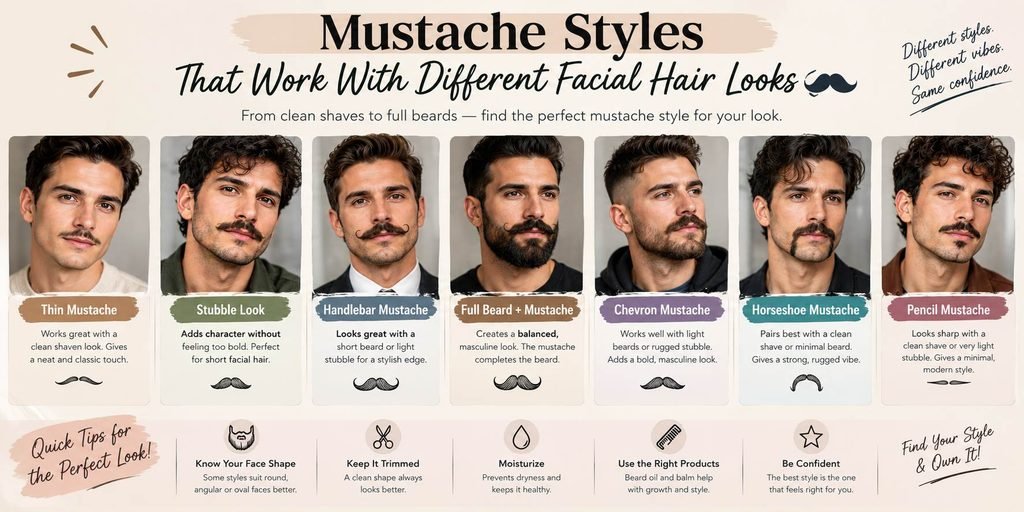
One of the simplest ways to make a mustache appear fuller is to give it enough time to grow before judging its final shape. New facial hair can look patchy during the early stages because different hairs grow at different rates. Trimming too soon can make it difficult to see how much density you could achieve with additional length.
However, growing a mustache longer does not automatically make every mustache look better. Once the hair becomes too long, individual strands can separate and create the impression of gaps. Finding the right length for your particular hair texture can therefore make the mustache appear denser without actually increasing the number of hairs.
Brushing can also help organize the hair. A small mustache comb can guide the strands in a consistent direction and make the overall shape look more uniform. This is especially helpful for medium and longer styles.
Keeping the skin underneath the mustache clean is important as well. Facial hair can trap oil, dead skin cells, food particles, and product residue. Gentle cleansing can help keep the skin comfortable while avoiding the excessive scrubbing that may cause irritation.
Moisturizing the skin can also make grooming more comfortable. A suitable facial moisturizer can reduce dryness around the upper lip, while a small amount of beard or mustache conditioner may help longer facial hair feel softer.
Nutrition and general health are relevant to normal hair growth, but they should not be confused with guaranteed facial-hair growth treatments. Eating a balanced diet and getting adequate nutrients supports normal body functions. Taking supplements specifically to grow a thicker mustache is not automatically beneficial, particularly when there is no nutritional deficiency.
Can You Make Your Mustache Grow Faster?
There is no reliable trick that makes facial hair suddenly grow much faster than its natural rate. Hair growth is influenced by genetics, hormones, age, and individual biology, so growth speed varies significantly from person to person.
Many products online claim to dramatically accelerate facial-hair growth, but impressive marketing does not necessarily mean that a product can produce the promised result. It is worth being cautious about products that guarantee a dramatically thicker or faster-growing mustache.
Time is often one of the most important factors. Facial hair can continue developing as a person gets older, and some people naturally notice changes in thickness and coverage over several years.
A healthy lifestyle can support normal hair growth. Regular meals containing adequate protein and a variety of nutrients, sufficient sleep, physical activity, and general health habits all contribute to the body’s normal functions. However, these habits cannot override genetic limitations or guarantee a specific mustache density.
If facial-hair growth changes suddenly or there is an unusual pattern of hair loss, speaking with a healthcare professional may be more useful than experimenting with random growth products. A medical professional can determine whether there is an underlying issue that deserves attention.
How to Style and Maintain Different Mustache Styles
Styling a mustache becomes much easier when you start with the correct length. Trying to force a very short mustache into an elaborate shape usually creates unnecessary frustration, while allowing a longer mustache to grow gives you more room to experiment.
Begin with a clean, dry mustache. Washing the facial hair removes excess oil and product buildup, making it easier to see the natural growth pattern. After washing, gently pat the area dry instead of aggressively rubbing the hair.
A small comb can then be used to guide the hairs in the direction you want them to sit. For a classic short mustache, simply combing the hair downward and slightly outward can create a neat appearance. Longer styles may require more deliberate shaping.
Grooming scissors are useful for removing individual hairs that extend beyond the desired outline. It is generally better to make small cuts rather than removing a large amount of hair at once. Once facial hair has been trimmed too short, you have to wait for it to grow back.
For styles such as the Handlebar, a small amount of mustache wax can help create and maintain the desired shape. Wax should be applied sparingly because using too much can leave the hair stiff, greasy, or difficult to reshape.
The Chevron and other fuller styles generally require less styling product. Their appearance comes primarily from natural density and controlled trimming. The Walrus may need regular combing simply because the hair becomes long and can fall across the upper lip.
Shorter styles such as the Shadow or Pencil require more frequent trimming because even a small amount of additional growth can change their appearance. Keeping the edges neat is particularly important when the style depends on a precise outline.
Keeping the Edges Clean
The edges around a mustache can make the difference between a polished style and a messy one. The exact amount of trimming depends on the look you want, but stray hairs around the corners of the mouth and lower edge are often worth cleaning up.
Some people prefer a completely defined border, while others want a more natural transition. Neither approach is inherently better. A softer edge can work well with stubble, whereas a sharply defined outline can complement a clean-shaven face.
The area directly above the upper lip also deserves attention. If the hair becomes too long, it can interfere with eating, drinking, or speaking comfortably. Trimming the bottom edge slightly can improve comfort without sacrificing the overall fullness of the mustache.
Symmetry is another consideration. Facial hair does not always grow at exactly the same speed on both sides, so checking both sides before trimming can prevent accidentally making one side significantly shorter.
Using a mirror with good lighting makes precision easier. If you are attempting a complicated shape for the first time, it is often safer to leave a little extra length and make additional adjustments later.
Choosing a Mustache Style That Fits Your Routine
The most practical mustache style is usually the one that matches both your natural growth and your willingness to maintain it. A style that looks impressive but requires daily shaping may not be a good fit for someone who prefers a quick grooming routine.
If you want something simple, a short natural mustache, Shadow, or Chevron can be relatively easy to maintain. These styles do not depend heavily on elaborate shaping and can work well as part of an everyday grooming routine.
If you enjoy experimenting, the Handlebar provides more styling possibilities. Growing the ends longer gives you the ability to change the shape, but it also means spending more time combing and styling.
Fuller styles such as the Walrus require patience during the growth stage. The hair may look uneven before it reaches sufficient length, so avoiding unnecessary trimming can help you determine how much natural fullness you can achieve.
The Pencil is almost the opposite. Instead of waiting for maximum length, it depends on precision and controlled trimming. It can therefore require frequent maintenance despite being much shorter than fuller styles.
Your workplace or daily environment can also influence the style you choose. A subtle mustache may be easier to incorporate into a conservative grooming routine, while a dramatic horseshoe or handlebar can make a much stronger style statement.
There is no need to choose one style permanently. Facial hair grows back, and experimenting with different lengths is one of the easiest ways to discover which shape you prefer.
Final Thoughts
Mustache styles range from extremely subtle to bold and highly recognizable, making facial hair one of the easiest ways to change your overall grooming style. The Chevron provides a classic fuller appearance, the Handlebar adds a more distinctive shape, the Pencil focuses on precision, and the Walrus emphasizes natural volume. Styles such as the Shadow can offer a simpler option for someone who prefers minimal maintenance.
The right choice ultimately depends on your natural facial-hair growth, the amount of time you want to spend grooming, and the kind of appearance you want to create. A style should work with your hair rather than requiring you to constantly fight against its natural direction.
Growing a mustache also requires patience. Facial hair does not develop at exactly the same speed everywhere, and the early stages can look very different from the finished style. Giving the hair enough time to grow can help reveal its natural density before you decide how aggressively to trim it.
Good maintenance does not necessarily require a large collection of products. A suitable trimmer, small grooming scissors, a comb, and optional styling wax are enough for many mustache styles. Regular cleaning and gentle skincare can also keep the area beneath the facial hair comfortable.
Most importantly, avoid judging a mustache style solely by how it looks on another person. Facial structure, hair density, texture, and growth direction can produce very different results. Use other styles as inspiration, then adapt the length and shape to your own facial hair.
Whether you prefer a clean Chevron, a dramatic Handlebar, a rugged Horseshoe, or a simple Shadow, experimenting gradually is often the easiest way to find a style that feels natural and manageable. The best mustache is not necessarily the most complicated one—it is the one you can maintain confidently and comfortably.