Lymphatic drainage massage is a gentle massage technique designed to encourage the movement of lymph fluid through the body, but what makes it different from an ordinary massage? The answer is surprisingly simple: less pressure, more precision.
Unlike deep-tissue massage, lymphatic drainage focuses on light, rhythmic movements and the pathways of the lymphatic system. It is commonly used as part of care for swelling and lymphedema, while facial lymphatic massage has also become popular as a cosmetic and relaxation practice.
Why Is Lymphatic Drainage Massage Different?
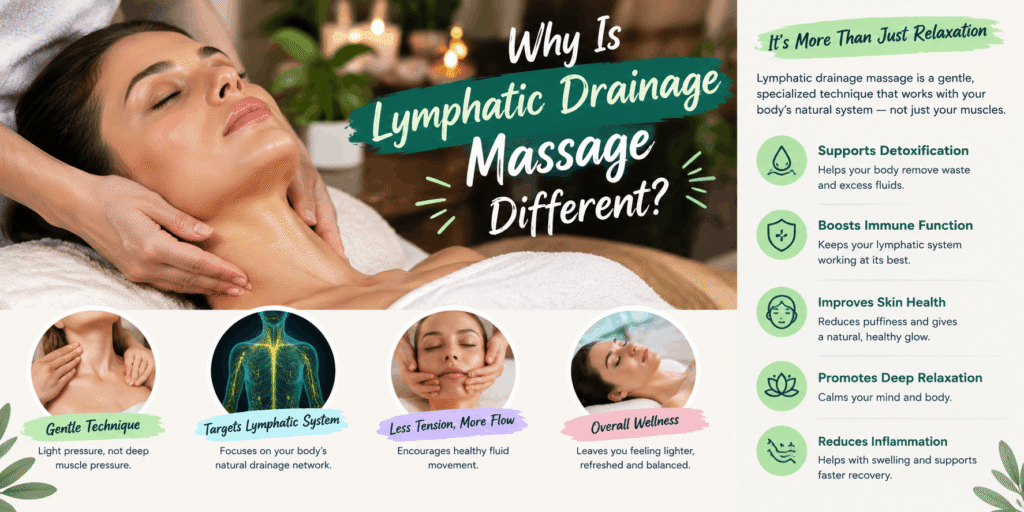
At first glance, lymphatic drainage massage may look like any other type of massage. However, the purpose and pressure are quite different.
The lymphatic system is a network of vessels, nodes and tissues that helps maintain fluid balance and plays an important role in the body’s immune system. Unlike the circulatory system, it does not have a central pump like the heart. Movement from surrounding muscles and other body processes help lymph fluid move through the system.
That is why lymphatic drainage massage uses a much lighter touch than many people expect. The technique is intended to gently influence superficial lymphatic vessels rather than deeply work the muscles.
The Idea Behind the Technique
The basic idea is to encourage lymph fluid to move from areas where it has accumulated toward functioning lymphatic pathways and nodes.
For someone dealing with lymphedema, this can be part of a broader treatment plan. The NHS describes manual lymphatic drainage as one component of decongestive lymphatic therapy, which may also involve compression, exercise and skin care.
This is an important distinction because lymphatic drainage massage is not simply a general “detox” massage. Its most established medical use relates to managing swelling associated with problems in lymphatic drainage.
For people without a lymphatic condition, expectations should also remain realistic. A massage may feel relaxing or temporarily reduce the appearance of puffiness, but that does not mean it has permanently changed the body’s lymphatic function.
Why the Movements Are So Gentle
One of the biggest misconceptions about lymphatic drainage massage is that stronger pressure must produce better results.
In reality, the technique is intentionally gentle. Specialized therapists use light, rhythmic movements because many lymphatic vessels are located close to the surface of the skin.
This is also why lymphatic drainage massage may feel completely different from a traditional massage. There is usually no need for forceful kneading or deep pressure.
If a massage feels painful, aggressive or uncomfortable, that is a reason to stop rather than assume the technique is working better.
What Happens During Lymphatic Drainage Massage?
A professional session is usually more strategic than simply massaging wherever swelling appears.
A trained practitioner considers the lymphatic pathways and works toward areas where fluid can be redirected. Depending on the person’s condition, the session may involve areas around the neck, chest, armpits, abdomen or limbs.
The exact approach can vary considerably because lymphatic drainage is not a one-size-fits-all treatment.
Someone receiving treatment for lymphedema after medical treatment may require a very different approach from someone interested in a gentle facial massage.
Where the Massage Usually Begins
Professional lymphatic drainage may begin by working around areas containing groups of lymph nodes before addressing an area where fluid has accumulated.
This helps explain why the technique can seem unusual to someone experiencing it for the first time. A therapist may work around nearby areas rather than immediately concentrating on the visibly swollen area.
The goal is to create a pathway through which fluid can move toward functioning parts of the lymphatic system.
How Different Areas Are Approached
The face, neck, arms, abdomen and legs can all be approached differently.
Facial lymphatic massage is generally associated with gentle movements intended to reduce temporary puffiness and create a refreshed feeling. Body-focused manual lymphatic drainage, particularly when used for lymphedema, requires a more individualized approach.
For this reason, copying a technique from a random online video is not always appropriate, especially when swelling is related to a medical condition.
A qualified healthcare professional or lymphatic therapist can determine whether self-massage is suitable and, when appropriate, teach a person a technique suited to their situation. The NHS specifically notes that people with lymphedema may be taught simpler self-massage techniques during the maintenance phase of treatment.
Why Direction Matters
Lymphatic drainage is not simply about rubbing the skin in any direction.
The direction and sequence of movements are based on the anatomy and function of the lymphatic system. Specialized therapists use particular pathways to encourage fluid toward areas that can process it.
That is one reason professional instruction can be valuable. Two people may have swelling in the same body area but require different approaches depending on the underlying cause.
Can You Do Lymphatic Drainage Massage at Home?
In some circumstances, yes. Simple lymphatic drainage techniques can be taught for home use, particularly as part of ongoing management for conditions such as lymphedema.
However, “gentle” does not automatically mean “appropriate for everyone.”
If you have unexplained or persistent swelling, it is better to understand why it is happening before trying to treat it with massage. Swelling can have many possible causes, and lymphatic drainage may not be the right approach for every situation.
For someone simply interested in a relaxing facial routine, the considerations can be different from those of someone with diagnosed lymphedema.
What to Know Before Trying It
The most important thing to understand is that lymphatic drainage massage should never be treated as a substitute for medical evaluation.
Cleveland Clinic notes that self-massage may be possible in some cases, but recommends checking with a healthcare provider first, particularly for people with lymphedema or other health concerns.
A professional can also teach the appropriate technique rather than having you guess at the pressure, direction or sequence.
If the purpose is cosmetic facial massage, the goal should remain modest: temporary reduction in puffiness or a relaxing sensation rather than claims of permanent reshaping or “flushing toxins.”
Creating a Comfortable Routine
If a healthcare professional has told you that lymphatic self-massage is appropriate, the experience should be comfortable and gentle.
A calm environment can make the routine more relaxing, and there is no reason to rush through the movements. Lymphatic drainage is generally associated with slow, light techniques rather than fast or forceful massage.
It is also useful to pay attention to how your body responds afterward. Some people may experience temporary effects such as fatigue, headache or nausea, and Cleveland Clinic recommends discussing concerning reactions with a healthcare provider.
What Are the Potential Benefits?
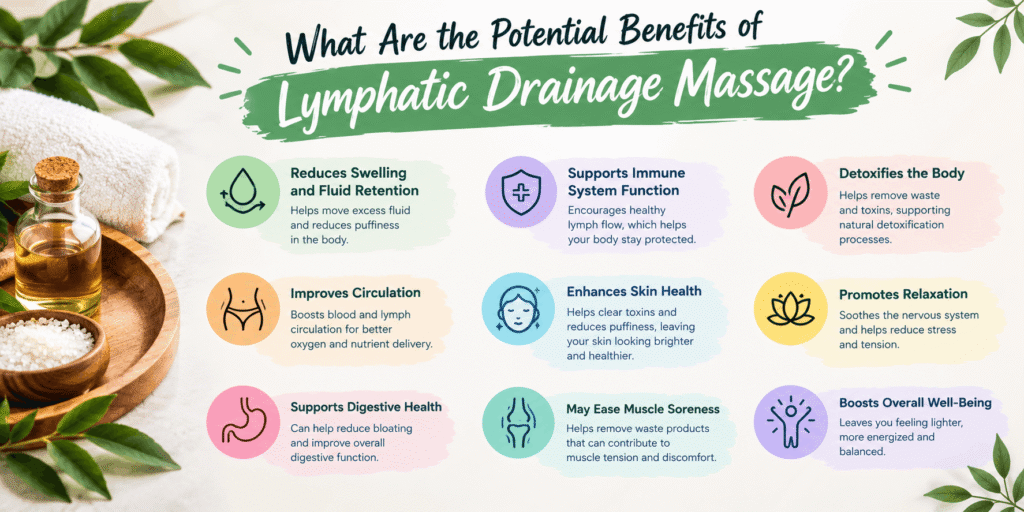
The potential benefits depend heavily on why the massage is being used.
For people with lymphedema, manual lymphatic drainage may help reduce swelling and discomfort as part of a broader treatment program. It is not generally considered a stand-alone cure.
For facial massage, people may notice temporarily reduced puffiness or simply enjoy the relaxing sensation. These cosmetic effects should not be confused with treating an underlying lymphatic disorder.
Supporting the Body’s Natural Fluid Movement
The primary purpose of manual lymphatic drainage is to encourage lymph fluid to move through functioning lymphatic pathways.
When the lymphatic system is disrupted, fluid can accumulate in tissues and contribute to swelling. Carefully performed lymphatic drainage can help redirect that fluid toward functioning lymphatic areas.
This is particularly relevant in lymphedema care, where manual lymphatic drainage may be combined with compression, exercise and skin care.
Relaxation and a Light, Comfortable Feeling
Because the technique is slow and gentle, some people find lymphatic drainage massage relaxing.
Facial lymphatic massage is also popular as a cosmetic treatment for temporary facial puffiness. Cleveland Clinic notes that facial lymphatic drainage may increase circulation and reduce puffiness, although results can vary from person to person.
The key is to view these effects realistically. A temporary change in puffiness is not the same thing as permanently changing facial structure or body composition.
Why Everyone May Experience It Differently
There is no universal result from lymphatic drainage massage.
Someone receiving treatment for diagnosed lymphedema may have a specific medical goal, while another person may simply be looking for relaxation or a temporary reduction in puffiness.
The underlying cause of swelling, overall health, treatment history and the skill of the practitioner can all influence the experience.
This is why persistent swelling should not automatically be treated as something that can be fixed with massage alone.
Lymphatic Drainage Massage for Different Areas
Lymphatic drainage can involve different parts of the body depending on the reason for the massage. The approach is not identical everywhere because the lymphatic pathways and the reason for fluid buildup can vary.
A professional may assess the affected area and surrounding lymphatic pathways before deciding how to approach it. For people with lymphedema, treatment is generally individualized rather than based on a universal routine.
Face and Neck
Facial lymphatic massage has become particularly popular because people often associate it with reducing temporary puffiness and creating a more refreshed appearance.
The face and neck contain numerous lymphatic structures, and professional techniques use extremely light movements around these areas. Because the skin is delicate, aggressive rubbing is unnecessary.
Some people may notice that their face looks temporarily less puffy afterward, particularly when the puffiness is related to normal fluid accumulation. However, this should not be confused with permanent changes to facial shape.
Facial massage can also simply be a relaxing addition to a skincare routine when performed gently and appropriately.
Arms and Hands
The arms and hands can experience swelling for many different reasons. When swelling is connected to lymphatic dysfunction, manual lymphatic drainage may be incorporated into a broader treatment plan.
For example, lymphedema can develop after certain medical treatments or when the lymphatic system has been damaged or is not functioning normally. In these situations, a trained professional can determine which techniques are appropriate.
This is also why persistent swelling in an arm or hand should not automatically be assumed to be a cosmetic issue.
Abdomen and Lower Body
The abdomen and lower body may also be included in professional lymphatic drainage, depending on the person’s needs.
Online content sometimes makes lymphatic massage sound like a universal solution for bloating, weight loss or body sculpting. Those claims should be approached carefully.
Lymphatic drainage is primarily concerned with lymph fluid movement and management of certain types of swelling. It is not a substitute for healthy eating, physical activity, medical treatment or a weight-management plan.
Temporary changes in fluid levels can also look different from changes in body fat, so dramatic transformation claims should be treated skeptically.
Mistakes That Can Make the Technique Less Effective
Because lymphatic drainage massage uses such a light touch, it can be tempting to assume that doing more will produce better results.
The opposite can be true. Using excessive pressure or treating the technique like deep-tissue massage can make the experience uncomfortable and may not reflect how the specialized technique is intended to work.
Pressing Too Hard
One of the biggest mistakes is applying too much pressure.
Lymphatic drainage focuses on superficial lymphatic vessels, so deep pressure is generally unnecessary. Professional manual lymphatic drainage uses slow, gentle movements rather than forceful kneading.
If you are following a technique that has been specifically taught to you by a healthcare professional, follow their instructions rather than increasing the pressure because the movements feel too subtle.
A gentle technique can feel surprisingly light, especially if you are accustomed to conventional massage.
Using Random Massage Directions
Another mistake is assuming that lymphatic massage means simply rubbing toward the nearest swollen area.
The lymphatic system follows specific pathways, and professional techniques are designed around those pathways. This is one reason generalized online routines may not be suitable for someone with a diagnosed lymphatic condition.
Rather than improvising a treatment for persistent swelling, it is safer to have the underlying cause assessed and receive appropriate instructions when self-massage is suitable.
Expecting Dramatic Results Immediately
Social media can make lymphatic massage appear almost magical, particularly when before-and-after images are used.
A temporary reduction in puffiness is possible, but it does not mean that massage has removed body fat or permanently reshaped the body.
For people with lymphedema, manual lymphatic drainage may help manage swelling, but it is usually one part of a larger treatment approach that can include compression, exercise and skin care.
Realistic expectations make it much easier to understand what the technique can and cannot do.
Who Should Be Careful With Lymphatic Drainage Massage?
Lymphatic drainage massage is not appropriate for everyone.
Cleveland Clinic advises that people with certain conditions should avoid lymphatic drainage or obtain medical guidance first. Examples include active infections, blood clots and some heart or kidney problems.
This is particularly important when swelling appears suddenly or without an obvious explanation.
Massage should not be used to delay medical evaluation when swelling may have another underlying cause.
Situations Where Medical Advice Comes First
If you have unexplained swelling, persistent swelling, a known lymphatic disorder, a recent medical procedure or another significant health concern, talk with a healthcare professional before attempting self-massage.
People undergoing treatment for lymphedema may benefit from seeing a certified lymphedema therapist or another appropriately trained professional. A specialist can assess the situation and teach suitable self-management techniques when appropriate.
Medical guidance is also especially important if swelling is accompanied by other concerning symptoms.
When to Stop and Seek Professional Guidance
A lymphatic drainage technique should not cause significant pain.
If you develop unusual discomfort or feel unwell while attempting massage, stop and seek appropriate advice rather than trying to push through it.
Cleveland Clinic also notes that some people can experience temporary side effects such as fatigue, headache or nausea after lymphatic drainage. More concerning or persistent symptoms should be discussed with a healthcare provider.
The goal is not to make the body tolerate increasingly intense massage. The technique is supposed to remain gentle and controlled.
Final Thoughts
Lymphatic drainage massage is a specialized technique that is easy to misunderstand because its movements can look deceptively simple. The defining feature is its gentle, purposeful approach, not strong pressure or dramatic manipulation.
For people with lymphedema or certain types of swelling, manual lymphatic drainage can be part of a broader management plan. For others, especially those interested in facial massage, it may be used as a gentle wellness or cosmetic practice with more modest expectations.
The most important thing is to understand why you are considering lymphatic drainage massage. If you are dealing with unexplained or persistent swelling, getting the cause evaluated is more important than simply trying a massage routine.
When appropriate, professional instruction can also make self-massage much safer and more effective. Instead of following every viral massage trend online, focus on gentle techniques, realistic expectations and guidance that fits your individual situation.
Ultimately, lymphatic drainage massage is less about applying more pressure and more about understanding why the technique is gentle, where it fits into lymphatic care, and when professional advice should come first.