
The area beneath the eyes can have a noticeable effect on how refreshed or tired a face appears. Even after getting enough sleep, some people still have visible hollows, shadows, or a sunken appearance that makes them look exhausted. Skincare products may improve hydration and surface texture, but they cannot always address changes in facial volume. This is one reason under eye filler has become a popular cosmetic treatment for people who want to soften the appearance of hollow areas without undergoing surgery.
Under eye filler is an injectable treatment designed primarily to restore volume beneath the lower eyelids. By carefully adding volume to selected areas, a qualified medical professional may reduce the appearance of tear trough hollows and create a smoother transition between the lower eyelid and cheek. The goal is not to make the area look swollen or dramatically different. A suitable treatment aims for a subtle result that complements the person’s natural facial structure.
However, this procedure is more complicated than it may appear in social media videos. The skin around the eyes is delicate, the anatomy is complex, and not everyone is a suitable candidate. Dark circles, eye bags, loose skin, and hollowness can have different causes, meaning one treatment cannot solve every concern.
Before considering an appointment, it is worth understanding how under eye filler works, what results may be possible, how long they can last, and which risks deserve serious attention. This guide explores the treatment from consultation to recovery so you can make a more informed decision.
What Is Under Eye Filler?
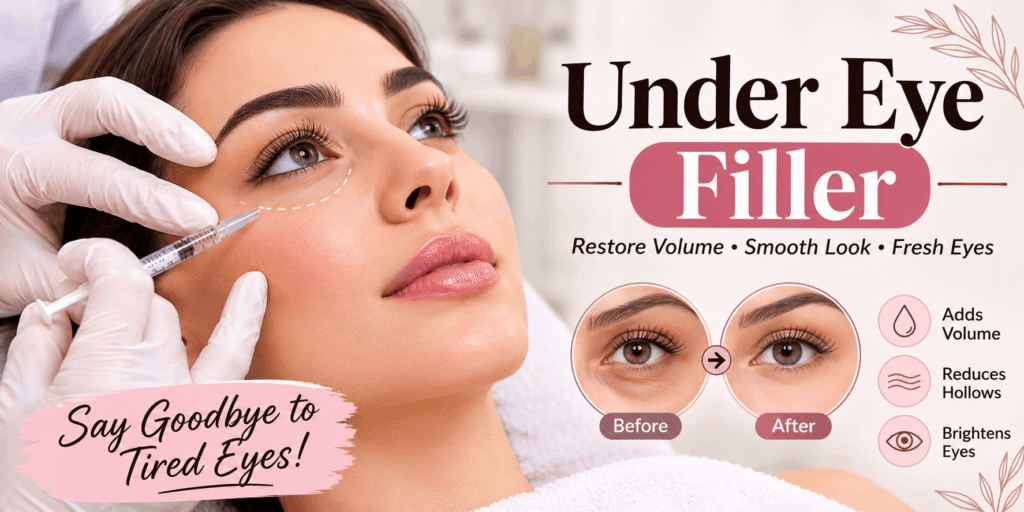
Under eye filler is a nonsurgical cosmetic procedure in which a medical professional injects a dermal filler into selected areas beneath the eyes. The treatment is commonly associated with the tear trough, which is the natural groove running between the lower eyelid and the upper cheek.
When this area becomes more hollow, it can create a shadow that resembles a dark circle. Some people naturally have deeper tear troughs because of their facial structure, while others notice increasing hollowness as facial volume changes with age. In suitable cases, adding a small amount of filler may soften the depression and create a more even-looking contour.
Hyaluronic acid (HA) is a commonly used filler material for this area. Hyaluronic acid is a substance naturally present in the body and has the ability to attract and hold water. In cosmetic fillers, it is formulated into a gel that adds temporary volume beneath the skin. Different products have different characteristics, including thickness, flexibility, and water attraction, so the choice of product matters.
Not every dermal filler is appropriate for the under-eye region. The skin here is thin, and poorly selected or incorrectly placed filler can create visible irregularities, swelling, or discoloration. A medical professional must evaluate the anatomy and decide whether a filler-based approach is appropriate.
It is also important to understand that under eye filler is not simply an injection for every type of dark circle. It is mainly intended to address hollowness and volume-related shadows. If darkness comes from pigmentation, visible blood vessels, allergies, or another skin concern, filler may provide little improvement.
Why Do People Consider Under Eye Filler?
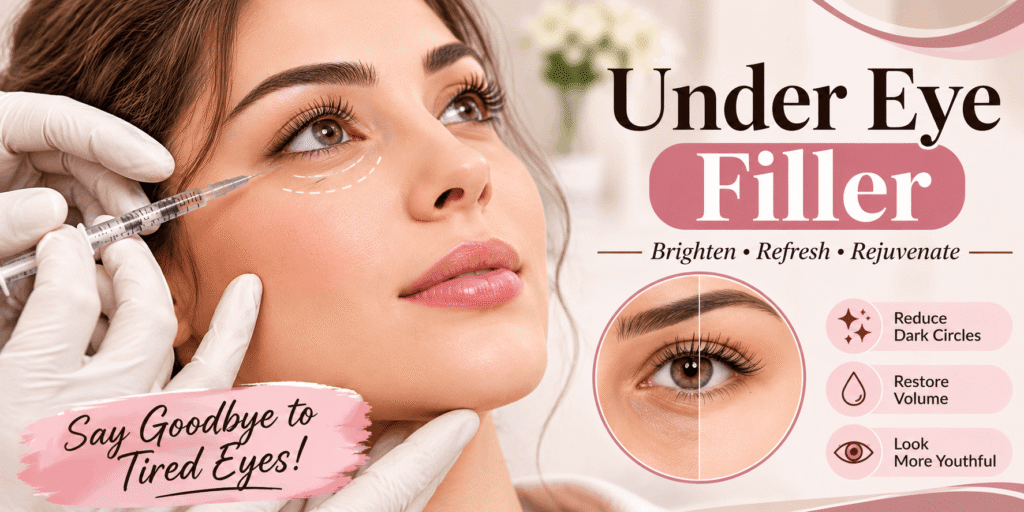
The reasons for considering under eye filler are different from person to person. Some people have naturally deep tear troughs that create shadows even when they are young. Others notice changes over time as the face loses some of its natural fullness.
The lower eyelid and cheek form a connected area. When the supporting volume beneath the eyes changes, the transition between these regions can become more noticeable. A hollow groove may create a shadow that makes the eyes appear tired, even when the person feels well-rested.
Genetics can also influence the appearance of the under-eye area. Facial bone structure, the natural distribution of fat, skin thickness, and inherited pigmentation all contribute to how this region looks. This explains why two people with similar lifestyles may have very different under-eye concerns.
Aging is another factor. As facial tissues change, some individuals develop more visible hollows, while others experience puffiness or loose skin. These concerns may appear together, which makes professional assessment particularly important.
People may consider filler because they want to soften a hollow contour without undergoing an operation. However, choosing an injectable treatment should involve more than simply wanting to look younger. The cause of the concern, overall facial anatomy, medical history, and realistic expectations all influence whether the procedure makes sense.
What Can Under Eye Filler Actually Improve?
Under eye filler is most useful when the main concern is a visible depression beneath the lower eyelid. Adding volume to an appropriate area may reduce the shadow created by the hollow and make the eyelid-to-cheek transition appear smoother.
Tear Trough Hollows
Tear trough hollows are one of the main reasons people seek this treatment. They can create a noticeable groove beneath the eyes, particularly under certain lighting conditions. In carefully selected patients, filler may soften this indentation and create a more even contour.
The result depends on the depth of the hollow, the surrounding tissue, and the amount of volume needed. A natural-looking result does not necessarily mean removing every visible line or creating a completely flat surface. Some facial contours are normal and should not automatically be treated as imperfections.
Shadows That Resemble Dark Circles
Not all dark circles are caused by pigmentation. Sometimes, the darkness is partly a shadow created by a hollow beneath the eye. When the contour becomes smoother, that particular shadow may become less noticeable.
However, filler does not directly remove excess pigment from the skin. If the under-eye area is brown because of pigmentation or post-inflammatory changes, adding volume may not address the actual cause.
A Tired-Looking Appearance
A deep tear trough can make the face appear tired, even when the person has a healthy sleep routine. By improving volume-related hollowness, under eye filler may create a more rested appearance.
The improvement is usually subtle rather than dramatic. The purpose is to soften a specific contour, not to change the entire expression of the face.
Uneven Under-Eye Contours
Some people have more noticeable hollowness on one side than the other. In certain cases, carefully planned treatment may improve the appearance of this difference. However, facial asymmetry is natural, and filler cannot guarantee perfectly identical sides.
The provider must assess the underlying anatomy rather than simply adding the same amount of product to both sides.
Who May Be a Suitable Candidate?
A suitable candidate for under eye filler is generally someone whose primary concern is volume loss or a hollow tear trough. They should also have realistic expectations and understand that the treatment has limitations.
People with mild to moderate hollowness may be considered after a medical assessment. Their skin quality, facial structure, medical history, and the condition of the surrounding cheek area all need to be evaluated.
Someone with a deep hollow may require a different approach from someone whose main concern is loose skin. Likewise, a person with prominent under-eye bags may not benefit from adding more volume beneath the eyes. In some situations, filler can make puffiness more noticeable.
A professional consultation should include questions about previous cosmetic treatments, allergies, medications, medical conditions, and any history of eye or facial surgery. Previous filler injections are especially important to disclose, even if they were performed several years earlier.
Pregnancy, breastfeeding, active infections, certain medical conditions, and particular allergy histories may affect treatment decisions. A qualified provider should review these factors rather than relying on a general online checklist.
Age alone does not determine suitability. Facial anatomy and the reason for the concern are more important than simply reaching a particular birthday. Some products have specific approved age ranges and indications, so the provider should explain the relevant product information.
Most importantly, a person should never feel pressured to receive treatment. A consultation is an opportunity to understand the available options, not an obligation to proceed.
How the Under Eye Filler Procedure Works
The process usually begins with an assessment rather than an immediate injection. The medical professional examines the lower eyelids, cheek area, skin quality, facial proportions, and the depth of the tear trough. They may also ask what bothers the patient most and whether previous treatments have been performed.
This assessment helps determine whether the concern is related to hollowness, pigmentation, puffiness, loose skin, or a combination of factors. If filler is not likely to produce a satisfactory result, the provider should explain why and discuss other possibilities.
If treatment is considered appropriate, the professional discusses the product, expected outcome, possible side effects, and limitations. They should also explain what happens if a complication develops and whether the particular filler can be dissolved or otherwise managed.
The treatment area is then prepared according to the provider’s clinical protocol. Some products contain a local anesthetic, and additional numbing may be considered depending on the situation. The injection technique and instrument used are selected by the trained professional based on the individual’s anatomy.
A needle or cannula may be used, depending on the treatment plan. Neither method should be described as completely risk-free. The provider’s anatomical knowledge, product selection, technique, and ability to recognize complications are essential.
The filler is placed in carefully selected areas to address the hollow contour. The amount used should be based on the individual’s needs rather than a standard quantity advertised online. The under-eye region requires particular caution because excessive product can create puffiness, visible lumps, or an unnatural appearance.
After the procedure, the provider checks the treated area and gives instructions for recovery. A follow-up appointment may be recommended to assess the result after initial swelling has settled.
What Results Can You Expect?
Under eye filler can produce a visible improvement in suitable patients, but the outcome varies. Some people notice a softer tear trough and a smoother transition between the lower eyelid and cheek. Others may see only a modest change because their concern is caused by pigmentation, skin laxity, or prominent eye bags rather than hollowness.
The result is influenced by several factors, including the original facial structure, skin thickness, filler type, amount used, placement, and individual response. Even when treatment is performed carefully, it cannot guarantee a perfectly smooth under-eye area.
It is also important to distinguish the immediate appearance from the settled result. Mild swelling or bruising can temporarily affect the treated area. The final appearance should be assessed after the initial recovery period, according to the provider’s advice.
A natural result generally means that the under-eye area looks more balanced without appearing unusually full. Adding more filler does not automatically create a better outcome. In this delicate region, conservative treatment and careful assessment are particularly important.
Before-and-after photographs can help you understand a provider’s work, but they should be viewed critically. Look for examples involving people with similar concerns and facial structures. Ask whether the images show the immediate result or a later follow-up.
How Long Does Under Eye Filler Last?
The duration of under eye filler is not identical for everyone. It depends on the type of filler, the amount used, the placement, individual metabolism, and how the body responds to the product.
Hyaluronic acid fillers gradually break down over time, but this does not mean every treated area returns to its original appearance on a predictable schedule. Some filler may remain detectable longer than expected, especially in areas where movement and tissue conditions differ from other parts of the face.
For example, a filler product used in the lips may behave differently from one placed in the tear trough. The under-eye region has its own anatomical characteristics, and the product’s properties matter.
Patients should avoid relying on a single duration quoted in an advertisement. A provider should explain the expected longevity of the specific product being considered and make clear that individual results vary.
It is also not necessary to schedule repeat injections automatically. The area should be reassessed before any additional treatment. If enough volume remains or the region is already full, another injection may create unnecessary swelling or an unnatural contour.
Possible Side Effects and Important Risks
Under eye filler is a medical procedure, not a risk-free beauty service. The area around the eyes contains delicate skin and important blood vessels, so complications deserve serious consideration.
Common temporary effects may include swelling, tenderness, redness, bruising, and mild discomfort. These effects may improve over several days, although the recovery period varies. Some patients may also notice temporary unevenness while swelling settles.
Other complications can be more persistent. Filler placed too superficially may create visible bumps or a bluish discoloration known as the Tyndall effect. This can occur because light interacts differently with filler positioned close to the skin surface. The thinness of under-eye skin makes this region particularly sensitive to placement problems.
Some people develop prolonged puffiness or fluid retention around the treated area. This may make the under-eyes appear heavier instead of smoother. Lumps, asymmetry, inflammation, infection, and filler migration have also been reported.
A particularly serious complication is accidental injection into a blood vessel. This can interrupt blood flow and may cause tissue damage. In rare cases, vascular complications associated with facial filler injections have resulted in vision problems, including permanent vision loss, or stroke.
These severe complications are uncommon, but their potential consequences make provider selection extremely important. Anyone considering treatment should understand the risks before signing consent forms.
Sudden vision changes, severe or unusual pain, skin becoming pale or mottled, or other concerning symptoms after filler require immediate medical attention. Do not wait for a routine follow-up appointment if a serious symptom develops.
Why Choosing the Right Provider Matters
The under-eye region is not an area where price should be the main factor in choosing a treatment provider. A qualified professional needs a detailed understanding of facial anatomy, the blood supply around the eyes, filler behavior, and the management of complications.
Look for a licensed healthcare professional whose training and experience are appropriate for cosmetic injections. Depending on the country, this may include a qualified dermatologist, plastic surgeon, or another appropriately trained medical practitioner working within their legal scope.
Ask who will perform the injection rather than assuming the person conducting the consultation will also provide the treatment. You should know the practitioner’s qualifications and experience with the tear trough area specifically.
It is reasonable to ask which product will be used, whether it is authorized for the intended purpose in your location, and what its limitations are. The provider should be willing to identify the product and explain its safety information. Avoid anyone who refuses to disclose the filler brand or cannot explain the treatment plan.
A professional setting should have appropriate hygiene standards, proper product storage, and a plan for responding to complications. The provider should also explain what emergency arrangements are available if a vascular or vision-related complication occurs.
Be cautious of extremely low prices, social media promotions, unlicensed injectors, and treatments offered in nonmedical environments. Avoid purchasing filler online or attempting to inject it yourself. Needle-free devices marketed for filler delivery are not a safe substitute for treatment by a qualified professional.
A responsible provider should be comfortable recommending against treatment when the anatomy or medical history makes the procedure unsuitable.
Recovery and Aftercare: What Happens After Treatment?
Recovery after under eye filler varies according to the individual and the procedure. Mild swelling, redness, tenderness, or bruising may appear shortly after the injections. These effects are often temporary, but the provider should explain what is expected and which symptoms require medical attention.
Follow the aftercare instructions provided by the practitioner. Recommendations may include avoiding unnecessary pressure on the treated area and postponing strenuous activity for a period specified by the provider. The exact advice can vary depending on the product and treatment technique.
Do not massage, press, or attempt to reshape the filler unless the treating professional specifically instructs you to do so. Unsupervised manipulation may worsen irritation or interfere with the intended result.
If you use skincare products around the eyes, ask when it is appropriate to restart them. Avoid applying strong active ingredients to irritated or recently treated skin until your provider confirms that it is suitable.
Makeup should also be used according to the practitioner’s instructions. Keeping the area clean and avoiding unnecessary touching can help reduce irritation and infection risk.
Attend any recommended follow-up appointment, even if the initial result looks satisfactory. A professional can assess whether swelling has settled, whether the contour is even, and whether further evaluation is needed.
If you experience sudden visual symptoms, severe pain, unusual skin color changes, rapidly increasing swelling, or signs of infection, seek urgent medical assessment. These symptoms should never be treated as ordinary recovery discomfort.
Under Eye Filler vs. Other Treatments
Under-eye concerns can have several causes, so comparing treatment options is essential. A procedure that works for hollowness may not help pigmentation or loose skin. The right approach depends on what is actually creating the appearance you want to change.
Under Eye Filler vs. Eye Creams
Eye creams are topical skincare products designed to support the skin’s surface. Depending on their ingredients, they may improve hydration, temporarily soften the appearance of fine lines, or help address certain forms of pigmentation.
However, a cream cannot replace lost facial volume in the same way an injectable filler can. If the main concern is a deep tear trough, skincare alone may not create the same type of contour change.
This does not make eye creams useless. They can remain part of a suitable skincare routine, but their purpose is different from that of a medical injectable treatment.
Under Eye Filler vs. Laser Treatments
Certain laser treatments are used to address selected skin concerns, including some forms of pigmentation, texture irregularities, and signs of sun damage. Their suitability depends on the device, skin type, and the exact condition being treated.
Laser treatments do not work by adding volume to a hollow tear trough. Therefore, they may be considered for a different concern rather than as a direct replacement for filler.
A qualified professional can explain whether a skin-focused treatment is more appropriate than volume restoration.
Under Eye Filler vs. Lower Eyelid Surgery
Lower eyelid surgery, often called lower blepharoplasty, is a surgical procedure used to address certain concerns involving under-eye bags, excess skin, and the position of fat.
For people with prominent fat bulges or significant loose skin, surgery may be more appropriate than adding filler. However, surgery is more invasive and involves its own recovery period and risks.
The decision between filler and surgery should be based on anatomy, goals, and medical assessment. Some people may not be suitable for either option, while others may benefit from a different combination of treatments.
Under Eye Filler vs. PRP Treatments
Platelet-rich plasma, commonly called PRP, uses a preparation derived from a person’s own blood. It is used in some aesthetic settings to target aspects of skin quality, although evidence and treatment protocols vary.
PRP does not provide the same immediate volume replacement as a dermal filler. The two procedures have different purposes, and neither should be presented as a guaranteed solution for every type of under-eye concern.
Discuss the evidence, expected results, costs, and risks of any proposed treatment before making a decision.
What If You Do Not Want Under Eye Filler?
Choosing not to have filler is a perfectly reasonable decision. Many people can manage certain under-eye concerns through skincare, lifestyle adjustments, or other professional treatments, depending on the cause.
If darkness is related to pigmentation, a dermatologist may recommend a suitable skincare approach or treatment designed for that specific issue. If allergies contribute to rubbing, irritation, or puffiness, addressing the underlying allergy may be more useful than focusing only on appearance.
Consistent sleep, hydration, sun protection, and avoiding eye rubbing can support general skin health. These habits will not remove inherited hollowness or replace lost facial volume, but they may help prevent some factors from making the area look worse.
For people with prominent eye bags or loose skin, a consultation with an appropriate specialist can clarify whether a surgical or nonsurgical option is worth considering. Sometimes, accepting a natural facial feature is also a perfectly good choice.
The important point is to identify the cause before spending money on a treatment. A product or procedure that works for one person may be ineffective or unsuitable for another.
Questions to Ask Before Booking an Appointment
A consultation should give you enough information to make a thoughtful decision. Instead of focusing only on the expected result, ask questions about the procedure, the provider’s experience, and how complications are handled.
Find out whether your concern is actually caused by tear trough hollowness. Ask what makes you a suitable candidate and whether another treatment would be more appropriate. A good professional should explain both the potential benefits and the reasons filler might not work well for your particular anatomy.
You should also ask which product will be used, whether it is authorized for the intended indication in your country, how long results may last, and what side effects are possible. If the provider recommends a particular amount, ask why that amount is appropriate for your facial structure.
Discuss the plan for managing complications. Ask what would happen if you developed prolonged swelling, visible lumps, or a suspected vascular problem. It is also important to know whom to contact after the procedure if an unexpected symptom develops.
Finally, ask about the total cost, follow-up appointments, and whether any future treatment might be needed. A clear explanation is a better sign of professional care than a promise of perfect results.
Final Thoughts
Under eye filler can be a useful option for carefully selected people who want to improve the appearance of hollow tear troughs. By restoring volume in an appropriate area, it may soften shadows and create a smoother transition between the lower eyelid and cheek. However, it is not a universal treatment for dark circles, puffiness, loose skin, or every sign of tired-looking eyes.
The most important step is understanding what causes your particular concern. A qualified medical professional can evaluate your facial anatomy, discuss realistic outcomes, and explain whether filler or another approach is more suitable.
Although the procedure is nonsurgical, it still carries meaningful risks, including rare but serious vascular complications that can affect vision. Choosing an appropriately trained provider, asking detailed questions, and understanding the recovery process are essential parts of making an informed decision.
Ultimately, the goal should not be to change your natural features completely. It should be to understand your options, prioritize safety, and choose only a treatment whose potential benefits make sense for your individual needs.




3 Comments