
A blowout taper can make even a simple haircut look noticeably fuller, sharper, and more modern—but the real difference comes from how the volume on top works with the taper around the sides. From textured fringes to curls and slicked-back styles, the same basic haircut can take on completely different personalities.
If you want a hairstyle that combines clean sides with noticeable volume, a blowout taper is worth considering. It keeps the edges controlled while allowing the hair on top to look lifted, textured, or naturally full. The best version depends on your hair type, length, styling habits, and how bold you want the final look to be.
Why the Blowout Taper Stands Out
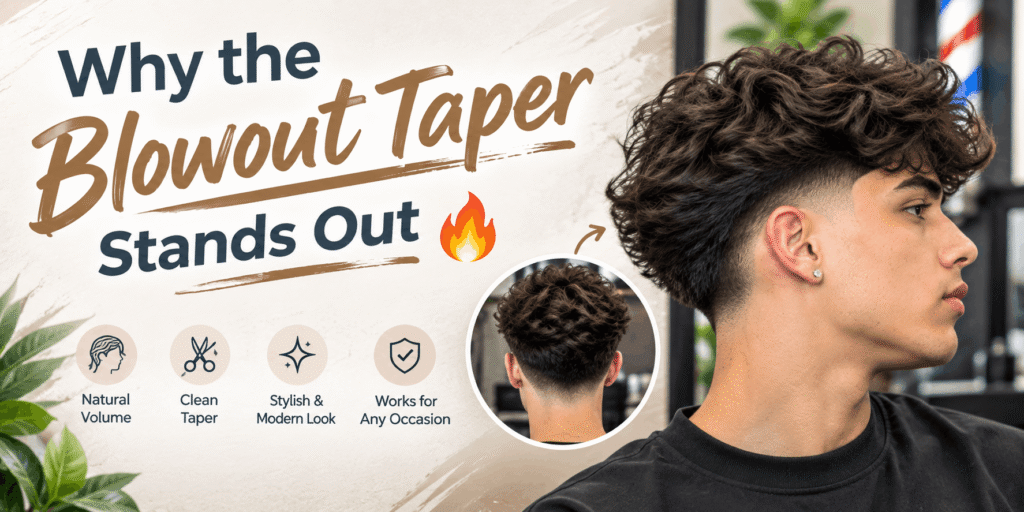
The appeal of a blowout taper comes from contrast. The sides and back are gradually cleaned up around the edges, while the top is left with enough length to create movement and volume.
Unlike a completely faded hairstyle, a taper can leave more of the natural shape around the sides. This makes the haircut feel less severe while still giving it a fresh, defined appearance.
The blowout element is what gives the style its personality. Instead of letting the top sit flat, the hair is styled outward and upward to create a fuller silhouette.
That combination makes the haircut surprisingly versatile. Someone with straight hair can create a sleek, controlled version, while someone with curls or waves can use their natural texture to create a more relaxed finish.
What Makes It Different From a Regular Taper?
A regular taper mainly focuses on gradually shortening the hair around areas such as the sideburns and neckline.
A blowout taper adds another element: volume and direction on top.
The taper keeps the perimeter neat, while the longer hair provides the opportunity to create height, texture, curls, waves, or a brushed-back shape.
This means you can have the same general taper concept but style the top completely differently depending on your preferences.
Who Can Wear This Style?
One of the biggest advantages of the blowout taper is that it is not limited to one hair texture.
Straight hair can be styled into a lifted or textured finish. Wavy hair can make the blowout look more natural because the movement is already present. Curly hair can create a fuller and more distinctive result without needing the top to look perfectly controlled.
Hair thickness also affects the appearance. Thick hair naturally creates more volume, while finer hair may benefit from a haircut and styling approach that creates the appearance of additional fullness.
The important thing is not trying to copy someone else’s exact haircut. A barber can adjust the taper and top length around your natural hair pattern.
10 Blowout Taper Hairstyles to Try
There are many ways to interpret this haircut, but these ten stand out because they offer noticeably different looks rather than simply changing the fade height.
1. Classic Blowout Taper Fade
The classic version is a great starting point if you want to understand what makes the haircut work.
The sides gradually become shorter while the top retains enough length to create visible volume. The hair can be styled upward and slightly outward, giving the haircut its characteristic blowout shape.
It works particularly well for someone who wants a modern haircut without an extremely complicated design.
The biggest advantage is flexibility. You can make the top more textured for a casual appearance or keep it relatively controlled for a cleaner everyday style.
2. Blowout Taper With Textured Fringe
Adding a textured fringe completely changes the character of the haircut.
Instead of directing all the volume backward, some of the longer hair is brought toward the forehead. The fringe can be separated into individual pieces or given a deliberately imperfect finish.
This creates a youthful, relaxed appearance while the taper prevents the sides from looking too heavy.
It can be especially interesting for medium-length hair because there is enough length to create movement without making the fringe completely dominate the face.
If your hair naturally has some texture, you may be able to emphasize that movement rather than trying to make every strand sit in exactly the same position.
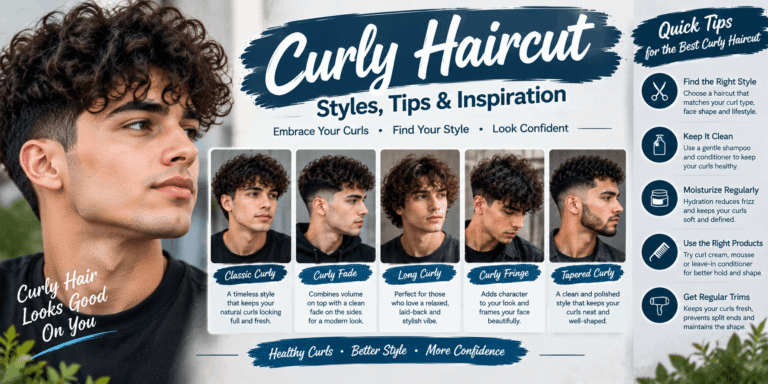
3. Curly Blowout Taper
Curly hair can give the blowout taper an entirely different appearance.
Instead of creating volume by making straight strands stand upward, the natural curls provide shape and fullness. The taper around the sides can make the curls on top appear even more prominent.
This style works best when the haircut respects the natural curl pattern rather than trying to flatten it.
The result can range from relatively controlled curls to a much fuller, more expressive shape. The amount of length left on top makes a major difference, so discussing your preferred level of volume with your barber is important.
4. Blowout Taper With Wavy Hair
Wavy hair is almost naturally suited to a blowout-inspired hairstyle because its texture already creates movement.
A wavy blowout taper can look softer than a straight-haired version while still maintaining a defined outline around the sides.
The waves can be pushed upward, backward, or slightly away from the face depending on the length.
This is a particularly good option if you want a hairstyle that looks styled without appearing overly rigid. The natural bends in the hair provide much of the visual interest.
5. Blowout Taper Slick Back
The slick-back version combines the volume of a blowout with a more polished direction.
Instead of pushing the hair randomly outward, the longer top is directed backward. The taper keeps the sides and neckline looking clean while the top creates a strong silhouette.
You can make this look neat and controlled or leave some texture in the hair for a less formal finish.
It is also a useful choice for someone who likes changing their hairstyle. On some days, the top can be worn more textured and casual; on others, it can be styled backward for a cleaner appearance.
6. Blowout Taper With Middle Part
A middle part adds a completely different visual balance to the blowout taper.
The top is divided around the center, allowing the hair to fall or sweep toward both sides while the taper keeps the perimeter tidy.
This combination works especially well with medium-length hair because the additional length gives the two sides enough movement.
Wavy hair can make the middle part look softer and more natural, while straight hair can create a cleaner and more structured version.
The key is keeping enough volume near the roots so the middle part does not simply collapse flat against the head.
7. Blowout Taper Mullet
If you want something more noticeable, combining a blowout taper with a mullet creates a much more distinctive haircut.
The front and sides remain relatively controlled while extra length is retained toward the back. The taper around the sides helps create separation between the shorter areas and the longer back.
The top can be textured, wavy, curly, or pushed upward depending on the hair.
This is less conservative than the classic blowout taper, making it better suited to someone who actually wants the haircut to stand out.
The proportions matter, though. A skilled barber can help determine how much length to leave at the back so the haircut looks intentional rather than simply grown out.
8. Blowout Taper With Shaved Design
A shaved design can turn an otherwise familiar blowout taper into something much more personalized.
The design can be simple, such as a clean line, or more creative depending on your barber’s skill and your preferred look.
Because the design is usually placed around a shorter section of the haircut, it becomes visible without competing too much with the volume on top.
This option is best if you enjoy experimenting with your hairstyle and do not mind that the design will become less defined as the hair grows.
For a more wearable result, a simple design often works better than adding several competing patterns.
9. Blowout Taper With Fluffy Texture
The fluffy version focuses almost entirely on creating soft, airy volume.
Rather than making the hair look heavily sculpted, the top is allowed to maintain movement and separation. The taper provides enough contrast to stop the overall haircut from looking bulky.
This can work particularly well with naturally thick hair because the existing density helps create the desired shape.
For finer hair, the same idea can still work, but the haircut may need to be adapted to avoid weighing the top down.
The goal is a finish that looks full and touchable rather than stiff or overly product-heavy.
10. Blowout Taper With Beard
Pairing a blowout taper with a beard creates a stronger connection between the hairstyle and the lower half of the face.
The taper keeps the haircut clean around the sides, while the beard adds additional structure around the jaw and chin.
The two do not necessarily have to match exactly. A subtle taper can work with light facial hair, while a more noticeable beard can complement a fuller hairstyle.
The most important factor is balance. If both the hair and beard are extremely heavy, the overall appearance can become visually crowded. Keeping one element slightly more controlled can create a cleaner result.
Finding the Right Blowout Taper for Your Hair
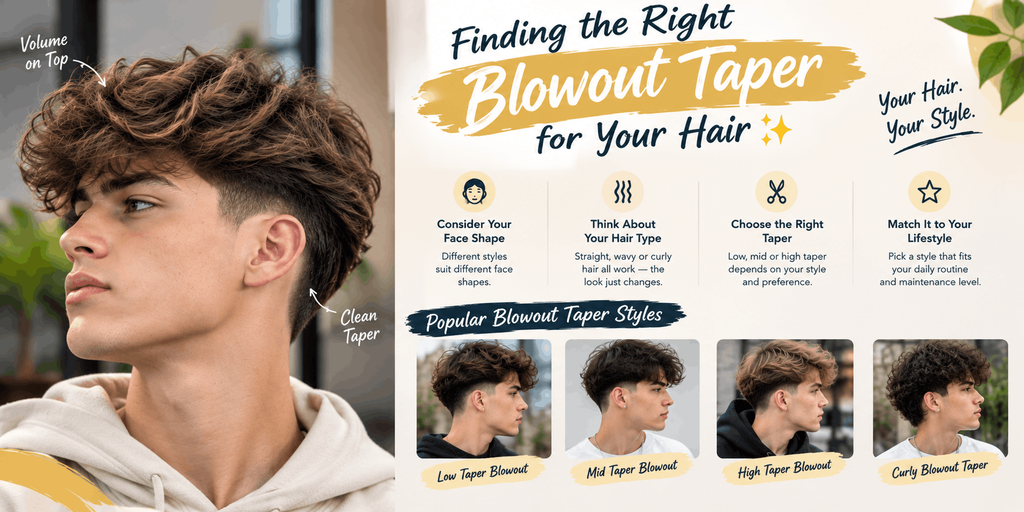
Choosing a blowout taper should start with your natural hair rather than a photograph of someone else’s hairstyle.
Hair texture determines how much movement you naturally have, while density affects how easily you can create volume. Hair length also determines which versions are realistic.
Fine vs. Thick Hair
Thicker hair usually creates volume more easily, making it naturally suitable for fuller blowout styles.
Fine hair can still work with the haircut, but keeping excessive length on top may sometimes make the hair appear flatter rather than fuller. A suitable cut and lightweight styling approach can help maintain movement without making the hair feel weighed down.
Straight, Wavy, and Curly Hair
Straight hair gives you the most control over the direction of the finished style.
Wavy hair adds natural movement, making the blowout appear softer.
Curly hair creates its own shape and can produce a particularly distinctive blowout taper when the curls are allowed to remain natural.
There is no single “correct” texture for this haircut. The best version works with what your hair already does naturally.
Choosing the Right Length
Length on top is one of the biggest factors controlling the final appearance.
Shorter hair creates a more compact and easier-to-manage blowout, while medium or longer hair provides more opportunities for texture, fringe, middle parts, slick backs, and other variations.
Instead of choosing a length simply because it looks good in a photo, consider how much time you realistically want to spend styling it.
How to Get the Blowout Look at Home
The blowout taper gets much of its character from the way the top is styled. The haircut creates the foundation, but volume, direction, and texture determine whether the finished result looks polished, relaxed, fluffy, or dramatically lifted.
The good news is that you do not necessarily need an elaborate routine. The most important thing is understanding how your hair naturally behaves and choosing a styling approach that works with it rather than against it.
Creating Volume Without Making Hair Look Stiff
A common mistake is using too much styling product in an attempt to make the hair stay lifted.
Heavy amounts of product can make the top look flat, greasy, or overly rigid. A better approach is to focus on creating the shape first and then using a small amount of suitable styling product to maintain texture and separation.
For naturally thick hair, you may need less product than expected because the hair already has plenty of volume. Finer hair may require more attention to lift and texture, but piling on product is not automatically the solution.
The finished hairstyle should still have movement. A blowout taper generally looks more natural when the top has some flexibility rather than appearing completely frozen in place.
Keeping the Taper Looking Clean
The taper is what gives the haircut its clean outline, so maintaining it can make a noticeable difference.
As the hair grows, the contrast around the sides and neckline gradually becomes less defined. How quickly this happens depends on your hair growth and the original taper.
Regular barber visits can restore the shape, but you do not necessarily have to completely change the hairstyle every time. A simple refresh can help maintain the outline while allowing the top to continue growing.
This is particularly useful if you prefer a longer blowout. The top can gain additional styling possibilities while the perimeter remains controlled.
What to Tell Your Barber
Rather than simply saying you want a “blowout taper,” explain what you want the finished haircut to look like.
Mention whether you want the top short, medium, or longer, and describe whether you prefer volume, texture, curls, a fringe, or a brushed-back finish.
It can also help to show a reference photo that has a similar hair texture and length to yours. Your barber can then adjust the proportions instead of trying to reproduce a style that may not suit your natural hair.
If you want to keep the haircut relatively low-maintenance, say so before the cut. The amount of length left on top can have a major effect on how much daily styling is required.
Making the Style Work With Your Hair
The best blowout taper is not necessarily the most dramatic one. A style that works with your natural texture and fits your routine will usually be easier to maintain.
Straight hair can be directed into several different shapes, while waves can add natural movement. Curly hair can create volume without needing the same type of styling as straight hair.
Hair density also matters. Thick hair can support larger silhouettes, while finer hair may look better with a lighter, more controlled amount of volume.
Your lifestyle matters too. If you prefer spending only a few minutes on your hair each morning, a shorter and simpler blowout taper may be a better choice than a long, highly styled version.
Final Thoughts
The blowout taper is more than simply short sides with volume on top. Its versatility comes from the fact that the top can be completely transformed while the taper provides a consistent, clean foundation.
You can keep things classic with a simple blowout taper fade, add texture through a fringe, let natural curls or waves take over, or create a more distinctive look with a middle part, mullet, or shaved design.
The most important choice is finding a version that fits your own hair rather than copying a style that requires a completely different texture or length. A good barber can adjust the taper, top length, and overall proportions to work with what you naturally have.
Think about how much styling you actually want to do, how often you are willing to refresh the haircut, and whether you prefer a polished or relaxed finish.
With the right combination of length, texture, volume, and taper, this haircut can be customized into a surprisingly wide range of looks while still keeping the recognizable blowout shape.


2 Comments