If you think a bowl cut still means one perfectly rounded shape with blunt edges, modern versions may change your mind. Today, the haircut can be textured, faded, layered, colorful, curly, or deliberately uneven, giving the familiar silhouette a much more current personality.
The appeal comes from its flexibility. Some versions keep the recognizable fringe and rounded outline, while others borrow details from fades, undercuts, mushroom cuts, and textured crops. That makes the style surprisingly adaptable for anyone who wants a haircut that stands out without relying on complicated styling.
Why the Bowl Shape Looks Completely Different Today
The original idea behind this bowl cut was straightforward: the hair around the head followed a rounded line, while the lower sections were kept shorter. That simple formula created the unmistakable shape people still associate with the style.
Modern hairstyling has changed the formula considerably. Instead of treating the rounded outline as a strict rule, barbers and stylists can break it up with layers, disconnected sides, tapering, texture, or different fringe lengths. The result can look polished, casual, edgy, or artistic depending on the details.
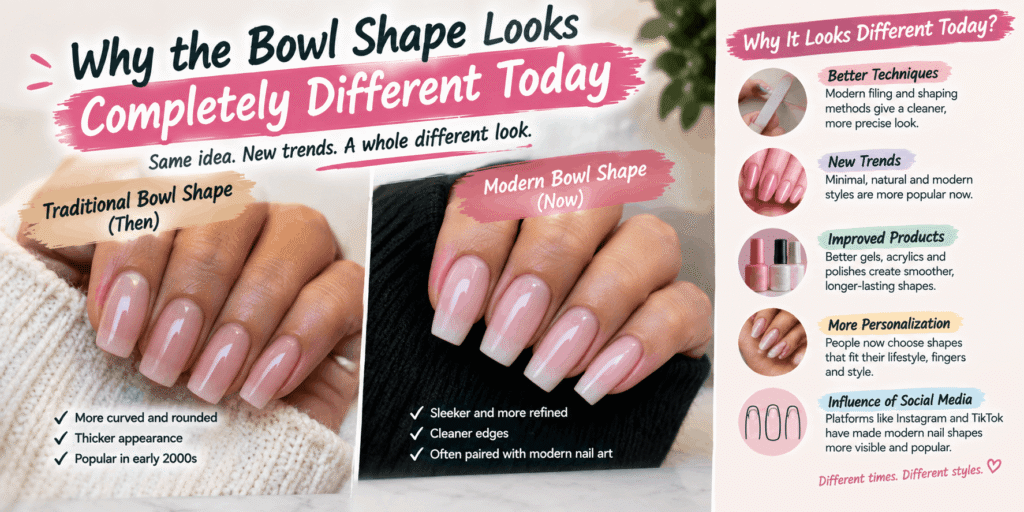
From Retro Silhouette to Modern Haircut
The retro reputation of this bowl cut is actually part of its appeal. Fashion repeatedly brings older silhouettes back, but usually with updated proportions and finishing techniques. The same thing has happened here.
A contemporary version might have a cleaner perimeter but softer texture through the top. Another might keep longer hair around the ears while adding a subtle fade underneath. Someone with naturally wavy hair could let the texture interrupt the rounded shape instead of trying to make every strand perfectly straight.
This is why the haircut no longer has one fixed appearance. The basic silhouette provides the starting point, while the texture, sides, fringe, and finish determine the final character.
What Gives the Cut Its Signature Shape
The fringe is one of the most recognizable features. It can sit straight across the forehead, curve slightly, separate into pieces, or move toward one side. The sides and back then determine how strongly the rounded effect remains visible.
Length is equally important. A very short version looks sharper and more graphic, while a longer one can feel softer and more relaxed. Adding texture can make the shape look less rigid, particularly when the hair naturally has movement.
That combination of recognizable shape and customizable details is what keeps the haircut relevant.
The Details That Make a Bowl Cut Look Modern
A modern interpretation is usually less about copying an old photograph and more about controlling proportions. The same basic idea can look completely different when the fringe is shortened, the sides are tapered, or the top receives visible texture.
Clean Edges or Softer Layers?
Clean edges create a stronger visual outline. This works especially well when the goal is a neat, graphic haircut where the fringe becomes an obvious focal point.
Softer layers create the opposite effect. Instead of making the perimeter look perfectly uniform, the stylist can introduce movement through the ends. This approach can make the haircut feel more relaxed and contemporary.
Neither option is automatically better. The choice depends on the finish you want and how naturally your hair behaves.
How Length Changes the Overall Effect
Length can completely change the personality of the style. Shorter sides and a compact top create a sharper appearance, while additional length around the ears and nape can make the silhouette more dramatic.
The fringe also deserves attention. A short fringe can make the haircut look bold and structured. A longer fringe can create a softer appearance and gives you more freedom when styling it forward or slightly to the side.
Rather than asking for a specific length without context, it can help to show your barber a reference and explain whether you want the result to look clean, soft, messy, or heavily textured.
Texture, Movement, and Natural Volume
Texture is one of the easiest ways to move this haircut away from its old-fashioned reputation. A completely smooth surface emphasizes the shape, while separated strands create dimension.
Natural hair texture can also become part of the design. Straight hair may create a crisp outline, whereas waves can make the edges appear more relaxed. Curly hair can produce an especially distinctive version because the curls naturally disrupt the uniform shape.
The important point is not to fight the texture unnecessarily. A good bowl cut should work with the way your hair naturally moves.
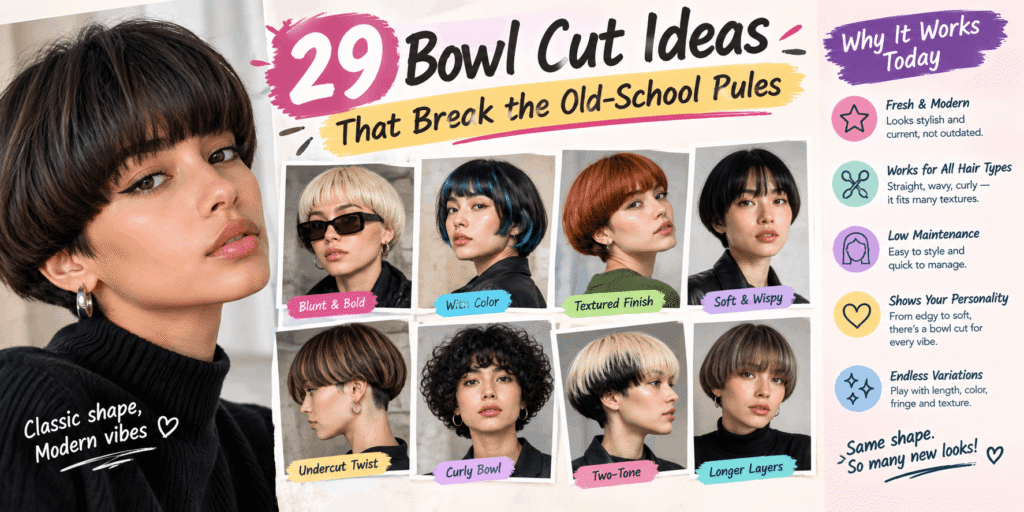
29 Bowl Cut Ideas That Break the Old-School Rules
There are countless ways to interpret this haircut. The following styles range from recognizable classics to much more experimental versions, so you can see how different details change the overall result.
1. Textured Bowl Cut
A textured version keeps the familiar rounded idea but replaces perfectly smooth sections with separated layers. The ends can be cut to create movement, making the haircut feel lighter and less rigid.
This style works particularly well when you want the shape to remain obvious without making the finish look overly precise. A small amount of styling product can emphasize individual sections without completely flattening the natural texture.
2. Classic Bowl Haircut
The classic interpretation stays close to the traditional formula. The fringe follows a relatively consistent line, while the sides and top create the recognizable rounded silhouette.
Its simplicity is exactly what makes it distinctive. Instead of relying on dramatic fades or colors, the haircut itself provides the visual interest. Keeping the finish neat can give it a clean, intentional appearance.
3. Bowl Cut With Full Bangs
Full bangs make the front of the haircut the main feature. Rather than separating the fringe into pieces, the hair falls more consistently across the forehead.
The rest of the haircut can remain relatively simple, allowing the fringe to define the silhouette. Slight texture at the ends can prevent the front from appearing too heavy while still keeping its strong shape.
4. Bowl Cut With a Fade
Adding a fade underneath the longer upper section creates a noticeable contrast. The top maintains the rounded inspiration, while the sides gradually become shorter.
This combination is useful for anyone who likes the recognizable shape but wants a more contemporary barbered finish. The fade can be subtle or more pronounced depending on how much contrast you want.
5. Bowl Cut With an Undercut
An undercut creates a stronger separation between the longer top and shorter lower sections. Instead of gradually blending the two areas, the difference in length becomes part of the design.
This gives the haircut a more dramatic edge. The longer upper section can be styled forward, left naturally textured, or slightly separated to reveal more of the underlying structure.
6. Mushroom-Inspired Cut
The mushroom variation emphasizes the rounded outline and often keeps the sides fuller than a heavily faded version. The shape can look soft and almost sculpted when the hair is straight.
Modern styling usually adds some variation to the ends rather than keeping everything perfectly uniform. That small change can make the silhouette feel more intentional and fashion-forward.
7. Highlighted Mushroom Bowl
Adding highlights introduces another layer of dimension. Lighter sections can make individual strands more visible, especially when the haircut contains layers or texture.
The highlights do not need to cover the entire head. Strategic placement around the fringe or upper sections can create contrast while allowing the original haircut shape to remain the focus.
8. Two-Tone Bowl Haircut
A two-tone approach uses noticeably different shades to separate sections of the haircut. The contrast can be subtle or dramatic, depending on the colors chosen.
Because the haircut already has a strong outline, color placement can make that structure even more noticeable. Keeping one shade dominant and using the second as an accent can create a more balanced result.
9. Bright Color Bowl Cut
For a statement look, bright color can completely change the mood of the haircut. Vibrant shades draw attention to the shape and make the style feel more experimental.
The cut itself can remain relatively simple because the color provides most of the visual impact. This is especially effective when the fringe and perimeter have clean, deliberate lines.
10. Curly Bowl Cut
Curly hair gives the silhouette a completely different character. Instead of producing a smooth rounded line, the curls create volume and movement around the shape.
The key is allowing the natural curl pattern to influence the final cut. Trying to force every section into a perfectly uniform outline can remove the quality that makes the curly version interesting.
11. Wavy Bowl Cut
Waves offer a middle ground between the polished appearance of straight hair and the stronger texture of curls. The rounded outline remains recognizable, but the natural bends in the hair make it softer.
A lightly layered finish can help the waves move naturally instead of sitting as one heavy section. This version can look especially relaxed when the fringe is allowed to separate slightly.
12. Messy Textured Bowl
The messy version deliberately moves away from precision. The perimeter may still suggest the classic shape, but the upper layers are given enough texture to create an undone finish.
This can be a good choice if you prefer hairstyles that do not look overly polished. The goal is controlled messiness rather than simply leaving the hair unstyled.
13. Afro Bowl Cut
Natural volume can create a striking interpretation of the rounded silhouette. Rather than trying to flatten or suppress the hair’s texture, the haircut uses that volume as part of its structure.
The shape can be carefully sculpted while leaving enough natural texture visible. The result feels distinctive because the traditional concept is being interpreted through a completely different hair texture.
14. Side-Swept Bowl
Moving the fringe slightly away from the center changes the appearance immediately. Instead of having a strong straight-across front, the hair gains directional movement.
The sides can remain rounded or be paired with a taper for additional contrast. This is a useful option when you like the overall concept but do not want a completely uniform fringe.
15. Side-Bang Bowl Cut
A longer side bang can make the haircut feel softer and more layered. The front section is allowed to fall toward one side, creating an asymmetrical detail within the otherwise rounded structure.
This approach also gives you more styling flexibility. The fringe can be worn closer to the forehead or moved farther sideways depending on the desired finish.
16. Long Bowl Hairstyle
Keeping more length throughout the haircut creates a softer interpretation of the traditional silhouette. The ears, sides, and fringe can remain longer, giving the style more movement.
This version works particularly well when paired with visible layers. Instead of looking like one solid shape, the hair can have several levels that move around the head.
17. Short Cropped Bowl
A short cropped version takes the concept in the opposite direction. The overall shape becomes compact, while the fringe and sides remain clearly defined.
Because there is less length to work with, the cutting technique becomes especially important. Small differences in the perimeter can noticeably change the finished appearance.
18. Tapered Bowl Cut
A taper creates a gradual reduction in length around selected areas, giving the haircut a cleaner transition than a disconnected undercut.
The upper silhouette can still remain rounded while the lower sections become more refined. This makes the style a practical bridge between a retro-inspired haircut and a contemporary barbering approach.
19. Bowl Cut With Shaved Sides
Shaved sides create maximum contrast with the longer top. The upper section becomes the dominant feature, while the sides provide a very clean visual break.
This is one of the more adventurous versions because the difference in length is immediately noticeable. Keeping the top textured can make the contrast feel even stronger.
20. Layered Bowl Hairstyle
Layers can make a rounded haircut feel much lighter. Instead of allowing the hair to sit as one continuous mass, the stylist creates different lengths that encourage movement.
This can be particularly useful for thicker hair, where removing some weight through carefully placed layers can make the style easier to manage.
21. Korean-Inspired Bowl Cut
Korean-inspired versions often combine a soft fringe with controlled volume and a more relaxed outline. Rather than creating an extremely sharp perimeter, the hair may be allowed to fall naturally around the face.
The finish is usually more polished than messy but less rigid than a traditional interpretation. Subtle layering can help the haircut maintain movement while keeping its recognizable shape.
22. Soft Fringe Bowl
A soft fringe creates a gentler version of the classic front line. Instead of a heavy, perfectly straight edge, the ends can be lightly separated or textured.
This small adjustment changes the entire mood of the haircut. The rounded shape remains present, but the result feels less severe and more casual.
23. Choppy Bowl Cut
Choppy ends bring noticeable variation to the haircut. Rather than having every strand finish at the same point, the stylist introduces irregularity through the layers and fringe.
This works especially well for a modern, editorial-inspired look. The uneven texture becomes part of the design instead of looking like an imperfection.
24. Bowl Cut With Undone Texture
An undone version combines the recognizable silhouette with loose, imperfect movement. The hair should look intentionally relaxed rather than heavily sculpted.
Light styling can separate the layers and bring out the natural texture. The less uniform finish helps the haircut feel contemporary without completely losing its original identity.
25. Sleek Straight Bowl
Straight hair can highlight the geometry of the haircut better than almost any other texture. The fringe appears cleaner, and the rounded sides become easier to see.
A sleek finish works when you want the haircut to look deliberate and polished. Keeping the ends healthy-looking and the shape well maintained is more important here because straight hair tends to reveal uneven lines quickly.
26. Blonde Bowl Hairstyle
Blonde tones can make the haircut appear lighter and emphasize texture. A single shade gives a clean appearance, while dimensional tones can make layers easier to see.
The color and haircut can complement each other without competing. If the cut contains strong texture, a lighter shade may naturally draw more attention to those details.
27. Dark Contrast Bowl Cut
A deep, contrasting shade creates a stronger visual presence. Darker hair can make the outline look particularly defined, especially when the fringe is cut cleanly.
The style does not need elaborate coloring to stand out. The combination of a clear silhouette and rich, consistent tone can already create a distinctive result.
28. Bowl Cut With a Modern Fade
A modern fade gives the haircut a sharper contemporary foundation. The upper section can retain enough length to create the rounded effect, while the fade gradually removes bulk around the lower sides.
This version demonstrates how far the haircut has evolved. It can borrow techniques from current barbering while keeping enough of its original shape to remain recognizable.
29. Statement Bowl With Bold Texture
The final version pushes texture to the forefront. Instead of treating texture as a small finishing detail, the haircut uses separated layers, movement, and an intentionally expressive shape.
It is less about following one exact template and more about creating a personalized silhouette. This makes it a strong option for someone who wants the haircut to feel creative rather than conventional.
Choosing the Right Version Without Guessing
With so many variations available, choosing a style should begin with how your hair naturally behaves rather than simply selecting the most eye-catching photograph. A reference image can show the direction you like, but your barber may need to adjust the shape based on your existing length, texture, and density.
Start With Your Hair Texture
Straight, wavy, curly, and tightly textured hair can all produce very different results from the same basic design. Straight hair tends to show the outline clearly, while textured hair introduces natural movement.
Instead of trying to make your hair behave like the model in a photograph, use the photograph to communicate the overall idea. Your stylist can then adapt the proportions to your own hair.
Think About the Amount of Maintenance
Some versions require regular trimming to keep their outline crisp. Others are intentionally layered or messy, allowing a little more growth without immediately changing the character of the style.
Consider how much time you realistically want to spend maintaining the haircut. A complicated color treatment or highly defined fade may require more frequent upkeep than a softer, longer interpretation.
Match the Shape to Your Personal Style
The best version is usually the one that fits the way you want your hair to look day to day. A bold, high-contrast design makes a stronger statement, while a softer textured version can feel more understated.
The modern approach is not about following one fixed definition. It is about taking the recognizable shape and adjusting its details until the haircut feels intentional, comfortable, and suited to your preferences.
How to Explain the Cut to Your Barber
Even when you know exactly which hairstyle you want, explaining the details can make a big difference. A photo is helpful, but it should not be the only part of the conversation. Two people can show the same reference picture and end up with different results because their hair texture, density, length, and natural growth patterns are not identical.
Instead of simply saying that you want a bowl cut, describe the elements that attracted you to the reference. Maybe it is the soft fringe, the faded sides, the longer shape around the ears, or the messy texture on top. Giving your barber those details makes it easier to adapt the idea rather than copying a style that may not work exactly the same way with your hair.
The Reference Photo Matters
A clear reference photo gives your barber something concrete to work from. Ideally, choose an image where the front, sides, and general shape are easy to see.
It can also help to bring more than one reference if you want to combine details. For example, you might like the fringe from one haircut and the faded sides from another. Your barber can then determine whether those elements can realistically be combined.
Try to focus on the haircut itself rather than the person wearing it. Their hair may have a completely different texture or density, so the final result should be adapted rather than duplicated.
What to Mention About the Sides and Fringe
The sides and fringe have an enormous effect on the finished shape. Tell your barber whether you want the sides blended, tapered, disconnected, or left relatively long.
The same applies to the front. A straight fringe produces a very different impression from a soft, choppy, or side-swept one. If you prefer some movement rather than a rigid line, mention that before the cutting begins.
It is also useful to explain how much styling you are willing to do. If you want something that looks good with minimal effort, your barber can take that into account when deciding the amount of layering and texture.
Styling It So It Doesn’t Look Stuck in the Past
A haircut can look completely different depending on how it is styled. A highly polished finish emphasizes the geometric shape, while loose texture makes the same cut feel more casual and modern.
The best approach is usually to work with your natural hair rather than trying to completely change it every morning.
For Straight Hair
Straight hair naturally emphasizes the outline, making it ideal for clean and structured versions. After washing, allow the hair to dry naturally or use a gentle blow-drying method to guide the fringe into place.
If you want extra definition, a small amount of lightweight styling product can separate the layers. Avoid using too much product because it can make the hair appear heavy and reduce the movement that gives the modern versions their character.
For a sleek look, keep the fringe relatively smooth and let the perimeter remain clearly defined. For something more relaxed, use your fingers to create slight separation through the top.
For Wavy or Curly Hair
Wavy and curly hair can give the haircut more natural dimension. Instead of trying to make every section perfectly straight, allow the existing pattern to become part of the finished style.
After washing, gently arrange the hair while it is damp and allow it to dry without excessive manipulation. A lightweight product designed for your hair type can help control unwanted frizz while preserving natural movement.
The goal is not perfect uniformity. A little variation can actually make the shape more interesting and prevent it from looking overly stiff.
For a Messier Finish
A messy finish works best when the haircut already contains layers or texture. Once the hair is dry, use your fingers to separate a few sections and create natural-looking movement.
There is no need to make every strand point in a different direction. The strongest messy styles still have an underlying shape. The difference is that the finish looks relaxed instead of carefully sculpted.
Keeping the Shape Looking Fresh
One of the biggest advantages of a distinctive haircut is also one of its biggest maintenance requirements: the shape matters.
As the hair grows, the original balance between the fringe, sides, and back gradually changes. A cut that looked sharp when freshly trimmed can become softer and less defined after several weeks.
Know Which Parts Need Regular Attention
The fringe is often the first area that becomes noticeable because even a small amount of extra length can change how it sits across the forehead.
Short faded or tapered sides may also need more frequent maintenance than longer versions. If your style depends heavily on a clean transition, allowing too much growth can make the haircut look considerably different.
Longer, layered interpretations usually have more flexibility. Their shape can evolve naturally without immediately looking untidy.
Don’t Overcomplicate the Routine
A complicated styling routine is not necessary for every version. In many cases, the haircut itself should do most of the work.
Keeping the hair clean, using products suited to your texture, and avoiding excessive product buildup can make everyday styling easier. If the hair starts behaving differently, it may be a sign that the shape needs a trim rather than another layer of styling product.
Why Texture Can Change Everything
Texture deserves special attention because it can transform a familiar silhouette into something much more individual.
Two haircuts with identical lengths can appear completely different when one has smooth, straight strands and the other has waves, curls, or heavily textured layers. This is why copying measurements from an online photo rarely produces an identical result.
Soft Texture for a Relaxed Finish
Soft texture creates movement without dramatically changing the overall shape. It can make the edges appear less severe and allow the hair to fall in a more natural pattern.
This is a useful choice when you like the basic silhouette but do not want the haircut to look overly geometric.
Strong Texture for a More Experimental Look
More pronounced texture creates visible separation between sections. Choppy ends, uneven layers, and disconnected pieces can give the haircut a more fashion-forward character.
Because the haircut already has a recognizable outline, strong texture can make it look especially expressive without requiring an elaborate design.
When the Classic Shape Actually Works Best
Not every haircut needs a fade, bold color, or dramatic layering to look current. Sometimes the simplest version works because its proportions are carefully controlled.
A cleaner interpretation can feel timeless when the fringe, sides, and top are balanced. The key is precision rather than unnecessary complexity.
When a Cleaner Version Makes Sense
A classic shape may appeal to someone who prefers neat hairstyles and wants the haircut itself to remain the main feature. Keeping the lines controlled can create a polished appearance without relying on additional styling details.
The result can also be easier to understand visually. There are fewer competing elements, so the rounded silhouette becomes the obvious focal point.
When a Softer Version Has More Appeal
A softer variation may be preferable if you want something less structured. Slightly longer sides, textured ends, or a relaxed fringe can take away some of the strictness associated with older versions.
This approach can also make the haircut feel more adaptable as it grows out.
How the Cut Works With Different Hair Textures
Hair texture is one of the most important factors to consider before choosing a specific variation. The same concept does not behave identically across different hair types.
Straight hair tends to make every line visible, so uneven cutting can be more noticeable. Wavy hair naturally breaks up the outline and can create a softer effect. Curly hair adds even more volume and movement, while tightly textured hair can create a strong sculpted silhouette.
Straight Hair
Straight strands are useful when you want a clear, recognizable outline. The fringe can remain crisp, and the sides can be shaped to create a strong visual curve.
Because straight hair reveals the perimeter easily, regular trims may be important if you want to preserve a precise shape.
Wavy Hair
Waves can soften the haircut without requiring extensive layering. They naturally introduce variation, making the finished result appear less uniform.
A slightly longer version may allow the waves to move more freely, while a shorter version can create a stronger, more compact silhouette.
Curly Hair
Curly hair can turn the haircut into something much more expressive. The curls create volume that interacts with the rounded shape, producing a result that can look very different from a straight-haired interpretation.
The cutting process may need to account for how much the curls contract as they dry. This is another reason why a barber experienced with the specific texture can be valuable.
Tightly Textured Hair
Dense, tightly textured hair can create impressive natural volume and definition. Rather than forcing the hair into a completely smooth shape, a stylist can use the existing texture to build the silhouette.
The finished style may look more sculptural, especially when the sides and perimeter are carefully defined.
Color Can Give the Haircut a Completely New Direction
Color is not necessary to make the haircut interesting, but it can dramatically alter its personality.
Subtle highlights can emphasize layers, while stronger color changes can make the entire hairstyle feel more experimental. Even a small section of contrasting color around the fringe can draw attention to the haircut’s structure.
Subtle Highlights
Highlights work particularly well on textured versions because lighter strands can make the layers easier to see.
Instead of covering the entire hairstyle, selective highlights can create dimension while allowing the natural or base color to remain dominant.
High-Contrast Color
A strong color contrast makes the haircut more noticeable. Bright shades or sharply different tones can turn a simple shape into a statement hairstyle.
Because the haircut already has a defined outline, dramatic color should be considered as part of the overall design rather than an isolated addition.
Making the Style Work Beyond the First Week
A good haircut should not depend entirely on the moment it leaves the barber shop. The way it grows and how easily it can be restyled are worth considering before choosing a highly specific variation.
Some versions rely on very precise lines, while others are designed to become softer with time.
Think About the Grow-Out
A heavily faded or sharply disconnected version can change noticeably as the shorter sections grow. A layered or longer style may transition more gradually.
If you do not want frequent trims, consider a variation that still looks intentional when the shape becomes slightly less defined.
Consider How You Normally Wear Your Hair
Think about your everyday routine. If you prefer letting your hair air-dry, a heavily styled version may become frustrating. If you enjoy experimenting with products and different finishes, you have more flexibility.
The haircut should fit into your routine rather than requiring you to completely change it.
Why These 29 Styles Feel So Different From One Another
Looking across all 29 variations, the biggest lesson is that the name describes a starting point rather than one strict hairstyle.
A classic version focuses on the recognizable rounded shape. A fade introduces modern barbering. An undercut creates separation. Layers add movement. Curls and waves change the silhouette through natural texture. Color introduces another visual dimension.
That is why two people can both choose the same general haircut while ending up with completely different results.
The most successful modern versions usually have one thing in common: the details feel intentional. The fringe works with the sides, the length works with the texture, and the styling complements the cut instead of fighting it.
Finding Your Own Version of the Look
Choosing among 29 styles does not mean you need to select one photograph and copy every detail. Instead, identify the elements you actually like.
Maybe you prefer the clean outline of the classic version but want the sides faded. Perhaps you like the movement of a textured style but want a longer fringe. Or you might prefer a curly interpretation because it works naturally with your hair.
Combining compatible elements can produce a more personal result than copying a single trend.
The most useful starting point is your natural hair. Look at its texture, density, length, and the way it normally falls. From there, choose a silhouette that works with those characteristics.
Final Thoughts:
The bowl cut has come a long way from its old-school reputation. Modern versions can be clean or messy, short or long, subtle or bold, textured or sleek. Fades, undercuts, layers, natural curls, waves, and color have all expanded what the style can become.
The biggest advantage is its recognizable foundation. You can keep enough of the traditional rounded shape to make the haircut instantly identifiable while changing almost everything else around it.
Whether you prefer a classic fringe, a textured finish, a modern fade, or a more experimental color combination, the goal is to choose details that work naturally with your hair and everyday routine. With the right proportions and a skilled barber or stylist, this once-retro haircut can feel surprisingly fresh well beyond 2025.
One Comment