
A mid taper is one of the easiest men’s haircuts to customize because it gives you a clean look around the sides and back without taking the fade too high. It works with short, medium, curly, wavy, straight, and even longer hairstyles on top. Whether you prefer a polished side part or a messy textured finish, a mid taper can give the haircut a sharper and more modern appearance.
The best part is its versatility. You can keep the top natural, add texture, create a fringe, pair it with a beard, or choose something more eye-catching like a mullet or a design. Here are 15 stylish versions worth considering.
Top Mid Taper Fade Haircuts for Men
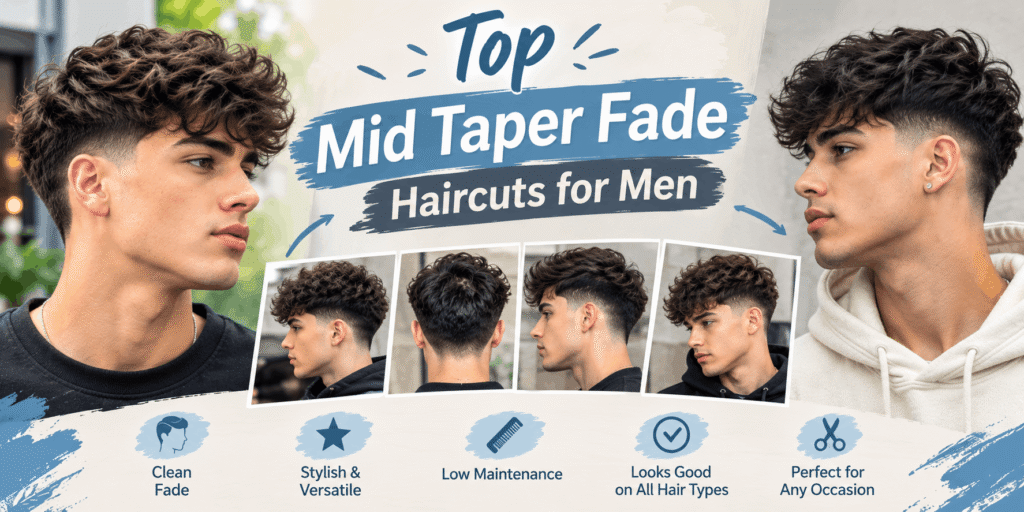
1. Mid Taper Fade with Textured Top
A textured top is one of the most versatile ways to wear a mid taper. The sides gradually become shorter around the temples and neckline, while the hair on top is left long enough to create movement.
Ask your barber for a mid taper that blends naturally into the sides without removing too much weight from the top. A small amount of matte clay can make the texture more noticeable while keeping the finish natural.
This version works especially well for men who want a modern haircut that does not look overly styled.
2. Mid Taper Fade with Curly Hair
Curly hair and a mid taper make a strong combination. The taper cleans up the area around the ears and neckline while allowing the curls on top to remain the main feature.
Instead of cutting the curls extremely short, keep enough length for their natural shape to remain visible. The contrast between the defined curls and tapered sides creates a sharp but relaxed appearance.
A lightweight curl cream can help keep the curls controlled without making them look heavy or stiff.
3. Mid Taper Fade with Straight Hair
Straight hair gives you plenty of styling options with a mid taper. You can push the hair forward, sweep it sideways, create a messy texture, or brush it backward for a cleaner finish.
The taper provides structure around the sides, while the straight hair on top gives you a smooth canvas for different styles. For a casual appearance, use a matte styling product and work the hair with your fingers.
For a more polished result, a comb and lightweight pomade can create a neat finish.
4. Mid Taper Fade Middle Part
The middle part has become a popular choice for men who want a slightly longer and more relaxed hairstyle. Combining it with a mid taper keeps the sides from looking bulky while allowing the top to maintain its length.
The center part can be styled naturally so that the hair falls toward both sides. This is particularly effective with straight or slightly wavy hair.
For a softer appearance, avoid making the part too sharp. Letting a few strands fall naturally can make the style look more effortless.
5. Mid Taper Fade with Blonde Hair
Blonde hair can make the contrast between the top and tapered sides more noticeable. You can keep the blonde shade natural or choose a lighter tone depending on your preferred look.
The top can be styled with texture, pushed forward, or swept back. Meanwhile, the mid taper creates a clean transition around the sides.
If your hair is already light, a textured finish can make the haircut appear fuller and more dimensional without requiring complicated styling.
6. Mid Taper Fade Side Part
A side part gives the mid taper a classic touch. It is a great option if you want something that looks clean enough for formal occasions but still works as an everyday hairstyle.
The barber can create a subtle part rather than an extremely defined line. Keep some length on top so the hair can be swept across naturally.
A small amount of molding paste or pomade can hold the side part in place without making the hairstyle look overly rigid.
7. Mid Taper Fade French Crop
The French crop combines a short textured top with a forward fringe. Adding a mid taper makes the overall haircut cleaner and gives the crop more definition.
The fringe can be kept blunt, textured, or slightly uneven depending on the look you want. The shorter sides also make the top stand out more.
This is a particularly practical choice if you prefer a hairstyle that does not require a lot of daily styling.
8. Mid Taper Fade Quiff
A quiff adds height to the top while the mid taper keeps the sides controlled. This creates a noticeable contrast without requiring a very high fade.
For the best result, leave enough length at the front to lift it upward and slightly backward. A blow dryer can help create volume before applying styling product.
Use a matte clay for a modern finish or a light pomade when you want the quiff to look smoother.
9. Mid Taper Fade with Fringe
A fringe can completely change the appearance of a mid taper. Instead of pushing the hair backward or sideways, the front is styled toward the forehead.
You can choose a short textured fringe for a sharper appearance or leave it slightly longer for a softer look. The taper keeps the sides neat while the fringe gives the haircut personality.
This style can work particularly well with straight, wavy, or textured hair.
10. Mid Taper Fade Blowout
A blowout gives the mid taper a more voluminous and energetic appearance. The hair on top and around the front is styled upward and outward, creating a fuller silhouette.
The tapered sides help keep the shape balanced, so the extra volume on top does not make the haircut appear too wide.
A blow dryer is usually the key to achieving this style. Apply a lightweight styling product first, then use the dryer to direct the hair into the desired shape.
11. Mid Taper Fade with Short Hair
You do not need long hair on top to get a great mid taper. A short version can be simple, clean, and easy to maintain.
Keep the top relatively short while allowing the barber to create a smooth taper around the temples and neckline. You can leave the top textured or simply brush it into place.
This is a good everyday option for men who prefer spending very little time styling their hair.
12. Mid Taper Fade Buzz Cut
A buzz cut paired with a mid taper creates a very clean and low-maintenance haircut. The hair remains short throughout, while the taper adds extra definition around the sides.
Because there is very little length to style, this option is especially convenient for men who want to wake up and go without spending time on their hair.
The main detail to discuss with your barber is how short you want the top and how gradually you want the taper to transition.
13. Mid Taper Fade with Wavy Hair
Wavy hair adds natural movement to a mid taper. Instead of trying to eliminate the waves, let them remain visible on top while the sides are cleaned up.
The result is a balance between relaxed texture and a sharp haircut. A lightweight styling cream can enhance the waves while keeping them soft.
Avoid using too much heavy product, as it can weigh down the natural movement that makes this hairstyle attractive.
14. Mid Taper Fade Mullet
A mid taper can also be combined with a modern mullet. The sides and temple area are cleaned up while extra length is retained toward the back.
This creates a stronger contrast between the front, sides, and back. You can keep the top textured for a casual appearance or add more volume for a dramatic finish.
Because the shape of a mullet is more noticeable than a traditional haircut, it is worth showing your barber a reference photo before getting the cut.
15. Mid Taper Fade with Beard
Pairing a mid taper with a beard creates a connected, balanced appearance around the sides of the face. The barber can carefully blend the taper into the sideburn area while keeping the beard shape clean.
The beard does not have to be extremely long. Even short facial hair can complement the haircut when the edges are maintained.
For the best result, tell your barber whether you want the transition between the haircut and beard to look seamless or slightly more defined.
What Is a Mid Taper Fade?
A mid taper fade is a haircut where the hair gradually becomes shorter around the temples and the back of the neck, with the taper positioned around the middle area of the sides.
Unlike a haircut that removes a large amount of hair high up the sides, a mid taper generally keeps more hair around the upper sides of the head. This makes it easier to combine with different styles on top.
The taper itself is created by gradually changing the hair length rather than creating one abrupt line. A skilled barber blends the different lengths so the transition looks smooth.
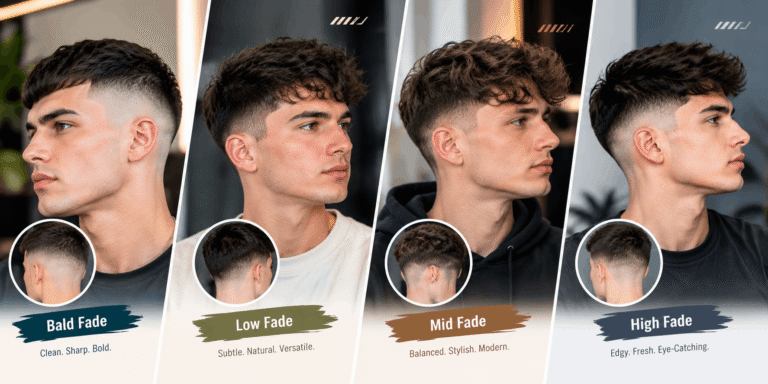
One reason the mid taper is so popular is that it sits between a low and high taper. It provides noticeable cleanup without completely changing the overall shape of the hairstyle.
Mid Taper Fade vs Other Taper Fades: Key Differences
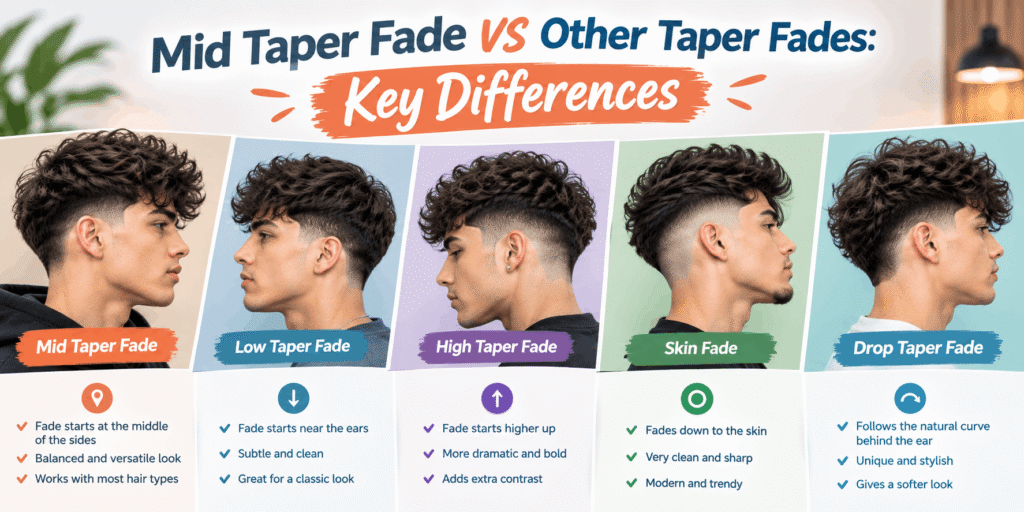
The biggest difference between taper styles is where the gradual shortening begins. That position changes the overall appearance of the haircut.
Mid Taper Fade vs Low Taper Fade
A low taper begins closer to the bottom of the sides and around the neckline. Because less of the sides are shortened, it creates a more subtle and traditional appearance.
A mid taper starts higher, around the middle of the side area, so the transition is easier to notice. It gives the haircut a slightly sharper and more contemporary appearance while still leaving plenty of hair above the taper.
Mid Taper Fade vs High Taper Fade
A high taper starts considerably higher on the sides. This creates more contrast between the longer hair on top and the shorter sides.
A mid taper is generally more balanced. It gives you visible definition without moving the taper as high toward the upper sides of the head.
If you want something noticeable but not extremely dramatic, the mid taper can be a useful middle ground.
How to Choose the Right Mid Taper Fade for You
Choosing the right version depends on more than simply asking for a mid taper. Your hair type, face shape, hair length, and preferred styling routine can all affect the final result.
By Hair Type
For straight hair, you can experiment with a side part, fringe, quiff, slick back, or textured top.
For wavy hair, keeping some natural movement on top can make the haircut look fuller and more relaxed.
Curly hair works well with a taper because the shorter sides help highlight the curls without requiring you to cut the top extremely short.
Thicker hair can support styles such as quiffs and textured tops, while shorter versions can make dense hair easier to manage.
By Face Shape
A mid taper is adaptable because the top can be adjusted to complement different facial proportions.
For a rounder face, adding some controlled height or texture on top can create a more elongated visual effect.
For longer faces, excessive height may not always be necessary. A textured fringe or side-swept style can help keep the proportions balanced.
Oval face shapes generally offer plenty of flexibility, so you can experiment with several versions of the mid taper.
How to Ask Your Barber for the Perfect Mid Taper Fade
Instead of simply saying “give me a mid taper,” explain exactly what you want to happen with the sides, top, and neckline.
Tell your barber that you want the taper positioned around the middle of the sides and that you want a smooth transition around the temples and back.
Then explain how much length you want to keep on top. For example, mention whether you want a textured crop, quiff, middle part, curls, or another specific style.
Showing a reference photo is even better. It gives your barber a clear idea of the taper height, top length, hairline shape, and overall finish you have in mind.
Also mention whether you want the neckline natural or cleaned up, and whether you want your sideburns blended into facial hair.
Styling a Mid Taper Fade
A mid taper fade gives you plenty of freedom on top. The sides and neckline provide the clean foundation, while the longer hair can be shaped in completely different ways depending on your personal preference.
Before styling, think about the result you want. A neat side-swept finish needs a different approach from a loose textured look, and naturally curly hair often looks better when its original pattern is allowed to show.
Give Your Hair the Right Starting Point
Styling is easier when the hair is neither soaking wet nor completely dry.
After washing, gently press the hair with a towel to remove excess moisture. There is no need to rub the strands aggressively. If your hair becomes frizzy easily, handling it gently can make the finished hairstyle look smoother.
People with dry-feeling hair can also use a small amount of leave-in conditioner before applying their main styling product. Keep the application light so the hair does not become weighed down.
Decide on the Look First
Your desired finish should determine what goes into your hair.
For a relaxed hairstyle with visible separation between strands, a matte clay can provide definition without creating a glossy appearance. A flexible paste is useful when you want the ability to reshape the hair.
Classic styles usually work better with pomade because it can provide a smoother appearance and varying levels of shine. Longer or wavy hair may benefit from a styling cream when the goal is light control rather than a heavily constructed shape.
The amount matters just as much as the product. Begin with a small dab, spread it between your palms, and work it through the top. Add more only when the first application is not enough.
Build the Hairstyle
Now direct the top into the shape you want.
For a raised front, use your fingers or a brush to lift the hair while directing it backward. This approach works well for a quiff-inspired finish.
If you prefer the hair moving sideways, establish the direction from the front toward the chosen side. A comb can create a cleaner result, while your fingers produce a more relaxed appearance.
For messy or textured hair, avoid trying to make every section identical. Slight differences in direction can actually make the hairstyle look more natural.
Curly hair should generally be treated differently. Rather than repeatedly brushing through the curls, use your fingers and let the natural pattern remain part of the finished style.
Add Volume With a Dryer
A blow dryer can be useful when the hair needs additional height or when you want the shape to last longer.
Move the airflow along the direction of the hairstyle instead of randomly blowing across the head. Use your free hand to lift or position the hair as you dry it.
The front can be lifted for additional volume, while a flatter hairstyle can be directed closer to the head. If you have curls or waves, lower heat and minimal manipulation can help preserve their natural appearance.
Make Small Finishing Adjustments
Once the hair has dried, look at the overall shape before adding anything else.
If certain sections need extra control, use a small amount of finishing product rather than starting over with a large application. The finished hair should still have some movement.
A completely stiff top can make the haircut appear less natural. Keeping some flexibility also makes it easier to adjust the hairstyle throughout the day.
Keeping a Mid Taper Looking Fresh
The styling routine is only part of maintaining this haircut. The tapered areas gradually become less noticeable as new growth appears around the temples and neckline.
Refresh the Edges When Needed
How frequently you visit the barber depends on how quickly your hair grows and how sharp you want the taper to remain.
If you like a freshly detailed appearance, you may prefer more frequent cleanups. If you do not mind a slightly grown-out look, you can wait longer between appointments.
Tell your barber whether you want the existing shape preserved or whether you want changes to the taper. This is especially important if you are growing the hair on top.
Protect the Length on Top
The top of the haircut determines many of the styles you can create.
If you are working toward a middle part, quiff, longer textured style, or another hairstyle that needs length, tell your barber before the cut begins.
A simple instruction such as keeping the length on top can help prevent an otherwise good taper from becoming too short for the style you want to wear.
Keep Product Buildup Under Control
Heavy styling products can accumulate in the hair over time. If your hair starts feeling coated or unusually difficult to wash, your routine may need some adjustment.
Choose products according to what your hair actually needs rather than automatically selecting the strongest formula. A lighter product may be enough for short hair, while thicker or longer hair can require additional hold.
Clean hair is also easier to style, so maintaining a regular washing and conditioning routine can make a noticeable difference.
Products That Work Well With a Mid Taper Fade
There is no universal styling product for this haircut. The best choice depends on the length and texture of the top and the finish you want to achieve.
Matte Clay for Definition
Clay is a useful choice when you want the hair to look textured rather than glossy.
It can create separation between strands and help casual hairstyles maintain their shape. Short crops, messy tops, and textured finishes can all benefit from this type of product.
Molding Paste for Flexibility
Paste is a good middle ground when you want control without making the hair feel locked into one position.
It works well for casual side-swept looks and hairstyles that need to remain touchable. If you like changing the direction of your hair during the day, a flexible formula can be particularly convenient.
Styling Powder for Lift
Hair powder can be useful when volume is the main goal.
It adds grip at the roots and can make flat hair easier to lift. Because the effect can become noticeable quickly, apply a small amount first and judge the result before adding more.
Pomade for a Polished Finish
Pomade is better suited to hairstyles where shine and smoothness are part of the look.
Side parts, combed-back styles, and classic finishes can benefit from its ability to keep the hair controlled. Different formulas offer different levels of shine, so choose one that matches the appearance you want.
Sea Salt Spray for Texture
Sea salt spray can help give the hair a loose, textured quality.
It is often useful as a preparation step before blow-drying, particularly when working with naturally wavy hair. However, if your hair already tends to feel dry, keep the amount moderate.
Styling Cream for a Softer Result
Styling cream offers lighter control and is useful when you do not want the product itself to dominate the appearance of the hairstyle.
It can be a good match for longer hair, waves, middle parts, and casual versions of the mid taper. The finished look generally remains softer and easier to move.
Argan Oil for Added Softness
Argan oil can give the hair a smoother feel and a small amount of shine.
It is concentrated, so there is usually no need to use much. Apply a tiny quantity through the hair, particularly toward the ends if they feel dry, instead of saturating the entire haircut.
Clarifying Shampoo for Occasional Cleanup
If several styling products are used throughout the week, ordinary washing may not always remove every trace of buildup.
A clarifying shampoo can occasionally be introduced to give the hair a deeper cleanse. It does not have to become an everyday product, and how often it is needed depends on your normal styling routine.
Conditioner for Easier Styling
Conditioner can make longer hair easier to handle and can improve how smoothly it moves during styling.
Apply it mainly to the hair rather than concentrating a large amount at the roots. Rinse well and adjust your routine according to how your hair responds.
Final Thoughts
The mid taper fade works because it leaves the top open to interpretation. You can keep it compact and easy to manage, build height at the front, create a deliberately messy texture, emphasize curls, or allow enough length for a middle part.
The haircut can therefore move between casual and refined without requiring a completely different cut. The tapered temples and neckline add definition, while the top provides most of the personality.
When getting the haircut, communicate both parts of the style: the taper you want and the way you plan to wear the top. A clear reference photo can make this conversation much easier.
Afterward, the maintenance routine can remain simple. Keep the taper refreshed when necessary, use products that suit your hair rather than applying excessive amounts, and preserve enough length on top for the hairstyle you actually want to wear.
That combination allows a mid taper to stay adaptable as your hair grows and as your preferred style changes.
5 Comments