
What if one of the most relaxing experiences you can add to a Japan trip happens in a salon chair instead of a sightseeing spot? A Japanese head spa combines scalp care, cleansing, massage, shampooing, and relaxation into a slow, sensory experience—and some Tokyo salons now offer dedicated courses lasting 70 to 110 minutes.
The experience can be especially appealing after a busy day of walking around Tokyo, Kyoto, or Osaka. Instead of simply washing your hair, a head spa session can involve a consultation, scalp-focused cleansing, massage, warm water treatments, conditioning, and a final blow-dry, depending on the salon and package.
Because “Japanese head spa” is used for several different types of services, the experience can vary considerably from one place to another. Some salons focus heavily on relaxation, while others combine scalp analysis, hair treatments, pressure-point massage, or longer luxury sessions.
This guide explains what you can expect, how a typical appointment works, what different treatments may include, how much they can cost in Japan, where travelers can experience them, and how to choose a salon that fits your trip.
Why Japanese Head Spas Are Getting So Popular
The appeal of a Japanese head spa is partly the way it combines several experiences into one appointment. Instead of treating hair washing, scalp care, massage, and relaxation as separate activities, the session can connect them into one continuous ritual.
For visitors to Japan, that can make it an appealing break from a packed sightseeing schedule. One current Tokyo head-spa provider describes its treatments as combining Oriental pressure-point techniques with modern trichology, while its listed courses include neck and shoulder massage, head massage, massage shampoo, and blow-drying.
The atmosphere also contributes to the experience. Dedicated head spas often use reclining chairs, soft lighting, quiet treatment rooms, and specialized wash stations. HEAD SPA Kuu in Tokyo’s Omotesando area, for example, has been highlighted by Live Japan as a luxury head-spa experience aimed at both Japanese customers and international visitors.

The Experience Starts Before the Treatment
A good session can begin with a brief discussion about your scalp, hair, preferred pressure, and what you want from the appointment. Some salons also offer scalp analysis or microscope-based assessments.
The Head Spa Tokyo, for example, currently offers an optional microscopic scalp diagnosis for an additional ¥550 and lists separate head-spa courses of 70, 90, and 110 minutes.
For travelers, this initial discussion can be useful because you can explain whether you mainly want relaxation, scalp cleansing, hair conditioning, or a combination of these.
What Makes It Different From a Regular Scalp Treatment
A regular salon shampoo may be a short part of a haircut or styling appointment. A head spa gives the cleansing and massage experience much more attention.
The exact difference depends on the salon, but dedicated sessions can last substantially longer than an ordinary shampoo service. One Tokyo salon currently lists a 70-minute head-spa course with neck and shoulder massage, head massage, massage shampoo, and blow-dry, while its 90-minute option adds a head-bath experience.
The relaxing environment is also part of the appeal. Some dedicated salons use private or semi-private spaces rather than treating the head spa as a quick add-on to a haircut.
Inside a Japanese Head Spa Session
There is no single universal procedure, but many sessions follow a similar general flow. The exact steps, products, water treatments, and massage techniques depend on the salon and package you book.
The Consultation and Scalp Check
Your appointment may begin with questions about your hair and scalp. Some salons may examine the scalp before choosing products or techniques.
This can be particularly useful when the salon offers several treatment options. Instead of choosing a package simply because it sounds luxurious, you can discuss what you actually want from the experience.
Deep Cleansing and Scalp Massage
Cleansing and massage are usually central parts of the experience. The practitioner may use shampoo or specialized cleansing products while applying controlled pressure to the scalp.
At The Head Spa Tokyo, the listed head-spa courses include head massage and massage shampoo, while the brand describes its approach as combining pressure-point techniques with massage.
The pressure should remain comfortable. If something feels painful or unpleasant, tell the therapist so the technique can be adjusted.
Shampoo, Rinse, and Conditioning
After the massage and cleansing stages, the hair may be conditioned using products selected for the treatment.
Some sessions also include special water or bath experiences. The Head Spa Tokyo’s current 90-minute course, for example, includes its 70-minute head spa followed by a “head bath.”
Other salons may offer longer hair-focused treatments that combine the head spa with additional conditioning or hair-care steps.
The Finishing Touches
Many sessions finish with a blow-dry, making the experience convenient if you plan to continue sightseeing afterward.
Some higher-priced courses include additional styling or hair treatments. The exact services should be checked when booking because not every head spa includes the same finishing steps.
The Relaxation You Can Expect
Relaxation is a major reason many visitors choose a Japanese head spa. The combination of reclining treatment chairs, warm water, quiet surroundings, scalp massage, and slow movements can make the appointment feel quite different from a normal salon visit.
Some providers specifically position their treatments around relaxation and relief from everyday or travel-related tension. For example, a Tokyo salon in Shinjuku currently markets its head-spa sessions toward visitors looking to unwind from travel fatigue.
Scalp Massage and Pressure Techniques
Massage techniques vary by practitioner. Some salons incorporate pressure-point methods, while others focus more on gentle scalp massage.
Because pressure preferences are personal, communicate what feels comfortable rather than assuming you have to tolerate a particular intensity.
Warm Water and Sensory Elements
Warm water can be one of the most memorable parts of a head spa. Some courses incorporate a dedicated head bath or water treatment after the main massage.
The combination of water, temperature, sound, and massage is part of what gives the experience its relaxing character.
Hair Care Meets Self-Care
Although the experience has a strong relaxation component, many salons also incorporate hair and scalp care into the appointment.
Some treatments are designed to leave the hair feeling conditioned and the scalp feeling refreshed. More specialized courses may include additional hair treatments, depending on the salon.
How Much Does a Japanese Head Spa Cost in Japan?
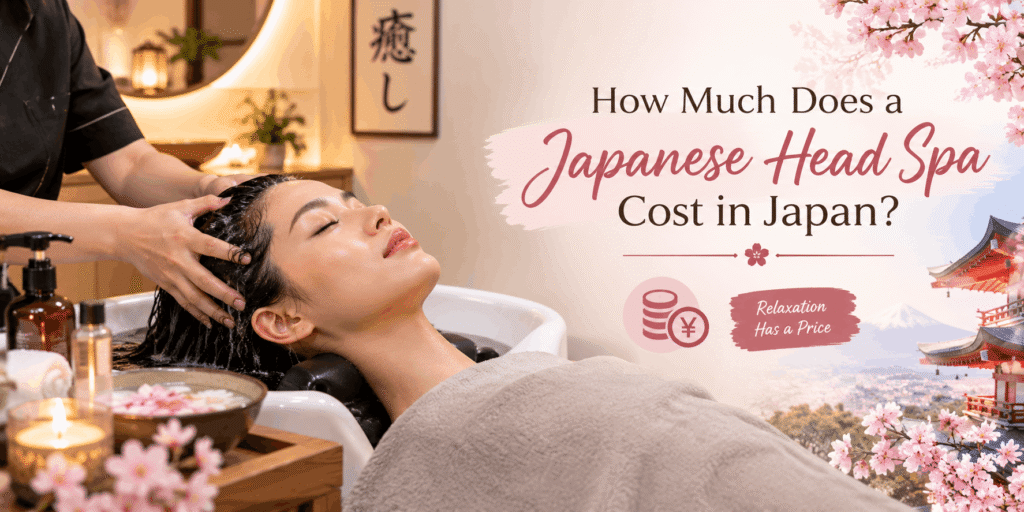
Prices vary considerably depending on the city, salon, treatment length, location, and whether the service is designed specifically for tourists.
For example, ISSOU head spa in Tokyo currently lists a 70-minute treatment at ¥11,000, a 110-minute treatment at ¥15,400, and a 130-minute treatment at ¥19,800.
The Head Spa Tokyo currently lists ¥12,100 for 70 minutes, ¥14,300 for 90 minutes, and ¥18,700 for 110 minutes. Its listed prices include shampoo and blow-dry, while certain additional services cost extra.
Luxury tourist-oriented experiences can cost considerably more. One current 2026 guide notes that English-facing tourist salons can charge substantially higher prices than neighborhood salons, particularly when private rooms and language support are included.
This means travelers should compare the complete package, not just the advertised session length.
Where to Try a Japanese Head Spa in Japan
Japan offers plenty of opportunities to experience a Japanese head spa, but the experience can differ significantly between salons. Some are traditional hair-salon treatments, while dedicated head-spa studios may offer longer sessions, private rooms, scalp-focused consultations, and more elaborate relaxation rituals.
Tokyo has one of the widest selections, particularly around areas such as Shibuya, Harajuku, Omotesando, Ebisu, and Daikanyama. For example, The Head Spa Tokyo currently lists locations across several of these neighborhoods and also has a Kyoto location, with online booking and daily availability updates.
Kyoto is another excellent place to add a head spa to your itinerary, especially if you want to combine relaxation with traditional Japanese surroundings. head CONCIERGE KYOTO, for example, is located near Kyoto Kawaramachi and currently lists 60-, 90-, and 120-minute head-spa courses, with prices ranging from ¥10,780 to ¥21,780 including tax.
Osaka also has distinctive head-spa experiences. One Osaka tourism-listed experience combines a head spa with elements such as a tea ceremony, sweets, foot spa, and Japanese-style surroundings, giving visitors a broader cultural experience alongside the treatment.
Tokyo
Tokyo is a particularly convenient choice if a head spa is one of the experiences you specifically want to include during your trip. Dedicated salons can be found in several central neighborhoods, and some provide English-language booking or consultation options.
HEAD SPA Kuu in Tokyo’s Omotesando area is an example of a more luxurious experience. Live Japan describes the treatment as beginning with a consultation and foot bath, followed by scalp massage, oil application, steam, and cleansing in a private setting.
Kyoto
Kyoto can be appealing when you want a quieter experience after sightseeing. Current listings show both dedicated head-spa salons and broader relaxation businesses offering dry head-spa services.
The head CONCIERGE Kyoto location currently lists a 60-minute trial course at ¥10,780 including tax, a 90-minute standard course at ¥16,280, and a 120-minute luxury course at ¥21,780.
For a shorter experience, THE BODY Kyoto Gion currently lists a 45-minute dry head spa for ¥6,980, as well as a 120-minute body-and-head-spa combination.
Osaka
Osaka provides options ranging from straightforward head treatments to experiences that combine the spa with Japanese cultural elements.
One Osaka tourism experience currently lists a 90-minute treatment combining a head spa with a tea ceremony, sweets, foot spa, and other elements, showing how some experiences can become part of the wider Japan travel experience rather than simply a salon appointment.
Picking the Right Head Spa for Your Trip
Choosing a head spa is easier when you first decide what kind of experience you want. A short dry head spa may be ideal when you have a busy sightseeing schedule, while a longer wet head spa can work better when you want the treatment itself to be a major part of your day.
Price is another important difference. Current Tokyo guides show a broad range from roughly ¥3,000–¥10,000 for shorter or standard services to ¥15,000–¥20,000 or more for premium treatments. English-language tourist-focused salons can cost considerably more, particularly when private rooms and language support are included.
Check the Treatment Menu
Read the complete treatment description before booking. A “head spa” may refer to a dry massage, a wet scalp treatment with shampoo, a longer treatment including hair care, or a package containing several additional services.
Also check whether the advertised duration includes consultation, drying, styling, or other parts of the appointment. Hayato Salons in Tokyo, for example, currently notes that its listed head-spa treatment itself lasts approximately 30 minutes and that blow-drying is charged separately.
Read Recent Reviews
Reviews can help you understand the atmosphere, communication, treatment style, and whether international visitors found the booking process easy.
Look for recent reviews rather than relying entirely on older recommendations, particularly because prices, locations, staff, and reservation systems can change.
Look at the Session Length
If you’re fitting a head spa between sightseeing plans, leave enough time for the complete appointment rather than scheduling another activity immediately afterward.
Longer treatments can also include consultation, massage, washing, drying, and styling, so the actual time at the salon can be longer than the headline massage duration suggests.
Consider Language and Booking Options
International travelers should check whether the salon offers English-language booking or consultation. This can make the experience much easier, particularly when choosing between different treatment packages.
Some salons have English websites and online booking, while others rely primarily on Japanese booking platforms. Current Tokyo listings demonstrate a clear difference between local-price services and English-facing tourist services.
Before Your Appointment
A little preparation can make the experience more comfortable. Check the salon’s instructions regarding hair products, arrival time, payment, and cancellation before you go.
You generally don’t need to create a complicated routine beforehand. The important thing is to know what you booked and mention anything relevant to the therapist, such as scalp sensitivity or discomfort.
What to Wear
Comfortable clothing is usually the easiest choice, particularly for longer sessions. Avoid anything that makes reclining or relaxing uncomfortable.
Some salons may provide towels, changing facilities, or other amenities, while others may not, so check the information provided when booking.
What to Bring
You generally only need your booking information and whatever you normally carry during your day in Japan.
Some Kyoto services specifically provide changing areas and luggage storage, which can be particularly convenient for travelers moving between sightseeing locations.
What to Expect After the Session
Your hair may be washed and blow-dried as part of the service, but this is not universal. Some treatments include drying, while others charge separately or let you style your own hair afterward.
For example, head CONCIERGE Kyoto lists blow-drying as an additional option, while some Tokyo salons include shampoo and blow-dry in their head-spa courses.
Is a Japanese Head Spa Worth Adding to Your Japan Trip?
For travelers who enjoy beauty treatments, relaxation, and experiences that feel different from a standard salon visit, a Japanese head spa can be a memorable addition to a Japan itinerary.
The best experience depends on what you value. A local salon can provide a more affordable introduction to the treatment, while an English-facing specialist can make booking and communication easier. Current 2026 pricing shows just how wide this range can be.
It can also be a useful way to slow down during a busy trip. After several days of sightseeing, a quiet treatment room and an extended scalp massage can provide a change of pace.
Final Thoughts
A Japanese head spa can be one of those Japan experiences that stays with you because it combines beauty care with a slower, more relaxing atmosphere. The treatment itself may include scalp massage, cleansing, shampooing, conditioning, warm water, and drying, but the exact experience depends heavily on the salon and course you choose.
Tokyo offers the widest variety, with options ranging from local-style services to luxury experiences designed with international visitors in mind. Kyoto offers both dedicated head spas and relaxation businesses where a shorter treatment can easily fit into a sightseeing day. Osaka also has experiences that combine head spa treatments with elements of Japanese culture.
Before booking, compare the treatment duration, complete price, what’s included, language support, location, and cancellation policy. Don’t assume that every salon using the term “head spa” offers the same treatment.
Most importantly, choose an experience that fits your itinerary rather than trying to squeeze a long appointment into an already packed day. Whether you choose a simple 45-minute session in Kyoto or a longer specialist treatment in Tokyo, a Japanese head spa can provide a peaceful pause in the middle of an otherwise busy Japan adventure.

One Comment