
A conch piercing can completely change the look of an ear without requiring an elaborate collection of piercings. It sits in the cartilage area toward the center of the ear, giving you a distinctive place for a small stud or a statement hoop. Because the location is naturally noticeable, even simple jewelry can make the piercing stand out.
At the same time, a conch piercing is different from a standard lobe piercing. Cartilage has less blood supply than the earlobe, so the healing process can take considerably longer. That means choosing an experienced piercer, using suitable jewelry, and following sensible aftercare are all important.
If you’re considering getting one, understanding what happens before, during, and after the piercing can make the experience much easier. This guide covers the placement, expected discomfort, healing process, jewelry choices, aftercare, and other important things to know before making your decision.
What Is a Conch Piercing?
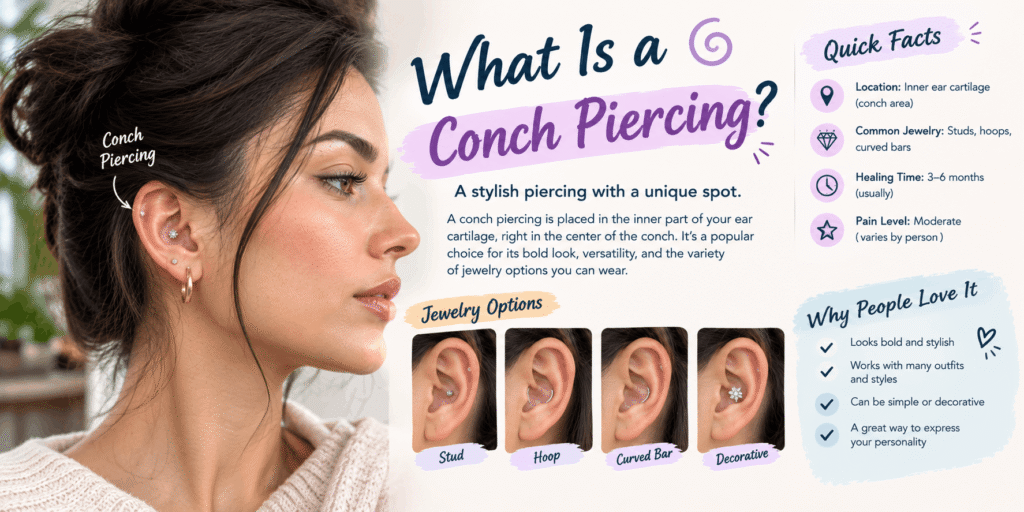
A conch piercing goes through the cartilage in the inner portion of the ear. The area gets its name from its resemblance to the curved shape of a conch shell. Unlike a lobe piercing, which goes through soft tissue, a conch piercing passes through firm cartilage.
There are generally two ways people refer to conch placement: inner conch and outer conch. An inner conch is positioned in the deeper bowl-shaped section of the ear, while an outer conch sits closer to the outer cartilage. The exact placement depends on your individual ear anatomy and the look you want.
One reason this piercing has become so popular is its flexibility. A small flat-back stud can create a subtle appearance, while a hoop can give the ear a more noticeable edge once the piercing has healed sufficiently for that jewelry style.
Your ear anatomy matters more than copying a particular photo. A placement that looks perfect on one person’s ear may not be appropriate for another person’s cartilage structure. A professional piercer should examine your ear before deciding exactly where the piercing can safely be placed.
Conch Piercing Pain, Healing Time & What to Expect
Pain is one of the first things many people think about before getting cartilage pierced. However, discomfort varies significantly from person to person, so there isn’t one universal pain score that applies to everyone.
During the actual piercing, you may experience a brief, sharp sensation followed by pressure or tenderness. Because cartilage is firmer than the soft tissue of the earlobe, the experience can feel more intense than a typical lobe piercing. The procedure itself is usually very quick, though.
What happens afterward can be more noticeable than the initial piercing. Your ear may feel warm, tender, or slightly swollen during the first several days. Sleeping directly on the new piercing can also make it uncomfortable, especially if the jewelry gets pressed against a pillow.
The healing period is another major difference. Cartilage piercings generally take much longer to settle than lobe piercings. A conch piercing can take several months to heal fully, and some people may need longer depending on their anatomy, jewelry, irritation, and aftercare.
It’s important not to assume that a piercing is completely healed simply because it looks normal from the outside. The tissue inside can still be recovering. Avoid changing jewelry too early unless a qualified piercer has determined that it is ready.
During healing, occasional mild tenderness or temporary swelling can happen, particularly after accidental bumps. However, worsening pain, significant swelling, spreading redness, unusual discharge, or feeling unwell can indicate a problem that deserves professional medical attention.
How a Conch Piercing Is Done
A professional conch piercing should begin with an assessment of your ear. The piercer needs to look at the shape and thickness of the cartilage and determine a placement that works with your anatomy and the jewelry you want to wear.
The area should then be prepared using appropriate hygiene procedures. A professional piercer will use sterile, single-use equipment and should explain the process before starting.
Once the placement has been agreed upon, the piercer marks the intended entry point. Take a moment to check the position before the actual piercing. This is the easiest time to make adjustments if the placement doesn’t look right to you.
The piercing is then performed with professional piercing equipment. Afterward, the jewelry is inserted and the area is checked.
A good piercing appointment should not feel rushed. Your piercer should be willing to answer questions about jewelry, cleaning, healing, and what to expect during recovery.
Avoid choosing a piercer simply because they offer the cheapest price. With cartilage piercings, proper technique and hygiene are much more important than saving a small amount of money.
Choosing the Right Conch Piercing Jewelry
Jewelry is not only about appearance when you’re getting a new conch piercing. The material, shape, size, and quality can all affect comfort during healing.
For a fresh piercing, implant-grade titanium is often a strong choice because it is lightweight and generally well tolerated. Certain high-quality gold options may also be appropriate, but jewelry intended for a fresh piercing should meet suitable quality standards rather than simply being described as “gold.”
Avoid assuming that every piece of jewelry sold as stainless steel, silver, or gold is automatically suitable for a fresh piercing. Some materials or coatings may irritate sensitive tissue, and low-quality jewelry can create additional problems.
The jewelry should also be properly sized. A piece that is too tight can place unnecessary pressure on the healing tissue, while excessively long jewelry can catch on hair, clothing, or bedding.
Jewelry Styles for the Conch
A flat-back stud is one of the most practical choices for a fresh conch piercing. Its relatively simple profile can reduce the chances of catching the jewelry on things around you.
Once the piercing is fully healed, you can explore other looks. Small hoops are particularly popular because they follow the curve of the ear and create a more decorative appearance.
You can also experiment with different gemstone colors, minimalist metal designs, or slightly larger pieces. However, changing the style should come after the piercing has healed sufficiently rather than being treated as part of the initial healing process.
The jewelry you choose should match both your personal style and your lifestyle. If you frequently wear headphones, helmets, or other equipment that presses against the ear, consider how the jewelry will interact with those items before choosing a particular design.
Conch Piercing Aftercare: What Actually Works
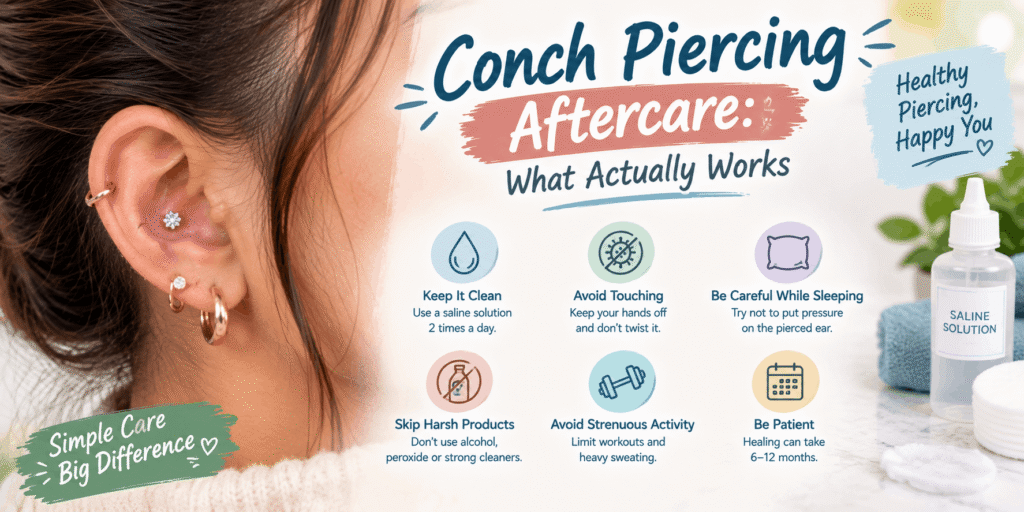
Aftercare is one of the biggest factors in how comfortably a conch piercing heals. The goal isn’t to constantly clean or manipulate the piercing. Instead, you want to keep the area reasonably clean while minimizing unnecessary irritation.
Wash your hands before touching the area. A sterile saline wound wash can be used according to the product’s directions. Allow the solution to contact the area without aggressively scrubbing the piercing.
After cleaning, avoid repeatedly touching, twisting, spinning, or moving the jewelry. These actions can irritate healing tissue and potentially prolong recovery.
It’s also useful to keep an eye on the things that regularly come into contact with your ear. Pillowcases, headphones, phones, hats, hair, and other objects can introduce dirt or repeatedly put pressure on the piercing.
What to Do
Keep your hands clean whenever you need to be near the piercing. Follow the aftercare instructions provided by your professional piercer, particularly during the early healing period.
Try to prevent unnecessary pressure on the ear. If you normally sleep on the side where your piercing is located, changing your sleeping position can make recovery more comfortable.
Keep hair products, cosmetics, perfumes, and other potentially irritating products away from the healing area whenever possible.
Be patient with the healing process. A cartilage piercing may look fine before the inside has completely recovered, so appearance alone isn’t a reliable reason to start changing jewelry.
What Not to Do
Don’t repeatedly rotate the jewelry simply because you’ve heard that doing so helps a piercing heal. Moving the jewelry unnecessarily can irritate the tissue.
Avoid using harsh substances such as rubbing alcohol or hydrogen peroxide as routine piercing aftercare unless a healthcare professional specifically tells you to use them. Strong products can irritate healing tissue.
Don’t pick at crusting or dried material around the jewelry. If buildup develops, gentle cleaning and letting the area naturally loosen is preferable to scraping it away.
Also avoid changing the jewelry yourself too early. If the jewelry needs adjustment because of swelling, sizing, or another issue, have a qualified piercer assess it.
Irritation, Infection, Bumps & Scarring
Not every uncomfortable bump means that a piercing is infected. Healing cartilage can become irritated from pressure, friction, unsuitable jewelry, or repeated touching.
Irritation may appear as localized redness, tenderness, swelling, or a small bump near the piercing. Identifying and removing the source of irritation can help, but persistent or worsening symptoms should be evaluated by a professional.
An infection is more concerning. Increasing pain, significant swelling, warmth, spreading redness, or thick unusual discharge can be warning signs. If you suspect an infection, seek medical advice rather than trying to treat a potentially serious infection entirely at home.
There is also a difference between ordinary piercing bumps and keloid scars. A keloid is an overgrowth of scar tissue that extends beyond the original wound area. Some people are more prone to developing them, so anyone with a history of keloids should discuss the risks with an appropriate healthcare professional before getting a new piercing.
Don’t squeeze, cut, or aggressively treat a bump yourself. What looks like a simple irritation bump may have a different cause, and attempting to remove it can make the situation worse.
Do Conch Piercings Help With Headaches or Migraines?
You may come across claims online that certain ear piercings can reduce migraines or headaches. These claims are often associated with the daith piercing, but similar discussions sometimes appear around other cartilage piercings.
At present, there isn’t strong scientific evidence showing that a conch piercing is a reliable treatment for migraines or headaches. A piercing should therefore be viewed as a cosmetic choice rather than a medical treatment.
If you experience recurring headaches or migraines, it is better to discuss them with a healthcare professional who can help identify possible causes and appropriate treatments. Getting a piercing specifically because you expect it to cure a medical condition can lead to disappointment and unnecessary risk.
Conch Piercing Cost and Choosing a Professional Piercer
The price of a conch piercing can vary considerably depending on where you live, the reputation of the studio, the experience of the piercer, and the jewelry selected. The piercing fee and jewelry cost may be charged separately, so it’s worth asking for the complete price before booking an appointment.
A very low price isn’t necessarily a bargain if it comes with poor hygiene, inexperienced technique, or low-quality jewelry. Cartilage piercings require careful placement, and an experienced professional can also help determine whether your ear anatomy is suitable for the style you want.
When comparing studios, look beyond online photos. A reputable piercer should work in a clean professional environment and use appropriate sterile, single-use equipment. They should also be comfortable explaining their hygiene practices and answering questions about jewelry materials and aftercare.
Don’t hesitate to ask what material will be used for the initial jewelry, whether the jewelry is appropriately sized for your anatomy, and what happens if you experience swelling during healing. A professional who takes time to explain these things is generally a better choice than someone who simply wants to complete the appointment quickly.
Your piercer should also inspect your ear before agreeing to a particular placement. If the jewelry style you have in mind isn’t appropriate for your anatomy, they should explain why and suggest a safer alternative rather than forcing the placement.
How to Choose the Right Conch Piercing for You
Choosing a conch piercing isn’t only about deciding whether you prefer a stud or hoop. The position, jewelry size, ear anatomy, and your everyday habits can all influence which option makes the most sense.
If you prefer understated jewelry, a small stud can give you a polished look without becoming the main focus of your ear. This works particularly well if you already have other piercings and want to create a balanced arrangement rather than adding another large statement piece.
For a more noticeable appearance, a decorative stud with a gemstone or an interesting metal design can make the conch area stand out. You can keep the rest of your jewelry simple and let the conch piece become the focal point.
Hoops create a completely different effect. They follow the natural curve of the ear and can look especially striking when combined with helix or lobe jewelry. However, a hoop isn’t automatically the best choice for a fresh piercing. Movement and pressure can make healing more difficult, so your piercer can advise you on whether a particular hoop is appropriate for your anatomy and stage of healing.
Think about your daily routine before choosing your jewelry. Someone who frequently wears over-ear headphones may have different practical considerations from someone who rarely puts anything over their ears. Hair length, sleeping habits, sports equipment, and even how often you use a phone can influence how easily the piercing gets bumped.
There’s also no need to create an elaborate ear stack immediately. A single well-positioned conch piercing can look complete on its own. Once it has healed, you can decide whether you want to add complementary pieces around it.
Things to Consider Before Getting a Conch Piercing
Before committing to a conch piercing, think about how it will fit into your everyday routine. Cartilage piercings need patience, and small habits such as constantly touching the jewelry, sleeping directly on the ear, or accidentally catching it with hair can make the healing period more frustrating. Knowing this beforehand can help you decide whether you’re comfortable with the commitment.
It’s also worth considering the jewelry you eventually want to wear. If your goal is a particular hoop or decorative design, mention it during your consultation. The ideal placement can depend on your ear’s natural shape as well as the jewelry style you’re hoping to use later.
Another important consideration is timing. Getting a cartilage piercing immediately before activities that involve frequent pressure, contact, or exposure to potentially unclean water may make the healing period less convenient. Choosing a calmer period can make aftercare easier.
Finally, don’t feel pressured to copy someone else’s ear styling. A conch piercing can look completely different from one person to another because every ear has its own shape. The best placement is one that suits your anatomy, feels comfortable, and gives you the appearance you actually want.
FINAL THOUGHTS
A conch piercing can be a simple way to add personality to your ear, but it isn’t something to rush. The cartilage location means healing can take considerably longer than a basic lobe piercing, making patience an important part of the experience.
The best results start with professional placement and suitable jewelry. Instead of choosing a studio based only on price, look for someone who takes hygiene seriously, examines your ear anatomy, uses appropriate equipment, and explains the aftercare process clearly.
Once you have the piercing, gentle care is more useful than constantly touching or cleaning it. Avoid unnecessary pressure, don’t change the jewelry prematurely, and pay attention to unusual or worsening symptoms.
Most importantly, choose the piercing because you genuinely like the look rather than because of online claims that it can treat headaches or other medical problems. With thoughtful placement, quality jewelry, and enough time for healing, a conch piercing can become a versatile part of your personal style.




One Comment