A bald fade is one of the cleanest and most versatile short hairstyles for men. It creates a gradual transition from very short or shaved hair near the sides and back into longer hair higher on the head. Unlike a traditional fade that may leave some visible hair at the lowest point, a bald fade takes the shortest section down to the skin, creating its signature sharp finish.
The style can look very different depending on where the fade begins, how quickly it blends upward, and what haircut is left on top. That flexibility is one reason the bald fade works with everything from a short crop to textured hair and longer styles. However, getting the right result is not only about asking for “a bald fade.” Understanding the different versions and how they grow out can make your next barber visit much easier.
What Makes It a Bald Fade
The defining feature of a bald fade is the extremely short starting point around the lower sides and back. The hair is gradually blended from the skin upward through increasingly longer lengths. This creates a smooth transition rather than a sudden line between shaved and longer hair.
A barber may use clippers, trimmers, and sometimes a razor to create the lowest section, depending on the desired finish and the barber’s technique. The important part is the progression between lengths. A well-executed fade should look blended rather than like separate bands of hair.
The height of that transition is what gives different bald fades their individual character. A low bald fade keeps the shortest area closer to the ears and neckline, while a higher version moves the fade farther up the sides. A mid fade sits between those two approaches and is often a practical choice for people who want a noticeable fade without taking it extremely high.
The Importance of the Blend
The blend is arguably the most important part of the haircut. Because the lowest section is taken very short, even a small difference in technique can be noticeable. The barber needs to gradually connect the shortest section with the longer hair above it.
This does not mean every bald fade has to look identical. Some people prefer a very soft transition, while others like a sharper, more defined appearance. The shape of the head, natural hair growth, and the hairstyle on top can all influence how the fade is built.
A good consultation before the haircut can help. Instead of only saying that you want a bald fade, you can explain whether you prefer the fade low, medium, or high and show a reference photo if you have a particular look in mind.
Bald Fade vs. Other Short Fades
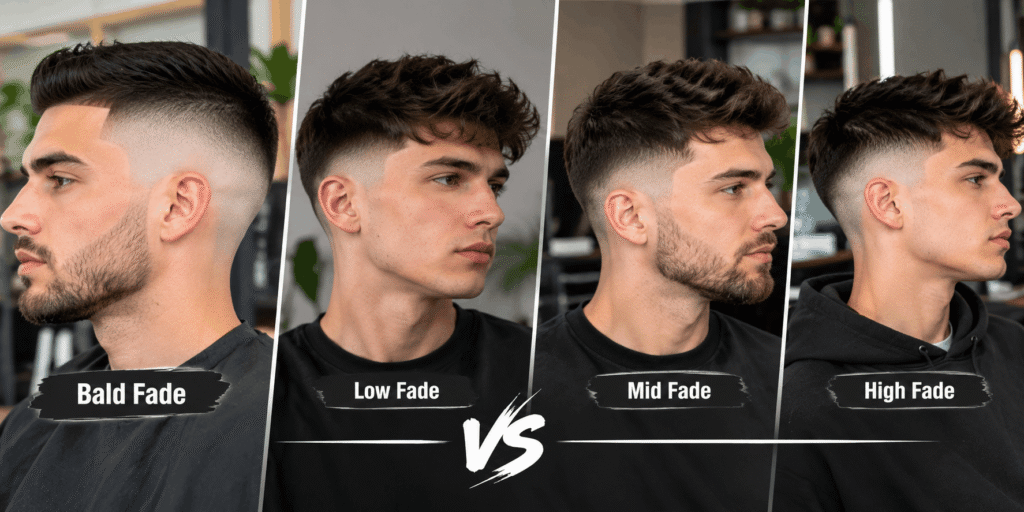
The terminology used by barbers can vary, which sometimes makes fade names confusing. A bald fade generally means the fade reaches the skin at its shortest point. A traditional fade may leave a little more visible hair at the bottom.
A skin fade is commonly used as another term for a bald fade, although individual barbers and shops may use the terms slightly differently. A zero fade is also very short, but depending on the barber’s terminology and technique, it may not mean exactly the same thing as taking the hair completely down to the skin.
For that reason, describing the result you want can be more useful than relying on one haircut name alone.
Types of Bald Fades
There are several ways to customize a bald fade, but the biggest difference is usually where the fade begins. The basic technique remains similar, while the placement changes the overall shape of the haircut.
Low Bald Fade
A low bald fade begins close to the ears and neckline. Most of the sides remain longer, so the transition is concentrated toward the bottom of the haircut.
This can be a good choice if you want the clean appearance of a bald fade without having the faded section dominate the sides. It also leaves more room for the hair above the fade to provide shape and volume.
Because the fade stays relatively low, it can pair naturally with short textured cuts, longer tops, side parts, and other styles where you want some length around the upper sides.
Mid Bald Fade
A mid bald fade starts around the middle portion of the sides. It provides a stronger contrast than a low fade while still leaving a reasonable amount of hair toward the upper sides and top.
The middle placement makes it particularly adaptable. You can combine it with a textured crop, short curls, a brushed-up style, or a simple short top.
A mid bald fade can also be adjusted slightly during the consultation. A barber can consider your preferred silhouette and determine exactly where the fade should sit rather than treating every head shape the same way.
High Bald Fade
A high bald fade moves the shortest section farther up the sides of the head. This creates a stronger contrast between the faded sides and the hair remaining on top.
Because more of the sides are taken very short, the haircut tends to have a more dramatic appearance. It can work particularly well with styles where the top is intentionally left longer or textured.
However, a high fade is also more noticeable as it grows out. If you prefer a softer transition between visits, a lower placement may require less visual adjustment as the hair starts getting longer.
Bald Taper Fade
Some barbers may describe a very short tapered area around the sideburns and neckline differently from a full bald fade. A bald taper can keep more of the overall side length while bringing the skin-level finish mainly to specific areas.
This can create a cleaner outline without removing as much hair from the sides. The exact terminology varies between barbers, so a photo or clear description can prevent misunderstandings.
Who Does a Bald Fade Suit?
A bald fade is highly adaptable because the fade itself can be adjusted. There is no single face shape, hair texture, or personal style that automatically determines whether someone can wear it.
The bigger consideration is how the fade is positioned and how it connects to the hair on top. A lower fade can create a more gradual overall change, while a higher fade produces more contrast. Your barber can help decide where the transition should sit based on the haircut you want.
Hair texture can also influence the finished appearance. Straight hair may show the transition very clearly, while curly or coily hair can create a different visual effect as the lengths blend together. Wavy hair can add texture around the top and make the contrast between the sides and top especially noticeable.
The style also works across different levels of hair length on top. Keeping the top short produces a neat, low-maintenance result, while leaving additional length allows for styling options.
Matching the Fade With the Top
The most successful bald fades usually feel connected to the hairstyle above them. A very high fade with a longer top creates a completely different silhouette from a low fade with a short crop.
For a simple everyday haircut, a short textured top can keep the overall style easy to manage. If you prefer more styling flexibility, leaving additional length on top allows you to experiment with texture, direction, or volume.
The neckline matters too. A clean neckline can help the haircut maintain its shape, but the exact finish should be chosen according to the overall haircut rather than treated as a separate detail.
Considering Hair Growth Patterns
Natural growth patterns can affect how a bald fade looks after the appointment. Cowlicks, uneven growth, curls, and different hair densities can all influence the way the transition appears.
This is one reason a reference image should be treated as inspiration rather than a guarantee that the haircut will look exactly the same. The same fade placement can produce different results on different hair.
A skilled barber can adapt the technique to those differences instead of simply copying a single pattern.
How Long Does a Bald Fade Take to Look Overgrown?
One of the main things to understand before choosing a bald fade is that the cleanest part of the haircut does not stay at exactly the same length for long. Hair begins growing immediately, so the skin-level section gradually becomes visible hair again.
How quickly the haircut looks noticeably grown out varies from person to person. Hair growth rate, density, texture, and the contrast between the sides and top all play a role.
For someone who likes the extremely crisp appearance of freshly faded sides, the change may become noticeable relatively quickly. Someone who prefers a more natural, grown-out look may be comfortable wearing the same haircut for longer.
This is why bald fades can require more frequent maintenance than some longer hairstyles. The haircut itself is not necessarily difficult to maintain, but the contrast between skin and hair makes regrowth easier to notice.
Planning Your Barber Visits
There is no universal schedule that works for everyone. Some people prefer returning as soon as the fade begins losing its sharpness, while others wait until the sides have grown considerably.
If you want a consistently fresh appearance, you may need more frequent appointments than someone who is comfortable with a softer, grown-out fade. Your preferred style should determine the schedule rather than a fixed rule.
Between appointments, simple maintenance can help the haircut remain presentable without trying to completely recreate a professional fade at home.
Home Maintenance Between Visits
A bald fade is one of those haircuts where small maintenance habits can make a noticeable difference between barber visits. However, there is an important distinction between keeping a haircut tidy and trying to completely recreate a professional fade at home.
The fade itself involves gradually blending several different lengths. Reproducing that transition evenly can be difficult without the right tools, mirrors, experience, and technique. For most people, simple cleanup is a more practical approach.
You can keep the neckline and other obvious areas looking neat if you already know how to use your grooming tools safely. The goal should be to maintain the general shape rather than repeatedly cutting into the fade and accidentally changing its proportions.
Keep the Top Consistent
The top usually requires less frequent attention than the skin-level portion of the fade. Depending on the hairstyle, you may simply need to wash, dry, brush, or lightly style it.
If you have a textured crop, curls, waves, or a longer top, your styling routine can be different from someone wearing a very short haircut. There is no requirement to use a large number of styling products. A simple routine that works with your hair texture is often easier to maintain.
Avoid Over-Cleaning the Fade
One common mistake is trying to make the sides look freshly shaved every few days. Repeatedly cutting the same area can make it difficult to preserve the original shape.
If you are inexperienced with clippers, it is generally better to leave the detailed blending to your barber. You can explain what has grown out and let the barber refresh the fade rather than attempting increasingly complicated corrections yourself.
Keeping the scalp comfortable is also important. If you experience persistent redness, itching, bumps, or irritation after trimming, give the skin time to settle and consider speaking with a healthcare professional if the problem continues.
Choosing Hairstyles to Wear With a Bald Fade
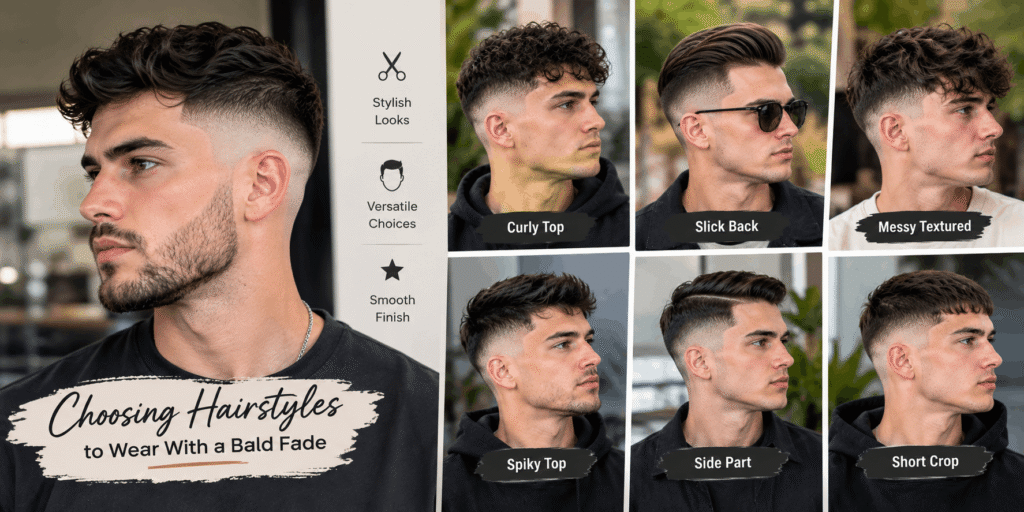
One reason the bald fade remains popular is that it can be combined with many different hairstyles. The fade creates a clean foundation while the top determines much of the haircut’s personality.
A short textured crop can give the haircut a straightforward appearance, while a longer top can create more contrast. A side part can give the style a more structured direction, while curls or waves can make the transition between the sides and top look more textured.
The important thing is balance. The higher and shorter the fade, the more visual attention naturally goes toward the remaining hair on top. This means the length and texture of the top can significantly change the overall result.
Short Textured Styles
Short textured hair works naturally with a bald fade because there is enough difference between the top and sides to create definition without requiring a complicated styling routine.
A textured finish can be created through the haircut itself and, depending on the hair type, with a small amount of suitable styling product. Keeping the top relatively short can also make the haircut easier to manage between appointments.
Longer and Styled Tops
Leaving more length on top gives you additional styling choices. You can wear the hair forward, sweep it to one side, create texture, or leave it relatively natural.
A longer top can create a stronger contrast with a high bald fade. With a low or mid fade, the transition may feel more gradual because more hair remains around the sides.
Curly and Wavy Hair
Curly and wavy hair can work particularly well with a bald fade because the texture on top contrasts naturally with the clean sides.
The amount of length you keep should depend on how your hair behaves when it dries. Curly hair can appear considerably shorter when dry than when wet, so discussing the desired finished length with your barber is useful.
Final Thoughts
The bald fade is more than simply cutting the sides very short. Its defining feature is the gradual transition from skin-level hair into longer lengths, and that transition can be positioned differently to create low, mid, or high versions.
Its versatility is a major reason the haircut continues to work with so many hairstyles. The top can be short and textured, longer and styled, curly, wavy, or kept relatively simple. Rather than following a single formula, the haircut can be adjusted to suit the person’s natural hair and preferred look.
Maintenance is the main consideration. Because the shortest section creates strong contrast, regrowth can become noticeable sooner than with some softer fades. People who want an especially crisp finish may therefore choose more frequent barber visits, while those who are comfortable with gradual growth can wait longer.
Home maintenance should be approached carefully. Keeping the hair clean and styled is straightforward, but recreating the detailed fade is more difficult. If you are unsure with clippers, letting a professional handle the blending can prevent uneven patches and accidental changes to the haircut.
Ultimately, a good bald fade is one that works with the rest of the haircut rather than existing as an isolated feature. Discuss the fade height, top length, and desired finish with your barber, and use a reference photo when possible. That simple preparation can make it much easier to get a result that matches what you actually have in mind.
2 Comments