
Wavy hair sits in an interesting space between straight and curly. It can look smooth when brushed, develop visible bends when left natural, and become much more textured when paired with the right haircut. That flexibility is one reason waves hair styles can be adapted to short, medium, and longer lengths.
The challenge is usually not creating a complicated hairstyle. It is finding a haircut that allows the natural movement to show without making the hair look too bulky or difficult to control. A good cut should work with the direction your hair already wants to take rather than forcing it into a completely different shape.
Whether your waves are subtle or clearly defined, there are plenty of ways to build a hairstyle around them. Below are ten distinct approaches, followed by practical advice for choosing, styling, and maintaining wavy hair.
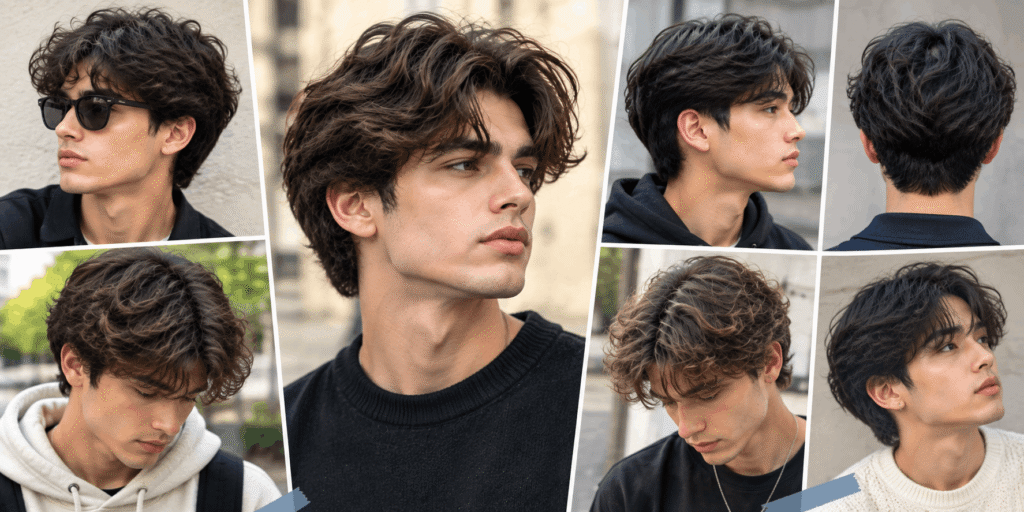
10 Wavy Hairstyles Worth Trying
1. Short Textured Waves
Short wavy hair can be surprisingly versatile. Keeping the overall length controlled while leaving enough texture on top creates a clean style that doesn’t require the hair to be completely straightened.
The top can be pushed slightly forward, lifted at the roots, or simply allowed to settle naturally. A lightweight styling cream can help organize the waves without making them look overly rigid.
This is a useful choice if you like the character of wavy hair but don’t want a hairstyle that takes a long time to arrange each morning.
2. Wavy Middle Part
A middle part gives longer waves a clear direction. The front separates near the center and falls toward both sides, creating a relaxed shape around the forehead and temples.
The length of the front is important. Very short hair may not stay separated naturally, while longer waves can create a softer curtain effect.
You don’t necessarily need a perfectly straight part. Allowing the separation to follow your natural growth pattern can make the style easier to maintain and less forced.
3. Wavy Fringe
A wavy fringe brings attention toward the front of the hairstyle. Instead of brushing the hair away from the forehead, the longer top is allowed to fall forward, with the natural bends giving the fringe more movement.
The fringe can be relatively compact or longer and more relaxed. Your choice should depend on whether you want the hair to stay above the eyebrows or create a more noticeable frame around the face.
For everyday styling, use your fingers rather than repeatedly brushing the waves into a flat shape.
4. Wavy Quiff
A quiff works particularly well with hair that naturally has some lift. The front is directed upward and slightly backward, while the sides remain shorter or more controlled.
Waves prevent the quiff from looking completely uniform. Instead of creating a perfectly smooth front, the texture adds natural variation to the shape.
Blow-drying the roots in the direction you want before adding a small amount of styling product can make this hairstyle easier to maintain.
5. Wavy Mullet
A wavy mullet allows the natural texture to emphasize the difference between the shorter front and sides and the longer back.
Waves can make the transition appear less rigid than it would with completely straight hair. The amount of length at the back determines how noticeable the mullet influence becomes.
If you don’t want a dramatic version, ask for a softer shape with moderate length at the back. If you prefer something more distinctive, additional length and layering can make the silhouette much stronger.
6. Layered Wavy Hair
Layers can help distribute volume through medium or long wavy hair. Without enough shape, waves can sometimes become heavy around the sides or form a large, uneven mass.
Well-placed layers allow different sections to move independently. This can make the hair appear lighter while preserving its natural texture.
The goal isn’t necessarily to create lots of short layers. Too much layering can make the hairstyle difficult to control, so the amount should be adjusted according to your hair’s thickness and length.
7. Wavy Fade
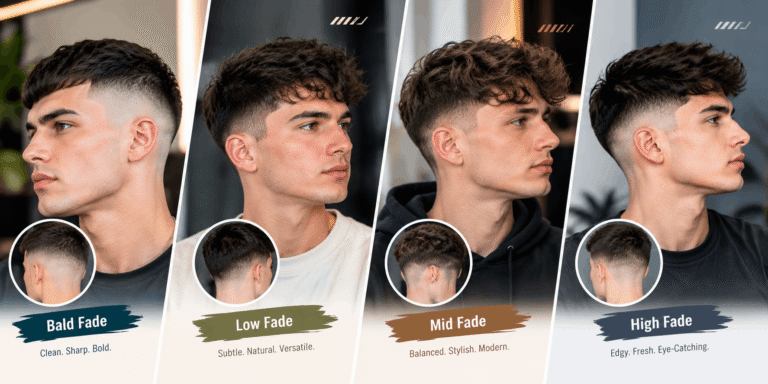
A fade creates contrast between the textured top and the progressively shorter sides. The waves remain the main feature while the sides and back receive a cleaner outline.
You can choose a lower fade for a more subtle transition or a higher fade if you want a stronger difference between the top and sides.
Because waves can create additional volume, the barber should consider how wide the top becomes when it dries. Removing or shaping some bulk can help the fade and top work together.
8. Wavy Side Part
A side part gives wavy hair a more organized direction without removing its natural movement. The longer top is guided toward one side while the shorter side provides contrast.
This style can range from casual to more polished depending on the amount of product used. A small amount of styling cream can preserve movement, while a stronger product can create a more controlled finish.
Following your natural hair growth can make the part easier to maintain than forcing it into a direction your hair resists.
9. Messy Wavy Hair
Messy waves don’t mean simply leaving the hair untouched. The haircut should still have a deliberate shape, while the styling allows individual sections to move naturally.
This works especially well with medium-length hair because there is enough length for the waves to create separation. Use your fingers to arrange the general shape rather than trying to make every wave identical.
A lightweight texture product can add definition while keeping the finished style flexible.
10. Wavy Flow
A wavy flow keeps enough length for the hair to move backward and around the sides of the head. The result is relaxed rather than sharply structured.
This style can work particularly well for men who prefer growing their hair rather than maintaining very short sides. Regular shaping can keep the overall silhouette intentional while allowing the length to remain.
The waves become part of the hairstyle rather than something that needs to be flattened or controlled.
Choosing a Wavy Hairstyle That Actually Fits You
Hair length is one of the biggest factors. Short waves usually create a compact and controlled appearance, while medium lengths provide more opportunities for parts, fringes, quiffs, and layered shapes. Longer waves can create movement around the neck and shoulders and can also be tied back.
Hair thickness matters just as much. Thick wavy hair may need strategic layering to prevent excessive bulk. Finer hair can benefit from a cut that creates movement without removing too much density.
Your natural wave pattern should also influence the haircut. Some hair develops gentle bends, while other hair forms much stronger waves. A style that looks loose on one person can appear considerably fuller on someone with denser texture.
Face shape can be considered, but it shouldn’t be the only deciding factor. The height at the top, length around the sides, position of the fringe, and amount of volume can all be adjusted to change the overall proportions.
The most useful question is often simpler: How do you want your hair to behave every morning? If you want something quick, choose a shape that naturally falls into place. If you enjoy styling, you can keep additional length and choose a more structured design.
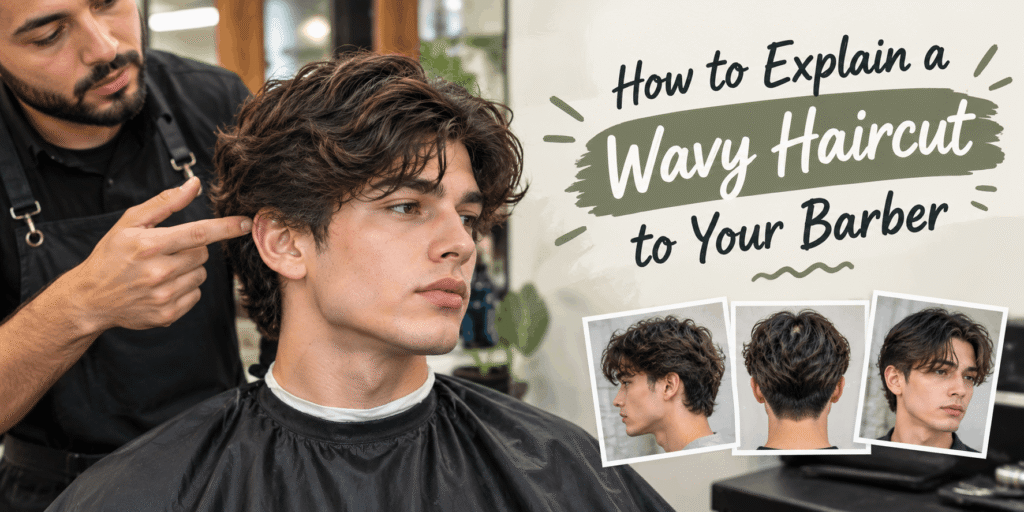
How to Explain a Wavy Haircut to Your Barber
Saying “I want a wavy haircut” doesn’t give your barber enough information because that could mean dozens of different styles.
Start by explaining the length you want on top and whether you want the sides short, tapered, or faded. Then mention how much of your natural wave you want to preserve.
If you want a middle part or fringe, say so before the cutting begins. If you’re growing the back longer, make that clear as well.
A reference photo can help, but don’t expect your hair to reproduce the image exactly. The model may have different density, wave strength, thickness, or growth direction.
Instead, point out what you like about the reference: the length, volume, sides, fringe, layers, or overall shape. That gives your barber useful information while leaving room to adapt the style to your own hair.
Styling Waves Without Fighting Them
Wavy hair generally responds better when you work with its natural bends instead of trying to flatten everything.
Start with damp hair after washing or refreshing it. Apply a small amount of styling product and distribute it through the hair using your fingers. Avoid repeatedly combing through the waves if you want them to remain grouped together.
If you need additional volume, use a blow-dryer while lifting the roots gently. A diffuser can also be useful for textured hair because it spreads airflow more evenly than directing strong air at one section.
Once the hair is mostly dry, reshape any sections that need attention. You don’t have to make every wave identical. Slight differences in direction can make the finished hairstyle look more natural.
For a softer appearance, styling cream can be enough. If you want more texture, a suitable clay or texture product can provide additional separation. Use a small amount initially and add more only when necessary.
Keeping Wavy Hair Healthy and Manageable
Wavy hair can become difficult to style when it is excessively dry, overloaded with product, or handled roughly. A simple care routine is often more useful than constantly changing products.
Cleanse your scalp according to how oily or active it becomes rather than following an arbitrary schedule. Conditioner can help improve manageability, particularly if the lengths feel dry or become tangled.
Try not to scrub the hair aggressively with a towel after washing. Gently squeeze out excess water and allow the waves to settle.
If you use styling products regularly, occasional deeper cleansing may help remove accumulated residue. Follow the instructions of the product you choose rather than assuming that stronger cleansing is always better.
Regular trims can also make a difference. You don’t necessarily need a major haircut each time. Removing damaged ends and restoring the shape can keep medium and long waves looking intentional while allowing you to preserve the length you want.
Products That Can Support Wavy Hair
You don’t need a large collection of products to style waves successfully.
A sea salt spray can add texture and create a more tousled appearance, although some formulas may feel drying if overused.
A styling cream can provide light control while keeping the waves flexible. This is often useful when you want the hair to look natural rather than heavily styled.
A texture clay offers more separation and control. It can be useful for shorter or messy styles where you want individual sections to stand out.
A pomade can provide a more controlled finish for styles such as a side part or slicked-back waves. The amount used can dramatically change the result, so start small.
A hydrating conditioner can make longer waves easier to handle and detangle. The right formula depends on your hair and scalp, so pay attention to how your hair feels after use rather than choosing a product solely because it is marketed for wavy hair.
The simplest routine is often the easiest to maintain: one cleansing product, one conditioner, and one styling product that matches your preferred finish.
Create a Routine Around Your Natural Waves
The way you handle your hair immediately after washing can have a bigger effect than the styling product you use later.
After cleansing, gently squeeze excess water from the hair rather than aggressively rubbing it. When the hair is still damp, use your fingers to arrange the general direction you want. This is the stage when you can encourage a middle part, push the front backward, or allow the waves to fall forward.
If your hair tends to lose its shape quickly, avoid repeatedly touching it while it dries. Constantly running your hands through the hair can separate sections that naturally form together.
For more defined waves, gently scrunch sections upward with your hands. If your hair is longer, work through different areas instead of applying pressure to the entire head at once.
Once the hair has dried, check whether it actually needs more product. Many men apply additional product simply because the hair looks slightly different while drying. Waiting until the final shape appears can prevent unnecessary buildup.
Blow-Drying Can Change the Final Shape
Air-drying is convenient, but a blow-dryer gives you more control over direction and volume.
For additional lift, gently raise the roots while directing airflow toward them. For a flatter appearance, guide the hair closer to the head as it dries.
A diffuser can be useful when you want to preserve the natural wave pattern. Rather than blasting the hair with concentrated airflow, the attachment spreads the air across a larger area.
Use a comfortable heat setting and avoid keeping intense heat focused on one section for too long. Your hair doesn’t need extreme heat to develop a good shape.
Fixing Common Wavy Hair Problems
One of the most common issues is frizz. Frizz can become more noticeable when the hair is dry, exposed to humidity, rubbed roughly, or repeatedly disturbed while drying.
Instead of trying to eliminate every flyaway, look at your overall routine. Gentler towel-drying, regular conditioning, and less unnecessary handling can make the hair easier to manage.
Another issue is flat roots with bulky ends. This can happen when the haircut carries too much weight in the lower sections. Changing the styling product may help temporarily, but the haircut itself may need adjustment if the problem continues.
If the hair looks greasy or heavy, you may simply be using too much styling product. Start with a smaller amount and distribute it more evenly. Adding another product usually won’t solve a buildup problem.
If your waves appear undefined, consider whether you are brushing them apart while dry. Try applying your styling product to damp hair and allowing the natural sections to form before making further adjustments.
And if the hair looks different every morning, don’t assume something is wrong. Wavy texture naturally responds to moisture, sleeping position, weather, and the way it was styled the previous day.
How to Keep Waves Looking Good Between Haircuts
You don’t always need a complete haircut when the style starts losing its shape. Sometimes the problem is simply excess growth around the areas that were originally kept shorter.
If you have a fade or taper, the sides may become noticeably fuller before the top needs attention. A quick cleanup can restore the outline without sacrificing the length you have been growing.
For medium or long waves, you may prefer to keep the length and have only the ends or bulky areas shaped. Tell your barber that preserving length is important if you’re working toward a longer hairstyle.
The frequency of trims depends on your haircut and personal preference. Shorter styles generally show changes more quickly, while longer styles can often grow for a greater period before requiring a significant adjustment.
Caring for Wavy Hair While It Grows
Growing out wavy hair can be awkward because different areas may expand at different rates. The sides may become wider while the top is still developing length, creating a shape you didn’t intend.
This doesn’t necessarily mean you need to cut everything short again. A barber can remove some excess weight or reshape particular areas while leaving the overall length intact.
Layers can also become useful as the hair gets longer. Properly placed layers can help waves move instead of forming one heavy shape.
However, too many layers can create excessive separation and make the hair difficult to control. If you’re growing your hair, tell your barber that you want to preserve length and develop a natural shape over time.
Choosing Products Without Overloading Your Hair
The product you choose should depend on the finish you want.
If you prefer soft and natural waves, a lightweight styling cream may provide enough control.
If you want more visible texture, a texture spray or lightweight clay can add separation.
If you prefer stronger control, a small amount of pomade may help keep a part or swept-back style in place.
If your hair feels dry, focus more on conditioning and gentle handling rather than continuously adding styling products.
You don’t need to combine several products simply because each one promises a different benefit. Too many layers can make waves lose their movement and become difficult to refresh.
Try one product at a time and pay attention to how your hair looks and feels throughout the day.
Wavy Hair for Different Daily Routines
If you’re busy in the morning, choose a haircut that naturally falls into shape. A shorter textured style can be easier to manage than a longer hairstyle that requires detailed blow-drying.
If you enjoy styling your hair, medium-length waves give you more freedom. You can change the direction, create a part, add volume, or experiment with a fringe without changing the haircut itself.
For active days, keeping the hair away from the face may be more practical. Longer waves can be loosely tied when necessary, while shorter styles can be kept controlled with a small amount of flexible product.
Your hairstyle should fit your routine rather than forcing your routine to revolve around your hairstyle.
Can Straight Hair Become Wavy?
Straight hair can sometimes be given a temporary wavy appearance through styling techniques, heat tools, braiding, rollers, or other methods. The result depends on the hair’s natural characteristics and how it responds to styling.
A professional chemical treatment can also alter the hair’s texture for a longer period. If you’re considering one, speak with a qualified stylist about the process and aftercare beforehand.
You don’t necessarily need a permanent change to experiment with waves. Temporary styling can let you see whether you like the general appearance before making a bigger commitment.
What Makes Wavy Hair Look More Natural?
Natural-looking waves usually come from avoiding excessive manipulation.
When every section is heavily combed, coated with product, and forced into a fixed position, the hair can lose the movement that makes wavy texture distinctive.
Instead, establish the overall direction and allow some variation between the waves. A little irregularity can make the hairstyle appear more relaxed.
The haircut matters too. If the shape is designed around your natural texture, you generally need less effort to make it look intentional.
Final Thoughts
Wavy hair gives men plenty of flexibility because it can move between clean, textured, relaxed, and longer styles without requiring a completely different hair type.
The most effective routine is usually straightforward: keep the scalp clean, condition when needed, handle damp hair gently, and choose a styling product that matches the finish you want. Don’t keep adding products when the real issue is the haircut or drying technique.
Most importantly, give your natural waves some room to exist. The slight changes in direction and texture are part of what makes waves hair distinctive. A haircut that respects that movement will usually be easier to style and maintain than one designed to fight it.
One Comment