
Brunette hair has a way of looking polished without feeling overdone. From deep espresso and chocolate tones to softer caramel and warm chestnut shades, brown hair offers an enormous range of possibilities. It can look rich and dramatic, soft and natural, or bright and dimensional depending on the shade, haircut, lighting, and styling.
What makes brunette hair especially versatile is that it does not have to mean one flat shade of brown. Subtle highlights, lowlights, glosses, and carefully chosen tones can completely change the overall effect while keeping the foundation unmistakably brunette.
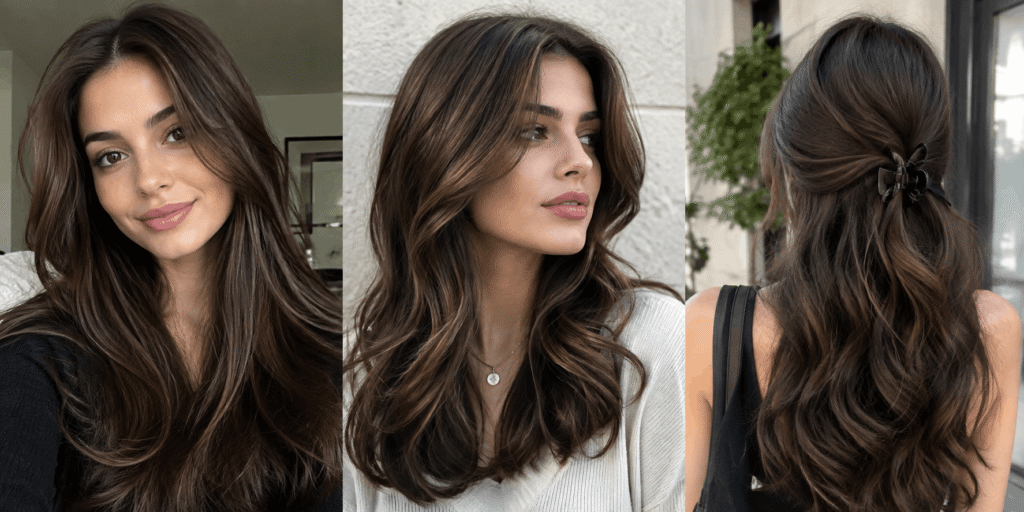
Why Brunette Hair Has So Many Different Looks
The word “brunette” covers a surprisingly broad color family. Two people can both have brown hair while having completely different tones. One might have a deep, almost-black espresso shade, while another has a lighter brown with golden or reddish warmth.
Your natural hair color, previous color treatments, and the amount of light reflected by the hair can all affect how a brunette shade appears. This is one reason the same color formula may look different from one person to another.
Cool brunette shades tend to have beige, ash, or neutral qualities, while warmer brunettes can lean toward caramel, honey, copper, or chestnut. Neutral brown shades sit somewhere between these directions and can provide a balanced appearance.
Deep Brunette Shades
Deep brunette shades are among the richest options in the brown color family. Espresso, dark chocolate, and deep walnut tones can create a sleek, sophisticated finish, especially when the hair has plenty of shine.
Because darker shades absorb more light visually, healthy-looking shine can become an important part of the finished look. A smooth surface can make deep brown hair appear particularly dimensional instead of dull.
Medium and Light Brown Tones
Medium brunette shades offer plenty of flexibility. Chocolate brown, chestnut, mocha, and medium neutral brown can work as all-over colors or as foundations for highlights.
Lighter brunette shades can move toward caramel, honey, beige, or soft golden brown. These colors can create a brighter effect without completely moving into blonde territory.
Brunette Hair Color Ideas That Feel Modern
A brunette hair transformation does not necessarily require a dramatic change. Sometimes the most interesting results come from adding small differences in tone rather than replacing the entire color.
One popular approach is dimensional brunette hair, where multiple related shades are combined to create depth. The base remains brown while lighter or darker pieces provide variation through the lengths.
Chocolate brown with subtle caramel pieces can create warmth and movement. A cooler mocha base with beige-toned accents can create a more muted result. For a richer appearance, dark brown hair can be paired with slightly lighter brown ribbons that become visible when light hits the strands.
Gloss treatments can also make a difference. A gloss can refresh the appearance of colored hair and add shine while helping the overall shade look more polished. The exact result depends on the product and the condition and color history of the hair.
Brunette With Subtle Highlights
Highlights do not have to create a high-contrast look. Fine pieces placed strategically through the hair can produce a softer transition between the darker base and lighter sections.
Caramel highlights are one option for adding warmth, while beige or neutral brown highlights can create a more understated result. The placement matters as much as the shade because highlights around the face can have a different visual effect from those concentrated through the ends.
Brunette With Lowlights
Lowlights work in the opposite direction by introducing deeper tones into lighter brown hair. Instead of making the entire hairstyle brighter, they can create additional depth.
This technique can be especially useful when the hair looks too uniform after coloring. A combination of a main brunette shade and slightly deeper pieces can make the color appear more layered and natural-looking.
How to Choose a Brunette Shade That Fits Your Style
Choosing a brown shade is easier when you think beyond a single color name. Words such as “chocolate,” “mocha,” or “caramel” can mean different things depending on the brand, salon, lighting, and starting hair color.
Before choosing a shade, consider whether you want your result to look warm, cool, neutral, deep, soft, or dimensional. Bringing reference photos can also help a stylist understand the level and tone you have in mind.
Your existing hair color matters too. Previously colored hair may respond differently from natural hair, and achieving a major shift in tone can require a more customized process.
Warm, Cool, or Neutral?
Warm brunette shades usually have golden, caramel, copper, or reddish qualities. They can create a cozy and luminous effect.
Cool brunette shades often lean toward ash, beige, or muted brown. They can produce a more subdued color without obvious golden warmth.
Neutral brunettes sit between the two. If you are unsure which direction you prefer, looking at several real-life examples rather than relying on a single color name can make the decision easier.
Think About Maintenance Before Coloring
The shade you choose can influence how frequently you want to refresh your hair. A subtle change that stays relatively close to your natural color may be easier to maintain than a dramatic transformation involving extensive lightening.
Dimensional color can also offer flexibility because the grow-out may look less obvious than a sharply contrasting all-over color. Your stylist can help you choose a technique based on how often you are comfortable returning for maintenance.
Brunette Haircuts That Let the Color Shine
Color and haircut work together. The right cut can make variations in brown tones easier to notice because layers and movement affect how light travels through the hair.
Long layers can allow different brunette tones to blend through the lengths. A blunt cut, meanwhile, can make a single rich shade look especially strong because the ends create a clean visual line.
Medium-length cuts offer a balance between movement and structure. Shorter styles can make the overall color feel more graphic and defined, particularly when the cut has strong shape.
Texture is another important factor. Waves and curls can reveal dimensional color differently from straight hair because the bends in the hair create natural changes in light and shadow.
Long Brunette Hair
Long hair provides plenty of space for subtle color transitions. A darker root with gradually lighter brown lengths can create a soft dimensional effect.
Long layers can help distribute highlights and lowlights so that the color does not appear concentrated in one area. Loose waves can also make tonal differences easier to see.
Medium-Length Brunette Styles
Shoulder-length and medium cuts are particularly adaptable. A layered lob, soft waves, or a sleek straight style can all work with brunette coloring.
Medium-length hair can also be easier to refresh than very long hair because there is less length to manage while still offering enough room for dimensional color.
Short Brunette Cuts
Short brunette hair can look striking with a single polished shade. A deep chocolate or espresso color can emphasize the clean shape of a bob or cropped haircut.
If you prefer more dimension, subtle lighter pieces can be incorporated without overwhelming the haircut. Placement should complement the shape rather than simply adding color everywhere.
Caring for Brunette Hair and Keeping It Glossy
Color-treated brunette hair benefits from a consistent routine focused on keeping the strands in good condition. Frequent washing, heat styling, and environmental exposure can all affect how hair looks over time.
Using products appropriate for your hair type can help maintain softness and manageability. If your hair is colored, a shampoo and conditioner designed for color-treated hair may help support the longevity of the color.
Water temperature can also affect how comfortable your hair feels after washing. Extremely hot water may leave some hair types feeling drier, so a comfortably warm temperature can be a simpler choice.
Heat styling should be approached thoughtfully as well. When using heated tools, follow the product’s directions and use suitable heat protection. Avoid repeatedly applying high heat to the same sections.
Keeping Brown Hair From Looking Dull
Shine is closely connected to how smooth the hair surface appears. Dry, rough, or heavily processed hair may scatter light rather than reflect it evenly.
Regular conditioning can help hair feel smoother. Leave-in products can also be useful for some hair types, particularly when the lengths tend to feel dry.
A buildup of styling products can sometimes affect how clean or shiny the hair appears. If buildup becomes an issue, an appropriate clarifying product used according to its instructions may help, although very frequent clarifying can be drying for some hair types.
Brunette Hair Trends Without Chasing Every Trend
One advantage of brown hair is that it can be adapted to current trends without losing its timeless character. Instead of completely changing your color every time a new trend appears, you can make smaller adjustments.
For example, you might add a few lighter pieces around the face, introduce a slightly cooler tone, or refresh a faded brunette shade with a gloss. These smaller changes can create a noticeable difference without requiring a complete transformation.
The goal is not necessarily to follow every popular color. A shade that works with your natural starting point and fits your styling routine can remain useful long after a short-lived trend disappears.
Face-Framing Color
Face-framing pieces can add brightness near the front of the hairstyle. The effect can range from extremely subtle to more noticeable depending on the difference between the base and lighter tones.
For a natural result, the transition should generally look intentional rather than like a random stripe of lighter color. A professional colorist can help determine placement based on the haircut and existing color.
Rich Single-Color Brunette
Not every brunette needs highlights. A carefully chosen single shade can be just as interesting, particularly when the color has depth and the hair has a healthy-looking finish.
Deep chocolate, neutral brown, and espresso shades can create a sophisticated result without multiple tones. This approach can also be appealing if you prefer a simpler color routine.
What to Consider Before Your Next Brunette Color Appointment
A successful color appointment begins with realistic expectations. Bring a few reference photos that show the shade you actually want rather than relying only on a color name.
Tell your stylist about previous coloring, highlights, bleaching, chemical treatments, or other changes to your hair. Previous treatments can affect how new color behaves, so accurate information helps the stylist plan appropriately.
It is also worth discussing maintenance before the service begins. Ask how often the shade may need refreshing, what kind of home care is recommended, and whether the color will change as it fades.
If you are making a major color change, your stylist may recommend more than one appointment depending on your starting shade and the desired result. A gradual approach can sometimes be more practical than trying to achieve everything at once.
Final Thoughts on Brunette Hair
Brunette hair is much more than a single shade of brown. Its range stretches from deep espresso and dark chocolate to warm chestnut, caramel, mocha, and soft neutral brown. That variety makes it possible to create a look that feels subtle, dimensional, bold, or completely natural.
The best brunette color is not necessarily the trendiest one. It is the shade and technique that fit your starting color, hair condition, preferred maintenance routine, and personal style.
Whether you choose a rich all-over brown, delicate highlights, dimensional lowlights, or a simple gloss refresh, brunette hair gives you plenty of room to experiment while keeping a classic foundation.
One Comment