Hair dye colors range from natural-looking black, brown, and blonde to expressive shades such as copper, burgundy, violet, and pastel pink. The right choice depends on your current hair color, desired result, skin undertone, hair condition, and maintenance preferences. Understanding these factors makes it easier to choose a shade you’ll enjoy beyond the first few days.
Table of Contents
- What Are the Different Hair Dye Colors?
- Popular Hair Dye Colors to Consider
- How to Choose Hair Dye Colors for Your Skin Tone
- Which Hair Colors Work Best on Dark Hair?
- Understanding Hair Dye Types
- How to Choose Your Ideal Shade
- Practical Examples of Choosing Hair Color
- Common Hair Coloring Mistakes
- How to Maintain Your New Hair Color
- Hair Dye Safety Checklist
- Frequently Asked Questions
- Final Thoughts
Key Takeaways
- Choose a hair color by considering your natural hair depth, undertone, desired contrast, and upkeep.
- Brown, blonde, red, black, and fashion colors offer different levels of visual impact.
- Your current hair color and previous chemical treatments affect the result you can achieve.
- Going lighter may require bleaching, while going darker often involves fewer lightening steps.
- Follow the dye manufacturer’s instructions and perform the required allergy alert test before every application.
1. What Are the Different Hair Dye Colors?
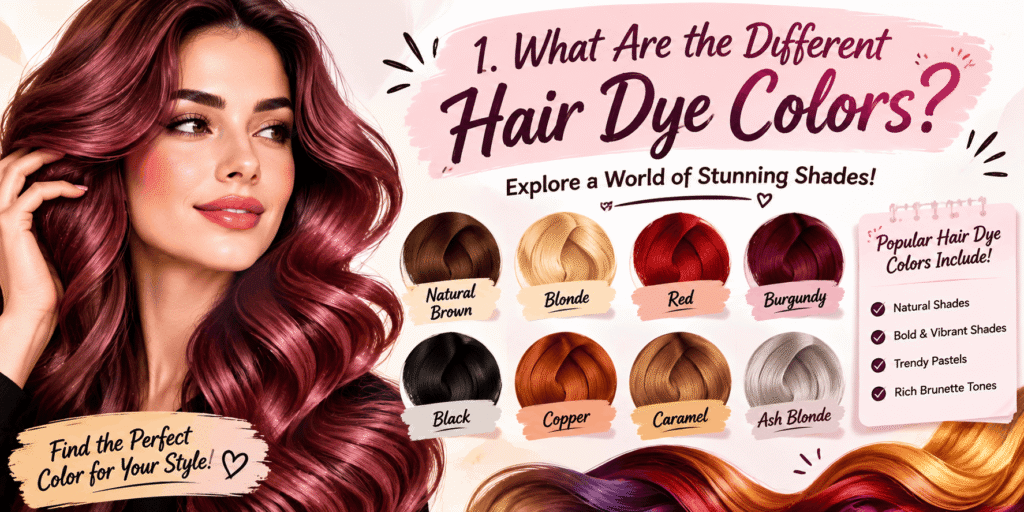
Hair dye colors are shades used to change, enhance, deepen, or add tones to natural hair. They can create a subtle adjustment close to your original color or a dramatic transformation that makes the hair a prominent part of your look.
Most shades fall into five broad families: black, brown, blonde, red, and fashion colors. Each family includes variations in depth and undertone. For example, brown can appear cool and smoky, warm and golden, or rich and neutral.
A useful way to understand any shade is to consider three elements:
- Depth: How light or dark the color appears.
- Undertone: Whether the shade leans warm, cool, or neutral.
- Intensity: How vivid or muted the color looks.
These elements explain why two shades with similar names can look noticeably different. A golden brown and an ash brown may have a similar depth, but the first emphasizes warmth while the second has a cooler appearance.
A shade name on a box is a starting point, not a guarantee of your final result. Your starting color, hair history, product formula, and application technique all influence the outcome.
2. Popular Hair Dye Colors to Consider
The most useful way to explore hair dye colors is by shade family. Start with the overall look you want, then narrow your choices to individual shades.
Brown hair colors
Brown is a versatile family that ranges from light, soft brown to deep espresso. It can add dimension without the dramatic contrast associated with some very light or vivid colors.
- Chocolate brown: A rich, balanced brown that creates a polished appearance.
- Caramel brown: A warmer shade with golden or amber character.
- Ash brown: A cooler brown with muted, smoky undertones.
- Chestnut brown: A brown shade with reddish warmth.
- Espresso brown: A very deep brown that can appear almost black in low light.
- Mushroom brown: A muted, earthy brown that generally leans cool or neutral.
Brown is a useful starting point if you want a noticeable change without moving too far from a naturally dark shade. The exact result still depends on your existing hair color and the dye used.
Blonde hair colors
Blonde includes everything from dark blonde to very pale platinum. Some shades look golden and sunny, while others appear beige, icy, or creamy.
- Honey blonde: Warm and golden.
- Beige blonde: A balanced shade that can sit between warm and cool.
- Ash blonde: A cooler blonde with muted tones.
- Golden blonde: A brighter, yellow-gold appearance.
- Strawberry blonde: A blonde base with a delicate reddish or copper influence.
- Platinum blonde: An extremely light blonde that often requires substantial lightening.
Blonde can create a soft change or a high-contrast transformation. However, moving from dark hair to a very light blonde usually requires more processing than choosing a shade close to your natural color.
Red, copper, and auburn hair colors
Red hair colors range from understated warmth to saturated, eye-catching shades.
- Copper: A bright, orange-based red that can look fiery or softly golden.
- Auburn: A mixture of brown and red that offers depth.
- Burgundy: A deep red with purple or wine-like character.
- Cherry red: A more vivid red that can range from bright to dark.
- Mahogany: A deep reddish-brown that combines red tones with a darker base.
- Cherry cola: A dark brown-red shade with a noticeable red or burgundy reflection.
Copper and auburn can work well for someone who wants warmth without choosing a bright fashion color. Burgundy and cherry cola offer a deeper alternative for those who prefer a more dramatic red effect.
Black hair colors
Black hair dye colors are not all identical. Their undertones can influence how the hair looks in different lighting.
- Natural black: A deep, relatively neutral-looking black.
- Blue-black: A dark black with a cool blue reflection.
- Soft black: A slightly gentler-looking alternative to an intensely dark finish.
- Black cherry: A dark base with red-violet character that becomes more noticeable in suitable lighting.
Black can provide strong contrast and a glossy-looking finish. Keep in mind that very dark permanent dye may be difficult to lighten later, so consider your future color plans before committing.
Fashion and creative hair colors
Fashion colors offer more expressive choices beyond natural-looking shades.
Popular options include pastel pink, vivid magenta, lavender, violet, teal, turquoise, cobalt blue, silver, and combinations of multiple colors.
These shades can be applied throughout the hair, used as highlights, or concentrated on selected sections. Pastel and silver results often require a very light starting base, while deeper fashion shades may work on darker hair with varying degrees of visibility.
The important consideration is the starting color. A pastel shade applied to dark brown hair will not necessarily produce the same result shown in a photograph of nearly white-blonde hair.
3. How to Choose Hair Dye Colors for Your Skin Tone
Skin tone describes the visible depth of your complexion, while undertone refers to the subtle hue beneath the surface. Both can help you explore hair colors, but neither should be treated as a strict rule about what you are allowed to wear.
Understand warm, cool, neutral, and olive undertones
Warm undertones often have a golden, peachy, or yellow appearance. Honey blonde, caramel, copper, and warm brown are useful shades to explore.
Cool undertones may have pink, rosy, or bluish characteristics. Ash brown, cool espresso, beige blonde, and some burgundy shades can be starting points.
Neutral undertones have a more balanced relationship between warm and cool characteristics. Many people can experiment across both color families.
Olive undertones can include subtle greenish or golden characteristics. Chocolate brown, neutral brown, muted caramel, and selected copper shades may be worth testing.
These are flexible recommendations, not universal rules. A person with a cool undertone can still look striking with copper hair, and someone with warm undertones may prefer an icy blonde for contrast.
Consider your complexion and desired contrast
Complexion depth can help you estimate how dramatic the difference between your hair and skin may appear. Deep espresso, for example, creates a different visual effect from honey blonde, even if both shades suit the same person for different reasons.
Instead of asking only which color matches your skin, ask what effect you want:
- For a natural-looking result, start near your current hair depth.
- For a warmer appearance, explore golden, caramel, or copper tones.
- For a cooler effect, consider ash, beige, or cool brown.
- For stronger contrast, explore a lighter or deeper shade while accounting for the processing involved.
A useful next step is to compare inspiration photos taken in natural light. Look for people with a similar starting hair color and a similar desired level of contrast rather than selecting a photograph based on complexion alone.
4. Which Hair Colors Work Best on Dark Hair?
Naturally dark hair can support many attractive color choices, but the result depends on whether the dye adds tone, deepens the color, or attempts to lighten it.
Options for naturally black or dark brown hair
Chocolate brown, espresso, mahogany, burgundy, and dark cherry-cola shades can be practical starting points for people who want a richer appearance.
Caramel highlights and copper accents can create more visible dimension, although they may require lightening selected sections. A vivid fashion color may also need pre-lightening to achieve the desired brightness.
One important distinction is that adding color and removing natural pigment are different processes. A dye that deposits tone into dark hair may not produce a bright blonde result. Previously colored hair can be even more complicated because artificial pigment changes how subsequent color treatments behave.
Can you dye dark hair lighter without bleach?
Sometimes you can achieve a modest change without a separate bleaching step, depending on the starting shade and product. However, a substantial move from black or dark brown to pale blonde generally requires significant lightening.
The American Academy of Dermatology advises staying within three shades of your natural hair color when possible, noting that greater lightening typically requires stronger peroxide and can cause more damage.
For a major transformation, consult a qualified colorist who can assess your hair’s condition and previous chemical history.
5. Understanding Hair Dye Types
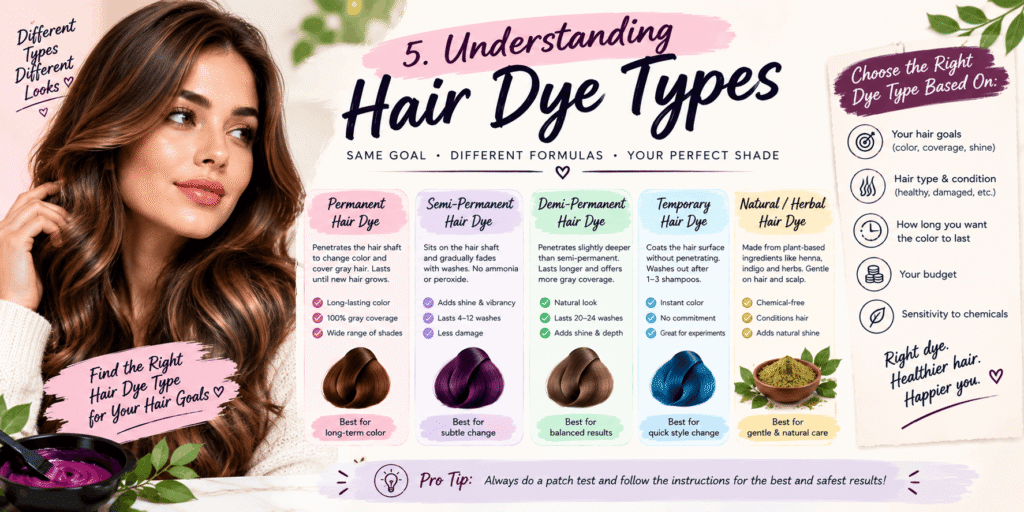
Choosing the right shade is only part of the decision. The dye type determines how the color is deposited, how it changes over time, and how much commitment may be involved.
| Dye type | General purpose | What to consider |
|---|---|---|
| Temporary color | A short-term color effect | Useful for experimenting; longevity depends on the product and application. |
| Semi-permanent dye | Adds tone without the same permanent color change | Often fades with washing; it may not lighten natural hair. |
| Demi-permanent dye | Refreshes or deepens color with a less permanent result than permanent dye | Suitable uses depend on the specific formula; it is not necessarily damage-free. |
| Permanent dye | Creates a longer-lasting color change | Regrowth and fading may need management; some formulas can lighten natural pigment. |
| Bleach or lightener | Removes natural or artificial pigment to create a lighter base | Can cause significant damage and may require professional application. |
The exact performance of each category varies by formula. Some semi-permanent products behave differently from others, and permanent dye does not mean the color will remain unchanged forever.
Choose a temporary or less permanent option if you are testing an unfamiliar color and the product is suitable for your intended use. For major lightening, extensive gray coverage, or a complicated color correction, professional advice may be more appropriate.
6. How to Choose Your Ideal Shade
A simple decision process can narrow the options without making the decision unnecessarily complicated.
Step 1: Record your starting color
Identify whether your hair is naturally black, dark brown, medium brown, light brown, dark blonde, or a lighter shade. Also note whether it has been dyed, bleached, relaxed, or chemically treated.
Your current hair history is more informative than the shade you hope to achieve.
Step 2: Decide how dramatic the change should be
Choose one of three goals:
- Subtle: Stay near your natural depth and adjust the tone.
- Noticeable: Move to a different brown, blonde, or red family.
- Dramatic: Choose a much lighter shade, vivid fashion color, or strong contrast.
The more substantial the change, the more important it becomes to evaluate processing, maintenance, and hair condition.
Step 3: Select a temperature or undertone
Decide whether you prefer warm, cool, or neutral-looking results. If you are unsure, compare several shades in the same depth instead of changing both depth and undertone at once.
For example, if you have medium brown hair, compare chocolate brown, ash brown, and chestnut before considering a complete change to platinum blonde.
Step 4: Estimate the upkeep
Ask yourself how often you are willing to refresh the color. A shade close to your natural roots may be easier to maintain than a high-contrast color that makes regrowth more visible.
Bright red, vivid fashion colors, and some cool-toned shades may also require extra attention to fading or unwanted tonal changes. Actual maintenance depends on the formula, washing routine, hair condition, and starting color.
Step 5: Test before committing
Follow the manufacturer’s instructions for the required allergy alert test before every application. A separate strand test can help you evaluate the likely color result and the condition of your hair.
Neither test guarantees a perfect result or rules out every possible reaction. If you have previously experienced a reaction to hair dye, seek medical advice before trying another formula.
7. Practical Examples of Choosing Hair Color
These scenarios illustrate how the decision framework works. They are examples, not guarantees of a particular outcome.
Example 1: Someone with naturally black hair wants a subtle change
Imagine a person with untreated black hair who wants a richer color without a major transformation. They could compare espresso, chocolate brown, and mahogany.
Espresso would maintain a deep appearance, chocolate brown could provide a softer brown direction, and mahogany could introduce a red-brown reflection. The final result would depend on the product and whether the chosen formula can create the intended change on the starting hair.
A practical approach would be to compare product swatches, perform the required tests, and avoid selecting a shade that promises dramatic lightening without an appropriate process.
Example 2: Someone wants a blonde transformation
Imagine a person with previously dyed dark brown hair who wants platinum blonde. Selecting a very light box shade is unlikely to be a reliable shortcut because the artificial pigment and existing hair condition affect the process.
A professional colorist can assess whether staged lightening is appropriate, how much change is realistic, and whether the hair can tolerate the treatment.
If a large transformation is not suitable immediately, a gradual move toward lighter brown or caramel highlights may be a more manageable alternative.
[AUTHOR EXPERIENCE: Add a genuine example of comparing hair swatches, checking color under natural light, or learning from a real coloring result. Include the starting color, chosen shade, actual outcome, and any limitations.]
8. Common Hair Coloring Mistakes
Several common mistakes can lead to disappointing results, even when the chosen shade looks attractive on a screen.
- Choosing by shade name alone: Different brands and formulas can produce different results.
- Ignoring the starting color: A blonde reference photo may be unrealistic on untreated black hair without lightening.
- Overlooking previous dye: Previously colored hair can react differently from untreated hair.
- Expecting undertone rules to be absolute: Warm and cool shade suggestions are starting points, not restrictions.
- Skipping required safety tests: Previous successful applications do not guarantee that a future application will be reaction-free.
- Leaving dye on longer than directed: Extra processing time is not a safe substitute for choosing the correct formula.
- Ignoring future color plans: Very dark permanent dye can complicate a later transition to a much lighter shade.
Before buying a product, evaluate the shade, instructions, starting color, and likely upkeep together.
9. How to Maintain Your New Hair Color
Color maintenance helps preserve the intended appearance, although every shade fades differently. The right routine depends on your dye type, hair condition, washing habits, and exposure to sunlight or heat.
Consider these practical habits:
- Use hair products intended for your type of color-treated hair.
- Wash according to your scalp’s needs and the dye manufacturer’s recommendations.
- Avoid unnecessarily high heat from styling tools.
- Use suitable heat protection when heat styling.
- Protect your hair from prolonged, intense sunlight.
- Follow the instructions for any color-depositing conditioner or gloss.
- Seek professional guidance before combining multiple chemical treatments.
The American Academy of Dermatology notes that coloring can leave hair dry and brittle and recommends protecting colored hair from sun exposure.
Do not assume that every shade needs the same maintenance schedule. Bright reds, cool blondes, deep browns, and fashion colors can fade or shift in different ways.
10. Hair Dye Safety Checklist
Before coloring your hair, use this checklist to reduce avoidable risks.
- Read the entire product label and follow its directions.
- Perform the required allergy alert or patch test every time, according to the manufacturer’s instructions.
- Perform a separate strand test when appropriate to evaluate color and hair condition.
- Wear the recommended protective gloves.
- Do not dye hair if your scalp is irritated, damaged, or sunburned.
- Never exceed the recommended processing time or mix unrelated dye products.
- Rinse thoroughly as directed.
- Never use scalp hair dye to color eyebrows or eyelashes.
- Seek medical advice if you have a history of hair dye reactions.
The U.S. Food and Drug Administration advises following package instructions, performing a skin test before each use, wearing gloves, and avoiding eyebrow and eyelash applications. It also warns that a person can develop sensitivity after previous uneventful uses
A patch test reduces uncertainty but cannot guarantee that a reaction will not occur. If you experience facial or throat swelling, difficulty breathing, or another severe allergic symptom, seek emergency medical help.
Final Thoughts
The best hair dye colors are the ones that fit your desired appearance, starting hair color, hair condition, and willingness to maintain the result. Brown, blonde, red, black, and fashion shades each offer multiple possibilities, so you do not have to rely on a single trend or rigid skin-tone rule.
Before making a change, compare shades at the right depth, consider your hair’s chemical history, and perform the required safety tests. If you want a dramatic transformation, especially from dark hair to very light blonde, seek professional guidance rather than relying on a shade chart alone.
At BestGlowNest, the goal is to help you make an informed beauty decision—not simply choose a color that looks good in a photograph.
Author: [BEST GLOWNEST]
Editorial note: This article provides general beauty information. Individual color results and hair responses vary by product and hair history. It is not a substitute for personalized professional advice or medical care.
Commonly explored hair dye colors include chocolate brown, espresso, honey blonde, ash brown, copper, auburn, burgundy, and black. Pastel pink, lavender, blue, and other fashion shades appeal to people who prefer a more expressive result. The right choice depends on personal style, current hair color, and the level of maintenance you are comfortable with.
Start by considering your skin undertone, then compare shades at a suitable depth for your current hair. Warm undertones can make golden brown, caramel, and copper worth exploring, while cool undertones may pair well with ash brown or cooler blonde shades. These are suggestions rather than rules; contrast and personal preference also matter.
Chocolate brown, espresso, mahogany, and burgundy are useful starting points for people with naturally dark hair. Caramel highlights and brighter shades may require lightening, depending on the desired result. Remember that previously dyed dark hair can be harder to lighten than untreated hair, so assess your hair history before choosing a product.
2 Comments