
Hair botox treatment is a cosmetic hair-smoothing service designed to make hair feel softer, look shinier, and appear less frizzy. Despite its name, it is not a Botox injection. The term generally describes conditioning or smoothing formulas whose ingredients and application methods vary by brand, so the results depend on the specific product and your hair’s condition.
Table of Contents
- What Is Hair Botox?
- How Does Hair Botox Treatment Work?
- The Hair Botox Treatment Process
- Benefits of Hair Botox
- Who Should Consider Hair Botox?
- Possible Side Effects and Safety Considerations
- Hair Botox vs. Keratin Treatments vs. Deep Conditioning
- How to Maintain Your Results
- Common Mistakes to Avoid
- Hair Botox Treatment: Practical Examples
- Frequently Asked Questions
- The Final Takeaway
Key Takeaways
- Hair botox is a cosmetic treatment, not a standardized medical procedure or injectable Botox treatment.
- Its main purpose is to improve the appearance and feel of hair through conditioning and, depending on the formula, smoothing.
- Results vary by product, application method, hair texture, and aftercare.
- Some salon smoothing products may release formaldehyde when heated, so ingredient checks and salon ventilation matter.
- Deep-conditioning masks can be a simpler alternative if your primary goal is softer, more manageable hair.
- Hair botox should not be treated as a cure for hair loss, scalp conditions, or permanently damaged strands.
What Is Hair Botox?
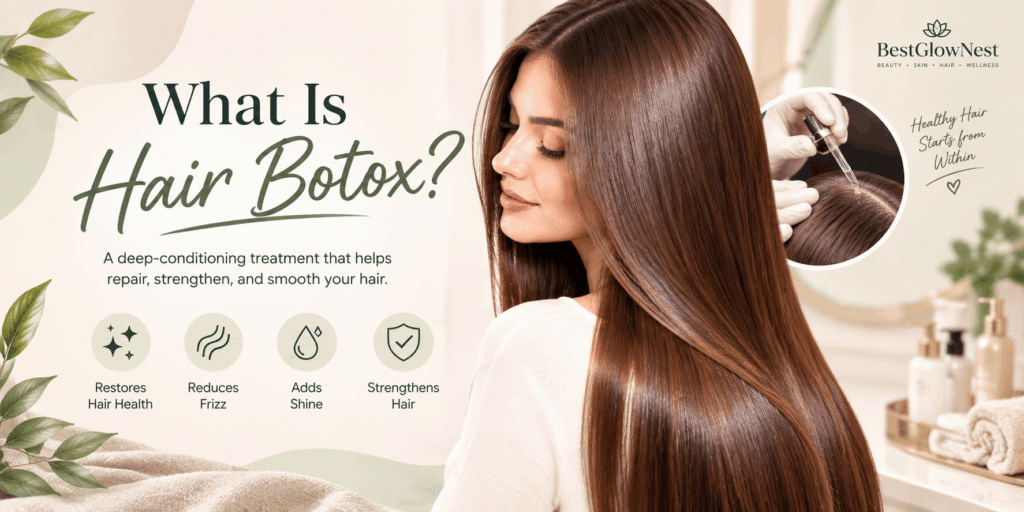
Hair botox is a non-injectable cosmetic hair treatment that aims to improve the softness, smoothness, shine, and manageability of hair. It is commonly marketed for frizz-prone, dry-looking, rough, or difficult-to-style hair, although the exact formulation and intended results differ between products.
Unlike medical Botox, which uses botulinum toxin for specific medical or cosmetic purposes, hair botox does not refer to an injection into the scalp or hair. The name is a beauty-industry label rather than a standardized chemical definition.
Products marketed under this name may contain conditioning agents, proteins, amino acids, oils, humectants, or other ingredients intended to improve the hair’s appearance. Not every formula contains the same ingredients, and the name alone cannot tell you whether a product straightens hair, provides deep conditioning, or requires high heat.
What Does Hair Botox Actually Do?
The treatment generally works by improving the feel and appearance of the hair shaft. Conditioning ingredients can help hair strands feel smoother and reduce friction between them, making detangling and styling easier.
Hair that has a rough or raised cuticle surface may look dull and feel more difficult to manage. A suitable conditioning treatment can temporarily improve surface smoothness and shine. However, cosmetic improvement does not mean the hair has returned to its original, undamaged state.
It is also important to distinguish a conditioning treatment from a chemical straightening service. Some products sold as hair botox involve blow-drying and flat-ironing, while others focus more on conditioning. Ask your stylist which category the specific product belongs to before booking.
How Does Hair Botox Treatment Work?
Hair botox works through the ingredients in the chosen formula and the way it is applied. Conditioning-focused products coat or condition the hair surface, while certain smoothing formulas use additional processing steps to create a sleeker finish.
The treatment does not work by injecting anything into the hair follicles. Instead, the formula is applied to the hair strands, where its conditioning or smoothing ingredients produce the intended cosmetic effect.
Depending on the product, the stylist may use shampooing, application, a processing period, rinsing, blow-drying, and heat styling. These steps are not universal. Follow the instructions for the actual product rather than assuming every hair botox service uses the same technique.
One important limitation is that hair fibers are nonliving structures. A cosmetic treatment can improve their appearance and handling, but it cannot biologically regenerate a damaged strand. Severely split or broken ends may still need trimming.
The Hair Botox Treatment Process
A salon hair botox appointment typically begins with an assessment of the hair and the product being used. The exact procedure varies, so the following steps are a general overview rather than instructions for every formula.
1. Hair and product assessment
The stylist examines your hair texture, previous coloring or bleaching, breakage, and desired result. This is also the time to discuss scalp sensitivity, allergies, and any previous reactions to smoothing products.
Ask to see the ingredient list and the manufacturer’s directions. A stylist should be able to explain whether the service is primarily conditioning or intended to produce a straighter finish.
2. Cleansing and preparation
Some treatments begin with a cleansing shampoo to remove product buildup and prepare the hair. Others use a different preparation method.
The cleansing step depends on the product instructions. It should not automatically be assumed that a strong clarifying shampoo is appropriate for every person, especially if the hair is already fragile or the scalp is irritated.
3. Applying the formula
The stylist applies the product to the hair according to the manufacturer’s instructions. The application method, amount, processing time, and distance from the scalp vary by formula.
Do not assume that a product is safe simply because it is labeled natural, organic, or botox. Its actual ingredients and intended use are more important than its marketing name.
4. Processing, rinsing, and styling
Depending on the product, the stylist may allow a processing period, rinse the hair, blow-dry it, or use a flat iron. Some formulas require heat to achieve their intended finish.
Heat and chemical exposure deserve particular attention. The U.S. Food and Drug Administration (FDA) warns that certain hair-smoothing products can release formaldehyde gas when heated. Ask whether the product contains formaldehyde, formalin, or methylene glycol, and whether it can release formaldehyde during use.
5. Aftercare instructions
Before leaving the salon, ask when you can wash your hair, which products are suitable, and whether any specific aftercare restrictions apply. These instructions vary by formula, so there is no single waiting period that applies to every treatment.
Benefits of Hair Botox
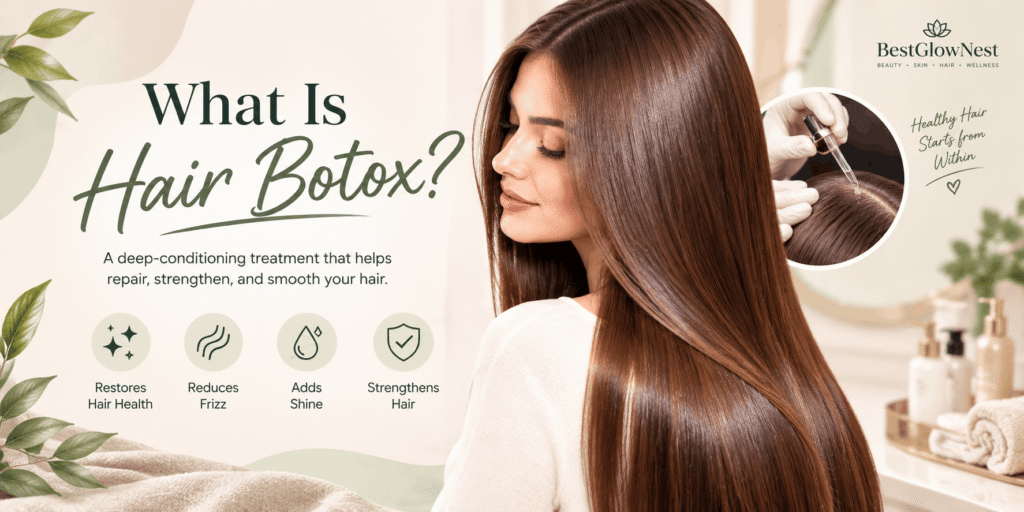
The main potential benefit of hair botox is improved cosmetic manageability. A suitable formula may help hair feel softer, look shinier, and appear less frizzy, but results are not guaranteed.
Hydration and softness
Conditioning ingredients can help hair feel more flexible and smooth by improving the way the strands interact with water and reducing surface friction. This can be useful when hair feels rough after frequent washing, heat styling, or coloring.
However, the word hydration should not be interpreted as proof that the treatment permanently restores moisture balance. The effect depends on the formulation, hair condition, and maintenance routine.
Reduced frizz
Frizz can become more noticeable when the hair surface is rough, when strands absorb moisture unevenly, or when the surrounding environment is humid. Certain conditioning and smoothing products help strands sit together more evenly, creating a neater appearance.
The amount of frizz reduction varies. A person with lightly frizzy hair may notice a more polished finish, while someone with tightly coiled hair may see a different result.
A smoother appearance
Some hair botox formulas are marketed for smoother-looking hair and easier styling. Depending on the product, this may mean fewer flyaways or a sleeker finish rather than completely straight hair.
If you want to preserve your natural curls, tell the stylist before treatment. Ask whether the chosen formula and heat-processing method are likely to change your curl pattern temporarily.
Added shine
Hair often looks shinier when its surface reflects light more evenly. Conditioning products can improve surface smoothness, which may make the hair appear more polished.
Shine is a cosmetic result, not evidence that every damaged area has been repaired. Product buildup, excessive application, or a formula that is too heavy for fine hair can also leave strands looking flat.
Improved manageability
Softer strands may be easier to comb, detangle, and style. This can make a morning routine more convenient, particularly for people whose hair tangles easily or becomes puffy after drying.
The benefit depends on your starting hair condition. A treatment that improves manageability for one person may offer only a small difference for someone whose hair is already smooth.
Who Should Consider Hair Botox?
Hair botox may be worth considering if your main concerns are frizz, rough texture, dullness, or difficult styling. It is less appropriate when your main problem is unexplained hair loss, an irritated scalp, or severe breakage that requires a different approach.
You may want to discuss the treatment with a qualified stylist if:
- Your hair feels dry or rough along the lengths.
- You regularly struggle with flyaways or puffiness.
- You want a smoother appearance without assuming you will achieve permanently straight hair.
- You understand the treatment’s limitations and have checked the ingredients.
- Your hair is strong enough to tolerate the specific application and any heat styling involved.
Extra caution is appropriate for bleached, heavily colored, chemically processed, or fragile hair. These strands may be more vulnerable to additional heat or processing.
If you have a sensitive scalp, a history of allergic reactions, or an existing scalp condition, speak to an appropriate healthcare professional before using a product that could aggravate the problem. People who are pregnant or breastfeeding should discuss potentially chemical or heat-activated smoothing services with their healthcare professional, particularly when the ingredients are unclear.
Hair botox is not a treatment for hair loss from the roots. If you are experiencing persistent shedding, bald patches, or sudden changes in hair density, seek medical advice rather than relying on a smoothing service.
Possible Side Effects and Safety Considerations
Hair botox does not have one universal safety profile because products sold under this name can contain different ingredients and require different application methods. Possible problems depend on the formula, the way it is used, and individual sensitivity.
Potential concerns include scalp irritation, allergic reactions, hair dryness or breakage from unsuitable processing, and exposure to hazardous fumes from certain smoothing products.
The FDA specifically advises consumers to examine the ingredients of hair-smoothing products and ask salons about product safety. Formaldehyde, formalin, and methylene glycol are important names to look for because products containing these substances can release formaldehyde gas during heating. Exposure can irritate the eyes, nose, throat, and lungs and may cause other health effects.
A label stating “formaldehyde-free” should not replace a careful ingredient review and discussion with the salon. Ask for the full product name, ingredient information, safety data sheet where available, and details of ventilation and heat application.
Stop the treatment and seek appropriate medical advice if you experience a significant reaction. Breathing difficulty, severe swelling, or other serious symptoms require urgent medical attention.
Hair Botox vs. Keratin Treatments vs. Deep Conditioning
The best option depends on whether you want temporary softness, reduced frizz, or a more pronounced smoothing effect. These services overlap, but they are not interchangeable, and the product formulation matters more than the label.
| Feature | Hair Botox | Keratin treatment | Deep-conditioning mask |
|---|---|---|---|
| Main purpose | Conditioning and cosmetic smoothing | Smoothing and, with some formulas, reducing curl or frizz | Improving softness and manageability |
| Typical setting | Salon; some products are sold for home use | Commonly a salon service | Usually at home or in a salon |
| Heat required | Depends on the formula | Often used in smoothing services | Usually not essential |
| Effect on curls | Depends on the product and processing | Some formulas noticeably alter the appearance of curls | Usually designed to condition without straightening |
| Maintenance | Depends on the formula and washing routine | Depends on the formula and aftercare | Repeated use as directed |
| Main caution | Product ingredients and processing method | Potential chemical exposure and heat | Ingredient sensitivity and overuse |
Deep-conditioning masks
A deep-conditioning mask is often a practical starting point for hair that feels dry, rough, or tangled. It can improve softness without requiring a salon smoothing service.
Look for a product designed for your hair type and follow its instructions. A mask is unlikely to produce the same smoothing effect as a heat-activated salon treatment, but it may be sufficient if you mainly want easier detangling and less dryness.
Keratin treatments
Keratin treatments are salon services that use particular formulations and application methods to create a smoother finish. Some are designed to reduce frizz substantially and may change the appearance of curls.
The term keratin does not establish that a product is safe or that it contains no formaldehyde-related ingredients. Check the actual formula and application process before comparing it with hair botox.
Which option should you choose?
Choose a deep-conditioning mask if your priority is softness and a manageable home routine. Consider a professional smoothing service if you want a more pronounced change in how your hair behaves and understand its potential risks.
Do not choose hair botox solely because the name sounds gentler than keratin. Ask the salon to compare the specific formulas, ingredients, heat requirements, expected finish, and aftercare.
How to Maintain Your Results
Aftercare can influence how long a cosmetic smoothing result remains noticeable. Your product’s instructions should take priority over generic advice because different formulas may require different washing schedules and maintenance products.
Consider these habits:
- Follow the manufacturer’s directions. Do not wash or restyle the hair against the treatment’s instructions.
- Use suitable cleansing products. Ask whether a gentle shampoo or a particular maintenance range is recommended.
- Limit unnecessary heat. Excessive heat styling can contribute to dryness and breakage, even when hair initially looks smooth.
- Condition regularly. Use a conditioner or mask suited to your hair texture and condition.
- Handle wet hair gently. Detangle carefully and avoid aggressive brushing.
- Set realistic expectations. The finish may change as you wash and style your hair. Do not assume the treatment will last a fixed number of weeks.
If the salon promises a specific duration, ask what product evidence or manufacturer guidance supports that estimate. Results can differ substantially between people.
Common Mistakes to Avoid
A few avoidable mistakes can lead to disappointing results or unnecessary risk.
- Assuming hair botox contains actual Botox: The name does not establish the ingredients.
- Expecting permanent repair: Cosmetic treatments can improve appearance and feel, but they do not regenerate dead hair fibers.
- Ignoring product ingredients: Ask for the full product name and ingredient information before the service.
- Treating every hair type the same: Fine, curly, bleached, and coarse hair can respond differently.
- Using high heat without assessing hair condition: Fragile or chemically processed hair may be more susceptible to damage.
- Expecting treatment to stop hair loss: Hair smoothing does not address the underlying causes of shedding.
- Choosing a salon by price alone: Product transparency, training, application practices, and appropriate ventilation are also important.
Hair Botox Treatment: Practical Examples
These scenarios illustrate how to evaluate the treatment without assuming that everyone will get the same result.
Example 1: Frizzy hair in humid weather
Imagine someone with medium-length, wavy hair that becomes puffy after spending time outdoors. Their goal is to reduce frizz and make daily styling easier while keeping some natural movement.
A conditioning-focused treatment might help, but the person should ask whether the product is likely to loosen their waves. If the main concern is surface dryness, a deep-conditioning mask and gentler styling routine may be worth trying first.
Example 2: Bleached hair with fragile ends
Consider someone who has lightened their hair several times and now notices rough ends and frequent breakage. They want a glossy finish before an upcoming event.
A smoothing treatment that involves high heat may not be the best first step. A stylist should assess the hair’s condition and discuss gentler alternatives. Trimming severely split ends and reducing further chemical or heat damage may be more useful than pursuing an immediate glossy finish.
These are illustrative scenarios, not guaranteed treatment outcomes. Actual results depend on the hair, formula, and application method.
Hair Botox Treatment Checklist Before Booking
Use this checklist to compare salons and decide whether the service fits your goals.
- I know whether I want softer hair, less frizz, or a straighter finish.
- I have told the stylist about previous bleaching, coloring, relaxing, or other chemical treatments.
- I have checked the exact product name and ingredient information.
- I have asked whether the product contains or releases formaldehyde when heated.
- I understand the heat-processing method and the salon’s ventilation precautions.
- I know the expected result, its limitations, and the recommended aftercare.
- I have discussed any scalp sensitivity, allergies, or relevant health concerns.
- I have compared the treatment with a deep-conditioning mask or another suitable alternative.
If the salon cannot explain the product or answer basic safety questions, postpone the service until you have reliable information.
Final Thoughts
Hair botox treatment can be an option for people who want softer, shinier, and more manageable hair with less visible frizz. However, results depend on the formula, your hair’s condition, and the application method. The treatment does not permanently repair damaged strands or guarantee straight hair.
Before booking an appointment, review the ingredients, discuss your styling goals with your stylist, and understand any potential risks associated with chemical processing and heat. If your main concern is dryness, a deep-conditioning mask may be a simpler alternative.
Ultimately, the right hair treatment is one that suits your hair type, supports your styling goals, and prioritizes safety over marketing promises.
Hair botox treatment is not suitable for everyone or every hair condition. The results and potential risks depend on the product’s ingredients, application method, and use of heat. People with bleached, fragile, or chemically treated hair should consult an experienced stylist before treatment and review the product’s safety information.
No, hair botox does not automatically make hair permanently straight. Some formulas focus on conditioning, while others provide a smoother finish that may temporarily affect the appearance of natural curls. The outcome depends on the specific product and processing method, so ask your stylist what results to expect.
The results vary depending on the formula, hair condition, washing frequency, and aftercare routine. Some treatments maintain a smoother appearance longer than others, but there is no universal duration for every hair botox product. Ask your stylist for the manufacturer’s guidance for the exact formula being used.
One Comment