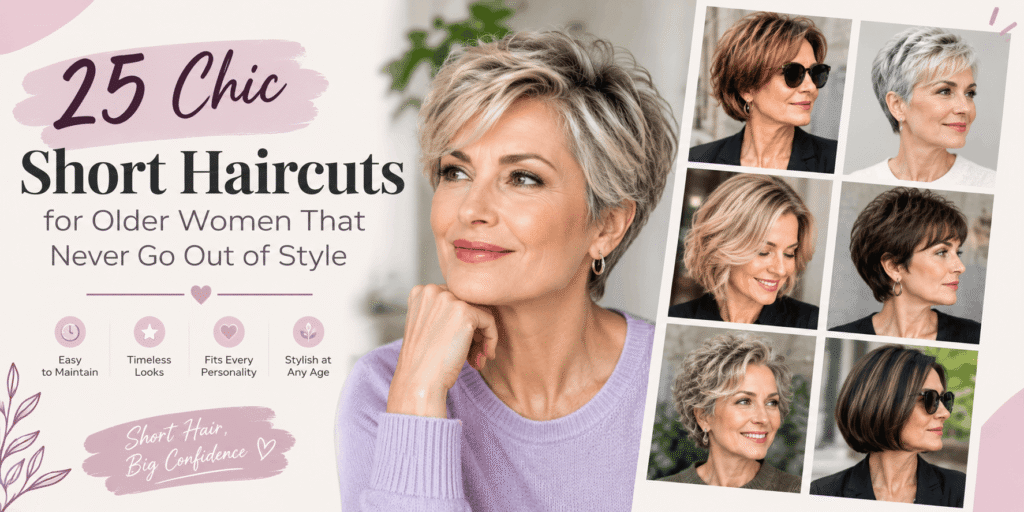
A great haircut should fit your life, not make your daily routine more complicated. For many older women, short hair offers an opportunity to explore a different look, work with changing hair texture, and enjoy a style that feels comfortable and personal. The best short haircuts are not necessarily the newest or most fashionable ones. They are the cuts that complement your features, work with your natural hair, and make you feel good when you look in the mirror.
Hair can become finer, coarser, drier, or less dense over time, although everyone’s experience is different. That is why choosing a haircut based on your actual hair needs can be more useful than choosing one simply because it looks attractive in a photograph. A little structure may help fine hair appear fuller, while carefully placed layers can make thick hair easier to manage.
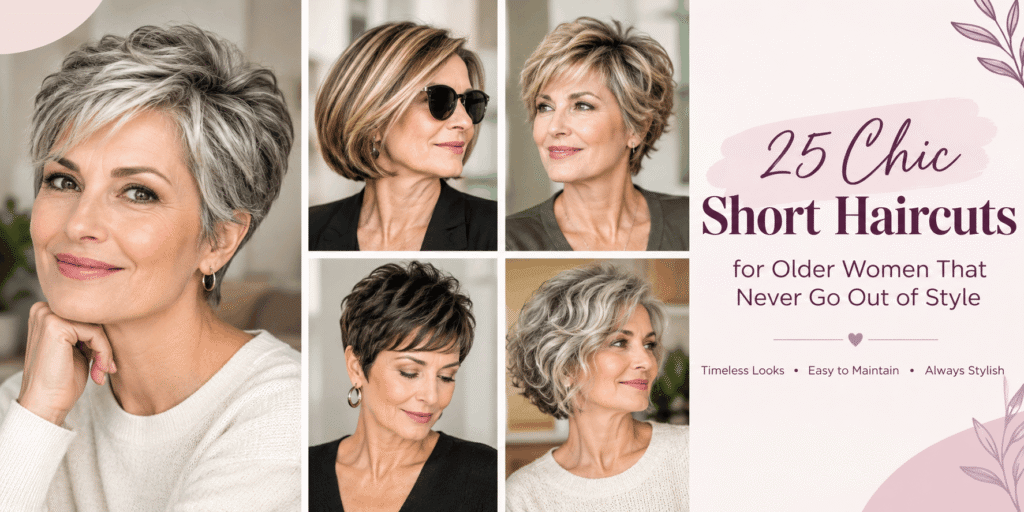
From softly shaped bobs to expressive pixie cuts, these short haircuts for older women offer different ways to refresh your appearance. Each style can be adjusted by a professional stylist to suit your face shape, hair density, texture, and preferred level of maintenance.
You don’t seem to be using a Table of Contents plugin.
1. Classic Bob
Some hairstyles remain popular because they are easy to adapt, and the classic bob is a perfect example. Its length generally falls around the jaw or chin, creating a defined outline without requiring long hair. Depending on how it is cut, the bob can look elegant and smooth or soft and relaxed.
If you prefer a tidy appearance, ask for a clean shape with minimal layers. If your hair tends to sit flat, a little internal layering may give it more movement without changing the overall silhouette. A side part can make the look feel softer, while a middle part creates a more balanced, symmetrical effect.
The classic bob is particularly convenient for women who want a haircut that works with everyday clothing as well as more formal outfits. Before choosing the length, discuss how your hair behaves around the ears and neckline, since these details affect how the cut sits after washing.
2. Pixie Bowl Cut
The pixie bowl cut brings together a short, close-fitting shape and a rounded outline around the top of the head. Unlike a traditional bowl cut with a rigid edge, a modern version can include feathered ends, uneven texture, or a softer fringe.
This is an interesting option if you want your hairstyle to have a recognizable shape rather than simply being short all over. The rounded top can draw attention to the eyes, while a carefully adjusted fringe can help balance the forehead and other facial features.
Ask your stylist how the cut will work with your natural hair growth. Hair that sticks up at the crown or grows in a strong direction may need a different layering pattern to achieve the intended result. A small amount of styling cream can define the shape, but heavy products may flatten the hair.
Because the outline is an important part of this haircut, occasional trims will help preserve its rounded appearance.
3. Layered Bob
A layered bob is useful when you want the familiar shape of a bob but prefer a little more movement. Instead of leaving every section at the same length, the stylist introduces shorter pieces that help the hair fall in a softer, more flexible way.
The right layers depend on your hair density. Fine hair may benefit from restrained layering because removing too much length can make the ends look sparse. Thick hair may handle more internal layers, which can reduce heaviness and help the haircut move naturally.
You can also use layers to influence the overall shape. Shorter sections near the crown may encourage lift, while pieces around the face can create a gentle frame. These adjustments are best made according to your natural texture rather than copied exactly from a reference photograph.
For daily styling, a brush and a light styling product may be enough. The goal is to preserve the haircut’s natural movement instead of forcing every strand into place.
4. Choppy Lob
The choppy lob is a longer bob with deliberately varied ends and a relaxed finish. It usually sits between the chin and shoulders, making it a useful choice for women who want a shorter hairstyle but are not ready to lose much length.
Its appeal comes from its imperfect-looking texture. Rather than creating a perfectly uniform edge, the cut uses different lengths to give the hair a more casual appearance. This can be especially attractive on naturally wavy hair, where the waves help reveal the individual layers.
If your hair is straight, your stylist can introduce subtle texture so the cut does not appear too heavy. A lightweight texturizing product may help separate the ends, but avoid using too much if your hair is fine.
The choppy lob also leaves room for styling variety. You can tuck one side behind your ear, change your part, or add loose waves when you want a different look. It is a practical middle ground between a traditional bob and longer hair.
5. Undercut Pompadour
For women who enjoy a stronger, more distinctive appearance, the undercut pompadour offers a dramatic alternative to conventional short cuts. The sides and back are clipped shorter, while the longer hair on top is lifted and styled backward or slightly to one side.
The contrast between the top and the sides creates the haircut’s defining feature. You can make that contrast subtle or pronounced, depending on how much length you want to retain. A softer version can feel wearable for everyday life, while a more dramatic undercut creates a bold fashion statement.
Styling focuses mainly on the longer top section. A blow-dryer and a small amount of volumizing product can help create height, while a flexible-hold product keeps the shape in place without making it feel stiff.
Consider the upkeep before choosing this cut. The shorter sections may need frequent trimming, and styling the top can take more time than maintaining a simple pixie. However, for women who enjoy experimenting with volume and shape, the extra effort may be worthwhile.
6. Blunt Bob
The blunt bob relies on a clear, even edge rather than multiple visible layers. Its length can vary from just below the ears to the chin, but the defining feature is the solid-looking outline.
This can be a helpful choice for women with fine hair who want the ends to look more substantial. Since the perimeter is kept relatively even, the haircut can create a fuller visual effect. However, the result also depends on the amount of hair you have and how naturally it falls.
A blunt bob can look sleek when carefully blow-dried, but it does not have to be perfectly straight. A slight natural bend can give the style a softer character while preserving its defined outline.
Ask your stylist to consider your jawline, neck length, and hair’s natural movement when deciding where the cut should end. Even a small change in length can influence how the bob frames your face. Regular trims will help maintain the clean edge that makes this style distinctive.
7. Wolf Cut Bob
A wolf cut bob combines a shorter overall length with pronounced layers and a deliberately relaxed shape. The crown usually has more movement, while the ends appear lighter and less uniform than those of a traditional bob.
This haircut may suit women who dislike hairstyles that look too carefully arranged. Its textured structure is designed to move, so it can work particularly well with natural waves and hair that already has some body.
The main consideration is how much layering your hair can support. Very fine or sparse hair may need a gentler interpretation to avoid making the ends appear thin. Thicker hair may provide more flexibility for shaping the crown and sides.
For styling, use a lightweight product and allow the hair’s natural texture to contribute to the finish. You do not need to make every layer look identical. The slightly irregular appearance is part of the style’s character.
Before committing, ask your stylist to explain how the cut will grow out, since heavily layered shapes can change noticeably as the shorter sections gain length.
8. Bixie
The bixie sits between a bob and a pixie, offering a short hairstyle without the very cropped appearance of a traditional pixie. The back and sides can be kept relatively close, while longer pieces around the crown, ears, and forehead provide softness.
This makes it an appealing option for women who want a noticeable change but still enjoy having some hair to arrange around the face. It can also be a useful transition for someone moving from a longer bob toward a shorter cut.
The bixie can be tailored to different textures. Gentle layers may help fine hair gain movement, while thicker hair might need more shaping to prevent the silhouette from becoming bulky. A side-swept fringe is one way to add softness, although the front can also be worn away from the face.
Daily styling can remain simple. Work a small amount of lightweight cream through the hair, then arrange the longer sections with your fingers. The result should feel flexible rather than stiff.
9. Tapered Pixie
A tapered pixie has shorter hair around the neckline and sides, gradually blending into a longer crown. This creates a neat outline while leaving enough length on top to introduce texture, direction, or a little volume.
It is a practical choice if you prefer a haircut that stays away from the neck and ears. The tapered shape can also be adjusted to suit your comfort level: some women prefer a very close finish, while others want a softer blend with more coverage.
The longer crown is where you can personalize the look. It may be brushed forward, swept to one side, or styled with a small amount of product for added definition. If your hair naturally lies flat, ask your stylist whether a slightly longer top would give you more styling options.
A tapered pixie is not entirely maintenance-free. The neckline can lose its shape as the hair grows, so periodic trims are useful. In return, you get a compact style that can be quick to wash, dry, and arrange.
10. Graduated Bob
A graduated bob is shaped so the hair at the back is shorter than the sections toward the front. The gradual difference in length creates a rounded profile and gives the cut more structure than a single-length bob.
This style can be especially appealing if you want a defined silhouette without making the front sections too short. The back can be shaped to sit close to the head, while the longer pieces near the face offer a softer finish.
The amount of graduation matters. A subtle version can look understated and professional, while a stronger angle creates a more noticeable profile. Your stylist should take your hair thickness and natural growth pattern into account so the back does not become too bulky or the front too sparse.
For everyday styling, use a brush to guide the back into its shape and smooth the front sections as desired. The graduated bob works best when the cut is balanced carefully, so a consultation before trimming can help you choose a result that suits your routine.
11. Butterfly Bob
The butterfly bob uses soft, face-framing layers to give a short haircut a sense of movement. It takes inspiration from longer butterfly cuts but adapts the idea to a bob-length shape, with shorter sections around the face and added flow through the top.
This can be a good option if a traditional bob feels too solid or heavy. The lighter layers create a more flexible outline, particularly when the front sections are styled away from the face.
The haircut requires thoughtful layering. If too much length is removed from the front, the bob may lose its balanced shape; if the layers are too subtle, the butterfly effect may not be noticeable. A stylist can adjust the design to your hair density and the amount of styling you are willing to do.
A round brush can help sweep the front pieces outward, but a natural finish works too. The goal is to create movement that complements your hair rather than relying on complicated styling every morning.
12. Micro Bob
A micro bob is a very short version of the traditional bob, usually ending around the ears or above the jawline. Its compact length gives it a distinctive appearance and makes it an option for women who enjoy a clean, carefully shaped haircut.
The micro bob can be cut with a straight edge for a bold look or softened with slight texture around the sides. If you have fine hair, keeping the ends relatively even may help the haircut appear fuller. Women with thicker hair may benefit from subtle shaping to prevent the sides from becoming too wide.
One thing to consider is how the shorter length frames your face. A micro bob draws attention to the jawline, ears, and neck, so your stylist can adjust the length to suit your preferred look.
For everyday care, a small amount of smoothing cream may be enough to control flyaways. Because there is less length to manage, drying can be quick, although regular trims will help preserve the intended shape.
13. Asymmetrical Lob
An asymmetrical lob adds a creative twist to the long bob by keeping one side slightly longer than the other. The difference can be subtle or dramatic, depending on how noticeable you want the shape to be.
This haircut is a good option for women who like familiar hairstyles but want something less conventional. The uneven lengths create visual interest without requiring bright colors, complicated styling, or an extremely short cut.
The style can work on straight or wavy hair, but the amount of asymmetry should suit your natural texture. If your hair has a strong wave pattern, the shorter side may sit differently from the longer side. A stylist can plan the cut around how your hair behaves when dry.
You can wear it smooth for a more defined appearance or allow the ends to fall naturally for a softer finish. A side part often works well with this design because it helps emphasize the difference in length.
Before choosing this cut, discuss how it will look when tucked behind an ear and how much maintenance the shape will require.
14. Buzz Cut
A buzz cut is one of the shortest and simplest hairstyles available. Hair is clipped close to the scalp, creating a uniform finish that places little emphasis on styling and more emphasis on the natural shape of the head and facial features.
For women who are tired of spending time washing, drying, and arranging their hair, a buzz cut can feel refreshingly straightforward. It may also be appealing to anyone who wants to embrace a bold personal style rather than follow traditional expectations about women’s hair.
The length can be customized. A very close clip creates a striking appearance, while leaving slightly more length produces a softer effect. Your stylist can help you decide which version feels comfortable.
Although daily styling is minimal, a buzz cut still requires upkeep if you want to maintain a consistent length. Hair grows at different rates, so the appearance gradually changes between trims.
It is also worth considering scalp care. If your scalp is exposed to the sun, use appropriate sun protection or wear a hat outdoors. The buzz cut is a statement style, but its biggest advantage is how little daily arranging it requires.
15. Comb-Over Pixie
The comb-over pixie keeps the sides and back short while leaving a longer section on top that can be swept across the forehead or toward one side. This direction creates a soft, asymmetrical effect without requiring a dramatic haircut.
It can be particularly useful if you enjoy having some length around the front but do not want to maintain a full fringe. The longer top section gives you room to change your part and adjust the look depending on the occasion.
For fine hair, a lightweight volumizing product may help the longer section maintain its shape. Avoid heavy gels or creams if they make your hair appear flat. If your hair is thick, gentle layering can make the top easier to arrange.
A comb-over pixie can be styled neatly for a polished appearance or loosely for a relaxed finish. The key is to work with your natural parting rather than forcing the hair into a direction that does not hold comfortably.
Ask your stylist to leave enough length on top to create the sweep you want while keeping the sides proportionate.
16. French Bob
The French bob is a short, characterful haircut often associated with a length near the jaw and a fringe that sits around the forehead. Its charm comes from its simplicity: it does not need to look perfectly smooth or highly structured to feel stylish.
For older women, the French bob offers an alternative to longer, conventional bobs. Depending on the cut, it can feel artistic, relaxed, or polished. A fringe can draw attention to the eyes, while the short perimeter gives the hair a clear shape.
This style often works well with naturally straight or wavy hair. If your hair has a strong curl pattern, your stylist may need to adjust the length and fringe so they sit correctly after drying.
The French bob can be worn with a slightly tousled finish, which reduces the need to make every strand look perfectly arranged. A small amount of styling cream can help control flyaways while keeping the hair flexible.
Consider fringe maintenance before choosing this style. Hair across the forehead may require more frequent trims than a bob without bangs.
17. Angled Lob
An angled lob is a long bob with a shape that gradually becomes longer toward the front. Unlike a standard lob with a relatively even perimeter, this version creates a visible line from the shorter back toward the longer front sections.
The angle can give the haircut a more structured appearance without making it extremely short. It may suit women who want to retain some face-framing length while keeping the neckline relatively clear.
The degree of the angle is important. A gentle slope creates a subtle difference, while a sharper angle makes the haircut more noticeable. Your stylist should consider hair thickness, natural movement, and how the longer sections fall around your face.
For daily styling, smooth the front sections with a brush if you want to highlight the angled shape. Alternatively, a natural wave can soften the lines and give the haircut a more casual feel.
An angled lob can be a useful option for women who want a modern silhouette while retaining enough length to tuck the front behind an ear or create loose waves.
18. Pompadour Bob
The pompadour bob combines the familiar outline of a bob with extra height and volume at the front or crown. The front section is lifted away from the face, creating a fuller shape that distinguishes it from flatter, more traditional cuts.
This style may appeal to women who enjoy volume and want their haircut to make a noticeable impression. It can be adapted to different levels of drama, from a gentle lift at the front to a more pronounced swept-back shape.
Hair density affects how easily the style holds. If your hair is fine, a light mousse or root-lifting product may help create height. Thick hair may require shaping and careful blow-drying to keep the front section from feeling too heavy.
Use a round brush to lift the roots while drying, then arrange the front section in the direction you prefer. A flexible-hold product can help maintain volume without making the hair stiff.
The pompadour bob generally requires more styling than a simple bob, so consider whether you enjoy using a brush and hair dryer before choosing this cut.
19. Boss Pixie
The boss pixie is a confident, polished interpretation of a short pixie haircut. It typically combines a neat outline with enough texture on top to create definition, giving the style a professional appearance without making it feel overly formal.
This cut can suit women who prefer practical hairstyles but still want their appearance to feel intentional. The sides and back can be kept close, while the crown is shaped to add movement or a little height.
One advantage of the boss pixie is that it can be personalized. A smooth finish looks refined, while textured layers create a more relaxed effect. A side-swept front can soften the overall shape, and a slightly longer crown offers additional styling options.
For everyday care, use a small amount of lightweight product and arrange the hair with your fingers. You may not need extensive styling, particularly if the haircut has been designed around your natural growth pattern.
Regular trims will help maintain its clean outline. If you want a haircut that feels capable, neat, and versatile, this pixie variation is worth discussing with your stylist.
20. Asymmetrical Bob
The asymmetrical bob features sides of different lengths, creating an uneven outline that gives the haircut its distinctive character. It can be subtle enough for everyday wear or more dramatic for women who enjoy a bolder appearance.
Unlike a standard bob, which usually aims for balance on both sides, this cut uses the difference in length as a design feature. One side may end closer to the chin while the other extends farther down, depending on the chosen variation.
The haircut can work with straight or slightly wavy hair. Straight hair tends to show the difference in length clearly, while natural waves can soften the overall shape. Your stylist should consider how your hair falls when dry to avoid an unintended imbalance.
Styling can be simple if the cut has a strong shape. A smoothing product may help define the outline, while a relaxed finish can make the look less formal.
Before choosing an asymmetrical bob, decide whether you prefer a barely noticeable difference or a clear contrast between the two sides. This small decision will influence the haircut’s overall personality.
21. Textured Pixie
A textured pixie uses short layers and varied lengths to create separation throughout the hair. Rather than lying in one smooth shape, the hair has small sections that can be arranged in different directions.
This is a useful option for women who want a short cut with movement. It can make styling feel less rigid and offers a way to work with natural texture instead of trying to flatten every strand.
The cut can be adjusted for different hair types. Fine hair may need carefully placed layers to avoid removing too much fullness, while thick hair can often accommodate more texture. Your stylist should also consider any natural cowlicks around the crown or hairline.
To style it, apply a small amount of texturizing cream and gently separate the sections with your fingers. You can create a neat finish or leave the hair slightly tousled.
The textured pixie is especially practical for women who like a casual hairstyle that can be refreshed quickly in the morning.
22. Soft Shag Bob
The soft shag bob combines the length of a bob with gentle, feathered layers inspired by the shag haircut. Instead of a sharply defined outline, it creates a more relaxed shape with movement around the crown and sides.
This style may be a good match for women whose hair naturally has a little wave or who prefer a less formal finish. The layers can help reduce a heavy appearance and give the haircut a sense of movement.
The important word is soft. An extremely layered shag may not suit everyone, particularly if the hair is fine or lacks density. A more restrained version can retain fullness while introducing enough texture to make the shape interesting.
For styling, allow the hair to follow its natural movement and use a light product to define the ends. A round brush can add lift at the crown if desired, but the haircut should not require elaborate styling to look attractive.
Discuss the amount of layering with your stylist so the finished shape complements your hair rather than making the ends appear too thin.
23. Side-Swept Pixie
The side-swept pixie features a longer front section that falls diagonally across the forehead. The sides and back remain short, while the sweeping fringe adds softness and gives the haircut a clear direction.
This can be an appealing choice if you want a pixie but prefer some coverage around the forehead. The longer front section also creates flexibility, allowing you to wear it smoothly to one side or add texture for a more casual appearance.
The length of the fringe should suit your hair’s natural behavior. If it tends to separate or spring upward, your stylist may recommend a slightly different shape to help it fall comfortably.
A lightweight styling cream can help guide the front section without making it greasy or flat. If you use heat to arrange the fringe, apply a heat protectant first.
The side-swept pixie offers a balance between a short, manageable haircut and a softer frame around the face. It can be adapted to both polished and relaxed personal styles.
24. Curly Short Bob
A curly short bob is designed to work with the hair’s natural curl pattern instead of forcing it into a straight shape. The length may sit around the jaw or chin, depending on how much volume the curls create and how the hair behaves when dry.
For women with naturally curly hair, the right cut can make the curls easier to arrange and help distribute volume more evenly. However, curls often appear shorter when dry than when wet, so choosing the length requires care.
Ask your stylist whether a dry-cutting approach or curl-by-curl shaping would suit your hair. The answer depends on your curl pattern, density, and the stylist’s technique. Too many short layers can create excess volume in some areas, while too few may leave the shape feeling heavy.
For daily care, use a conditioner suited to your hair and a lightweight curl product if needed. Avoid brushing dry curls aggressively, as this can increase frizz and disrupt their natural shape.
A well-shaped curly bob can celebrate natural texture while keeping the overall length manageable.
25. Short Crop with a Fringe
A short crop with a fringe keeps the sides and back relatively close while leaving a defined section across the forehead. The fringe can be straight, softly curved, or textured, allowing the haircut to be adapted to different preferences.
This style is worth considering if you like short hair but want one feature that gives the cut a little individuality. The fringe can change the overall impression of the haircut without requiring additional length around the sides.
The best fringe depends on your hairline, texture, and how much time you want to spend styling. A short, textured fringe may need very little arrangement, while a longer or smoother version could require brushing after washing.
Fine hair may benefit from a light fringe that does not remove too much density from the crown. Thicker hair may need extra shaping so the front does not become overly heavy.
Talk with your stylist about how the fringe will look when your hair is dry and how quickly it will grow out. This helps you choose a version that remains comfortable between appointments.
How to Choose the Right Short Haircut
With so many short styles available, the most useful starting point is your hair’s natural behavior. Consider whether it is fine or thick, straight or curly, and whether it tends to lie flat or expand with humidity. These details often matter more than age alone.
Your daily routine is another important factor. A simple crop or tapered pixie may suit someone who wants minimal styling, while a pompadour bob or carefully shaped fringe may require more time in the morning.
It also helps to bring reference photographs to your appointment. Rather than asking for an exact copy, explain what you like about the pictures: the length, the volume, the fringe, or the shape around the face. Your stylist can then adapt those features to your hair.
Finally, think about maintenance. Short hair can be easy to wash and dry, but sharply shaped cuts may need frequent trims. Choosing a style that fits both your appearance goals and your schedule will make it easier to enjoy over time.
Final Thoughts
Choosing the right short haircut is about finding a style that complements your natural hair, suits your lifestyle, and makes you feel confident. From classic bobs and elegant pixies to textured crops and modern asymmetrical cuts, there are plenty of options for older women who want a fresh, stylish look. The best choice depends on your hair texture, preferred length, and daily styling routine.
Before visiting the salon, consider how much maintenance you prefer and bring a few inspiration photos to help explain your desired look. With the right cut and simple styling techniques, short hair can be comfortable, versatile, and full of personality at any age.
Classic bobs, layered bobs, tapered pixies, and textured crops are popular options. The best choice depends on your hair texture, face shape, and styling preferences.
A flattering short haircut can create a fresh, modern appearance, but the result depends on the individual style and personal features rather than age alone.
A blunt bob or a softly layered bob can help fine hair appear fuller. A stylist can recommend the right shape based on your hair density.
Many short hairstyles require less time for washing and drying. However, pixie cuts and sharply shaped bobs may need regular salon trims to maintain their appearance.