A wolf cut long hair style brings together the relaxed movement of a shag with the fuller shape of a modern layered haircut. Instead of making long hair look flat or overly uniform, this cut uses different lengths to create volume around the crown while allowing the ends to remain longer and more flowing.
For girls who love long hair but want something more expressive than a simple one-length cut, the wolf cut can be a fun way to change the overall shape without giving up their length. The layers can be subtle and soft or much more noticeable, depending on the look you want.
What Is a Wolf Cut?
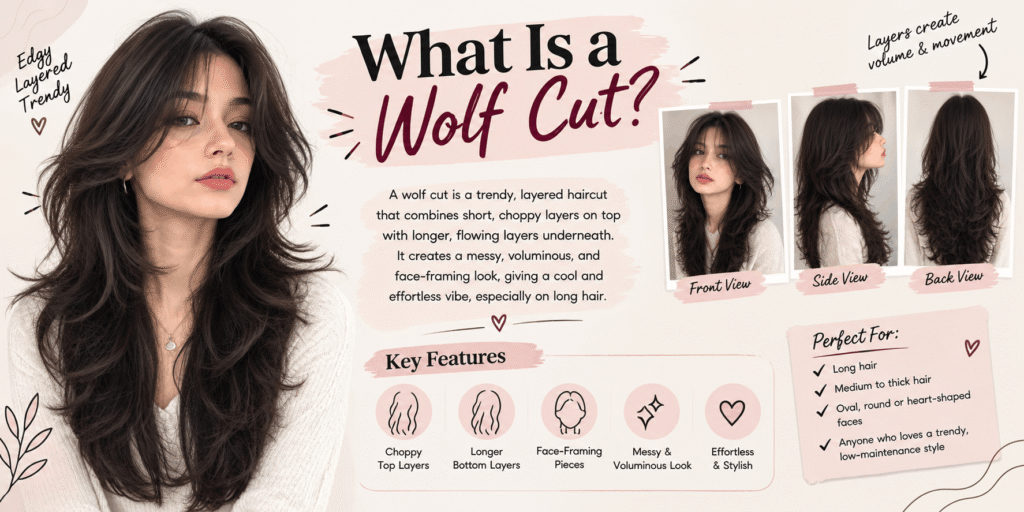
A wolf cut is a heavily layered hairstyle that combines elements of shag-inspired cuts with a fuller, more lifted shape near the top of the head. The hair generally becomes shorter and more textured around the crown and face, while the lower sections remain longer.
The result is intentionally imperfect rather than perfectly symmetrical. Instead of every strand ending at the same level, the layers create movement throughout the hairstyle. This is what gives the cut its distinctive messy, airy appearance.
Long hair provides especially interesting possibilities because there is more length to work with. A stylist can build shorter layers around the crown and face while preserving plenty of length through the bottom. This creates contrast between the fuller upper section and the longer ends.
The amount of layering makes a major difference. A soft version can look romantic and easygoing, while heavier layers can produce a much more dramatic alternative style. Your natural hair texture also changes the final result, so a wolf cut will not look exactly the same on straight, wavy, and curly hair.
10 Wolf Cut Long Hair Styles
There are many ways to customize this haircut, but the most important thing is choosing a version that works with your natural texture and the amount of styling you actually want to do. These first five ideas focus on different shapes and finishes rather than simply changing the same haircut by one small detail.
Long Layered Wolf Cut
The long layered wolf cut is a great starting point if you want the characteristic shape without sacrificing much of your existing length. The upper sections are layered to create movement, while the lower lengths continue past the shoulders.
This approach works particularly well for girls who feel that their long hair has become too heavy or flat. Strategic layers can make the hair appear more active without turning it into an extremely short hairstyle.
The layers around the face can also be adjusted to create a more personalized frame. They may begin higher around the cheekbones for a stronger effect or start lower for a softer transition.
One of the biggest advantages of this version is flexibility. You can leave the hair naturally textured, add loose waves, or blow-dry the layers for more visible volume. The haircut itself provides enough shape that you do not necessarily need an elaborate styling routine every day.
Curly Long Wolf Cut
Long curls and wolf-cut layers can create a particularly expressive combination. Instead of hiding the natural curl pattern under excessive weight, the layers give curls more room to move and form their own shape.
The key is having the cut adapted to curly hair rather than treating curls like straight hair. Curl shrinkage can make shorter layers appear much shorter once the hair dries, so the stylist needs to consider how the curls naturally behave.
A curly wolf cut can have a rounded, airy shape around the crown while keeping substantial length underneath. The curls then create natural volume without requiring the hair to be teased or heavily styled.
For everyday wear, defining the curls with a suitable styling product can help maintain their shape. You can also let the texture remain slightly undone if you prefer a more relaxed appearance.
Choppy Wolf Cut
A choppy wolf cut emphasizes uneven-looking layers and visible texture. It has a more energetic appearance than a softly blended version because the individual sections of hair are intentionally given different lengths.
This style can be particularly appealing if you want your long hair to feel less conventional. Instead of creating a smooth cascade from the top to the ends, the layers give the haircut a deliberately piecey character.
The choppy effect does not mean the haircut has to look damaged or unkempt. The goal is controlled texture. A good stylist can create separation between sections while maintaining an overall shape that still looks intentional.
This version can be styled with loose waves to emphasize the different layers. On naturally straight hair, a lightweight texturizing product can help bring out the separation without making the hair feel stiff.
Soft Wolf Cut
If you like the idea of a wolf cut but do not want an extremely dramatic transformation, a soft version offers a gentler approach. The layers are blended more gradually, creating movement without making the top excessively short.
This can be a useful choice for someone trying the style for the first time. You still get the airy, layered character associated with a wolf cut, but the difference between the upper and lower sections is less extreme.
Long, soft layers around the face can make the haircut feel feminine and fluid. The ends can remain relatively full instead of becoming extremely thin, which helps preserve the appearance of length.
A soft wolf cut also gives you plenty of styling freedom. Straight hair can show off the layering clearly, while waves can make the shape look more relaxed and textured.
Voluminous Wolf Cut
A voluminous wolf cut focuses on creating height and fullness around the upper portion of the hair. The crown is layered in a way that encourages the hair to lift rather than simply falling flat against the head.
This can be especially noticeable on thick or naturally textured hair, although styling techniques can also help create additional body in straighter hair.
The volume should be balanced with the length underneath. If too much weight remains around the crown, the haircut can lose its airy appearance. If too much is removed, the ends may look considerably thinner than intended.
For styling, lifting the roots while blow-drying can make the upper layers stand out. Loose bends through the mid-lengths can further emphasize the shape, while leaving the ends relatively natural keeps the hairstyle from looking overly polished.
Choosing the Right Wolf Cut for Long Hair
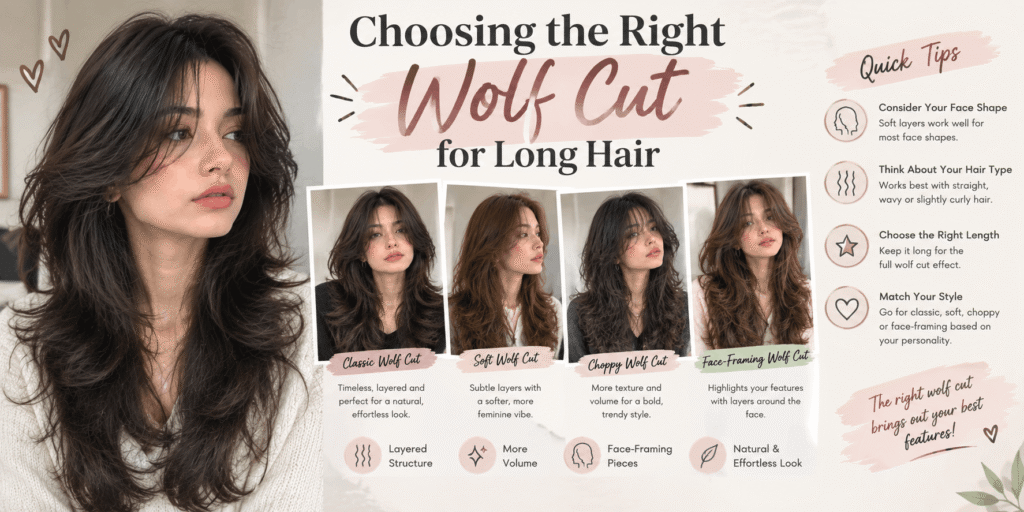
Long hair gives you plenty of room to customize a wolf cut, but that does not mean every version will behave the same way. Your natural texture, density, current length, and preferred styling routine should all be considered before deciding how heavily the hair should be layered.
If you normally wear your hair straight, you may want layers that create visible movement without becoming too separated. If your hair is naturally wavy, the texture can help bring out the layers with little effort.
For curly hair, the cutting technique becomes even more important because curls can spring upward after the hair dries. Discussing your usual curl pattern with your stylist can help prevent an unexpectedly short-looking result.
It is also worth deciding how much length you are willing to lose around the front. Face-framing layers can dramatically change the appearance of long hair even when the overall length stays almost the same.
A reference image can be useful, but try to choose one showing hair with a texture and density reasonably close to your own. Two people can receive the same haircut and end up with noticeably different results because their hair behaves differently.
More Wolf Cut Long Hair Styles
Wispy Wolf Cut
A wispy wolf cut uses lighter-looking layers to create an airy finish. Instead of making the ends appear dense and heavy, the haircut allows individual pieces to move freely around the face and throughout the lengths.
This style can be especially attractive if you want your long hair to have more movement without creating an extremely bold shape. The wispy sections can frame the face while the longer pieces continue flowing down the back.
On naturally wavy hair, the texture can make the wispy pieces look even more effortless. Straight hair can also work well, particularly when the layers are styled with a slight bend rather than being completely flat.
The important part is keeping the texture controlled. Too much thinning or excessive removal can make the ends appear unnecessarily sparse, so explain to your stylist how much length and fullness you want to preserve.
’70s-Inspired Wolf Cut
A ’70s-inspired wolf cut takes inspiration from the dramatic layering and natural movement associated with hairstyles from that decade. The shape usually places more attention around the crown and face while maintaining plenty of length underneath.
The front layers can be styled away from the face to create a sweeping effect. When combined with loose waves, the hairstyle can feel retro without looking like a costume.
You do not need to recreate a historical hairstyle exactly. A modern interpretation can use the same general layering concept while keeping the overall shape softer and easier to wear.
This version works particularly well when the hair has natural movement. A round brush or large barrel styling tool can help create the sweeping direction, although naturally wavy hair may need very little additional work.
’90s-Inspired Wolf Cut
A ’90s-inspired version gives the wolf cut a slightly sleeker personality. Instead of relying entirely on messy texture, the layers can be shaped to create movement while the longer sections remain relatively smooth.
The face-framing pieces are important here. They can be styled outward or backward to create a soft frame around the face while the rest of the hair maintains its length.
This approach is useful if you like the layered structure of a wolf cut but prefer a more polished appearance. A smooth blowout can make the layers look defined without making the hairstyle excessively dramatic.
You can also combine the shape with a center or slightly off-center part. Changing the part can alter how the shorter front sections fall and can make the same haircut feel different from one day to the next.
Long Wolf Cut With Bangs
Adding bangs creates another focal point while keeping the rest of the hair long. The bangs can be cut relatively light and blended into the layers, allowing them to become part of the overall wolf-cut shape rather than looking like a completely separate section.
A longer curtain-style fringe can create a softer transition, while shorter bangs produce a much more noticeable change.
Before choosing the length, think about your normal routine. Bangs generally require more frequent attention than the rest of a long haircut because even a small amount of growth can change their shape.
Your natural hair texture also matters. Wavy or curly bangs can shrink when dry, so the cutting approach should account for that behavior.
For anyone who wants to keep the transformation manageable, longer curtain-style bangs can be a flexible starting point because they can eventually blend into the surrounding layers.
Glam Wolf Cut
A glam wolf cut keeps the recognizable layered structure but gives it a more polished finish. Instead of emphasizing deliberately messy texture, the hair can be blow-dried into smooth, flowing layers with controlled volume.
The result is a hairstyle that feels more dressed up while still retaining the movement that makes a wolf cut distinctive.
Large, loose waves can make the different lengths easier to see. The crown can have moderate volume while the lower sections remain long and fluid.
This style can work particularly well for occasions when you want your hair to look more refined. The important thing is not to remove all the texture created by the haircut. The layers should still have enough separation to preserve the wolf-cut character.
How to Style Wolf Cut Long Hair
Styling a wolf cut does not always require a complicated routine. The goal is usually to encourage the layers to move in different directions while keeping the overall shape balanced.
For naturally wavy hair, applying a lightweight styling product to damp hair can help the natural texture become more defined. Scrunching the lengths gently and allowing them to dry naturally can create a relaxed finish.
Straight hair may need a little more help to show the movement in the layers. A blow dryer and round brush can add lift around the crown and shape the shorter face-framing sections. You can also create loose bends through selected sections rather than curling the entire head.
If you prefer a messier finish, use your fingers after drying to separate a few layers. This creates texture without making every strand look deliberately placed.
For a smoother appearance, brush the hair while blow-drying and finish with a small amount of lightweight product. Avoid using excessive amounts, especially near the roots, because heavy products can flatten the volume that gives the haircut its shape.
How to Maintain a Long Wolf Cut
A wolf cut depends on its layers, so maintenance is less about keeping every strand at exactly the same length and more about preserving the overall shape.
As the shorter layers grow, the crown can gradually become less defined. The face-framing pieces may also lose their original position. A trim can restore the intended shape without requiring you to remove significant length from the bottom.
If keeping your long hair is important to you, tell your stylist before the appointment. They can focus on maintaining the layered structure while taking as little length as practical from the ends.
Hair care is also important because longer, layered hair can show dryness or split ends more noticeably. Regular conditioning and gentle handling can help keep the ends looking smoother.
Try not to rely on high heat every day. When you do use heated styling tools, keeping the temperature reasonable and using appropriate heat protection can reduce unnecessary stress on the hair.
Is a Wolf Cut Right for You?
A wolf cut can be a good option if you want long hair to have more shape, movement, and personality instead of falling in one uniform layer. It is particularly adaptable because the amount of layering can be adjusted to create anything from a subtle change to a much more dramatic transformation.
Think about your natural texture before making the decision. Wavy and curly hair can naturally emphasize the layered structure, while straight hair may show the shape more clearly and may need styling if you want extra volume.
Your lifestyle matters too. If you prefer washing your hair and letting it dry without styling, a softer version may be easier to live with. If you enjoy blowouts, waves, or experimenting with texture, you can choose a more heavily layered design.
Most importantly, do not focus only on how the haircut looks from the front. Ask your stylist to consider the profile, back, and way the layers will fall when your hair is naturally worn.
What to Ask for at the Salon
Instead of simply saying you want a wolf cut, explain the result you are trying to achieve. Tell your stylist that you want to keep your long length and describe how much volume or layering you are comfortable with.
A reference photo can make the conversation much easier. Ideally, bring more than one image showing the type of layers, face framing, and overall length you prefer.
You can also mention whether you normally wear your hair straight, wavy, or curly. Your everyday styling routine is useful information because the haircut should work with the way you actually wear your hair, not only when it has been professionally styled.
If you are nervous about losing too much length, say so clearly before the cutting begins. A softer, longer-layered version can give you the wolf-cut effect without making the transformation feel extreme.
Final Thoughts
The appeal of wolf cut long hair comes from its ability to make long hair feel completely different without requiring you to give up all of your length. Layers around the crown and face add movement, while the longer lower sections keep the hairstyle flowing.
You can take the look in many directions. A wispy version feels light and relaxed, retro-inspired layers add character, bangs create a stronger focal point, and a glam finish can make the same basic cut feel polished enough for a more dressed-up look.
The right version depends on your hair texture, preferred length, styling habits, and how dramatic you want the layers to be. Rather than copying one exact look, use the different variations as inspiration and work with your stylist to create a shape that fits your own hair.
With thoughtful layering and realistic maintenance, a long wolf cut can turn simple length into a hairstyle with much more movement, texture, and personality.
Yes. Long hair gives a wolf cut plenty of length for creating layered movement while keeping the lower sections long. It can be customized to look subtle, textured, voluminous, or more dramatic.
The overall length can remain long, but shorter layers around the crown and face can make the hairstyle look noticeably different. If you want to preserve most of your length, tell your stylist before the haircut.
Yes. Straight hair can show the different layers clearly, although some styling may be useful if you want more volume or movement. A blowout or loose bends can help emphasize the shape.
2 Comments