If your hair looks mostly straight but develops noticeable bends, natural texture, or a little extra volume, you may have 1C hair. This hair type sits near the boundary between straight and wavy textures, which can make it surprisingly easy to misunderstand. It may look sleek in some areas while appearing slightly tousled or textured in others.
Understanding where your hair fits can make styling much easier, but the goal should not be to force every strand into a perfect category. Hair naturally varies from person to person, and factors such as length, density, humidity, products, and styling habits can change how the texture appears from day to day.
What Is Type 1C Hair?
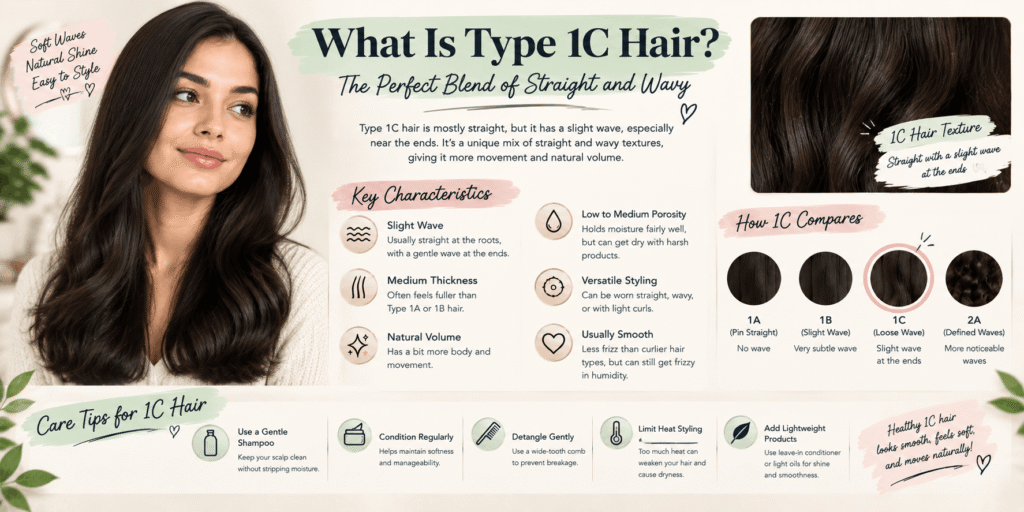
Type 1C hair is generally classified within the straight-hair family, but it has more natural texture than the looser 1A and 1B categories. Instead of lying completely flat from the roots to the ends, the strands may develop subtle bends, slight waves, or an uneven pattern.
This texture can have a fuller appearance than very straight hair because the strands do not always fall in one uniform direction. Some sections may look sleek while others develop gentle bends, especially toward the middle lengths or ends.
One reason 1C hair can be confusing is that it does not always look dramatically different from other straight textures. Under certain conditions, it may appear almost completely straight. After air-drying, sleeping on it, being exposed to humidity, or going several days without styling, however, its natural texture can become much easier to notice.
The individual strands may also vary in thickness. Someone with this pattern can have fine strands, medium strands, or relatively coarse strands. Therefore, the 1C classification describes the general shape of the hair rather than providing a complete description of its thickness or density.
Another characteristic is movement. While very straight hair tends to fall in a consistent direction, this texture may have more body and irregularity. The ends might curve slightly, the lengths may develop subtle bends, or the hair may look naturally tousled without actually forming defined waves.
This can be a useful texture for people who enjoy both straight and softly textured hairstyles because it can often be styled in either direction.
How 1C Hair Usually Looks
When left in its natural state, this hair type often has a mostly straight appearance with visible bends or a slight wave pattern. The texture may become more noticeable farther away from the roots.
The hair can also appear relatively full because the strands do not necessarily sit completely flat against the head. Depending on density, the overall result can range from smooth and understated to slightly tousled and voluminous.
Another common feature is that the hair may hold some hairstyles more easily than very straight textures. A loose braid, bun, or overnight styling method can leave behind subtle bends because the hair already has some natural movement.
At the same time, it may not have enough natural wave formation to be considered a clearly wavy texture. This is why looking at the entire head rather than one section is more useful when identifying your pattern.
What Makes This Texture Different?
The biggest distinction is the amount of natural movement present in the hair. Type 1A tends to be extremely straight, while Type 1B generally has slightly more body and may show a little bend. Type 1C sits further toward the textured end of the straight category.
That does not mean every person with this pattern will have identical hair. Two people can both have 1C hair while one has fine strands and another has thicker, denser hair.
The way the hair is treated also matters. A blowout can temporarily make the texture look straighter, while air-drying may reveal more of its natural bends. Products can have a similar effect. Lightweight products may allow the texture to remain visible, while heavier formulas can weigh it down.
Differentiating Between Type 1C and Other Hair Types
Identifying 1C hair becomes easier when you compare its overall behavior with neighboring textures instead of relying on a single photograph.
The closest comparisons are usually Type 1A, Type 1B, and Type 2A. These patterns can sometimes overlap visually, especially when hair has been brushed, heat-styled, or treated with products.
Type 1A is generally the straightest-looking category. Hair in this group tends to fall very straight without noticeable bends or waves. It can also appear smooth and flat because the strands follow a relatively consistent direction.
Type 1B has more body and movement. It may have some volume or subtle bends, but it still generally maintains a straight appearance.
Type 1C usually has more obvious natural texture. The hair can develop bends, uneven movement, or slight waves, particularly through the lengths and ends.
Type 2A begins to move into the wavy category. Instead of simply having occasional bends, the hair may form a more recognizable wave pattern. The difference can be subtle, which is why some people are unsure whether they belong to the straight or wavy range.
One useful approach is to examine the hair after washing and drying naturally. If the strands consistently form recognizable S-shaped waves, you may be closer to Type 2A. If the hair mostly remains straight with scattered bends and texture, the 1C category may describe it more closely.
However, classification should not become a strict rule. Natural hair can sit between categories, and different sections can behave differently.
1C vs. 1A Hair
The main difference between these two textures is movement. Type 1A hair tends to be extremely straight, while 1C hair usually has more visible bends and natural texture.
Type 1A can also appear flatter against the head, although density can change that appearance. Type 1C may have more body simply because the strands do not all fall in exactly the same direction.
If your hair looks completely straight after washing and remains that way without styling, it may be closer to 1A.
If you regularly notice bends or texture without deliberately creating them, you may be closer to 1C.
1C vs. 1B Hair
The difference between 1B and 1C hair can be harder to notice. Both can appear straight, but 1C generally shows more pronounced bends and texture.
A person with 1B hair might notice volume and slight movement, whereas someone with 1C hair may see clear sections that curve or develop loose bends.
The distinction does not need to be perfect. Hair-type systems are descriptive tools rather than scientific measurements, so there can be plenty of overlap between categories.
1C vs. 2A Hair
This comparison can be especially confusing because both patterns may show some wave-like movement.
The easiest thing to observe is whether the hair forms a consistent wave pattern. If most of the hair remains straight but has occasional bends, it may fit better within Type 1C. If sections consistently create loose S-shaped waves from the lengths toward the ends, Type 2A may be a closer description.
Humidity can make this distinction harder because moisture in the air may encourage straight hair with natural texture to appear more wavy.
Instead of identifying your hair immediately after a humid day or after using a styling product, observe it across several normal wash days.
Is It Possible to Have More Than One Hair Type?
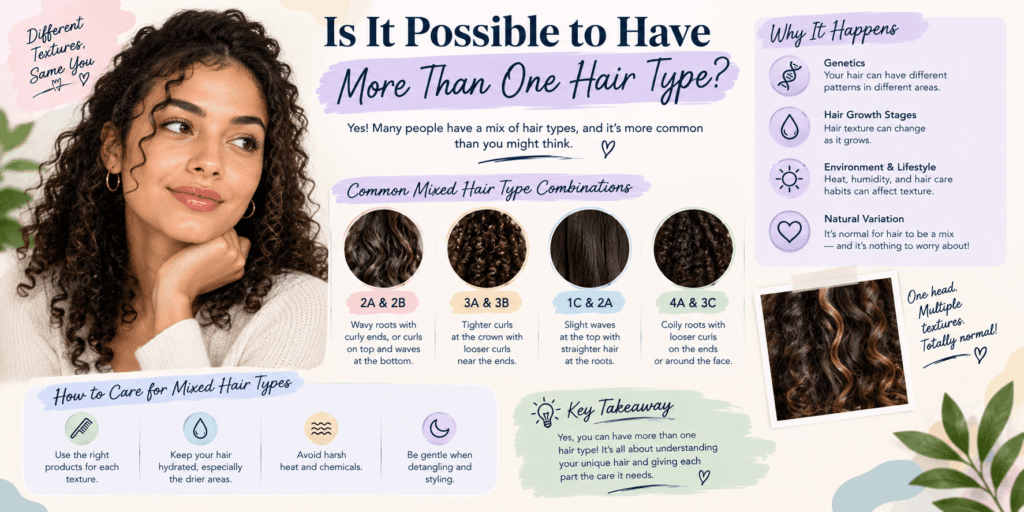
Absolutely. Having multiple patterns across your head is normal, and it does not mean your hair has been classified incorrectly.
One area may look almost completely straight while another section develops noticeable bends. Hair around the face can also behave differently from the hair underneath or at the back of the head.
There are several reasons for these differences. Hair follicles can naturally produce strands with different shapes, while length, density, previous styling, environmental exposure, and daily manipulation can affect how those strands appear.
For example, the hair around your hairline may receive more brushing and styling than the back of your head. As a result, it might appear smoother or straighter even if its natural pattern is similar.
Hair length can also change the appearance of texture. Longer hair has more weight pulling downward, which can make subtle bends less visible. After a haircut, those same bends may become easier to see because the hair is no longer being pulled down by as much weight.
This is one reason why identifying your pattern should be based on the overall behavior of your hair rather than one small section.
When Your Texture Changes From Day to Day
Your hair can look different even when its underlying pattern has not changed.
Humidity, sweat, product buildup, washing frequency, and sleeping position can all influence the way strands sit. A fresh wash may leave the hair light and airy, while several days of product or natural oils may make it appear flatter.
Heat styling can temporarily change the appearance as well. Straightening tools and blow-drying can make natural bends less visible, while air-drying may allow them to return.
Because of this, it is better to think of your hair type as a general description rather than a permanent visual rule.
You may even find that your hair looks smoother during one season and more textured during another. Weather conditions can have a noticeable effect on how straight or wavy hair behaves.
Should You Try to Make Every Section Match?
There is no need to make every section of your hair behave identically.
If one area has more texture than another, you can work with that difference. Trying to force the entire head into exactly the same pattern may require additional heat or styling products that are not necessary.
Instead, consider what you actually want from your hairstyle. If you prefer a smooth appearance, you can use a suitable styling routine to create consistency. If you prefer natural texture, allowing different sections to retain their individual movement can create a relaxed, effortless result.
The important thing is to recognize that mixed texture is part of normal hair variation.
Understanding 1C hair can help you make sense of these differences, but the label should support your routine rather than control it.
How to Care for Type 1C Hair
A good routine starts with the scalp. Cleansing removes excess oil, sweat, styling residue, and buildup that can make the hair look heavy. How frequently you need to wash depends on your scalp and lifestyle, so there is no universal schedule that everyone with this texture should follow.
If your roots become oily quickly, washing more frequently may help your hair maintain a fresher appearance. If your scalp stays comfortable for longer periods, you may prefer washing less often. The goal is to keep the scalp clean without unnecessarily rough handling of the lengths.
When shampooing, concentrate primarily on the scalp. There is generally no need to aggressively scrub the ends, because the cleanser will move through the lengths as you rinse.
Conditioning is also important, particularly if your hair becomes dry or tangled toward the ends. However, 1C hair can sometimes become weighed down by very rich formulas. Instead of automatically applying a large amount of conditioner from root to tip, start with the lengths and ends and adjust according to how your hair responds.
If your hair looks greasy or flat soon after conditioning, you may be using too much product or applying it too close to the roots. If the ends feel rough and difficult to manage, a little more conditioning may be useful.
The key is to find a balance between softness and movement.
Keep Products Lightweight
One of the easiest mistakes with this hair type is assuming that more product will automatically create better results.
Heavy oils, thick creams, waxes, and rich styling formulas can sometimes make the hair appear flatter. This is especially noticeable if your strands are fine or your hair has low density.
Lightweight sprays, leave-in conditioners, mousses, and small amounts of serum may be easier to work with. You do not need to avoid richer products completely, but using them selectively can help preserve natural volume.
A useful habit is to introduce only one new product at a time. This makes it easier to notice whether a product is actually improving your hair or simply adding buildup.
If your hair feels coated, looks unusually greasy, or loses movement after using a styling product, reduce the amount before immediately changing your entire routine.
Be Gentle When Detangling
Even relatively straight hair can become tangled, especially around the ends and after sleeping.
Instead of pulling forcefully through knots, separate the hair into manageable sections and work gradually from the ends upward. A suitable wide-tooth comb or gentle brush can make the process easier.
Detangling when the hair has some conditioning or slip may also reduce unnecessary pulling. However, the right technique depends on your individual hair and the tool you are using.
Wet hair can be more vulnerable to stretching, so avoid aggressive brushing immediately after washing. If you prefer to detangle while damp, use controlled movements and avoid forcing the tool through resistant knots.
The objective is simple: remove tangles without turning the process into a tug-of-war with your hair.
Manage Frizz Without Flattening the Hair
Frizz can happen even when hair is mostly straight. Humidity, dryness, friction, damaged ends, and frequent manipulation can all contribute to a less smooth appearance.
The solution is not always to add a heavy anti-frizz product. Sometimes a lighter serum or a small amount of leave-in product is enough.
Your drying technique can matter too. Roughly rubbing the hair with a regular towel can create friction and increase unwanted texture. Gently squeezing out excess water and using a softer fabric can be a more comfortable approach.
Try not to repeatedly brush your hair throughout the day just to control individual flyaways. Excessive brushing can disturb the surface of the hair and sometimes make the problem more noticeable.
Be Careful With Heat Styling
Straight hair is often associated with easy heat styling, but that does not mean it is completely protected from heat-related damage.
Flat irons, curling tools, and high-temperature blow-dryers can alter the appearance of the hair, but repeated exposure can leave the strands feeling dry or rough.
If you use heat, follow the instructions for your styling tool and use appropriate heat protection. Keeping the tool moving rather than repeatedly applying heat to the same section can also be useful.
You do not need to eliminate heat completely if you enjoy styling your hair. The more practical goal is to avoid unnecessary or excessive exposure.
If your hair begins to feel unusually dry, brittle, or difficult to manage after frequent heat styling, consider reducing how often you use heated tools.
Give Your Hair Some Rest
Constant styling can make even easy-to-manage hair more difficult over time.
If you frequently straighten, curl, tease, or tightly tie your hair, consider incorporating lower-manipulation days into your routine. Allowing the hair to remain in its natural state can reduce repeated mechanical stress.
Sleeping with the hair loose or in a comfortable, low-tension style may also help prevent unnecessary pulling and friction.
You can still experiment with different hairstyles. The idea is simply to avoid treating every day like a high-maintenance styling day.
The Best Hairstyles and Cuts for Type 1C Hair
The right haircut can make a noticeable difference because 1C hair often benefits from a shape that works with its natural movement rather than fighting against it.
Medium and long cuts can emphasize the subtle bends in the hair, while shorter styles can create more visible volume. Your choice should depend on the look you want, your density, your strand thickness, and how much daily styling you are willing to do.
A blunt cut can create a strong, polished outline and may make the ends appear fuller. This can work particularly well when you want a clean and structured appearance.
Layered cuts can create additional movement. However, the amount of layering matters. Too many short layers can sometimes make the hair look uneven or create extra styling work, while carefully placed layers can help the natural texture appear more dynamic.
A long layered haircut can be useful if you want movement without sacrificing much length. The layers can encourage the subtle bends in the hair to become more visible.
A medium-length cut can also be a practical option. It provides enough length for ponytails, buns, waves, and other styles while avoiding some of the weight that can pull longer hair downward.
For shorter styles, a bob can give this texture a clean shape with natural movement around the ends. Depending on the cut, the hair may look sleek or slightly tousled without requiring extensive styling.
Hairstyles That Work With Natural Texture
One advantage of this hair type is its versatility. Because it is naturally close to straight while still having some movement, you can create a range of looks without completely changing the hair’s character.
A simple middle part can create a polished appearance, while a side part can add visual volume. A low ponytail or low bun can create an understated everyday style.
Loose braids are another option. When removed after the hair has been braided, they can leave behind temporary waves. This can be useful when you want additional texture without using a heated styling tool.
A messy bun can also work well because the natural bends in the hair can make the finished style look less rigid. Instead of trying to make every strand perfectly smooth, allowing a few natural pieces to remain loose can create a relaxed appearance.
For a more polished result, a smooth blow-dry can emphasize the straight side of the texture. A round brush can add shape and movement, although you should use heat carefully.
The important point is that you do not have to choose between completely straight and fully wavy styling. There is plenty of room in between.
How to Add Volume Without Heavy Products
If your hair tends to fall flat, start with the haircut and drying technique before reaching for large amounts of styling product.
A lightweight volumizing product can help, but applying too much may create the opposite effect. Heavy formulas can cause the roots to collapse and make the hair look greasy.
Blow-drying the roots while lifting them gently can create more visible volume. Changing your part can also make the hair appear fuller because it prevents the strands from repeatedly falling in the same direction.
For naturally textured hair, allowing it to air-dry can sometimes reveal more movement than aggressively brushing it straight while drying.
If your goal is volume, think about creating space between the roots rather than simply adding more product.
Making Your Routine Work for Your Hair
There is no single routine that every person with 1C hair should follow. The most useful routine is the one that matches your scalp, strand thickness, density, lifestyle, and preferred hairstyle.
For example, someone with fine hair may need very little conditioner and styling product, while someone with thick or coarse strands may need more moisture. Someone who exercises frequently may prefer more frequent cleansing, while another person may wash less often.
Your hair can also respond differently to the same product depending on the weather. Humidity may increase texture and frizz, while dry weather can make the lengths feel rougher.
Instead of constantly searching for a perfect product list, pay attention to patterns. Notice what makes your hair feel clean, what causes buildup, which products preserve movement, and which techniques leave the hair looking flat.
This approach can save both time and money because you learn to evaluate products according to your own results.
It is also worth remembering that hair-type labels do not describe everything. Two people can have the same general pattern while having completely different needs.
Your strand thickness, density, porosity, scalp condition, length, and chemical or heat history can all influence how your hair behaves.
That is why a routine should be flexible.
If something works well during one stage of your life but stops working later, that does not necessarily mean your hair type has completely changed. Your length, environment, styling habits, or product use may simply be different.
The Final Takeaway
1C hair is generally straight with more noticeable natural texture, bends, and movement than the straighter 1A and 1B categories. It can sometimes resemble very loose waves, especially in humid conditions or when the hair is allowed to air-dry.
Because it sits close to the boundary between straight and wavy textures, it is completely normal to feel unsure about where your hair belongs. Some people may even have different patterns across different sections of their head.
The most useful thing is not finding a perfect label but understanding how your hair behaves.
Keep your cleansing routine appropriate for your scalp, use enough conditioner to keep the lengths manageable without weighing them down, and choose lightweight styling products when your hair tends to become flat easily. Gentle detangling and sensible heat use can also help maintain the condition of the strands.
When choosing a haircut, consider how much natural movement you want. Blunt cuts can create a clean and structured look, while carefully placed layers can bring out more movement and volume.
Most importantly, do not feel that you need to make your hair behave differently simply because it does not fit perfectly into one category. Natural texture varies, and a little inconsistency is often what gives hair its character.
Once you understand how your own strands respond to products, weather, styling, and haircuts, managing them becomes much easier. The 1C hair label can give you a useful starting point, but your actual hair behavior should always guide the final routine.
One Comment