
3B hair is known for its defined curls, noticeable volume, and springy texture, but keeping those curls looking healthy can require a little more attention than simply washing and brushing. Because curly hair tends to have a different moisture pattern from straight hair, the right routine is usually more about understanding your natural texture than following a long list of products.
If you have 3B hair, you do not need to completely change your routine every time a new hair trend appears. A consistent approach that focuses on moisture, gentle handling, suitable styling products, and regular trimming can make your curls easier to manage. The key is learning how your particular curls respond to products, weather, washing, and styling.
Understanding the 3B Hair Type
3B hair generally falls within the type 3 curly category and is recognized by clearly formed curls that can range from loose spirals to tighter ringlets. The curl pattern often has plenty of volume and movement, although the exact appearance can vary considerably from one person to another.
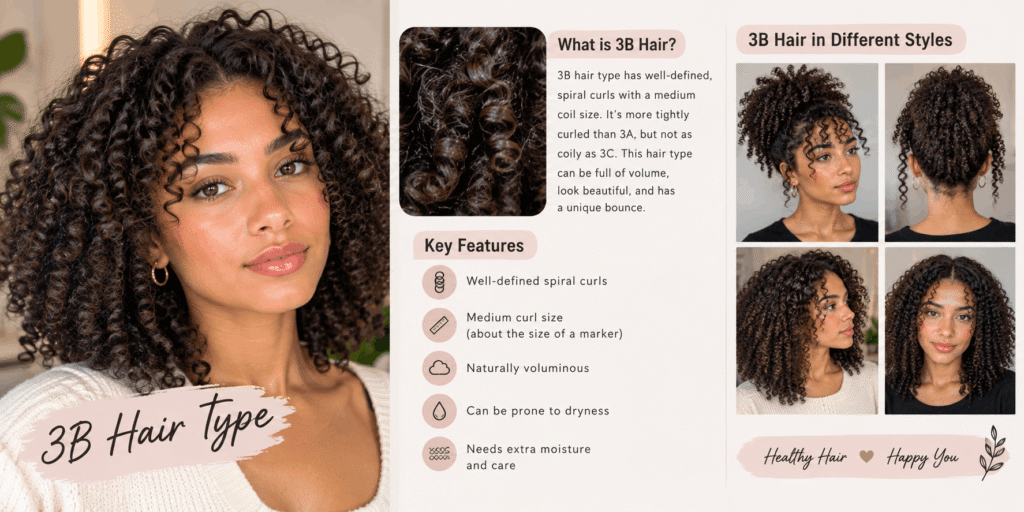
Some 3B curls may look more defined and compact, while others may appear softer and more elongated. Hair density can also make a major difference. Two people can have a similar curl pattern while having completely different amounts of hair, strand thickness, or levels of frizz.
Another important point is that curl typing is only a general way of describing texture. It does not tell you everything about your hair’s needs. Porosity, density, strand thickness, previous chemical treatments, and the condition of the hair can all influence how your curls behave.
How Is 3B Different From 3A Hair?
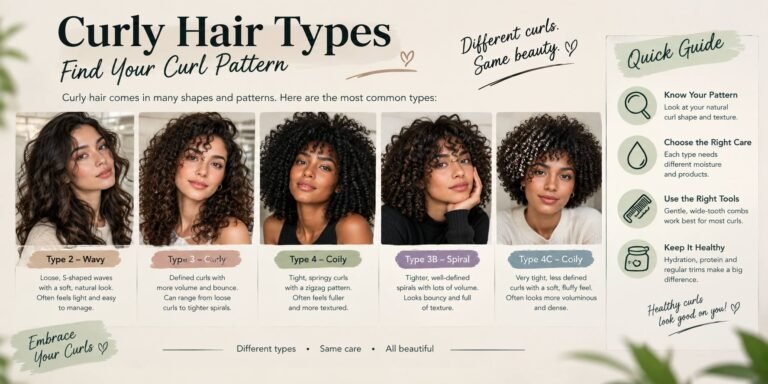
The main difference between 3A and 3B hair is usually the shape and tightness of the curls. 3A curls tend to form larger, looser spirals, while 3B curls generally create smaller and more defined ringlets.
However, there is plenty of overlap between the two. Hair can contain more than one curl pattern, meaning someone may naturally have sections that look closer to 3A alongside areas that behave more like 3B.
Instead of trying to force every curl into one category, pay attention to what your hair actually needs. If your curls lose definition easily, feel dry, or become difficult to detangle, those characteristics are more useful for building a routine than the label alone.
How Is 3B Different From 3C Hair?
3B and 3C hair are both curly textures, but 3C curls are generally tighter and more densely packed than 3B curls. 3B hair often forms springy ringlets, while 3C curls can have a smaller circumference and create a more compact overall pattern.
Again, curl categories are not strict rules. A person can have a combination of curl patterns across the same head, especially around the hairline, crown, and back.
The difference also does not mean one type needs a completely different routine. Both textures can benefit from gentle detangling, adequate moisture, careful styling, and avoiding unnecessary manipulation. The best routine is the one that works with the actual condition and behavior of your hair.
How to Build a Better Routine for 3B Hair
Caring for 3B hair does not have to mean using dozens of products. In many cases, a simpler routine is easier to maintain and makes it easier to understand which products your curls actually like.
Curly hair can become difficult to manage when it is repeatedly exposed to excessive heat, rough brushing, harsh handling, or products that leave too much buildup. Rather than changing everything at once, make small adjustments and watch how your curls respond.
Reduce Your Wash Days
You do not necessarily need to wash curly hair every day. Frequent washing can remove some of the natural oils that help the hair and scalp feel comfortable, although the ideal schedule varies depending on your scalp, lifestyle, products, and personal preference.
Some people with curly hair prefer washing several times a week, while others may go longer between washes. There is no universal schedule that works for everyone.
When your hair does need washing, concentrate shampoo mainly on the scalp and let the cleanser move through the lengths as you rinse. This can help clean the scalp without unnecessarily roughening the ends.
Conditioning is also important because curly lengths can feel dry more easily. A conditioner that works with your hair’s texture can make detangling and styling more manageable.
Clarifying Can Help With Buildup
Styling creams, gels, oils, conditioners, and other products can gradually build up on the hair. When that happens, curls may begin to feel heavy, look dull, or stop responding to products in the way they normally do.
This is where occasional clarifying can be useful. A clarifying shampoo is designed to provide a deeper cleanse than many everyday shampoos, helping remove accumulated residue.
That does not mean you should clarify constantly. Over-cleansing can leave hair feeling dry or stripped, especially if your curls already struggle with dryness. Think of clarifying as an occasional reset rather than a mandatory step every wash day.
If your hair suddenly feels coated or your usual styling products no longer seem to work, buildup may be one possibility worth considering.
Tailor Your Styling Products
Choosing products for 3B hair is easier when you think about the result you want rather than buying something simply because it says “for curly hair.”
A lightweight leave-in conditioner may be useful when your hair needs softness without much weight. A curl cream can help provide moisture and definition, while a gel can offer stronger hold and help curls maintain their shape.
The amount matters too. Applying too much product can make curls feel heavy or create unwanted buildup. Start with a smaller amount and add more only if your hair needs it.
Your hair density also matters. Someone with very dense curls may need more product than someone with finer or less dense hair. There is no single amount that every person with 3B hair should use.
Keep Frizz Under Control Without Fighting Your Texture
Frizz is not automatically a sign that your hair is unhealthy. Curly hair naturally has individual strands that do not always follow the same curl pattern, and humidity can also change how curls look and feel.
Instead of trying to eliminate every flyaway, focus on maintaining definition and reducing unnecessary disturbance to the curl pattern.
One helpful habit is to avoid aggressively brushing dry curls. Detangling is often easier when the hair has some moisture and slip from conditioner or a suitable detangling product.
Drying technique can also make a difference. Roughly rubbing curls with a regular towel can disturb the curl pattern. Gently squeezing or blotting excess water with a suitable soft fabric can be a more curl-friendly approach.
Choose Your Pillowcase Carefully
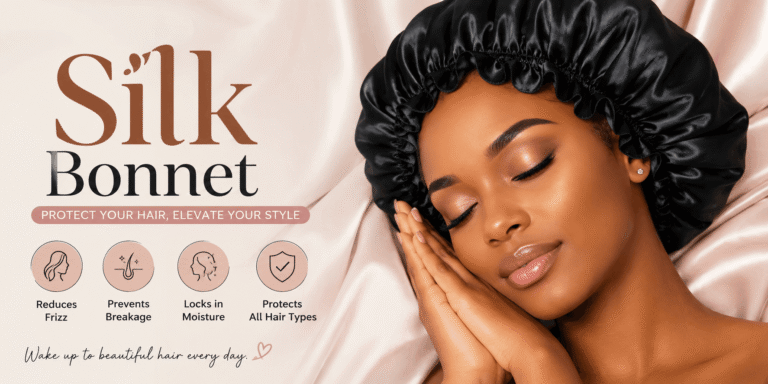
Your pillowcase can create friction while you sleep, which may contribute to tangling, flattened curls, or extra frizz by morning.
A smoother pillowcase can reduce some of that friction. Some people also choose to protect their curls at night with a satin or similar smooth covering, depending on what feels comfortable and works for their hair.
The goal is not to create a complicated nighttime routine. It is simply to reduce unnecessary rubbing and help your curls retain their shape between wash days.
If your curls look noticeably different in the morning compared with the evening, nighttime friction may be one factor worth experimenting with.
Know When to Visit a Professional
A professional stylist who understands curly hair can be particularly helpful when you want a new cut, need to reshape an uneven style, or are unsure how your curls should be handled.
Curly hair can look very different depending on whether it is wet or dry, so a stylist familiar with curls can take shrinkage and natural curl movement into account when planning the shape.
It can also help to bring a few reference photos showing the type of haircut or overall shape you like. Instead of expecting your hair to look exactly like a photo, use the images to communicate the length, volume, and silhouette you prefer.
A good haircut should work with your natural curl pattern rather than requiring you to constantly fight against it.
Choosing the Right Cut for 3B Hair
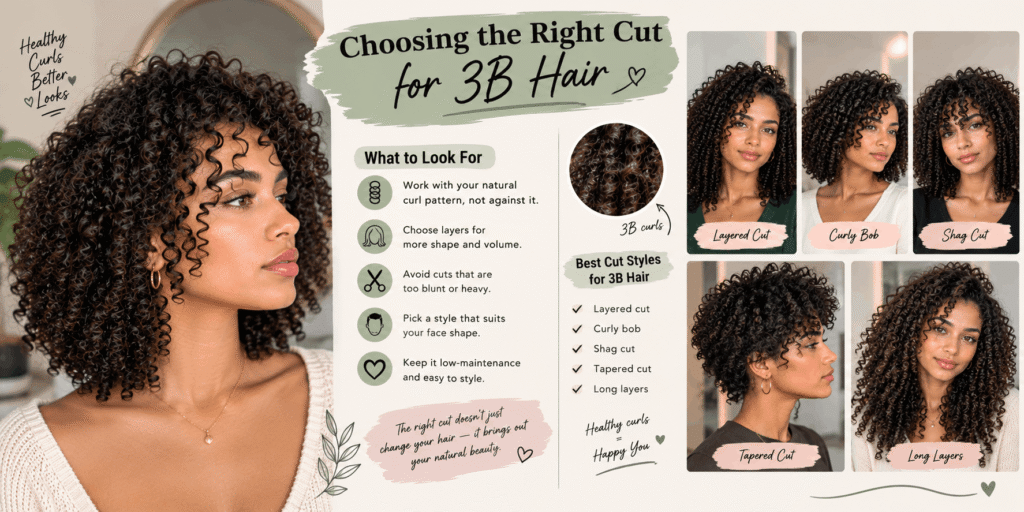
There is no single haircut that every person with 3B hair should choose. The best cut depends on your preferred length, curl density, face-framing preference, styling habits, and how much maintenance you are comfortable with.
Layering can be especially useful for curly hair because it can help create movement and shape instead of leaving all the weight concentrated at the bottom. However, the amount and placement of layers should be considered carefully.
A stylist can also help you decide whether you want a rounded silhouette, softer face-framing pieces, more volume through the crown, or a longer shape with minimal layering.
Why Curl-Friendly Cutting Matters
Curly hair often changes considerably as it dries and contracts. That is why cutting curly hair requires an understanding of how the curls behave rather than simply treating them like straight strands.
Before getting a significant haircut, discuss how much length you want to keep and whether you usually wear your hair naturally curly. If you regularly straighten or heat-style your hair, mention that as well because it can affect how you want the final shape to work.
Most importantly, a haircut should make your normal routine easier. If a style looks great only after extensive daily styling but becomes difficult to manage otherwise, it may not be the most practical choice for your lifestyle.
The Best Cuts and Styles for 3B Hair
Once you understand how your curls behave, choosing a haircut becomes much easier. The goal does not have to be finding one “perfect” style. Instead, think about whether you want more movement, more definition, extra volume, or a shape that is easy to maintain.
3B curls can work with both short and long hairstyles, and layers can completely change how the curls sit around the face. Your natural texture can also become the main feature of the style rather than something that needs to be controlled.
Curly Bangs
Curly bangs can bring attention toward the face while allowing your natural curl pattern to remain visible. They can be cut shorter or kept longer depending on how much framing you prefer.
Because curls can shrink as they dry, it is especially important to communicate the desired length clearly before getting curly bangs. A stylist who understands textured hair can account for the difference between wet and dry length.
Curly bangs can also be worn with longer layers throughout the rest of the hair, creating a softer transition instead of making the fringe look disconnected.
Long and Soft
Keeping 3B hair long can create a softer silhouette while giving curls plenty of room to fall and stretch. Longer hair can also make the curl pattern appear more elongated because of its weight.
Longer curls do require patience and consistent care, particularly when it comes to detangling and preventing unnecessary breakage. Gentle handling is usually more important than constantly adding new products.
Long layers can be useful when you want movement without taking away too much overall length. The exact placement should depend on your density and how your curls naturally form.
Curly Shag
A curly shag can give 3B hair plenty of movement and a deliberately relaxed shape. Layers throughout the haircut can help distribute volume rather than leaving the hair looking heavy at the bottom.
This style can be adapted to different lengths. A shorter shag can feel more playful, while a longer version can maintain more length and create a softer overall effect.
The finished result depends heavily on your natural curl pattern, so a reference photo can help your stylist understand the type of shape you have in mind.
Half-Up, Half-Down
A half-up, half-down style is a simple way to change the appearance of your curls without committing to a haircut. Pulling part of the hair back leaves the remaining curls loose while keeping some volume away from the face.
You can make the style casual or more polished depending on the accessory and how neatly you arrange the top section. Avoid pulling the hair excessively tight, especially if the style is worn frequently.
This option is also useful on days when your curls are still defined but you want a different look without completely restyling your hair.
Topped With a Headband
A headband can be an easy accessory for 3B curls, especially when you want to keep some hair away from your face while preserving the natural shape of the curls.
Different headband widths can create different effects. A wider style can make the accessory more noticeable, while a thinner band can provide a subtler finish.
Choose an accessory that feels comfortable and does not put unnecessary pressure on the hair or scalp. The best accessory is one you can wear without constantly adjusting it.
Messy, Wispy Bun
A loose bun can work particularly well when you want a relaxed hairstyle without completely hiding your curl texture. Leaving a few curls around the face can create a softer appearance while the rest of the hair stays gathered.
There is no need to make every strand perfectly smooth. The natural texture is part of what makes the style work.
If you wear buns regularly, vary the placement and avoid consistently pulling the same sections tightly. Gentle styling can help reduce unnecessary stress on the hair.
Rainbow Curls
Color can completely change the way curly hair catches attention, and rainbow-inspired curls can create a bold, creative look. However, coloring or lightening hair can affect its condition, particularly when multiple chemical processes are involved.
If you are considering a vivid color, talk with a qualified stylist about what your hair can reasonably handle. Maintaining the condition of the curls should remain a priority alongside the desired color.
A temporary or less permanent color option can also be considered if you want to experiment without committing to a long-term change.
Making Your 3B Hair Routine Easier
A good 3B hair routine should fit into your real life. You do not need to spend hours styling your curls every morning if a simpler routine gives you a result you like.
Try to identify the few things that make the biggest difference for your hair. For some people, that may be using enough conditioner during wash days. For others, it may be finding a styling product that provides reliable hold or changing how they sleep with their curls.
It can also help to change only one part of your routine at a time. If you replace your shampoo, conditioner, leave-in, curl cream, and gel simultaneously, it becomes difficult to know which change helped or caused a problem.
Your curls can also behave differently depending on the season. Humidity may increase frizz, while dry weather can make hair feel less flexible. Instead of constantly replacing your entire routine, small adjustments may be enough.
Keeping Your Curls Healthy Over Time
Healthy-looking curls are not created by one particular product or haircut. They are usually the result of consistent care and relatively gentle handling over time.
Regular trims can help maintain the shape of your haircut and remove visibly damaged ends when needed. You also do not need to wait for your hair to become difficult to manage before considering a trim.
Heat styling can be part of a routine for some people, but frequent or excessive heat can make hair more fragile. If you use heated tools, follow appropriate heat-protection practices and avoid relying on very high temperatures.
Your scalp also deserves attention. If you experience persistent itching, unusual flaking, pain, or other scalp concerns, a healthcare professional can help determine the cause rather than assuming it is simply a hair-type issue.
Final Thoughts
3B hair has a naturally defined curl pattern that can be styled in many different ways, from long layered shapes and curly bangs to shags, half-up styles, loose buns, and colorful looks. The most useful approach is not to force your curls into a particular standard but to understand how your own hair behaves.
A manageable routine usually starts with gentle cleansing, appropriate conditioning, thoughtful product selection, and careful handling. You can then adjust the routine depending on your hair’s density, porosity, length, and styling goals.
There is also no requirement to use every curly-hair trend you see online. A simple routine that keeps your curls comfortable and manageable can be more valuable than a complicated collection of products.
Whether you prefer your 3B curls long and loose or shaped into a shorter, layered style, the best haircut is one that works with your natural texture and fits the amount of maintenance you actually enjoy.
3 Comments