
Color depositing conditioner is an easy way to refresh faded hair color, enhance your natural-looking tones, and maintain salon-colored hair between appointments. Unlike traditional permanent dye, these conditioners generally use temporary pigments to add color to the hair while conditioning it, making them a convenient option for people who want to revive their shade without committing to a major color change.
The right formula depends on your current hair color, desired result, hair texture, and maintenance routine. Some options are designed to boost brunette and black tones, while others help maintain vibrant reds, soften unwanted brassiness in blonde hair, or blend silver strands with a cooler finish. Understanding these differences can help you choose a product that complements your existing color rather than creating an unexpected result.
In this guide, we explore 13 color depositing conditioner options and explain what each type may offer, how to choose a suitable shade, and what to consider before applying pigment to your hair.
Understanding Color Depositing Conditioner
A color depositing conditioner combines the conditioning benefits of a hair treatment with pigments that temporarily coat or stain the outer layers of the hair. Its primary purpose is to refresh an existing shade, add a subtle color effect, or help maintain the appearance of color-treated hair between salon visits.
The results are different from those of permanent hair dye. Most depositing conditioners do not lighten your natural hair because they generally lack the chemical process needed to lift its underlying pigment. Instead, they add color over the shade you already have. This means a copper conditioner may enhance copper-colored hair, but it will not turn dark brown hair into a bright copper shade on its own.
Results can vary depending on your starting color, hair porosity, product formulation, and how long you leave the conditioner on. Lightened, bleached, or highly porous strands may absorb pigments more noticeably than healthy, untreated hair.
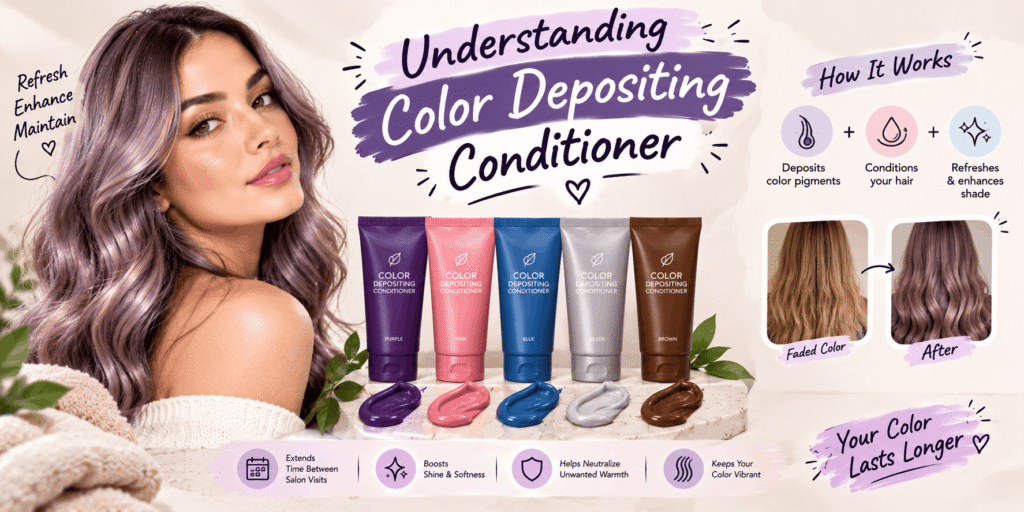
These products can also differ in texture and strength. Some are lightweight conditioners intended for frequent maintenance, while others are richer masks that provide more intensive conditioning and a stronger color effect. Choosing the right format can make your routine easier and help you achieve a more consistent finish.
Top Color Depositing Conditioner Options
The following products represent different approaches to maintaining and enhancing hair color. Their suitability depends on your particular shade and hair needs, so consider each product’s available colors, directions, and intended use before choosing one.
Best Overall: dpHue Gloss+
A tinted gloss treatment can be useful when your hair looks dull, faded, or less vibrant than it did after your last salon appointment. dpHue Gloss+ is an option to consider if you want to refresh the appearance of your color while giving your hair a smoother, more polished finish.
Gloss-oriented formulas are particularly appealing to people who want their hair to look more reflective without undergoing a full coloring service. Depending on the shade selected, a tinted gloss may help reinforce warm or cool tones and make existing color appear richer. The clear version of a gloss product, where available, serves a different purpose: it focuses on shine without adding an obvious new shade.
Before choosing dpHue Gloss+, check that the selected shade suits your current hair color. A color designed for a warm brunette may not produce the same effect on highlighted blonde hair, and a cool-toned formula may alter the appearance of warmer strands. Follow the product instructions carefully, especially if your hair has recently been bleached or chemically treated.
This type of treatment is worth considering when your main goal is color maintenance rather than a dramatic transformation. It cannot reliably replace permanent dye, lighten dark hair, or correct every uneven color result.
Best Mask: Maria Nila Colour Refresh
A color-refreshing mask can combine a noticeable pigment deposit with a richer conditioning experience. Maria Nila Colour Refresh is worth exploring if you want to maintain a chosen tone while incorporating color care into your regular hair routine.
Color-refreshing masks are available in different shades, allowing users to select a formula that complements their existing color or adds a subtle tonal change. The most appropriate option will depend on whether your hair is blonde, brown, red, copper, or another shade supported by the product range.
One advantage of using a mask format is that it can make color maintenance feel like a treatment rather than a separate dyeing process. However, a mask’s conditioning effect does not guarantee that it will repair all forms of hair damage. Dryness caused by bleaching, heat styling, or chemical processing may require additional care, such as a suitable moisturizing conditioner, reduced heat exposure, and gentle detangling.
For a more even result, begin with hair prepared according to the label directions. Distribute the product carefully through the intended sections instead of concentrating it on only the most visible strands. If your hair contains highlights or areas with different levels of porosity, test a small section first to see how strongly the pigment develops.
Best Mask, Runner-Up: Christophe Robin Shade Variation Care Mask
Christophe Robin Shade Variation Care Mask is another option for people interested in maintaining a particular hair tone with a mask-based product. Shade variation treatments are generally intended to influence the appearance of existing color, making the selected version especially important.
Different formulas may target different color concerns. A treatment for cool blonde hair, for example, will have a different purpose from one created to enrich copper or brown tones. Rather than choosing a mask based only on its name or packaging, review the exact shade description and confirm that it matches your current hair color.
This consideration becomes particularly important for highlighted or previously lightened hair. Porous strands may take on pigment quickly, and the final appearance may be more intense than expected. Applying a product unevenly can also create differences between the roots, mid-lengths, and ends.
A practical approach is to use the treatment according to its stated processing time and evaluate the result before making it a regular part of your routine. Avoid leaving it on longer than directed in the hope of obtaining a stronger effect. More processing time does not always mean a better or more balanced color result.
This type of mask may suit someone who wants a targeted color refresh alongside conditioning. Its effectiveness, however, depends on choosing the correct version and starting with hair that is compatible with the intended shade.
Best for Gray Hair: Hair Biology Silver Conditioner
Gray, silver, and white hair can develop yellow or brassy undertones because of environmental exposure, product buildup, minerals in water, and other factors. A silver-focused conditioner may help make these tones appear cooler, depending on its pigment system and the hair’s starting color.
Hair Biology Silver color depositing Conditioner is an option to investigate if your goal is to maintain a brighter-looking silver shade or reduce the visual warmth in gray hair. Before using it, check whether the product is designed primarily for conditioning, toning, or both, because these purposes are related but not identical.
Purple and blue pigments are often used in products for managing unwanted warmth. Purple is commonly associated with neutralizing yellow tones, while blue can help counter orange tones. The most appropriate choice depends on the color you are trying to balance rather than simply whether your hair is gray or silver.
Gray hair may also have a different texture from pigmented hair. Some people find that their silver strands feel coarse, dry, or difficult to manage. In these cases, conditioning and gentle handling are important alongside any toning routine.
Use the product as directed and monitor the result, especially if your hair is white, very light, or highly porous. Excessive pigment can sometimes leave a temporary violet or blue cast. If your hair has a mixture of gray, brown, and highlighted strands, test a small area first to understand how the formula affects the different tones.
Best Clear Gloss: Pureology Top Coat + Clear Gloss
Not every color-maintenance routine needs additional pigment. Sometimes the goal is to make hair look shinier and more polished while keeping its current shade unchanged. A clear gloss is designed for this kind of purpose, although its exact benefits depend on the specific formulation.
Pureology Top Coat + Clear Gloss is worth considering if you want a gloss-oriented treatment without deliberately adding a noticeable color. A clear formula can be useful for people who are satisfied with their shade but feel that their hair has lost some of its reflective appearance between salon visits.
It is important to distinguish a clear gloss from a traditional color depositing conditioner. A tinted conditioner adds pigment to influence the tone, whereas a clear gloss generally focuses on shine and the appearance of smoothness. Neither should automatically be treated as a permanent repair solution for damaged hair.
To decide whether a clear gloss is appropriate, think about the problem you are trying to solve. If your hair is simply looking dull, a clear treatment may be sufficient. If the color has faded or developed unwanted warmth, a clear formula may not address the issue because it does not provide the same targeted pigment deposit.
Always confirm the instructions and intended use of the exact product. Gloss treatments can differ in application method, processing requirements, and compatibility with other hair products.
Best for Black Hair: Davines Alchemic Conditioner in Chocolate
Black and very dark brown hair can lose some of its richness over time, particularly when it is color-treated or frequently exposed to sunlight, heat styling, and repeated washing. A dark, warm-toned conditioner may help enhance the appearance of brunette depth, but the result depends on the exact shade and the base color.
Davines Alchemic Conditioner in Chocolate is worth examining for people who want to maintain rich, chocolate-inspired tones. However, chocolate shades are not automatically suitable for every black-haired person. Depending on the formula, the result may add a warm brown cast rather than reinforce a neutral or blue-black finish.
If your hair is naturally black, a depositing conditioner is unlikely to make it lighter. It may add a subtle tonal effect or shine, but a dramatic change usually requires a different coloring approach. If your black hair is dyed, consider whether you want to preserve a cool, neutral appearance or introduce warmth before choosing a chocolate-toned product.
Application is another important consideration. Dark pigments can be more noticeable on lighter highlights, gray strands, or faded sections than on naturally dark lengths. Distribute the conditioner evenly and follow the label’s recommended timing to reduce the risk of patchy results.
For the most predictable outcome, compare the product’s intended shade with your current color in natural lighting. If you are unsure how the formula will look on your hair, perform a strand test before applying it to your entire head.
Best for Blondes: Kérastase Blond Absolu Anti-Brass Purple Mask
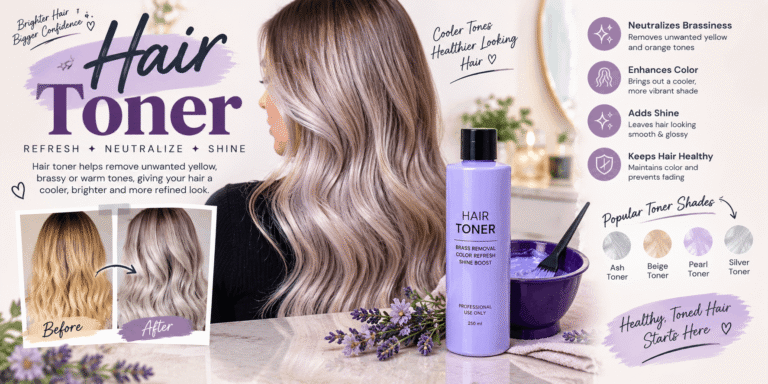
Blonde hair can gradually appear warmer than intended, particularly after lightening, frequent washing, or exposure to minerals and environmental elements. A purple mask may help counter some yellow tones and support a cooler-looking blonde between salon appointments.
Kérastase Blond Absolu Anti-Brass Purple Mask is an option to consider when the main concern is brassiness rather than a need for more blonde color. Purple pigments are commonly used because they visually balance yellow tones. However, the effect depends on the amount of unwanted warmth, the hair’s underlying shade, and how strongly the hair absorbs pigment.
A purple mask is not the same as a lightening product. It cannot turn naturally dark hair blonde, and it will not necessarily correct orange or copper tones as effectively as a formula designed for those specific undertones. If your blonde hair has become distinctly orange, you may need professional advice about the appropriate toning approach.
The condition of your hair matters as well. Bleached hair can become more porous and may absorb toning pigments unevenly. This can result in sections that look cooler or more violet than others. Begin with the product’s recommended use, avoid exceeding the stated processing time, and adjust the frequency based on your hair’s response.
If you have a mixture of blonde highlights and darker roots, apply the treatment only where appropriate according to the instructions. A carefully chosen purple mask can be a useful maintenance step, but it should complement—not replace—a suitable conditioning routine and professional color correction when needed.
Best for Red Hair: CHI Color Illuminate Conditioner
Red hair can lose its vibrancy relatively quickly, particularly when it is frequently washed or exposed to sunlight and heat styling. A color depositing conditioner can help refresh the appearance of red tones between coloring appointments, making the hair look more vivid without requiring a complete dye application every time.
CHI Color Illuminate Conditioner is an option to explore if you want to maintain a red or other color-treated shade. Before selecting a formula, check the available shades and confirm that the specific version is intended for your color. Red hair can range from copper and strawberry blonde to cherry, burgundy, and deep auburn, and each shade requires a different tonal approach.
A copper-toned conditioner may enhance warmth, while a deeper red formula may be more appropriate for maintaining richer red shades. Choosing a product that is too warm, cool, light, or dark can shift the appearance away from your desired result.
Color depositing conditioners are generally more effective at refreshing existing color than creating a completely new shade. If your red hair has faded substantially, a conditioner may improve its appearance, but the outcome may be subtler than a salon color service. Results also vary according to hair porosity and the pigments in the formula.
For maintenance, follow the manufacturer’s instructions and distribute the product evenly. Pay particular attention to the mid-lengths and ends if those areas have faded more than the roots. If your hair includes blonde highlights or previously lightened sections, test the product first because those areas may absorb the red pigment more strongly.
Best for Brunettes: Glaze Super Gloss
Brown hair can look flat when its color loses depth or its surface appears dull. A gloss-oriented treatment may help refresh the overall appearance of brunette hair, especially when the selected shade complements its existing undertones.
Glaze Super Gloss is worth considering if you want a polished-looking finish and a color refresh between salon appointments. However, it is important to check the exact product version, shade options, and application directions before use. A tinted formula and a clear gloss serve different purposes, even if both are marketed around shine.
Brunette shades vary considerably. Some lean toward cool ash brown, while others have golden, caramel, chestnut, or chocolate undertones. If your goal is to maintain a cool brunette color, a strongly warm formula could change the effect. Conversely, a warmer gloss may be appealing if your brown hair looks dull or lacks golden richness.
The condition of the hair can influence the final result. Previously colored or highlighted strands may absorb pigment differently from untreated roots, so a single formula might appear slightly different across the head. A strand test is especially useful when your hair contains multiple shades or has been chemically processed.
For a natural-looking result, select a shade that supports your existing color rather than choosing a formula solely because its packaging looks appealing. A gloss can be a useful maintenance step, but it will not necessarily correct uneven color or lighten dark brown hair.
Best for Instant Results: Evo Fabuloso Colour Boosting Treatment
When hair color begins to fade, a color-boosting treatment can be an alternative to immediately booking another coloring appointment. Evo Fabuloso Colour Boosting Treatment is an option to investigate if you want a treatment designed to refresh the appearance of your shade while conditioning the hair.
The phrase “instant results” should be understood carefully. A depositing treatment may visibly affect the hair after one application, but the strength and evenness of the result depend on the selected color, the condition of the hair, and the manufacturer’s recommended processing time. It does not mean every shade will become dramatically more vibrant in a single use.
Before applying a color-boosting product, identify what your hair actually needs. If the problem is faded brunette color, choose a compatible brunette shade. If your blonde has become yellow, a targeted toning product may be more suitable. If your hair simply lacks shine, a clear gloss or conditioning treatment may be enough.
Even distribution is important when the goal is a consistent finish. Work methodically through the sections specified by the instructions and avoid leaving the product concentrated in one area. Highly porous ends can absorb color differently from the roots, so inspect the hair’s condition before deciding how frequently to use a pigment-based treatment.
Do not extend the processing time beyond the product directions to force a stronger result. If the color looks uneven, unusually dark, or unexpectedly warm after application, pause further treatments and seek advice from a qualified colorist if necessary.
Best Cleansing Option: Keracolor Color + Clenditioner
Some people prefer a product that combines cleansing with color maintenance instead of adding a separate treatment to their routine. Keracolor Color + Clenditioner is a color-depositing cleansing option to consider if you want to refresh a compatible shade while washing your hair.
A cleansing conditioner with color pigments differs from a conventional color depositing conditioner because its role may include cleaning or replacing part of the usual shampoo-and-conditioner routine. The exact approach depends on the formulation and its directions, so check the label rather than assuming every color depositing product should be used in the same way.
The available shades are particularly important. A color-depositing cleanser can help maintain an existing tone, but it generally cannot lift your natural hair color or transform dark hair into a lighter shade. If you have highlights, gray strands, or previously bleached sections, the pigment may be more visible on those areas.
Consider your scalp and hair type before choosing a cleansing formula. People with oily roots may need a different cleansing routine from those with dry lengths or a sensitive scalp. A color-depositing cleanser should not automatically replace every product in your routine if your scalp requires more thorough cleansing or your hair needs additional conditioning.
For best results, use the product as directed and monitor how your hair responds over several applications. If the color becomes stronger than you intended, reduce use according to the label or switch to a non-tinted product. Avoid combining multiple depositing products without understanding how their pigments may interact.
Best for Dry Hair: Wella Color Fresh Mask
Dry hair can benefit from a color-maintenance product that also provides conditioning. Wella Color Fresh Mask is worth exploring if you want to refresh a compatible shade while giving your hair a softer, more manageable feel.
Hair may feel dry after repeated coloring, bleaching, heat styling, or exposure to harsh environmental conditions. A conditioning mask can help improve the feel of the hair, reduce friction during detangling, and make the surface appear smoother. However, these cosmetic benefits should not be confused with permanently repairing structural damage.
The appropriate version depends on your starting color and desired result. Some masks are designed to enrich warm tones, while others focus on cooler shades or color correction. Review the specific shade description carefully, particularly if your hair has highlights or a mixture of natural and dyed colors.
For dry or porous hair, begin with the recommended application time instead of assuming that leaving a mask on longer will improve the result. Porous strands may absorb pigments more readily, potentially creating a stronger or less even effect than expected. A small strand test can help you judge the outcome before applying the product throughout your hair.
If your hair is severely damaged, combine color maintenance with a broader care routine. Use gentle cleansing, limit excessive heat, detangle carefully, and select conditioning products that suit your hair’s needs. A color depositing mask can contribute to a smoother-looking finish, but it is not a substitute for professional assessment when breakage or chemical damage is significant.
Best Shade Range: Overtone Coloring Conditioner
Finding the right pigment can be challenging when you want something more specific than a traditional brunette, blonde, or red. Overtone Coloring Conditioner is an option to explore if you are interested in a wider variety of color effects, subject to the shades currently offered by the brand.
A broader shade selection can make it easier to maintain unconventional colors or experiment with a temporary tonal change. However, the result depends on the starting shade. A vivid depositing conditioner may show up more clearly on light or bleached hair than on dark brown or black hair. On darker hair, some shades may produce only a subtle reflection rather than a dramatic transformation.
Before selecting a color, consider how it will interact with your existing undertones. If your hair has a warm base, a cool pigment may not look exactly as it does on a neutral or pre-lightened base. Similarly, applying a strong pigment over faded highlights can produce different results across the hair.
Think about how easily you want the color to fade, too. Temporary pigments can gradually wash out, but they do not always disappear at the same rate on every hair type. Highly porous strands may retain certain colors longer than expected. This is especially relevant when experimenting with blue, green, purple, or other vivid shades.
For the most predictable outcome, review the brand’s current shade chart and application instructions. Test a discreet section first, and remember that photographs of product results may have been taken under different lighting or on hair with a different starting color.
How to Choose the Right Color Depositing Conditioner
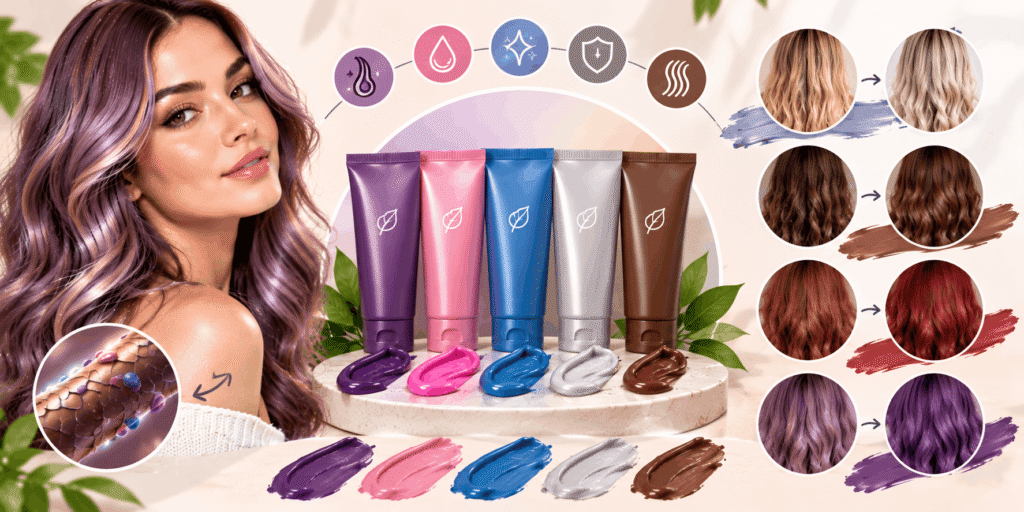
The best formula is the one that matches your current color, desired result, and hair needs. A product that works well for maintaining copper hair may be unsuitable for cool blonde strands, while a purple mask designed for blonde hair may not address the concerns of someone with dark brown hair.
Start by identifying your main goal. If your color has faded, look for a depositing conditioner in a compatible shade. If unwanted yellow or orange tones are the problem, choose a toning formula designed for that specific undertone. If your hair looks dull but its color is already right, a clear gloss or a non-tinted conditioning treatment may be more appropriate.
Next, consider your hair’s porosity and condition. Porous hair often absorbs pigment more quickly, which can make the result more intense or uneven. Hair that has been bleached, highlighted, or chemically treated may need a more cautious approach than untreated hair. A strand test is one of the simplest ways to understand how a formula may behave before using it on your entire head.
Also check whether the product is a rinse-out conditioner, a mask, a gloss, or a cleansing treatment. These formats may have different application methods and recommended frequencies. Using a product in a way that differs from its instructions can affect both the color result and the condition of your hair.
Finally, consider the maintenance required. Some shades may need regular refreshing, while others may remain visible for several washes. The actual fading pattern varies with the pigment, hair condition, washing frequency, water quality, and other aspects of your routine. Read the product details and choose an option that fits the amount of upkeep you are comfortable with.
How to Use Color Depositing Conditioner
A successful application begins before the product touches your hair. Read the instructions for your specific formula because application methods vary. Some products are intended for clean, towel-dried hair, while others have different directions. Do not assume that all depositing conditioners should be applied to wet or dry hair in the same way.
Prepare your workspace and protect surfaces that could be stained. Wear gloves if recommended, and use an old towel to avoid transferring pigment onto clothing. If you are trying a product for the first time, test a small, discreet section so you can assess the color and check for an unexpected reaction.
Divide your hair into manageable sections when the directions call for full-head application. Apply the product evenly to the intended areas, paying attention to sections that have faded more noticeably. Avoid repeatedly adding more product to the same area while leaving other sections untreated, as this can contribute to an uneven finish.
Follow the stated processing time. Leaving a product on for longer than directed does not guarantee a better result and may create a shade that is stronger than you wanted. Rinse according to the manufacturer’s instructions and assess the color in natural light once your hair has dried.
After application, monitor how the color changes with washing. If the result is too strong, do not immediately layer another pigment on top. Allow the color to fade as directed by the product guidance, and seek professional advice if the result is significantly uneven or difficult to correct.
How to Maintain Your Color Between Applications
Color maintenance involves more than choosing a depositing conditioner. Your everyday hair routine can influence how quickly a shade fades and how healthy your hair looks between treatments.
Wash your hair as often as your scalp needs, but avoid unnecessarily harsh cleansing if it contributes to dryness or fading. A suitable shampoo and conditioner can help maintain comfort and manageability. Color-safe products may be useful for dyed hair, although their effectiveness depends on the formulation and your individual routine.
Heat styling can also affect the appearance and condition of colored hair. Use appropriate heat protection and avoid excessive temperatures, especially if your hair is bleached or fragile. Gentle detangling and reduced friction can help limit breakage, making the overall color look more even as your hair grows and is styled.
Sunlight, swimming, mineral deposits, and environmental exposure may influence the appearance of some shades. If your hair regularly encounters these conditions, adjust your maintenance routine accordingly. For example, a swimmer may need a routine specifically suited to pool exposure, while someone with blonde hair may need occasional toning if unwanted warmth develops.
Do not use a color depositing conditioner more frequently than recommended simply because the shade fades quickly. Excessive use can result in pigment buildup or a color that becomes deeper than intended. If your hair is losing color unevenly, a professional colorist can help determine whether the issue comes from the original color, porosity differences, or another factor that a conditioner alone cannot resolve.
Common Mistakes to Avoid
One of the most frequent mistakes is choosing a shade that does not match the hair’s starting color. Product photographs and shade names can be helpful, but they do not guarantee the same result on every person. Always consider your base color and undertones before applying a pigment-based formula.
Another mistake is expecting a depositing conditioner to lighten the hair. Most formulas add pigment rather than lift existing color, so they cannot reliably turn dark brown hair into blonde or remove permanent dye. If you want a significant color transformation, consult a professional about the appropriate method.
Ignoring porosity can also lead to disappointing results. Damaged or bleached ends may absorb color more strongly than healthier sections, producing an uneven finish. A strand test can reveal this difference before you apply the formula throughout your hair.
Finally, avoid combining products without checking their intended uses. A purple toning mask, a red depositing conditioner, and a vivid-color treatment may each contain pigments that interact unpredictably when layered. If you are unsure how to combine products, use one at a time according to its instructions.
How Color Depositing Conditioners Should Be Evaluated
A useful comparison considers more than the product’s shade name or marketing claims. The following factors can help you assess whether a conditioner is suitable for your routine.
Shade compatibility: The product should be designed for your existing hair color and the result you want. A formula that targets yellow blonde tones serves a different purpose from one that enriches chocolate brown or copper hair.
Pigment strength: Some products are intended for subtle maintenance, while others can create a more noticeable tonal change. The desired intensity depends on your starting color, the product’s formulation, and your hair’s porosity.
Conditioning performance: Consider whether the formula helps your hair feel softer, smoother, and easier to detangle. Conditioning benefits vary between products and do not necessarily indicate that the formula will deposit color effectively.
Ease of application: A product should be manageable to distribute through the intended areas of the hair. Clear instructions, an appropriate texture, and a suitable application method can make the routine easier.
Fading and upkeep: Consider how often the product is intended to be used and how the shade may change over subsequent washes. Results are individual, so avoid assuming that a product will last a fixed number of washes for everyone.
Product transparency: Check the manufacturer’s directions, ingredient information, current shade selection, warnings, and compatibility guidance. These details are more useful for choosing a formula than unsupported claims that one product works perfectly for every hair type.
Final Thoughts
Color depositing conditioner can be a convenient addition to a hair-care routine when you want to refresh faded color, maintain a chosen tone, or add a temporary tonal effect between salon visits. Options range from gloss-oriented treatments and rich masks to cleansing formulas and conditioners designed for specific shades.
The most important step is selecting a product that matches your current hair color and intended result. Consider whether you need to enhance brunette depth, maintain red vibrancy, reduce unwanted blonde brassiness, or care for silver strands. Pay attention to your hair’s porosity, follow the product directions, and perform a strand test when trying a new formula.
No single conditioner is right for every person, and results can vary considerably. By choosing carefully and maintaining a suitable hair-care routine, you can make color refreshes more manageable without expecting a temporary depositing product to replace every salon service.
Follow the instructions for the exact product. Some formulas are applied to clean, towel-dried hair, while others have different requirements. Applying a product to the wrong starting condition may affect how evenly the pigment develops.
That depends on the formula. Some products are designed for regular maintenance, while others are intended for occasional use. Follow the recommended frequency and watch for pigment buildup, dryness, or a shade that becomes stronger than expected.
Some formulas may tint gray strands or help blend them visually with the rest of the hair, but they do not necessarily provide complete or uniform gray coverage. If you need reliable, long-lasting coverage, review the product’s specific claims or consult a colorist.

3 Comments