
Greasy hair can make a fresh hairstyle look flat, heavy, or unwashed even when you cleaned it recently. The problem usually begins at the scalp, where sebaceous glands naturally produce sebum, an oily substance that helps protect the skin and hair. When too much oil builds up or spreads through the hair quickly, your roots can start looking greasy.
The good news is that greasy hair does not always mean you need to wash it constantly. A better approach is to understand what is making your scalp oily, adjust your washing routine, and choose products that match your hair type. The right routine can be very different for someone with fine, straight hair compared with someone who has thick, curly, or textured hair.
What Causes Greasy Hair and an Oily Scalp?
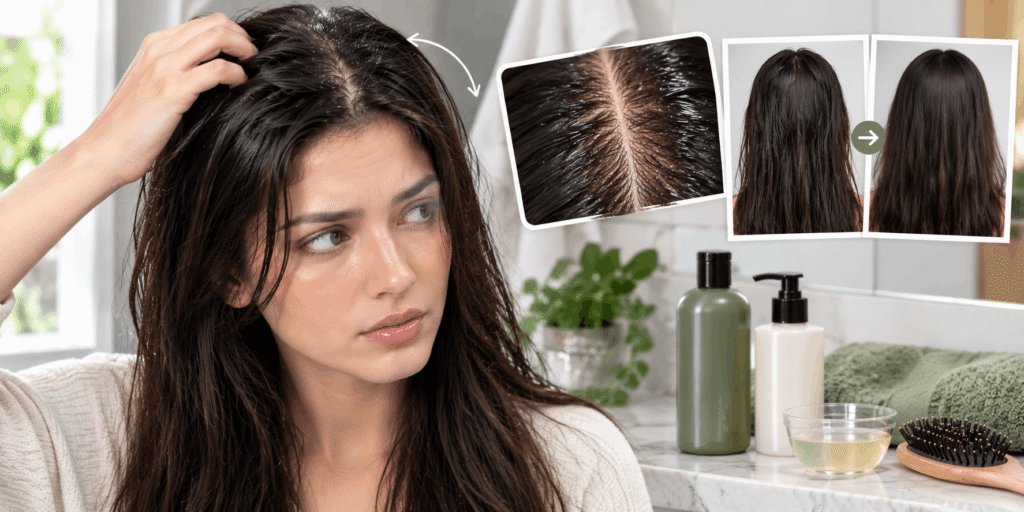
An oily scalp can have several contributing factors, and sometimes there is no single cause. Genetics can play a role because some people naturally produce more sebum than others. Your hair texture also affects how noticeable oil becomes. Oil can travel down straight hair relatively easily, while curls and coils may keep it closer to the scalp.
Your washing habits can also influence how greasy your hair feels. If you wash too infrequently for your hair type, oil, dead skin, sweat, and styling-product residue can accumulate. On the other hand, aggressive scrubbing or using unsuitable products can irritate the scalp and make your routine less comfortable.
Hair-care products are another common consideration. Heavy conditioners, oils, creams, waxes, and styling products can leave residue that makes the hair appear oily even when the scalp itself is not producing unusually large amounts of sebum. Choosing products according to your hair type can make a noticeable difference. Dermatologists recommend applying shampoo mainly to the scalp because this is where excess oil and buildup need to be removed.
Hormonal changes can also affect oil production. This is one reason some people notice changes in their skin or scalp during adolescence and other periods of hormonal fluctuation.
Stress may also coincide with changes in scalp or skin symptoms. It does not mean that every episode of greasy hair is caused by stress, but managing stress can be useful when it appears alongside certain scalp conditions. For example, dermatologists note that stress can contribute to flare-ups of seborrheic dermatitis.
Diet is sometimes blamed for every oily scalp, but it is better not to assume that one specific food is responsible for greasy hair. Instead of making unnecessary dietary restrictions, focus first on your overall hair-care routine and any symptoms that accompany the oiliness.
It is also worth removing the idea that an oily scalp automatically means poor hygiene. Sebum production is a normal biological process. Some scalp conditions can actually become irritated by excessive washing or harsh treatment, so cleanliness and aggressive scrubbing are not the same thing.
How to Manage Greasy Hair Without Overdoing It
The most useful change is often finding a washing schedule that fits your scalp instead of following a universal rule. There is no single number of washes that works for everyone. The American Academy of Dermatology notes that people with straight hair or an oily scalp may need to shampoo frequently, while people with dry, curly, or coily hair may need to wash according to their individual needs.
If your roots become visibly oily very quickly, extending the time between washes may simply make your hair feel uncomfortable. In that situation, washing more frequently can be reasonable. If your hair is textured or naturally dry, however, washing too aggressively may leave the lengths feeling dry even when the scalp becomes oily.
Start With a Better Shampooing Technique
Instead of concentrating shampoo on every inch of hair, focus mainly on the scalp. Massage the cleanser gently across the scalp with your fingertips rather than aggressively scratching with your nails.
The goal is to remove excess oil, product buildup, sweat, and dead skin without unnecessarily rough treatment. As the shampoo is rinsed away, the lather passes through the lengths of the hair.
A simple routine is to thoroughly wet the hair first, apply an appropriate amount of shampoo to the scalp, gently massage it, and then rinse well. If your hair remains oily because of significant product buildup, you may need a second wash depending on your product and hair type.
Rinse Thoroughly
Leaving shampoo or conditioner behind can make hair feel coated and uncomfortable. Rinse until the water runs through the hair without leaving a noticeable product film.
Conditioner deserves particular attention. If your roots become greasy easily, applying a heavy conditioner directly to the scalp may make the problem more noticeable. For fine or straight hair, dermatologists generally recommend applying conditioner mainly to the ends, while people with dry or curly hair may need conditioning through more of the length.
Be Careful With Brushing and Touching
Constantly touching your hair can transfer oils and product residue from your hands onto the strands. It can also disturb a hairstyle and make already-flat roots look even flatter.
Brushing is useful for detangling and styling, but there is no benefit in repeatedly brushing greasy hair simply to distribute the oil. Be gentle, especially when the hair is wet, because wet hair is more vulnerable to damage.
Clean your brushes and combs regularly as well. Hair products, shed hair, dust, and oil can accumulate on them and then return to freshly washed hair.
Choose Products for Your Hair Type
A product marketed for dry or very coarse hair may be unnecessarily heavy for someone with fine, straight hair and an oily scalp. On the other hand, someone with curly or textured hair may need more conditioning to prevent dryness.
Read the product directions rather than automatically choosing the strongest oil-control formula available. A balanced routine is usually more useful than repeatedly stripping the scalp.
Dry shampoo can temporarily absorb excess oil and make greasy roots look fresher between regular washes. However, it does not replace washing with shampoo and water. The AAD recommends continuing regular washing because dry shampoo does not actually clean away the accumulated oil, dead skin, and microorganisms.
Simple Habits That Can Make Greasy Hair Easier to Manage
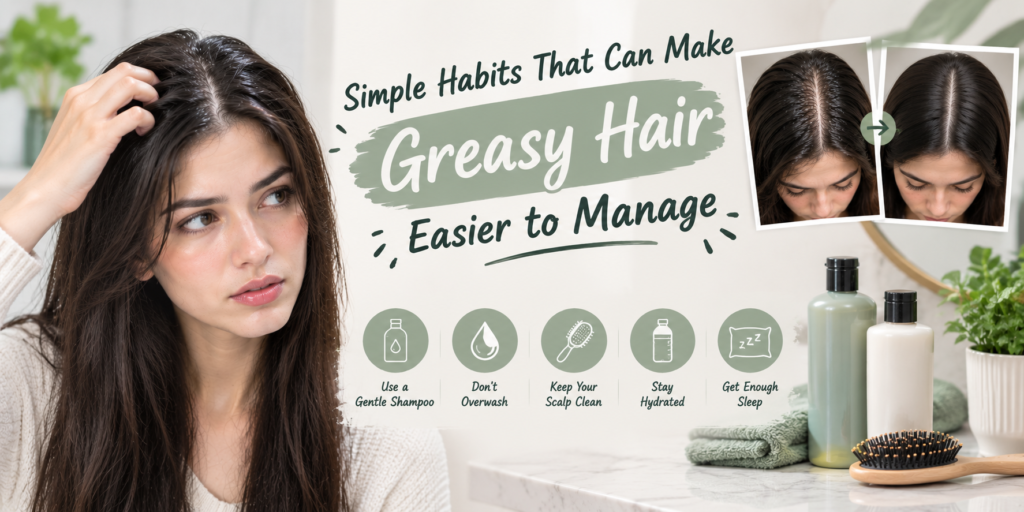
Small changes can complement a good washing routine. After exercise or heavy sweating, cleaning the scalp when needed can help prevent sweat and oil from sitting on the hair for too long. If your hair becomes greasy quickly, choosing a lighter styling routine can also reduce buildup.
Try not to use very hot water simply because it feels comfortable. Lukewarm water is a practical choice for washing, while gentle handling is more important than trying to “scrub away” every trace of oil.
You should also avoid making dramatic changes to your routine every few days. Give a suitable routine some time and observe how your scalp responds. If one product repeatedly causes itching, burning, or irritation, stop using it and consider getting professional advice.
Greasy hair itself is usually a hair-care concern, but persistent oiliness combined with flakes, itching, redness, or a rash may point toward a scalp condition rather than ordinary oil production. Seborrheic dermatitis, for example, commonly affects oily areas such as the scalp and can cause greasy or flaky scale.
Everyday Habits That Can Help Control Greasy Hair
One of the simplest habits is to keep your hands away from your hair as much as possible. Touching your roots repeatedly can transfer oils from your hands onto the strands and can make hair look oily sooner. It can also flatten the roots, making the greasiness more noticeable.
Your pillowcase, hats, brushes, and other items that regularly contact your hair can also collect oil and product residue. Keeping these items reasonably clean is a useful part of general hair care.
After exercise, consider what your scalp actually needs rather than automatically applying more styling products. If you have been sweating heavily, washing your hair may be more useful than trying to cover the roots with additional products.
The same principle applies to styling. Oils, waxes, pomades, creams, and leave-in products can be useful for the right hair type, but using several heavy products together can create buildup. If your hair is naturally fine or becomes oily quickly, lighter formulas may feel more comfortable.
Dry shampoo can be useful when you need a temporary refresh. It absorbs some oil at the roots and can make the hair appear less greasy. However, it should be treated as a styling aid rather than a replacement for normal washing. Dry shampoo does not remove accumulated oil, dead skin, sweat, or other debris from the scalp. The American Academy of Dermatology recommends washing regularly rather than relying on dry shampoo continuously.
Another helpful habit is paying attention to how your scalp reacts to products. If a shampoo leaves your scalp uncomfortable, excessively dry, itchy, or irritated, using more of it is unlikely to solve the problem. A suitable cleanser should leave the scalp feeling clean without requiring aggressive scrubbing.
What About Home Remedies for Greasy Hair?
Home remedies are frequently promoted as quick solutions for an oily scalp. Ingredients such as lemon juice, baking soda, apple cider vinegar, tea tree oil, and other kitchen or essential-oil ingredients are often recommended online.
However, “natural” does not automatically mean gentle or suitable for your scalp. Some concentrated ingredients can cause irritation, especially when applied directly to the skin. Baking soda, for example, can be quite harsh, while undiluted essential oils may irritate the scalp.
For that reason, it is better to avoid experimenting with strong household ingredients simply to remove oil. A properly formulated shampoo designed for your hair and scalp is generally a more predictable option.
If you particularly want to use a product containing an ingredient such as tea tree oil, look for a properly formulated hair or scalp product and follow its directions instead of applying concentrated oil directly to your scalp.
The same caution applies to acidic ingredients. Apple cider vinegar and lemon juice are sometimes promoted as scalp rinses, but stronger concentrations can be irritating. They also do not address every possible reason behind greasy hair.
A simple routine is often more useful than a complicated collection of homemade treatments: cleanse the scalp appropriately, rinse thoroughly, condition the lengths as needed, and avoid excessive product buildup.
Greasy Hair and Other Scalp Conditions
Sometimes oily hair is simply the result of normal sebum production. In other cases, persistent oiliness can occur alongside a scalp condition.
Seborrheic Dermatitis
Seborrheic dermatitis is a common inflammatory skin condition that can affect areas where oil glands are more active, including the scalp. It may cause flaking, redness, itching, and greasy or scaly patches.
This is different from simply having oily hair. If you regularly experience noticeable itching or persistent flakes along with an oily scalp, changing shampoo frequency alone may not resolve the underlying problem.
Treatment depends on the severity and symptoms. Dermatologists may recommend specific medicated shampoos or other treatments, so persistent symptoms are worth discussing with a healthcare professional.
Forehead Breakouts
Oil and hair products can also be relevant when breakouts appear around the forehead or hairline. Heavy products that come into contact with the skin may contribute to clogged pores in some people.
If you notice that breakouts repeatedly appear after using a particular styling product, consider whether the product is reaching your forehead or hairline. Choosing products carefully and keeping hair away from the face when possible may help reduce unnecessary contact.
However, acne has many possible causes, so greasy hair should not automatically be blamed for every forehead breakout.
When Should You See a Doctor?
Occasional greasy hairs are usually something you can manage with a suitable hair-care routine. You may want professional advice if oiliness is accompanied by persistent itching, significant redness, painful areas, unusual scaling, sores, or other changes that do not improve with basic care.
It is also worth getting help if you have tried reasonable adjustments to your routine but your scalp remains uncomfortable. A dermatologist can determine whether the issue is ordinary oil production, product irritation, dandruff, seborrheic dermatitis, psoriasis, or another scalp problem.
Avoid repeatedly switching between harsh shampoos or aggressive treatments in an attempt to force your scalp to become less oily. If the problem is actually caused by an underlying condition, stronger cleansing may simply make the scalp more irritated.
A Simple Routine for Greasy Hair
A manageable routine does not need to contain ten different products. Start by identifying how quickly your greasy hairs become oily and wash according to that pattern. Apply shampoo primarily to the scalp, massage gently with your fingertips, and rinse thoroughly.
Use conditioner where your hair needs it rather than automatically covering the scalp with a heavy layer. If your hair is fine and straight, the ends may need more attention than the roots. If your hair is curly or textured, you may need conditioning through more of the length.
Keep brushes and combs clean, limit unnecessary touching, and avoid piling several heavy styling products onto the roots. If you use dry shampoo, think of it as a temporary styling solution rather than a replacement for regular washing.
Most importantly, do not judge your hair-care routine by how often another person washes their hair. Hair texture, scalp oil production, lifestyle, climate, and product use can all differ. What keeps one person’s hair fresh may leave another person’s scalp uncomfortable.
Final Thoughts
Greasy hair is not necessarily a sign that something is wrong with your hygiene. Your scalp naturally produces sebum, and the amount you notice can depend on genetics, hair texture, hormones, products, washing habits, and everyday conditions.
Instead of trying to eliminate natural oil completely, focus on controlling excess buildup. A suitable washing schedule, gentle shampooing, thorough rinsing, appropriate conditioning, and lighter product use can make oily roots much easier to manage.
Be cautious with viral home remedies, particularly harsh acids, abrasive ingredients, and concentrated essential oils. They may create irritation without solving the reason your scalp becomes oily.
And if greasy hair comes with persistent itching, redness, heavy flaking, or other unusual scalp changes, treat those symptoms as a reason to seek professional advice rather than simply washing more often.
The most effective greasy hair routine is usually the one that fits your actual scalp and hair type—not the one with the most products or the most aggressive oil-removing steps.
One Comment