A goatee can completely change the way your beard looks without requiring a full, heavy beard. But with so many goatee styles available, the real question is which shape, length, and combination will give you the look you want?
From clean and minimal designs to fuller versions paired with a mustache, the right goatee can add definition to your overall appearance while still keeping your facial hair easy to manage.
Understanding Goatee Styles and What Makes Them Different
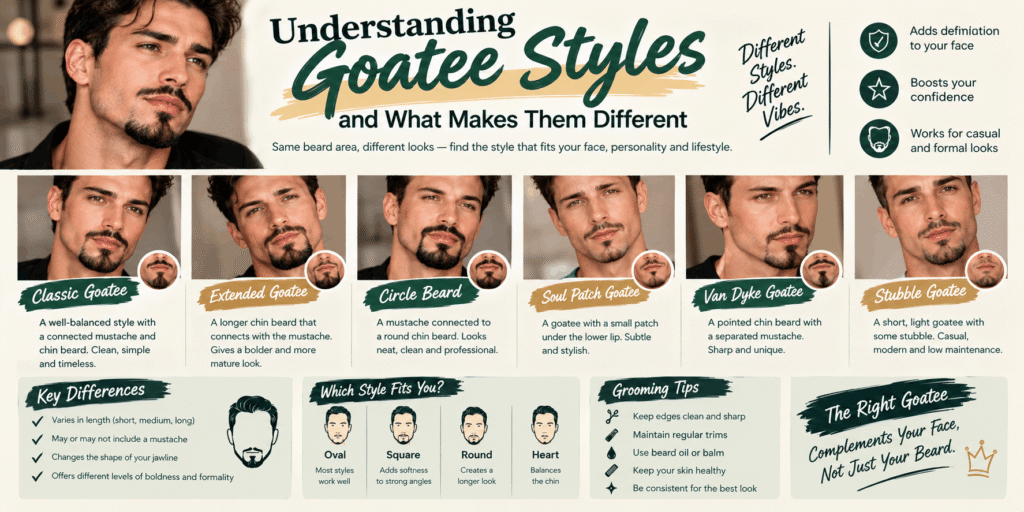
A goatee is generally associated with facial hair concentrated around the chin, although modern goatee styles can include the mustache and surrounding areas. What makes one style different from another is usually the shape, thickness, length, and connection between the chin hair and mustache.
Unlike a traditional full beard, a goatee allows you to keep more of the face clean-shaven while making the chin area the main focus. This makes it a flexible choice for someone who wants noticeable facial hair without covering the entire lower face.
The biggest advantage is variety. A short, neatly trimmed goatee can look understated and polished, while a longer or more sculpted version can create a much stronger appearance. Even small changes to the width of the chin hair or the shape of the mustache can make the overall style look completely different.
Modern goatee styles also do not have to follow one strict formula. Some designs keep the mustache connected to the chin hair, some separate the two, and others focus almost entirely on the chin.
Classic Goatee
The classic goatee is one of the simplest versions to recognize. It focuses primarily on hair around the chin while keeping the surrounding cheeks relatively clean.
Its straightforward shape makes it a timeless choice. Rather than relying on complicated lines or dramatic length, the classic version works because the facial hair remains concentrated in one area.
A neatly maintained classic goatee can work particularly well when you want your facial hair to look intentional without becoming the dominant feature of your appearance.
Full Goatee
The full goatee combines the chin area with a mustache, creating a more connected appearance around the mouth. This is one of the most recognizable modern interpretations of the style.
The amount of hair can vary considerably. A short full goatee can look clean and structured, while a slightly fuller version can create more visual weight around the lower face.
The key difference is the connection between the mustache and chin. Keeping that connection defined gives the style its distinctive appearance.
Connected Goatee
A connected goatee brings the mustache and chin beard together so that the facial hair forms a continuous shape around the mouth.
This design can create a strong frame around the lower part of the face. Because the connection is such an important part of the look, keeping the edges neat can make a significant difference.
The connected style can also be adjusted by changing the thickness of the mustache and chin area. A thinner version feels more subtle, while a fuller version creates a bolder effect.
Disconnected Goatee
A disconnected goatee separates the mustache from the chin hair rather than joining them together.
This small change can make the style look more modern and distinctive. The separation creates visible space around the corners of the mouth, giving the facial hair a less traditional appearance.
The disconnected design is especially interesting if you like experimenting with different facial-hair shapes without committing to a full beard.
Popular Goatee Styles to Consider
There are many ways to personalize a goatee once you move beyond the basic shape. Length, width, mustache design, and the amount of surrounding facial hair can all change the final result.
Instead of thinking about a goatee as one specific beard style, it is more useful to think of it as a category of facial-hair designs. That gives you much more freedom to choose a version that fits your preferred level of maintenance and overall style.
Anchor Goatee
The anchor goatee gets its name from the way the facial hair can create an anchor-like outline around the chin and jaw area.
It typically combines a mustache with a pointed or defined chin section, while the sides of the face remain relatively clean. The result is more sculpted than a basic goatee.
This style can be especially appealing if you prefer clearly defined facial-hair shapes rather than a soft or blended appearance.
Van Dyke Goatee
The Van Dyke-inspired look combines a mustache with a pointed chin beard, usually with a visible separation between the two.
It has a distinctive, artistic character and can make facial hair appear more deliberate and dramatic. The pointed chin is often the defining feature, although the exact length can vary.
A shorter version can keep the look modern, while extra length can make the pointed shape more noticeable.
Extended Goatee
An extended goatee moves beyond the immediate chin area and adds a little more facial hair toward the jawline.
It sits somewhere between a traditional goatee and a short beard, giving you additional coverage without turning the entire face into a full beard.
This can be a useful option for someone who likes the concept of a goatee but wants slightly more facial-hair coverage.
Petite Goatee
A petite goatee keeps everything compact and close to the chin. Instead of creating a large facial-hair shape, it uses a smaller patch of carefully maintained hair.
The advantage of this design is its simplicity. It can give the face a defined focal point while requiring less hair and less overall styling than a larger goatee.
The mustache can either be included or left separate depending on the variation you prefer.
Long Goatee
A longer goatee allows the chin hair to become the main feature of the style. The added length creates more possibilities for shaping, although it also makes regular maintenance more important.
Long goatees can be worn with a connected mustache or as a more separated design. The chin can also be kept rounded, squared, or slightly pointed depending on the desired appearance.
Because longer facial hair is more noticeable, keeping the outline tidy can help prevent the style from looking unstructured.
Choosing a Goatee That Fits Your Style
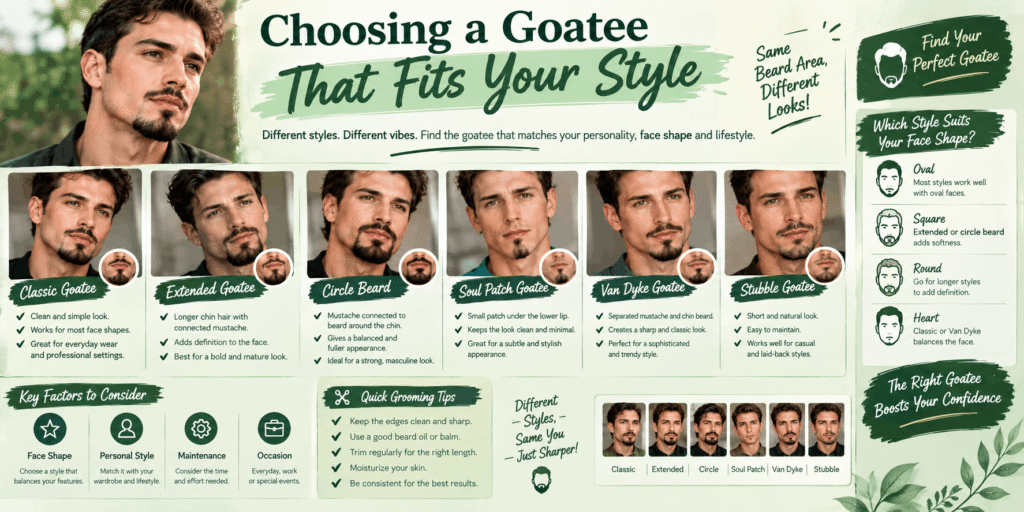
The best goatee style is not necessarily the most complicated one. A style that looks impressive in a photo may not be the most practical choice for everyday life.
Think about how much time you want to spend maintaining your facial hair. If you prefer a low-maintenance appearance, a shorter classic or petite goatee may be easier to keep looking neat. If you enjoy shaping facial hair, a more sculpted design gives you additional room to experiment.
Your natural facial-hair growth pattern also matters. Some people naturally grow fuller hair around the chin, while others have stronger growth around the mustache. Choosing a style that works with your natural growth can make maintenance easier.
The texture of your facial hair can make a difference as well. Coarser hair may create a fuller appearance at shorter lengths, while finer hair may benefit from a little more length to make the shape more noticeable.
Short Goatee
Short goatee styles are usually easier to maintain and can create a clean, controlled appearance.
They are a good starting point if you are unsure about committing to a longer style. Keeping the chin hair relatively short also makes it easier to change the shape later.
A short goatee can be connected, disconnected, rounded, or slightly pointed, so there is still plenty of room for personalization.
Medium-Length Goatee
A medium-length goatee gives you more visible texture and shape without reaching the maintenance level of a very long style.
This length works well for experimenting with different outlines. You can gradually adjust the chin shape and mustache instead of making a dramatic change all at once.
Because there is more hair to work with, medium-length styles can also create a stronger focal point around the chin.
Sculpted Goatee
A sculpted goatee focuses heavily on clean lines and intentional shaping. Rather than simply allowing the facial hair to grow, the overall design is defined around the chin and mouth.
This style tends to look most polished when the edges are kept consistent. Even a relatively short goatee can appear highly styled when its shape is carefully maintained.
How to Find Your Favorite Goatee Look
Choosing between different goatee styles becomes easier when you focus on the overall effect rather than simply copying a particular design.
Consider whether you want something subtle, bold, traditional, modern, or artistic. You can also think about whether you prefer the mustache connected to the chin or separated from it.
Another useful approach is to start with a simple shape and gradually experiment. A basic goatee can often be modified into a connected version, extended version, or pointed design without completely changing your facial-hair routine.
The goal is to find a shape that feels natural for your personal style and is realistic for you to maintain.
More Goatee Styles to Try
Once you understand the basic goatee shapes, it becomes easier to explore styles that have a little more personality. The difference between two looks can sometimes be as simple as changing the length of the chin hair, adjusting the mustache, or creating more definition around the edges.
Goatee styles are also easy to personalize because they do not have to look exactly like a particular reference photo. You can use a style as inspiration and adjust its proportions to create something that feels more natural for you.
Circle Beard
A circle beard brings the mustache and chin hair together in a rounded shape around the mouth. It is fuller than a small traditional goatee but still keeps the cheeks relatively clean.
The rounded outline gives the style a balanced appearance without requiring a large amount of facial hair. Keeping the shape consistent is what helps distinguish it from facial hair that has simply been allowed to grow naturally.
A shorter circle beard can look subtle, while a fuller version creates more definition around the lower face.
Goatee With Stubble
Combining a goatee with light stubble creates a more relaxed alternative to a completely clean-shaven cheek area. The chin and mustache remain the focus while the surrounding facial hair adds a little extra texture.
This approach can work well if you like the structure of a goatee but do not want an extremely sharp contrast between the goatee and the rest of your face.
The amount of stubble can change the overall effect considerably, so the style can range from neat and understated to more rugged-looking.
Chin Puff
The chin puff is a minimalist variation that focuses almost entirely on the hair directly beneath the lower lip and around the chin.
Unlike a larger goatee, it does not attempt to create a broad shape around the mouth. Its compact design makes it one of the simplest options to experiment with.
Because there is less facial hair involved, the shape itself becomes especially important. Even small differences in width or length can change the overall appearance.
Soul Patch Goatee
A soul patch-inspired goatee concentrates on the small area beneath the lower lip, sometimes combined with additional chin hair.
This style is much more understated than a full goatee and can be a good choice for someone who prefers a minimal facial-hair look.
The defining feature is its small size, so keeping the surrounding area neat helps preserve the clean appearance of the design.
Goatee With Fade
A goatee can also be paired with gradually blended facial hair along the sides. This creates a transition between the main chin area and the rest of the face instead of using a sharp difference between facial hair and clean-shaven skin.
The result can look especially modern because the facial hair appears connected to the overall grooming style rather than standing alone.
The fade does not have to be dramatic. A subtle transition can be enough to create a more blended appearance.
How to Maintain Goatee Styles
A good goatee style depends as much on maintenance as it does on the original shape. Facial hair naturally grows at different rates, which means a style that looks defined one day can become less noticeable as the hair grows.
Regular trimming can help maintain the general outline, while keeping the surrounding areas tidy preserves the contrast that makes a goatee recognizable.
You do not necessarily need a complicated routine. The important part is paying attention to the shape you have chosen and making small adjustments when the outline begins to lose its definition.
Keep the Shape Consistent
Consistency is one of the easiest ways to make a goatee look intentional. If one side appears noticeably different from the other, the overall design can look uneven.
Rather than constantly changing the shape, decide what general outline you prefer and maintain it over time. This is especially useful for styles with pointed chins, rounded edges, or defined connections between the mustache and chin.
Pay Attention to the Mustache
The mustache can completely change how a goatee looks. A thick mustache paired with a small chin beard creates a different impression from a thin mustache paired with a fuller chin.
If your chosen style connects the mustache and chin, keeping that area visually balanced becomes particularly important. If the style is disconnected, maintaining a clear separation helps preserve its intended shape.
Keep the Surrounding Area Neat
The cheeks and neck can influence how clearly the goatee stands out. Keeping the surrounding facial hair tidy can make the central design appear more defined.
However, there is no universal rule that every goatee needs perfectly bare cheeks. Some styles intentionally incorporate stubble or additional facial hair.
The important thing is that the surrounding growth complements the goatee rather than making its shape difficult to identify.
Matching a Goatee to Your Personal Style
Choosing a goatee should be about more than copying a popular look. Consider your everyday routine, the amount of maintenance you enjoy, and how noticeable you want your facial hair to be.
If you prefer something simple, a classic, petite, or short goatee may be a comfortable place to start. If you want more character, a pointed, anchor, Van Dyke-inspired, or longer design gives you more opportunities to experiment.
Your hairstyle can also influence the overall impression. A neat haircut paired with a sharply defined goatee can create a polished appearance, while a more relaxed hairstyle and subtle stubble can give the same basic facial-hair concept a much more casual feel.
Clothing and personal style matter too. The best goatee is often the one that feels consistent with the way you normally present yourself rather than something that looks completely different from your usual appearance.
When a Simple Style Works Best
Simple goatee styles are often easier to maintain and easier to change. They can also be useful if you are trying facial hair for the first time and are not sure which shape you prefer.
Starting small gives you the opportunity to see how you like the look before experimenting with more length or complicated shaping.
When to Try Something More Distinctive
If you already know that you enjoy maintaining facial hair, a more distinctive goatee can give you additional room for creativity.
Pointed chins, separated mustaches, extended shapes, and blended stubble can all create noticeably different results. The important part is choosing a design that you can realistically maintain.
Final Thoughts
The best goatee styles are not necessarily the longest, sharpest, or most complicated. A well-chosen shape that fits your preferred level of maintenance can make a much stronger impression than a style that is difficult to manage.
From the classic goatee and circle beard to the anchor, Van Dyke-inspired, disconnected, chin-focused, and stubble combinations, there are plenty of ways to make the look your own.
If you are unsure where to begin, start with a simple shape and experiment gradually. Once you know which length and outline you prefer, you can move toward a more distinctive version without completely changing your grooming routine.
One Comment