
If you want lighter-looking hair without the obvious lines that can sometimes come with traditional highlights, balayage can be an appealing option. Instead of creating a uniform pattern from root to tip, this coloring technique allows lighter tones to be placed where they can blend naturally with the rest of the hair.
The appeal of balayage hair is not limited to one particular color or haircut. The technique can be adapted to dark brown, brunette, blonde, and even naturally lighter hair. Depending on the desired result, the finished look can be subtle and soft or noticeably brighter around the face and through the lengths.
Another reason people consider balayage is the way the color can grow out. Because the technique does not necessarily create a strong line at the roots, the transition can appear softer as the hair grows. However, the final result depends heavily on the starting color, the condition of the hair, the chosen shades, and the stylist’s technique.
Before booking an appointment, it helps to understand exactly what balayage involves, how it differs from other highlighting methods, and what kind of maintenance it requires.
Why Balayage Hair Looks So Naturally Blended
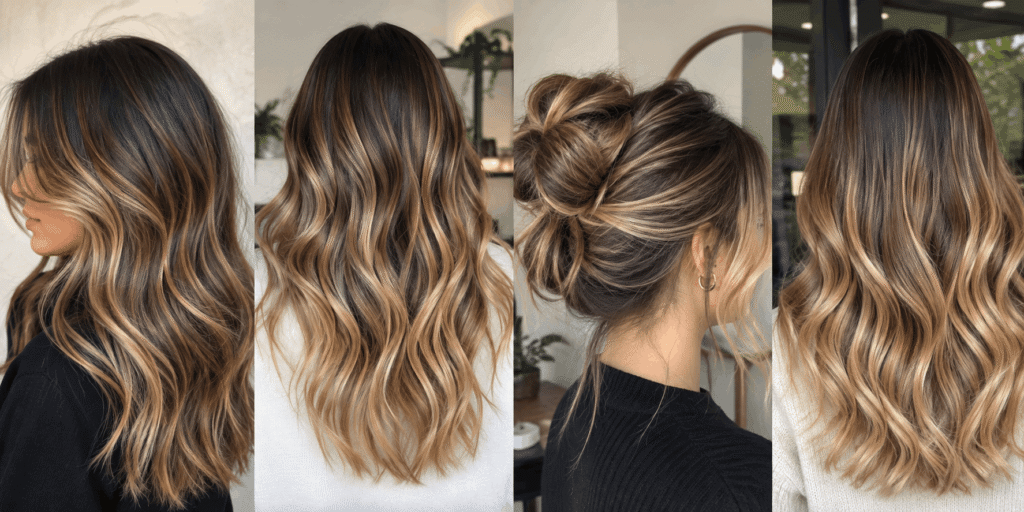
Balayage hair is best understood as a customized highlighting technique rather than a single hair color. The word is associated with the French technique of sweeping or painting color onto the hair. Instead of applying lightener in an identical pattern across every section, a stylist can vary the placement and intensity.
This gives the stylist more control over where brightness appears. Some sections may receive more noticeable lightening, while others can remain closer to the natural color. The result is usually designed to have gradual transitions rather than a uniform strip of color.
What Makes Balayage Different
Traditional highlighting often relies on a consistent sectioning pattern. Foils can be used to isolate strands and process them together, creating a more predictable distribution of highlights.
Balayage takes a more customized approach. The stylist can visually assess the hair and decide where lighter pieces will have the greatest effect. This can be particularly useful around the face, through the mid-lengths, or toward the ends.
The technique also allows different levels of contrast. Someone who wants only a slight change might choose shades close to their natural hair color. Another person may prefer a stronger difference between the base and lighter sections.
Because of this flexibility, there is no single “balayage color.” The finished result can look completely different from one person to another.
How the Color Is Painted Into the Hair
During a balayage appointment, the stylist generally separates the hair into sections and applies lightener or color strategically. The exact application method varies depending on the stylist and the desired outcome.
Some sections may receive more product toward the ends, while others may begin higher up. The placement can also be adjusted around the face to create brightness without making the entire head look heavily highlighted.
Processing time also varies. Hair history, texture, starting color, and the amount of lift required can all affect how the color develops.
This is why bringing reference photos to an appointment can be useful. A picture can communicate the level of brightness, warmth, contrast, and placement you have in mind more clearly than a simple request for “balayage.”
Why the Finish Can Look More Natural Than Traditional Highlights
One of the defining characteristics of balayage is its blended appearance. Instead of every highlighted strand following exactly the same pattern, the color can transition through different depths and intensities.
The effect can resemble naturally lightened pieces, particularly when the selected shades are close enough to the base color to create a gradual transition.
That does not mean every balayage result will look extremely subtle. The technique can also be used to create high-contrast looks. The difference comes from how the color is selected and applied.
Balayage Hair vs. Other Highlighting Techniques
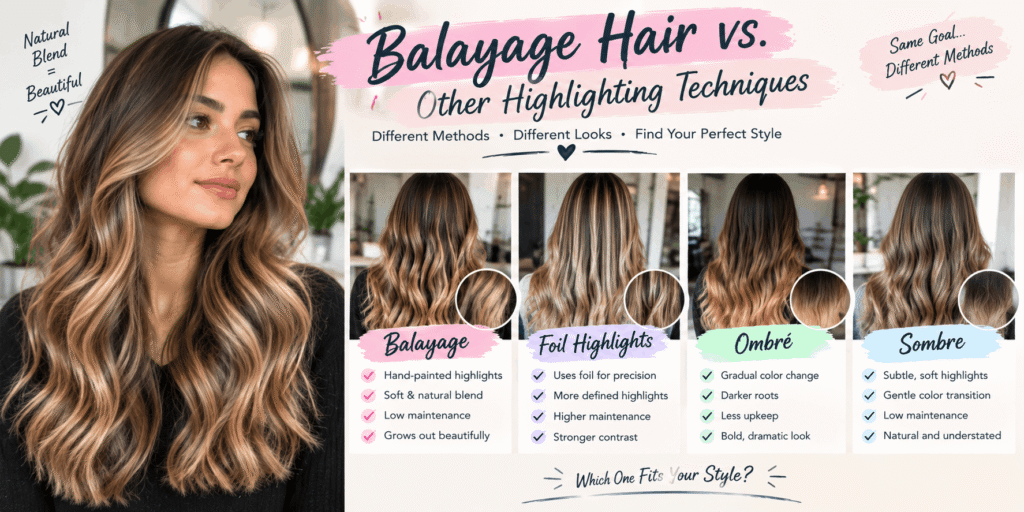
Hair-color terminology can become confusing because several techniques can create lighter pieces. Balayage, ombré, foil highlights, and traditional all-over color are not interchangeable, even though some finished looks may appear similar.
Understanding the differences can make it easier to explain what you want during a salon consultation.
Balayage vs. Foil Highlights
Foil highlights typically involve placing selected sections of hair inside foils with lightener or color. This method can create consistent and noticeable highlights throughout the hair.
Balayage generally focuses more on freehand placement. The stylist has flexibility to vary where the brightness begins and how strongly it appears.
Neither technique is automatically better. The right choice depends on the desired result, hair history, and amount of contrast you want.
Foils may be useful when someone wants significant and consistent lightening, while balayage may appeal to someone looking for a softer, more customized distribution.
Balayage vs. Ombré
Balayage and ombré are sometimes confused because both can create lighter ends, but they describe different concepts.
Balayage refers primarily to the way color is applied. Ombré describes a color transition, usually moving from a darker area into a lighter one.
A balayage technique can therefore be used to create an ombré-inspired effect, but the two terms do not mean exactly the same thing.
A classic ombré may have a more obvious progression from dark roots toward lighter ends. Balayage can be much more dispersed, with individual lighter sections appearing throughout the lengths.
Balayage vs. Traditional Full-Color Treatments
An all-over color changes the overall base of the hair more consistently. Balayage, on the other hand, usually preserves some of the natural or existing base color while adding lighter or different-toned sections.
This makes the two approaches feel very different visually.
Someone wanting a completely different overall shade may prefer an all-over color. Someone who likes their existing base but wants added dimension may find balayage more suitable.
The decision can also depend on future maintenance. Changing the entire base can require different upkeep from maintaining strategically placed highlights.
The Biggest Reasons People Choose Balayage Hair
Balayage has become popular partly because it offers a wide range of possibilities. It does not force everyone into the same finished look.
A subtle version can add small changes that are visible mainly in natural or bright lighting. A stronger version can create obvious contrast and make lighter sections much more noticeable.
A Softer-Growing Color Effect
One major attraction is the possibility of a softer grow-out. Since the color can be painted into the lengths rather than creating an identical line across the roots, new growth may blend more gradually with the existing color.
This does not mean balayage never needs maintenance. Hair continues to grow, tones can change, and lightened sections can become less vibrant over time.
However, the transition can be less visually abrupt than some highly defined root-to-tip coloring techniques.
Dimension Without an All-Over Change
If your natural hair feels too flat or one-dimensional but you do not want to completely change its base, strategically placed lighter pieces can add visual depth.
For example, a brunette base can be paired with caramel or honey-toned sections. A dark blonde base might work with beige or golden pieces, depending on the desired finish.
The important part is choosing a shade that works with the existing color rather than selecting a lighter tone simply because it looks appealing in someone else’s photo.
Options for Different Hair Colors and Lengths
Balayage hair can be adapted to short, medium, and long hair. The placement simply changes according to the haircut.
On shorter hair, carefully placed pieces can add definition around the face or ends. On longer hair, the stylist has more length through which to create gradual transitions.
The technique can also be adjusted for different natural bases. Darker hair may require more lightening to achieve certain blonde tones, while lighter hair may need less dramatic processing.
A Custom Look Instead of One-Color Results
Another advantage is customization. Two people can request balayage and still leave the salon with noticeably different results.
The stylist can consider the natural base, existing color, haircut, face-framing pieces, and preferred level of contrast.
This personalized approach is one reason it is useful to discuss the exact result you want instead of simply naming a technique.
What to Consider Before Booking a Balayage Appointment
A successful color appointment begins before the lightener is applied. Your current hair condition and previous color history can have a major influence on what is realistically achievable.
Your Starting Hair Color Matters
The starting shade determines how much work may be needed to reach the desired result.
Someone with naturally light brown hair may be able to achieve certain beige or honey tones with less dramatic lightening than someone starting with very dark hair.
The desired shade matters just as much. A warm caramel result and a very pale blonde result require different levels of processing.
Instead of assuming that one reference photo will translate exactly to your hair, use it as a visual guide and let your stylist explain what is achievable from your current starting point.
Hair Condition and Previous Color
Previously colored hair can behave differently from untouched hair. Box dye, permanent color, previous highlights, chemical treatments, and repeated heat styling may all affect how the hair responds.
If your hair has been colored before, tell your stylist what products or treatments you have used. Leaving out important color history can make it harder for the stylist to plan the appointment safely.
Hair condition matters too. If the strands already feel very dry, fragile, or damaged, aggressive lightening may not be the best immediate choice.
Choosing the Right Shade Direction
“Blonde balayage” is not one exact shade. Blonde can range from cool and beige to warm, golden, honey, or creamy tones.
Brunettes can also choose from different directions, including caramel, chestnut, mocha, or lighter brown tones.
Think about the overall effect you want rather than focusing only on a color name. Bringing several reference photos can help your stylist identify the common elements you like.
How to Prepare for Your Appointment
A consultation is one of the most useful parts of the process. Explain your current hair color, previous treatments, and your expectations.
It is also helpful to discuss maintenance before choosing a dramatic change. A color that requires frequent toning or refreshing may not suit someone who prefers a low-maintenance routine.
If possible, avoid making major last-minute changes to your hair before the appointment. Your stylist needs to see the actual starting condition and color to plan the service appropriately.
Your hair should also be reasonably detangled so the consultation and sectioning process are easier.
For major color changes, asking about a strand test can also be worthwhile, particularly when there is a history of previous coloring or chemical processing.
What Actually Happens During a Balayage Session
Once your stylist understands your current color and the result you want, the actual balayage process can begin. Although every salon has its own method, most appointments involve several stages rather than simply applying one product and washing it out.
The time required can vary considerably. A subtle refresh on already lightened hair may take less time than creating a significant change on long, dark, or previously colored hair. Your stylist may also recommend more than one appointment if achieving your desired result in a single session would place too much stress on the hair.
Consultation and Color Planning
The consultation gives your stylist an opportunity to examine your hair before deciding where and how much color to apply. This is when you can discuss your reference pictures, preferred tones, maintenance expectations, and any concerns about your previous color.
A good consultation should also include realistic expectations. The exact shade shown in a photograph may look different depending on lighting, filters, the person’s natural hair color, and previous treatments.
Your stylist may suggest a slightly different tone or placement to create a result that works better with your starting color.
Painting and Processing the Hair
After sectioning the hair, the stylist applies the chosen lightener or color to selected areas. The placement is usually intentional rather than identical across every section.
Some pieces may be kept darker near the roots, while others can receive more brightness toward the mid-lengths and ends. Face-framing sections may also be customized depending on how much brightness you want around the front.
Once the product has been applied, it needs time to process. The exact timing depends on the product, hair condition, starting shade, and desired level of lightness.
Trying to rush this stage is not a good idea. Color development needs to be controlled carefully, particularly when lightening is involved.
Toning and Finishing the Look
Lightening the hair and achieving the final tone are not always the same step. After the desired level of lift has been reached, a toner may be used to adjust the finished shade.
Toning can help create a particular direction, such as beige, neutral, golden, or cooler-looking blonde, depending on the formula selected.
After the color service, the hair is usually rinsed and conditioned before being dried and styled. This final stage makes it easier to see how the different tones work together.
The finished color may look slightly different under salon lighting compared with natural daylight, so checking it in different lighting can help you understand the result more accurately.
Why Results Can Vary From One Appointment to Another
Even when two people request the same balayage technique, their results can be very different. Hair density, texture, natural pigment, previous color, porosity, and existing highlights all influence the outcome.
A stylist may also adjust the technique during the appointment based on how the hair is responding.
This is why balayage is better viewed as a customized coloring service rather than a fixed formula. Your final result should be planned around your individual starting point.
How to Keep Balayage Hair Looking Fresh Between Appointments
Getting the color is only one part of the process. Once the appointment is over, your routine can influence how the hair feels and how the color looks over time.
Lightened sections can be more sensitive to dryness, so gentle care is especially useful. You do not necessarily need an extremely complicated routine, but consistency can make a difference.
Washing Without Fading the Tone Too Quickly
Frequent washing can gradually affect the appearance of colored hair. The ideal schedule depends on your scalp, hair type, lifestyle, and personal preference, so there is no universal number of washes that works for everyone.
When washing, choose products designed for color-treated hair if they suit your routine. Avoid using excessively hot water if it leaves your hair feeling dry, and focus shampoo primarily on the scalp rather than repeatedly scrubbing the lengths.
The ends generally need more conditioning than aggressive cleansing.
Keeping Lightened Hair Conditioned
Balayage can involve lightening, and lightened sections may require extra moisture and conditioning.
A regular conditioner can help keep the lengths manageable, while a deeper conditioning treatment can be added when your hair feels particularly dry.
Leave-in products can also help with detangling and styling. However, applying too many heavy products at once can make the hair feel weighed down, especially if your hair is fine.
The goal is not to cover the hair with products but to maintain a routine that keeps it comfortable, manageable, and protected during styling.
Managing Brassiness and Tonal Changes
Blonde and lighter balayage tones can gradually shift in appearance. Depending on the starting color and chosen tone, some people may notice warmer or brassier tones appearing over time.
A stylist can recommend whether a toning treatment is appropriate for your specific color. Purple or other toning products are sometimes used for certain blonde shades, but using them too frequently can affect the appearance of the color.
If you are unsure about which product to use, asking your stylist is better than choosing one solely because it is marketed for blonde hair.
When to Schedule a Refresh
Balayage does not necessarily need to be redone every time the hair grows. One of its appealing features is that the color can be designed to transition softly.
However, a refresh may eventually be useful if the tone has changed, the lighter pieces have lost their desired appearance, or you want additional brightness.
The timing depends on your color goals and how quickly your hair grows. Some people may prefer occasional toning, while others may want a more noticeable color refresh.
Your stylist can help you decide whether you need a complete service or only a smaller maintenance appointment.
Balayage Cost: What Determines the Price?
The cost of balayage can vary significantly between salons, cities, stylists, and hair types. There is no single price that applies everywhere.
Instead of choosing a salon based only on the lowest advertised price, consider what the appointment includes. A consultation, lightening, toner, treatment, blow-dry, and styling may all be included differently depending on the salon.
Hair Length and Thickness
Long or very thick hair can require more product and additional application time. This can increase the overall cost compared with a shorter or less dense head of hair.
Some salons use different pricing levels based on hair length, while others charge according to the amount of work required.
If you have particularly long or thick hair, asking for an estimated price during the consultation can help prevent surprises.
Starting Color and Previous Treatments
Your current hair condition can also influence the price.
A simple balayage refresh on previously lightened hair may be relatively straightforward. A major color correction, however, can require substantially more time and expertise.
For example, removing or working around previous dark color can be more complicated than adding subtle dimension to untreated hair.
Be honest about previous color services when getting a quote. The stylist needs accurate information to estimate both the work and the potential limitations.
Partial vs. Full Balayage
Not every balayage appointment needs to involve the entire head.
A partial service may focus on areas such as the front, crown, or sections that are most visible. This can provide a noticeable refresh without repeating the complete process.
A full service generally involves a broader distribution of color and may take longer.
If you are unsure which option you need, ask the stylist to explain what areas would be included in each service.
Salon Location and Stylist Experience
Where the salon is located can affect pricing. Salons in major cities or high-cost areas may charge more because of operating expenses and local market rates.
Stylist experience can also influence the price. Balayage requires judgment about placement, color development, and blending, so someone with extensive experience in the technique may charge more for the service.
A higher price does not automatically guarantee a better result, but looking at a stylist’s portfolio can give you a better idea of whether their work matches the style you want.
Is Balayage Right for You?
Balayage can be a flexible option, but it is not automatically the right choice for everyone. The best technique depends on the look you want, your current hair, how much maintenance you are comfortable with, and how dramatic a change you are considering.
When Balayage Makes Sense
Balayage may be worth considering if you want added dimension without completely replacing your natural-looking base.
It can work particularly well for people who like blended transitions and customized highlights rather than highly uniform sections.
It can also be useful if you want a color change that can grow out more softly than a sharply defined root-to-color transition.
However, the final appearance depends on the technique and color plan. A poorly matched shade or unsuitable placement can produce a result that does not match your expectations, which is why consultation matters.
When Another Coloring Technique May Be Better
Balayage is not the only way to add dimension.
If you want highly uniform, clearly defined highlights, foil techniques may be more appropriate. If your main goal is a dramatic dark-to-light transition from the roots toward the ends, an ombré-inspired approach may better match what you have in mind.
Someone looking for a complete change in their base color may also prefer an all-over color service.
The important thing is to describe the finished appearance you want rather than assuming a particular technique will automatically create it.
Questions to Ask Your Stylist Before You Start
Before committing to the appointment, a few practical questions can make the process easier.
Ask what result is realistically achievable from your current hair color. Find out whether the service will require lightener, toner, or multiple appointments. It is also useful to ask how much maintenance the finished color is likely to need.
You can also discuss what happens if you decide later that you want to return closer to your natural color.
Most importantly, show clear reference photos and explain what you like about them. If you like the brightness in one picture but the softer transition in another, say so. That information helps the stylist understand your priorities instead of guessing from a single image.
Final Thoughts
Balayage offers a way to introduce lighter tones and dimension while keeping the overall color customized to your hair. Its freehand approach allows the stylist to adjust placement, contrast, and tone instead of following one identical pattern for everyone.
The most successful result usually begins with realistic expectations. Your natural color, previous treatments, hair condition, and desired level of lightness all matter. A reference photo can show your stylist the direction you like, but the final result should be adapted to your own starting point.
After the appointment, gentle washing, regular conditioning, thoughtful heat styling, and occasional professional maintenance can help the color stay attractive and the hair remain manageable.
If you are considering balayage hair, focus less on copying a particular person’s exact color and more on finding a combination of tone and placement that suits your existing hair and your preferred maintenance routine. That approach can make the finished look feel more intentional, wearable, and genuinely your own.

3 Comments