The 2 block haircut has become one of the most recognizable modern men’s hairstyles, especially for anyone who wants a cut that can look neat, relaxed, or fashion-forward depending on how it is styled. Its defining feature is the contrast between the shorter lower section and the longer hair kept on top, creating a noticeable separation that gives the hairstyle its characteristic shape.
Unlike many traditional short haircuts, a two block does not rely on making every section the same length. Instead, the haircut uses different lengths strategically, allowing the top to move, fall, part, or be textured while the sides and back remain much cleaner. That flexibility is one reason the style works with several different finishes.
Quick answer
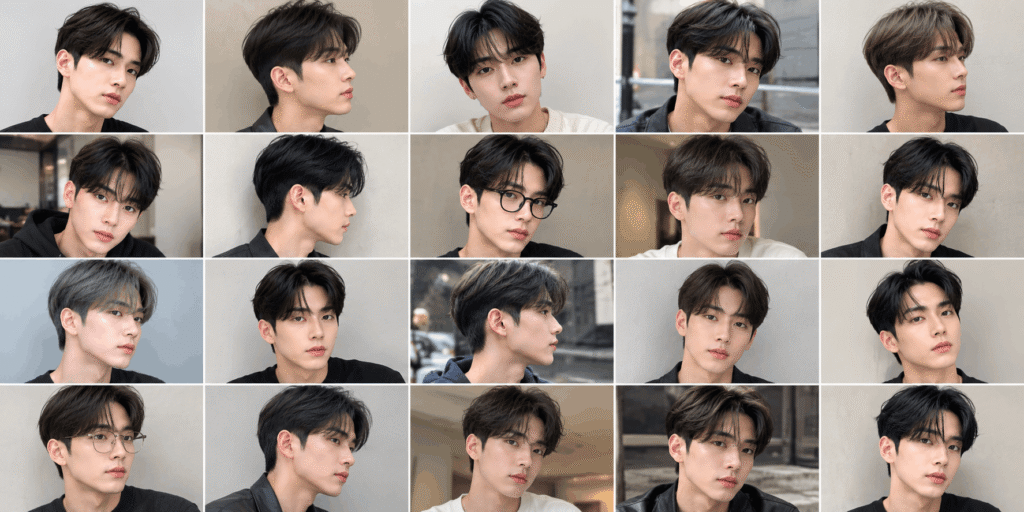
A two block haircut is a men’s hairstyle where the hair on the sides and back is cut significantly shorter than the longer hair on top. The transition between these sections creates two visually distinct areas, or “blocks.”
The longer top can be styled in several ways. It may be swept forward, separated down the middle, shaped into a fringe, given extra texture, or combined with a modern fade. The lower section can also be adjusted depending on how subtle or noticeable you want the contrast to be.
One of the biggest advantages of the cut is its versatility. The same basic haircut can produce a completely different appearance simply by changing the way the top is styled. This makes it useful for men who do not want a haircut that looks identical every day.
What is a two block haircut?
The two block haircut developed from modern East Asian hairstyling and became especially recognizable through Korean-inspired men’s fashion. The basic idea is simple: create a shorter lower section while preserving considerably more length through the upper section.
The sides and back may be trimmed short with scissors or clippers, while the top remains long enough to create movement and shape. Depending on the desired result, the back can be softly blended or left with a clearer distinction between the upper and lower sections.
What separates a two block from an ordinary short haircut is the way the lengths interact. A conventional taper gradually reduces the hair as it approaches the neckline. A two block can have a much more obvious difference between the upper and lower areas, although modern versions often soften that contrast.
The top length is where much of the personality comes from. Longer hair allows you to create a center part, side movement, fringe, waves, curls, or a deliberately messy finish. This means the haircut itself provides a foundation rather than locking you into one styling direction.
Hair texture also changes how the cut behaves. Straight hair can create a clean and controlled silhouette, while naturally wavy hair can give the upper section more movement. Curly hair may require a slightly different approach to prevent the shorter section from appearing disconnected from the top.
Face shape can also influence how the haircut is customized. The length, volume, and direction of the top can be adjusted to create different proportions around the forehead, cheeks, and jaw. Rather than treating the two block as one fixed haircut, it is more useful to think of it as a basic structure that can be personalized.
Another reason the style remains popular is that it can move between casual and polished settings. A loose, textured top can feel youthful and relaxed, while a controlled part and cleaner finish can make the same haircut look more refined.
Popular two block variations
There is no single way to wear a two block. The top section can be shaped according to personal style, hair texture, and the amount of maintenance you are comfortable with. Some versions emphasize a soft Korean-inspired finish, while others borrow elements from fades, perms, or contemporary men’s cuts.
Two block with comma hair
A two block haircut with comma hair combines the shorter lower section with a curved front section that bends inward, creating the recognizable comma-like shape near the forehead.
This variation puts more attention on the front of the haircut. The longer top gives enough length to direct part of the fringe forward and then curve it to one side. The result can look polished without requiring the entire hairstyle to be extremely structured.
For naturally straight hair, a small amount of styling product can help maintain the curve. Hair with some natural movement may form the shape more easily, although the front may still need light styling to stay in position.
The amount of volume can also change the overall impression. A flatter front produces a quieter appearance, while additional lift makes the hairstyle more noticeable.
Two block with middle part
The middle-part version is one of the easiest ways to give a two block a balanced, contemporary appearance. The longer top is separated near the center, allowing the two sides of the hair to fall away from the face.
The exact position of the part does not have to be perfectly centered. Moving it slightly can change the direction and volume of the hairstyle while keeping the overall concept intact.
This variation works particularly well when the top has enough length to fall naturally around the forehead. It can also be adapted for different textures, with straight hair producing a cleaner curtain effect and wavy hair creating a softer, more relaxed finish.
The sides should not necessarily be extremely short. Keeping some length in the lower section can create a softer transition, while a tighter cut makes the difference between the two sections more obvious.
Two block with textured fringe
A textured fringe gives the 2 block haircut a more casual and energetic appearance. Instead of allowing the longer front section to fall as one solid shape, the hair is separated into smaller pieces to create movement.
This can be useful for men who prefer a hairstyle that does not look overly polished. The fringe can be directed slightly forward, toward one side, or allowed to sit unevenly across the forehead.
Texture can be created through the haircut itself as well as through styling. A barber may use different cutting techniques to remove excess weight from the top, making the hair easier to separate.
The amount of texture should depend on the hair type. Very fine hair may benefit from controlled volume rather than excessive layering, while thicker hair may need more weight removed to prevent the fringe from becoming too heavy.
Two block with fade
Adding a fade creates a sharper, more contemporary interpretation of the classic two block structure. Instead of leaving the shorter section at one consistent length, the hair gradually becomes shorter as it approaches the lower sides and neckline.
The fade can be subtle or more pronounced. A low fade keeps the change relatively close to the lower portion of the head, while a higher fade creates a stronger contrast with the longer top.
This version is particularly useful for someone who likes the shape of a two block but prefers a cleaner finish around the ears and neckline.
The top can still be styled in almost any direction. It may be parted, textured, pushed forward, or given additional volume. The fade simply changes the character of the shorter section.
Two block with perm
A two block with a perm adds waves or curls to the longer top while keeping the lower section noticeably shorter. This can completely change the visual effect of the haircut because the additional texture gives the top more volume and movement.
A soft wave can create a relaxed appearance, whereas tighter curls produce a more noticeable transformation. The choice should take the existing hair texture, density, and desired maintenance level into account.
The shorter section is especially important with this variation because the contrast between textured length on top and shorter hair underneath creates much of the haircut’s identity.
A professional stylist should assess the condition of the hair before chemical processing. The final result depends not only on the haircut but also on how the hair responds to the perming process.
Who suits a two block?
The two block can be adapted for many different appearances because the length of the top, shape of the fringe, amount of volume, and shortness of the lower section can all be changed.
Men with straight hair may find it particularly easy to create clean parts and controlled shapes. Wavy hair can make the style appear softer and more natural, while thicker hair can provide plenty of volume for textured or layered versions.
Face shape is another consideration, but it should not be treated as a strict rule. A stylist can alter the top length and volume to create different proportions. For example, extra height changes the silhouette, while a longer fringe can create a softer frame around the forehead.
The most important factor is often the relationship between the top and sides. If the top is kept very long, the haircut will have a stronger contrast. If the lengths are brought closer together, the result can feel more understated.
Lifestyle matters too. Someone who wants a haircut that can be styled quickly may prefer a simpler version with moderate top length. Someone who enjoys spending time on their hair can choose a longer, more detailed variation with a part, fringe, texture, or perm.
How to ask your stylist for a two block
When asking for a two block, simply saying the name of the haircut may not communicate the exact version you want. The term covers several different interpretations, so describing the proportions is useful.
Explain how much length you want to keep on top and how short you want the sides and back. If you want a strong contrast, tell the stylist that you want the upper section to remain noticeably longer. If you prefer a softer appearance, ask for the transition to be less dramatic.
A reference photo can also make the conversation much easier. Try to choose an image showing the haircut from more than one angle so the stylist can understand the sides, back, and top rather than only the front.
It is also helpful to mention how you normally style your hair. If you rarely use styling products, the haircut should be designed to work with your natural texture. If you regularly use a blow dryer or styling product, there may be more freedom to keep additional length or volume.
Finally, discuss maintenance before the haircut begins. A two block that looks excellent immediately after a professional styling session may require more daily effort than you expect. Knowing the upkeep involved can help you choose a version that fits your routine rather than simply copying a particular photo.
Styling a two block in Singapore’s humidity
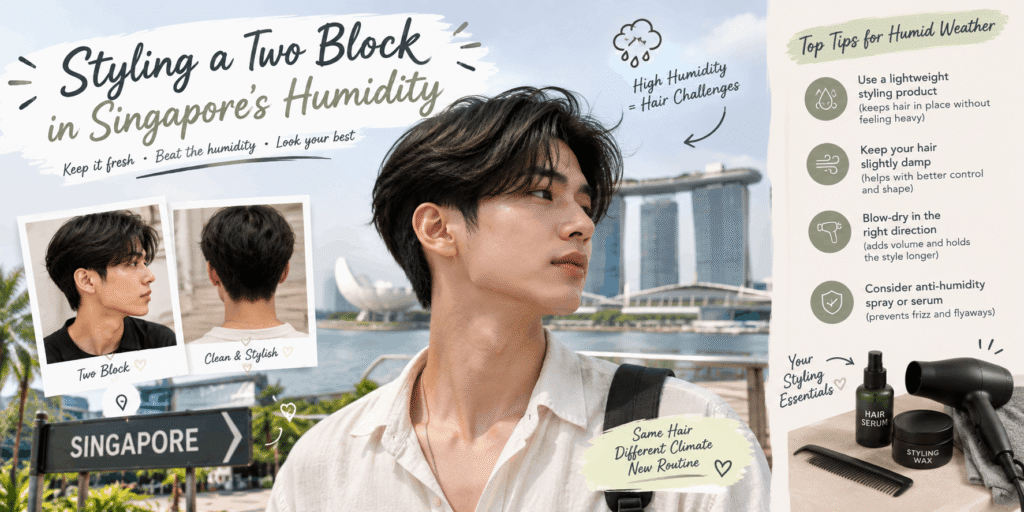
Humidity can make a two block behave very differently from how it looks immediately after a haircut. Moisture in the air can increase frizz, make straight hair swell slightly, and cause carefully arranged sections to lose their shape during the day.
The key is not to overload the hair with heavy products. Too much product can make the longer top look greasy or flat, particularly when the weather is already warm. A lightweight styling cream, mousse, or suitable texturizing product may provide enough control without making the hair feel coated.
Blow-drying can also make a noticeable difference. Rather than directing hot air randomly through the hair, use the dryer to guide the top in the direction you want it to sit. For a middle part, direct each side away from the center. For a fringe-based style, guide the front forward or slightly sideways depending on the shape you want.
Heat should be used sensibly. Excessive heat can make hair feel dry and more difficult to manage, especially when combined with frequent chemical treatments or coloring. A moderate temperature and controlled airflow are generally more practical for everyday styling.
If your hair becomes puffy throughout the day, avoid repeatedly adding more product. It can be more effective to use a small amount of product at the beginning and shape the hair properly before leaving home.
The best humidity-friendly two block is usually one that works with the natural behavior of your hair rather than fighting it constantly. A stylist can adjust the weight and length of the top so that the haircut remains manageable even when the weather is warm and damp.
How to maintain a two block
Maintenance begins with keeping the shorter section clean and properly shaped. As the hair grows, the difference between the upper and lower sections gradually becomes less defined. The haircut can therefore lose some of its original structure even when the top still looks good.
How frequently you need a trim depends on how sharp you want the lower section to remain. Someone who prefers a very clean outline may need more frequent appointments, while a softer version can be allowed to grow for longer.
The top requires a different approach. Rather than repeatedly cutting it very short, many two block styles depend on preserving enough length for styling. Your stylist may therefore focus more on controlling excess weight and maintaining the overall shape than simply reducing the length.
Washing habits matter as well. The ideal schedule depends on your scalp and hair type rather than a universal rule. Hair that becomes oily quickly may require more frequent washing, while drier hair may feel better with less frequent shampooing.
Conditioner can be useful for the longer upper section because it helps the hair feel smoother and easier to arrange. Applying it mainly through the lengths rather than heavily at the roots can help prevent unnecessary flatness.
Regularly cleaning styling tools is another small but useful habit. Combs, brushes, and other tools can collect product and oils over time. Keeping them clean helps avoid transferring that buildup back onto freshly washed hair.
If you have a perm, color treatment, or another chemical process alongside your two block, maintenance may need to be adjusted. In that situation, your stylist can recommend a routine based on the condition and texture of your hair.
Two block vs undercut: what’s the difference?
A two block and an undercut can look similar at first because both can feature a noticeable difference between shorter sides and longer hair on top. The distinction is mainly in the way those sections are shaped and connected.
An undercut traditionally creates a stronger separation between the long upper section and the shorter sides or back. The transition can be deliberately abrupt, giving the haircut a very clear division.
A two block also separates the upper and lower sections, but modern versions can use softer transitions and more variation. The shorter area does not always have to look completely disconnected from the top.
The styling options are another important difference. Two block haircuts are commonly designed around longer top sections that can be parted, fringed, textured, waved, or curled. An undercut can also be styled in numerous ways, but its stronger separation often creates a more dramatic silhouette.
The two styles can overlap, which is why photographs sometimes make them difficult to distinguish. A stylist may even combine elements of both depending on the client’s preferred shape.
If you want the softer, more flexible appearance generally associated with a two block, explain that you want the longer top and shorter lower section to remain visually distinct without necessarily creating an extremely hard disconnect.
Where to get a two block in Singapore
Finding the right place for a two block is less about choosing a salon simply because it advertises the haircut and more about finding a stylist who understands the proportions you want.
Before booking, look through the salon’s previous men’s haircut work and pay attention to whether the stylist has experience with longer textured tops, Korean-inspired cuts, fades, or similar styles. This can give you a better idea of whether their cutting approach matches your expectations.
A consultation can also be useful if you are unsure which variation suits your hair. Bring a few reference photographs and explain what you like about them. You may prefer the fringe from one style, the sides from another, and the overall length from a third.
Do not be afraid to discuss what you do not want either. For example, if you dislike very short sides, say so before the cutting begins. If you want the top to remain long enough for a middle part, make that clear as well.
The stylist should also consider your natural hair pattern. A reference photo taken on extremely straight hair may not translate exactly to thick, wavy, or curly hair.
Final Thoughts
The two block haircut stands out because it gives men more styling freedom than a conventional short cut. Its shorter sides and back create the foundation, while the longer top can be adapted into a middle part, fringe, textured finish, fade, or even a permed look.
The best version is not necessarily the one that looks most dramatic in a photograph. Hair texture, thickness, daily routine, and personal style all affect how the haircut will work in real life. A good stylist can adjust the proportions so the finished cut suits your hair rather than simply copying a reference image.
Whether you prefer a polished appearance or something more relaxed, the two block provides plenty of room to experiment. Keeping the shape maintained and learning a simple styling routine can also help the haircut continue looking intentional as it grows.
A two block haircut separates the shorter hair around the sides and back from the noticeably longer hair on top. This contrast creates its distinctive shape and allows the top to be styled in different ways.
Yes. The style continues to appear in contemporary men’s hairstyling, particularly in Korean-inspired and East Asian fashion trends, while modern variations have made it adaptable to different personal styles.
A shorter version is possible, but there needs to be enough length on top to create a visible difference from the sides and back. Your stylist can determine how much length is practical for the look you want.