
Understanding Cream Concealer and Its Role in Makeup
Cream concealer is a versatile makeup product designed to help create a more even-looking complexion. Its creamy texture makes it easy to blend into the skin, allowing users to cover the appearance of dark circles, blemishes, redness, and uneven skin tone. Whether someone prefers a natural everyday look or a more polished makeup finish, cream concealer can be a useful addition to a makeup routine.
Unlike some liquid or powder formulas, cream concealer often has a smooth, slightly rich consistency that allows controlled application. Depending on the formula, it may offer light, medium, or full coverage. Some cream concealers are designed to melt comfortably into the skin, while others provide a thicker texture for areas that need extra coverage.
One of the main reasons cream concealer remains popular is its flexibility. It can be applied with fingertips, a brush, or a makeup sponge, making it suitable for different techniques and personal preferences. It can also be used on specific areas instead of applying additional foundation across the entire face.
Choosing the right cream concealer involves more than selecting a product with good coverage. Skin type, undertone, shade depth, application method, and desired finish all influence the final result. Understanding these factors can help you use cream concealer more effectively and achieve a finish that looks balanced rather than heavy.
What Is Cream Concealer?
Cream concealer is a complexion makeup product formulated with a creamy base that helps camouflage visible imperfections. It usually comes in pots, small jars, compact palettes, or twist-up sticks. These formats make cream concealer convenient for targeted application and touch-ups throughout the day.
The texture can vary considerably between products. A lightweight cream concealer may spread easily and provide a skin-like finish, while a thicker formula may deliver more concentrated coverage. Some products have a natural or satin finish, whereas others are designed to look matte or slightly radiant.
Cream concealer can be used for several purposes:
- Covering blemishes: Apply a small amount over individual spots to reduce their visible appearance.
- Brightening the under-eye area: Select a suitable shade to help the area beneath the eyes look more refreshed.
- Reducing the appearance of redness: Use a shade that blends naturally with the surrounding complexion.
- Correcting uneven tone: Apply the product around the nose, mouth, or other areas where discoloration is noticeable.
- Refining makeup placement: Use a small brush to clean up the edges of eyeshadow or define selected areas of the face.
Cream concealer is not necessarily better than every other concealer type. Its performance depends on the ingredients, consistency, coverage, and compatibility with your skin. For example, someone with very oily skin may prefer a thinner formula that sets comfortably, while someone with dry skin may appreciate a cream concealer that blends without emphasizing dry patches.
The most useful product is the one that works with your skin and delivers the finish you want.
Cream Concealer vs. Liquid and Stick Concealer
Understanding the differences between concealer formulas can make choosing a product easier. Cream concealer sits between a range of textures, and its performance varies by formulation rather than packaging alone.
Liquid concealers generally have a fluid consistency. They can be easy to spread across larger areas, including beneath the eyes, and are available in finishes ranging from dewy to matte. However, some liquid formulas dry quickly, requiring careful blending.
Cream concealers tend to offer more control when applied to specific areas. Their consistency can make it easier to build coverage gradually over blemishes, discoloration, and other small sections of the face. They may also be convenient for people who prefer applying makeup with a brush or fingertip.
Stick concealers are packaged in solid or semi-solid forms. They are portable and useful for quick application, although their firmness and blendability depend on the formula. Some stick concealers have a creamy texture, meaning the categories can overlap.
When comparing these products, consider the following factors:
- Texture: Choose a formula that spreads smoothly without dragging the skin.
- Coverage: Look for a product that matches the amount of correction you need.
- Finish: Decide whether you prefer a natural, radiant, satin, or matte appearance.
- Portability: Compact cream concealers can be useful for travel and touch-ups.
- Blending time: A formula that allows enough time for blending may be easier for beginners.
There is no universal winner. Cream concealer is particularly useful when you want precise placement and buildable coverage without necessarily adding another layer of foundation to your entire face.
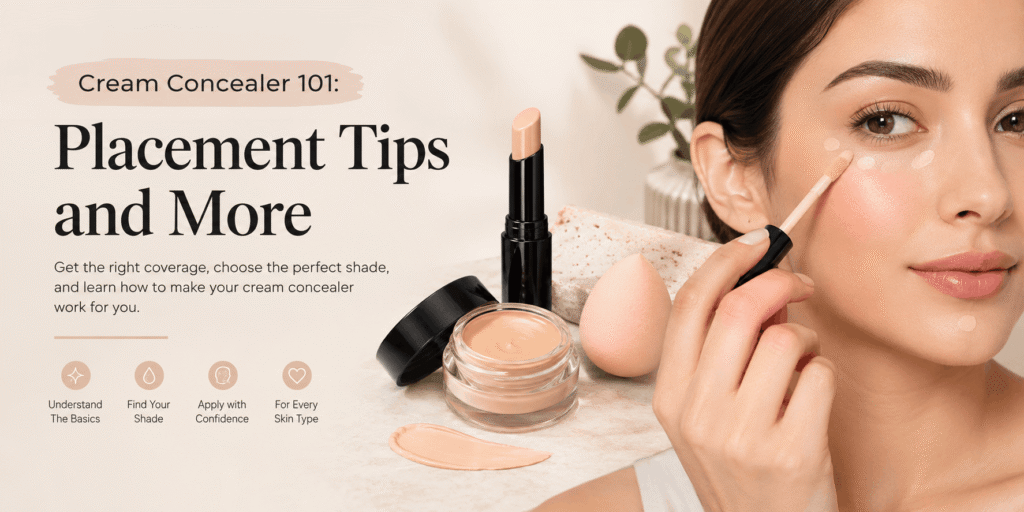
How to Choose the Right Cream Concealer Shade
Selecting the right shade is one of the most important steps in getting a natural result. Even a high-quality cream concealer may look noticeable if it is too light, too dark, or mismatched to your undertone.
Start by identifying the purpose of your cream concealer. A product used to cover blemishes usually works best when it closely matches your foundation or natural skin tone. A concealer intended to brighten the under-eye area may be slightly lighter, but an excessively pale shade can create an obvious contrast.
Understand Your Skin Undertone
Skin undertone refers to the subtle color beneath the surface of your skin. It is commonly described as warm, cool, or neutral.
- Warm undertones: Skin may have golden, yellow, or peachy qualities.
- Cool undertones: Skin may show pink, rosy, or bluish qualities.
- Neutral undertones: Warm and cool qualities appear more balanced.
Undertone is different from skin depth. A person with light skin can have a warm undertone, just as someone with deep skin can have a cool or neutral undertone. Therefore, do not select cream concealer based on how light or dark your skin appears alone.
When possible, test shades in natural daylight. Artificial lighting can change how a product appears, making a shade seem more suitable than it really is. Apply a small amount to the intended area and check whether it blends with the surrounding skin.
Match the Shade to the Area
Different parts of the face may require different approaches.
For blemishes and redness, a close match to your complexion usually creates the most seamless result. If the shade is too light, the covered area may stand out. If it is too dark, the spot can appear more noticeable.
For under-eye concealing, choose a shade that reduces the appearance of darkness without creating a gray or overly bright finish. Depending on your skin tone and the type of discoloration, a peach, salmon, or orange-toned color corrector may help neutralize darkness before applying a matching cream concealer.
Color correction and concealing serve different purposes. A corrector targets unwanted color, while a concealer helps blend the area into the rest of the complexion. Using a corrector is optional; many people achieve a satisfactory result with concealer alone.
Test the Formula Before Buying
Shade is only one part of a successful match. Pay attention to how the cream concealer behaves after application.
Notice whether it blends evenly, settles into fine lines, clings to dry patches, or becomes noticeably darker as it dries. Some formulas may change slightly in appearance after application, so checking the finished result is useful.
If you are shopping online, consult available shade descriptions and product swatches on a range of skin tones. Remember that screen brightness, photography, and lighting can affect how shades appear.
Where to Apply Cream Concealer for the Best Results
Cream concealer works best when you apply it where coverage is needed instead of automatically spreading it across the entire face. Strategic placement can create a more natural result and help prevent unnecessary product buildup.
Under the Eyes
The under-eye area is one of the most common places to use cream concealer. Begin with a small amount near the inner corner, where shadows may be more noticeable. Add a little product to other areas that need coverage rather than applying a thick layer beneath the entire eye.
Blend gently with a damp sponge, soft brush, or fingertip. Avoid rubbing the delicate skin aggressively, as excessive pressure can cause discomfort and disturb the product.
If the area tends to crease, allow your skincare to settle before applying makeup. Use thin layers and consider setting the concealer with a small amount of finely milled powder if that suits your skin and preferred finish.
Around the Nose
Redness around the sides of the nose can sometimes remain visible even after foundation. Cream concealer allows you to target these small areas with precision.
Use a small brush to place the product where redness appears, then blend the edges into the surrounding complexion. Too much product around the nose may collect in creases, so start with less and add more only when necessary.
On Blemishes and Dark Spots
For individual blemishes, apply cream concealer directly to the area rather than spreading it widely. Allow the product to sit briefly if the formula benefits from that approach, then gently blend only the outer edges.
Keeping more coverage in the center can help preserve the concealing effect. A small brush is particularly helpful when working around individual spots or small areas of discoloration.
Do not apply makeup to broken, irritated, or actively infected skin. If a blemish is painful or the surrounding skin is damaged, allow it to heal and follow appropriate skin-care guidance.
Around the Mouth and Chin
Some people notice uneven coloration around the mouth or chin. A thin layer of cream concealer can help create a more uniform appearance in these areas.
Choose a shade that matches the surrounding skin closely. Blend carefully around the corners of the mouth, where excessive product can settle into natural folds. If your skin becomes dry around the chin, prepare the area with suitable moisturizer before applying makeup.
For Subtle Highlighting
Cream concealer can also be used to create gentle contrast in selected areas of the face. A slightly lighter shade may be applied sparingly to the center of the forehead, the bridge of the nose, or the center of the chin.
This technique is optional and differs from basic spot concealing. For everyday makeup, using a complexion-matching shade in the areas that need coverage may be sufficient.
Avoid using a shade that is dramatically lighter than your skin unless you intentionally want a strong contrast. A balanced result usually comes from careful placement and thorough blending.
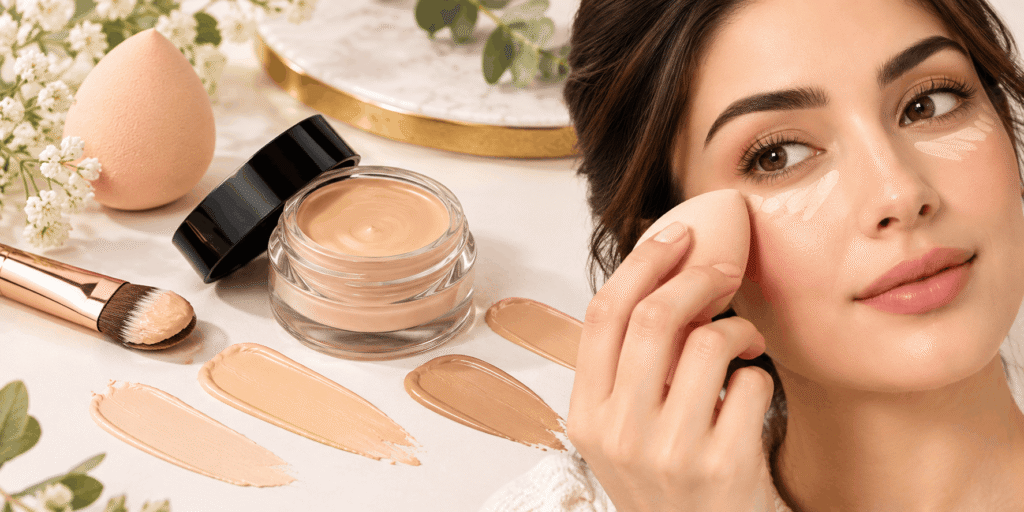
How to Apply Cream Concealer Step by Step
A simple routine can make cream concealer easier to apply, particularly if you are new to complexion makeup.
Step 1: Prepare your skin. Cleanse your face and apply moisturizer suited to your skin type. If you use sunscreen, allow it to settle before moving to makeup. Well-prepared skin can help cream concealer spread more evenly, although the result also depends on the formula.
Step 2: Decide whether to use foundation first. Cream concealer can be applied before or after foundation, depending on the product and the look you want. Applying foundation first may reduce how much concealer you need because foundation can already even out some discoloration. For targeted correction, concealer can then be added to the remaining areas.
Step 3: Use a small amount. Pick up a little cream concealer with a clean brush or fingertip. Applying too much at the beginning can make blending difficult and create an unnecessarily thick layer.
Step 4: Place it strategically. Concentrate the product on the areas that need coverage. For under-eye darkness, start near the inner corner and extend only as far as needed. For blemishes, keep the product close to the spot.
Step 5: Blend the edges. Use light tapping motions to soften the boundaries between the concealer and surrounding skin. Avoid sweeping away all the coverage from the center of a blemish.
Step 6: Build coverage gradually. If the first layer does not provide enough correction, add another thin layer. Allowing each layer to blend before adding more can help maintain a smoother finish.
Step 7: Set if necessary. If your cream concealer moves easily or creases, lightly apply setting powder to selected areas. People with dry skin may prefer less powder, while those with oily skin may find targeted setting helpful.
Step 8: Check the finished makeup. Look at your face in natural light and check for visible edges, excess product, or areas that need additional blending. A small adjustment can make the result look more cohesive.
The goal is not to cover every natural feature. Cream concealer is a tool for selective correction, and using it thoughtfully often creates a more comfortable, natural-looking finish.
Choosing Cream Concealer for Different Skin Types
Skin type can influence how cream concealer looks and wears throughout the day. However, the product’s specific formulation matters just as much as its category.
Cream Concealer for Dry Skin
Dry skin may have flaky patches or a tight feeling, especially when exposed to cold weather, frequent cleansing, or drying skincare products. A cream concealer that spreads smoothly and does not emphasize texture may be more comfortable.
Prepare the skin with a suitable moisturizer and avoid applying makeup before the skincare has settled. Use a small amount of concealer and blend gently. Applying several thick layers over dry patches rarely improves the appearance.
A radiant or natural finish may be preferable if you want to avoid an excessively flat look, but not every radiant formula will suit every person.
Cream Concealer for Oily Skin
Oily skin can cause complexion makeup to move, become shiny, or lose its even appearance during the day. If this is a concern, look for a cream concealer that feels lightweight and maintains its finish without requiring heavy application.
Apply the product in thin layers and use a small amount of setting powder where shine is most noticeable. You may not need to powder the entire face. Excessive powder can make makeup look dry or textured, even when the skin produces more oil.
A primer may help some formulas wear more evenly, but compatibility should be tested rather than assumed.
Cream Concealer for Combination Skin
Combination skin may have an oily forehead and nose while the cheeks or under-eye area feel dry. In this case, one application method may not work equally well everywhere.
Use a light hand around dry areas and apply additional setting powder only to sections that become oily. You can also choose different application techniques for different parts of the face without changing your cream concealer.
The most important factor is to observe how the product performs in each area rather than treating the entire face as having identical needs.
Cream Concealer for Mature Skin
Skin texture and fine lines can affect how makeup settles, although these features vary considerably from person to person. A cream concealer with a flexible, blendable texture may be worth testing if you prefer a softer appearance.
Apply a small amount and blend carefully. Thick layers can make fine lines more noticeable, while excessive powder may emphasize dryness. Good skin preparation and restrained application are often more useful than trying to conceal every line.
Common Cream Concealer Mistakes to Avoid
Even a suitable cream concealer may produce disappointing results when applied incorrectly. Recognizing common mistakes can help you improve your technique without purchasing additional products.
One frequent mistake is choosing a shade that is too light. Although lighter concealer can brighten selected areas, an overly pale shade may create a gray or chalky appearance, particularly when covering dark spots. Choose shades according to the area and purpose.
Another problem is using too much product. Heavy application can settle into creases, highlight skin texture, and make makeup look less natural. Begin with a small amount and increase coverage only where necessary.
Blending too aggressively can also reduce the product’s effectiveness. Instead of rubbing repeatedly, use gentle tapping motions to soften the edges while maintaining coverage where it is needed.
Skipping skin preparation may cause cream concealer to cling to dry areas or blend unevenly. However, applying too many skincare products immediately before makeup can also affect how cosmetics sit on the skin. Allow each layer to settle and test combinations that work well together.
Finally, avoid assuming that every cream concealer needs to be set with powder. Some formulas are designed to retain a natural finish, while others may benefit from light setting. Your skin type, climate, and desired appearance should guide this decision.
How to Make Cream Concealer Last Longer
The staying power of cream concealer depends on its formula, the condition of your skin, the products layered underneath it, and environmental factors such as heat and humidity.
Start with clean skin and appropriate skincare. If moisturizer or sunscreen remains very slippery, makeup may move more easily. Allow these products to settle before applying cream concealer, and avoid using excessive amounts of skincare directly beneath the areas you intend to cover.
Next, keep application thin. Multiple heavy layers may feel secure initially but can separate or crease as the day progresses. Targeted coverage generally requires less product and may be easier to maintain.
Choose a setting method that suits the formula. A light dusting of powder can help reduce movement in areas such as the sides of the nose, forehead, or under-eyes. Pressing powder gently into the skin may offer more control than sweeping it back and forth.
If you use setting spray, check whether it works comfortably with the rest of your makeup. No setting product can guarantee that cream concealer will remain unchanged all day, particularly in hot or humid conditions.
During touch-ups, remove excess oil gently with a clean tissue or blotting paper before adding more makeup. Applying fresh cream concealer over a thick, oily layer can create buildup. If coverage has worn away, use a small amount only where it is needed.
Clean brushes and sponges regularly, and avoid sharing makeup applicators. These habits support better makeup hygiene and help prevent residue from affecting application.
How to Choose a Quality Cream Concealer
Selecting a quality cream concealer involves evaluating its practical performance rather than relying only on packaging, popularity, or marketing claims.
Begin with the finish and coverage you prefer. If you want to conceal occasional blemishes while keeping your natural skin visible, a lighter or buildable formula may be suitable. If you need more coverage for noticeable discoloration, a more concentrated formula may be worth considering.
Check the texture before committing to a product when possible. Cream concealer should be workable enough for your preferred application method. If it feels difficult to spread, becomes patchy, or emphasizes areas you wanted to soften, it may not be the best match for your routine.
Packaging also matters. A compact or stick can be convenient for travel, while a pot may allow precise application with a brush. Products in jars require clean hands or clean tools to reduce contamination.
Read the ingredient list if you have known sensitivities, and discontinue use if a product causes irritation. Claims such as hydrating, long-wearing, or suitable for sensitive skin should be evaluated in the context of the actual formulation and your own experience.
Price alone does not determine performance. An affordable cream concealer may work well for your needs, while a more expensive option may offer a shade range or texture that better suits your preferences. Testing a product, when practical, is often more informative than choosing it based on brand recognition alone.
Frequently Used Cream Concealer Techniques for Everyday Makeup
Cream concealer can support a variety of makeup styles without requiring a complicated routine.
For a natural everyday look, apply a small amount only to areas where uneven tone is noticeable. Blend the edges and allow your natural complexion to remain visible. You may not need foundation if selective concealing provides enough coverage.
For a polished work or event look, use foundation first if desired, then apply cream concealer to remaining areas that need additional correction. Keep the under-eye application light and check your makeup under the lighting in which you will be seen.
For minimal makeup, cream concealer can be paired with moisturizer, sunscreen, and other preferred everyday products. However, concealer does not replace sunscreen, and makeup products should not be relied upon as the sole method of sun protection unless they are specifically formulated and used for that purpose.
For a more sculpted finish, a slightly lighter concealer may be applied sparingly to selected areas. Blend thoroughly so the contrast remains intentional rather than appearing like separate patches of makeup.
You can also mix compatible cream concealer shades to create a closer match when your complexion falls between two available colors. Mix only a small amount on a clean surface, and avoid combining formulas that separate or change texture when blended together.
With practice, you can discover the placement, amount, and blending method that produce the finish you prefer. There is no single technique that works for everyone, so adjust your routine according to your skin and the result you want.
Final Thoughts
Cream concealer is a practical option for anyone who wants targeted coverage, flexible application, and a complexion that looks more even without adding unnecessary layers of makeup. Its creamy consistency can make it useful for covering blemishes, softening the appearance of dark circles, reducing visible redness, and refining selected areas of the face.
The best results come from choosing a suitable shade, preparing the skin, applying small amounts, and blending with care. Skin type, formula, and personal preference all influence how cream concealer performs, so it is worth experimenting with different techniques rather than expecting every product to behave the same way.
Whether you prefer a simple everyday routine or a more defined makeup look, cream concealer can fit comfortably into your approach. Focus on the areas that genuinely need coverage, build the product gradually, and choose a finish that makes you feel confident and comfortable.
Cream concealer is used to cover the appearance of dark circles, blemishes, redness, dark spots, and uneven skin tone. Its creamy texture allows controlled application and buildable coverage.
Yes, cream concealer can work for dry, oily, combination, and mature skin. The best choice depends on the formula, finish, and how the product feels on your skin.
Both methods can work. Applying foundation first can help you identify which areas need additional coverage, while applying cream concealer first may suit certain targeted correction techniques.
Choose a shade close to your natural skin tone for blemishes and redness. For brightening the under-eye area, you can select a slightly lighter shade that complements your undertone.



4 Comments