
The skin around your eyes is often one of the first areas where changes in texture, hydration, and appearance become noticeable. Fine lines, puffiness, dark circles, and dryness can make the under-eye area look tired, even when the rest of your skin feels healthy. This is why eye cream has become an important part of many skincare routines. A well-chosen formula can provide targeted hydration, improve the appearance of dryness, and support smoother-looking skin.
However, not every eye cream works in the same way. Some formulas focus on moisture, while others contain ingredients intended to brighten the appearance of dark circles, soften fine lines, or reduce temporary puffiness. Choosing an appropriate product depends on your skin type, specific concerns, ingredient preferences, and how your skin responds to different formulations. Understanding these differences can help you avoid unnecessary purchases and build a more effective skincare routine.
What Is Eye Cream and Why Does the Eye Area Need Special Care?
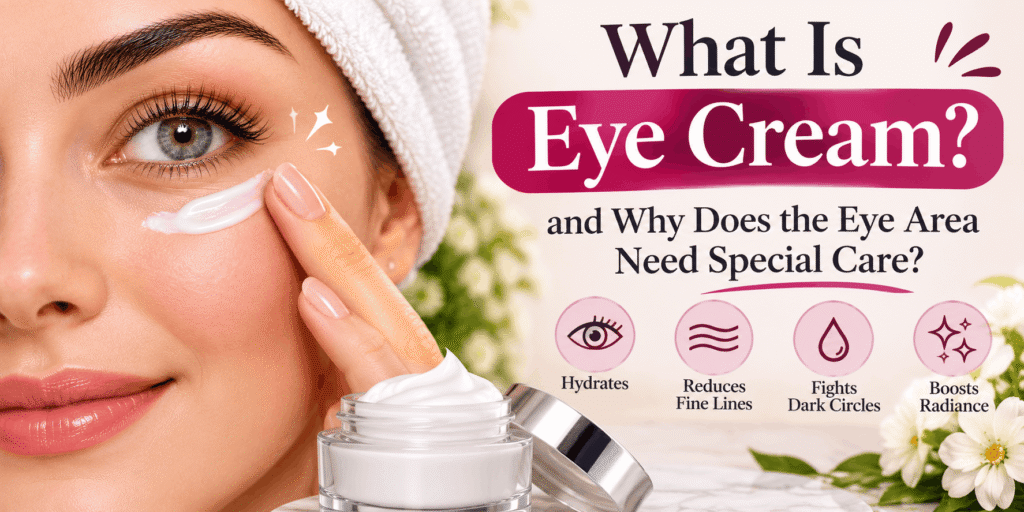
Eye cream is a skincare product formulated for the delicate skin surrounding the eyes. This area has different characteristics from many other parts of the face. The skin is relatively thin, contains fewer oil glands in certain areas, and is constantly involved in facial movements such as blinking, smiling, and squinting. These factors can make dryness, fine lines, and irritation more noticeable.
A regular facial moisturizer may provide sufficient hydration for some people, but an eye cream can offer a texture and ingredient combination designed for the specific needs of the eye area. Some products are lightweight gels that absorb quickly, while others have richer cream textures intended to support dry skin.
Eye creams are not magic treatments that completely remove every concern. Their benefits depend on the ingredients, formulation, consistency of use, and underlying cause of the problem. For example, a moisturizing formula may improve the appearance of dehydration lines, but it cannot necessarily correct deep wrinkles or hereditary dark circles.
The purpose of choosing an eye cream should be to address a realistic skincare concern rather than expecting a single product to solve every issue around the eyes.
Different Types of Eye Cream and Their Main Benefits
Eye creams are available in many formulations, and understanding their differences makes product selection easier. Instead of choosing a product simply because it has attractive packaging or popular marketing claims, look at the concern it is designed to address.
Hydrating Eye Creams
Hydrating eye creams are designed to reduce dryness and help the skin maintain moisture. They commonly contain ingredients such as hyaluronic acid, glycerin, ceramides, and other moisturizing components.
Hyaluronic acid attracts water and helps the skin appear temporarily plumper. Glycerin is a humectant that supports hydration, while ceramides help maintain the skin barrier. These ingredients can be particularly helpful when the under-eye area feels tight, rough, or dehydrated.
A hydrating formula may also make makeup application smoother by reducing the appearance of dry patches. However, hydration does not permanently eliminate wrinkles. It can make certain fine lines look less noticeable when they are associated with dryness.
Brightening Eye Creams
Brightening eye creams are designed to improve the appearance of uneven tone and dullness around the eyes. They may contain ingredients such as vitamin C, niacinamide, and other antioxidants or tone-supporting ingredients.
Vitamin C is widely used in skincare because of its antioxidant properties and its role in supporting a brighter-looking complexion. Niacinamide can help improve the appearance of uneven skin tone while supporting the skin barrier.
The results depend on the cause of discoloration. Dark circles may be related to genetics, visible blood vessels, pigmentation, allergies, or natural facial anatomy. A brightening product may help with some forms of discoloration but cannot address every underlying cause.
Anti-Aging Eye Creams
Anti-aging eye creams generally focus on the appearance of fine lines, wrinkles, and changes in skin texture. They may include peptides, retinol, antioxidants, and moisturizing ingredients.
Peptides are used in skincare formulations to support the appearance of smoother and firmer-looking skin. Retinol, a vitamin A derivative, can help improve the appearance of fine lines and uneven texture over time.
These products usually require consistent use, and stronger active ingredients may cause irritation if introduced too quickly. Because the eye area is sensitive, products should be specifically formulated or recommended for use around the eyes.
Eye Creams for Puffiness
Puffiness can make the under-eye area appear swollen or tired. It may be associated with fluid retention, lack of sleep, allergies, genetics, or the natural structure of the face.
Some eye creams contain caffeine, which is commonly used in products intended to temporarily improve the appearance of puffiness. Lightweight gel formulas can also feel refreshing, especially when stored according to the manufacturer’s instructions.
It is important to remember that skincare products cannot permanently remove hereditary under-eye bags or changes caused by facial anatomy. Persistent or sudden swelling may require medical assessment rather than a cosmetic product.
Firming Eye Creams
Firming eye creams are designed to improve the appearance of skin that looks less smooth or supported. They may contain peptides, antioxidants, moisturizing ingredients, and other components intended to improve the appearance of skin texture.
A good moisturizing formula can make the area look smoother by reducing dryness. Some active ingredients may also support improvements in the appearance of fine lines with regular use.
However, topical products have limitations. They cannot reproduce the results of surgical procedures or completely reverse significant skin laxity.
How to Choose the Right Eye Cream for Your Skin Concerns
Choosing an eye cream becomes easier when you identify the main issue you want to address. Buying several products with overlapping ingredients may not improve results and can increase the possibility of irritation.
If dryness is your biggest concern, look for formulas containing glycerin, hyaluronic acid, ceramides, or squalane. These ingredients support hydration and help improve the feel of dry skin. Creamier textures may be more comfortable for people whose under-eye area becomes tight during the day.
For dark circles, consider products containing vitamin C or niacinamide if discoloration is related to pigmentation. However, if your dark circles are caused by genetics, visible blood vessels, or hollowing beneath the eyes, an eye cream may offer limited improvement.
For fine lines, ingredients such as peptides and retinol may be worth discussing with a skincare professional. Retinol-based eye products should be introduced gradually because the skin around the eyes can be sensitive.
If puffiness is your main concern, a lightweight gel containing caffeine may provide a temporary refreshing effect. It is also helpful to consider other factors such as sleep habits, allergies, and salt intake.
People with sensitive skin should prioritize simple formulas without unnecessary fragrance or irritating ingredients. Patch testing a new product can help identify a possible reaction before applying it regularly.
Understanding Important Eye Cream Ingredients
The ingredient list often provides more useful information than marketing descriptions. Different ingredients perform different functions, so it is worth understanding what they can realistically do.
Hyaluronic acid: This ingredient attracts and holds water, helping the skin appear hydrated and temporarily plumper. It is particularly useful in formulas designed for dryness and dehydration.
Glycerin: A well-known humectant that draws moisture into the outer layers of the skin. It supports hydration and can help reduce the uncomfortable feeling associated with dryness.
Ceramides: These lipids help support the skin barrier and reduce moisture loss. They are useful in products designed for dry or sensitive skin.
Peptides: These ingredients are commonly included in formulas intended to improve the appearance of fine lines and skin firmness. Their effects depend on the specific peptide and overall formulation.
Vitamin C: An antioxidant ingredient that can help improve the appearance of dullness and uneven pigmentation. Different forms of vitamin C vary in stability and formulation requirements.
Niacinamide: Also known as vitamin B3, niacinamide supports the skin barrier and may improve the appearance of uneven skin tone. It is included in many products for its versatility.
Caffeine: Often used in eye products designed to temporarily reduce the appearance of puffiness. It is not a permanent treatment for under-eye bags.
Retinol: A vitamin A derivative that can help improve the appearance of fine lines and uneven texture. It may cause dryness, peeling, or irritation, especially when used too frequently.
Antioxidants: Ingredients such as vitamin E and certain plant extracts help protect formulations and support the skin against oxidative stress. Their benefits depend on the specific ingredient and concentration.
The presence of a popular ingredient does not automatically make a product effective. The complete formulation, stability, packaging, and suitability for your skin are all important.
How to Use Eye Cream Correctly
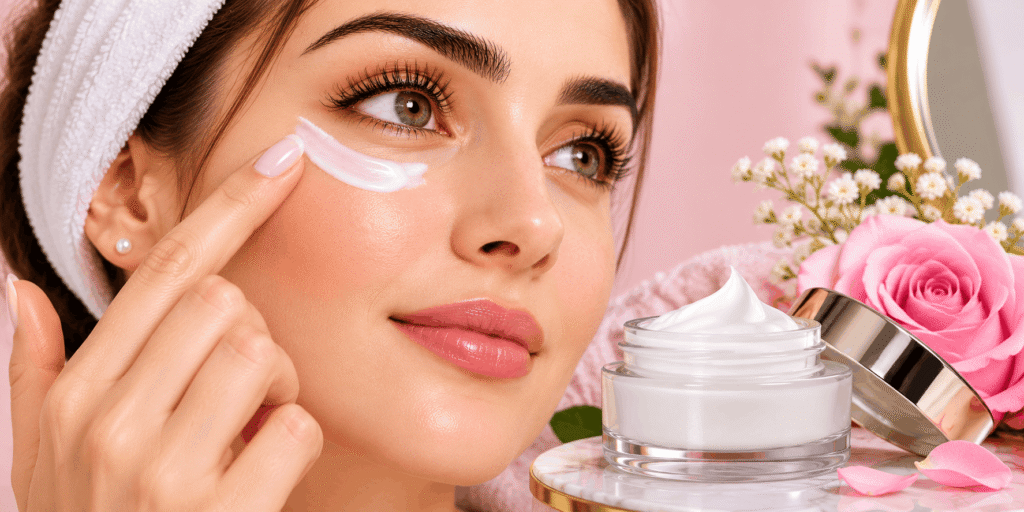
Even a well-formulated eye cream may not deliver the expected results if it is applied incorrectly. A gentle and consistent routine is usually more useful than applying a large amount of product.
Start with a clean face. After cleansing, apply a small amount of eye cream according to the product instructions. For many formulas, a quantity around the size of a small grain of rice for both eyes is sufficient, although the recommended amount can vary.
Use your ring finger if it helps you apply the product with a lighter touch. Gently tap the cream along the orbital bone rather than rubbing or pulling the skin. Avoid applying it too close to the lash line unless the product specifically instructs you to do so.
Allow the product to absorb before applying other skincare products or makeup. During the daytime, finish your routine with a broad-spectrum sunscreen suitable for the face and eye area. Sun protection is important because ultraviolet exposure can contribute to premature skin aging and uneven pigmentation.
At night, apply your eye cream after cleansing and before heavier moisturizers if that matches the product’s instructions. If you use retinol or other active ingredients, introduce them gradually and avoid combining multiple potentially irritating products around the eyes without professional guidance.
Consistency matters more than quantity. Applying extra cream will not necessarily improve results and may increase the risk of irritation or product migration into the eyes.
Eye Cream Mistakes That Can Affect Your Results
One common mistake is expecting immediate changes in wrinkles or dark circles. Hydrating products may make the skin feel smoother relatively quickly, but improvements in the appearance of pigmentation or fine lines generally require regular use over time.
Another mistake is using too much product. The eye area does not need a thick layer of cream to receive hydration. Excess product may feel heavy, interfere with makeup, or migrate into the eyes and cause irritation.
Applying eye cream too close to the lashes can also be uncomfortable. Some formulas may move slightly after application, so leaving a small distance from the lash line is often sensible unless the product directions say otherwise.
Using strong facial treatments around the eyes without checking their suitability is another avoidable problem. Products containing exfoliating acids, retinoids, or strong fragrances may irritate delicate skin if they are not designed for that area.
Finally, switching products too frequently can make it difficult to understand what works. Give a suitable product enough time to show its benefits, while stopping immediately if you develop significant irritation, swelling, or an allergic reaction.
Is Eye Cream Necessary for Everyone?
Eye cream is not an essential product for every skincare routine. Some people find that their regular facial moisturizer provides enough hydration for the surrounding area, especially when it is gentle and suitable for their skin.
However, an eye cream may be useful if you experience persistent dryness, prefer a lighter texture, or want a product containing ingredients targeted toward a specific concern. It can also be a convenient option for people who find regular moisturizers too heavy around their eyes.
Age alone does not determine whether someone needs an eye cream. Younger individuals may experience dryness or puffiness, while older individuals may have concerns about fine lines, uneven tone, or changes in skin texture.
The best approach is to consider your skin’s needs rather than following a complicated routine simply because a product is popular. A basic routine that includes gentle cleansing, appropriate moisturizing, and daily sun protection can provide a strong foundation.
Final Thoughts
Eye cream can be a useful addition to a skincare routine when its formula matches your specific needs. Whether you want to improve hydration, soften the appearance of fine lines, brighten dull-looking skin, or temporarily reduce puffiness, choosing the right ingredients is more important than selecting a product based only on its brand or price.
Remember that dark circles, under-eye bags, and wrinkles can have different causes, and no single cream can solve every concern. Give your chosen product time to work, apply it gently, and protect the eye area from excessive sun exposure. Most importantly, choose formulas that feel comfortable on your skin and avoid ingredients that cause irritation.
A thoughtful skincare routine does not need to be complicated. The most effective approach is one that supports your skin consistently while keeping expectations realistic.
Eye cream helps moisturize the delicate skin around the eyes and can improve the appearance of dryness, fine lines, puffiness, and dark circles, depending on its ingredients.
There is no specific age when everyone needs eye cream. You can begin using one whenever you notice dryness or have a particular concern you want to address.
Some facial moisturizers are suitable for the eye area, but others may contain ingredients that cause irritation. Check the product label and avoid applying products too close to your eyes.



2 Comments