
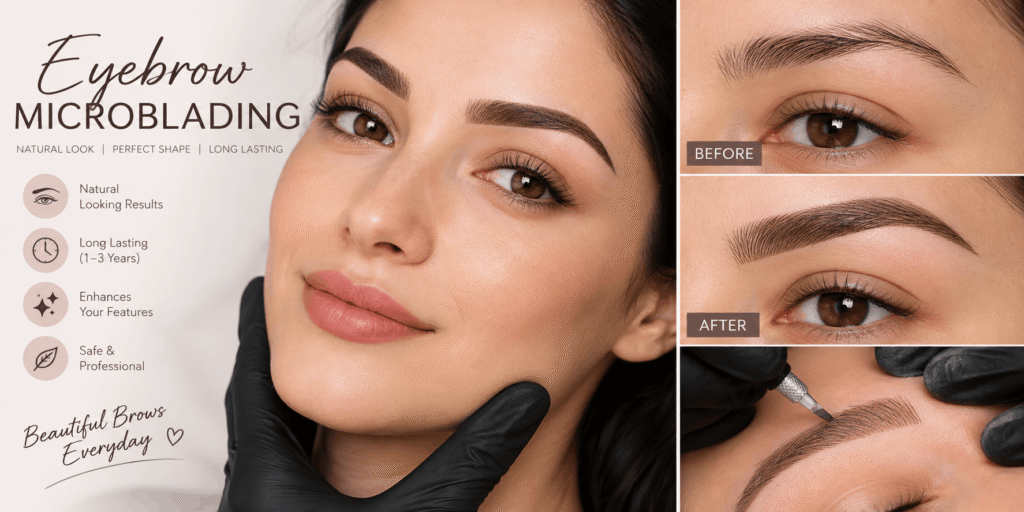
Eyebrow microblading is a semi-permanent cosmetic technique designed to create fuller, more defined, and natural-looking eyebrows. It is especially popular among people who have thin brows, sparse areas, uneven arches, or gaps caused by over-plucking. Instead of filling the eyebrows with makeup every morning, microblading creates fine, hair-like strokes that imitate the appearance of natural eyebrow hairs.
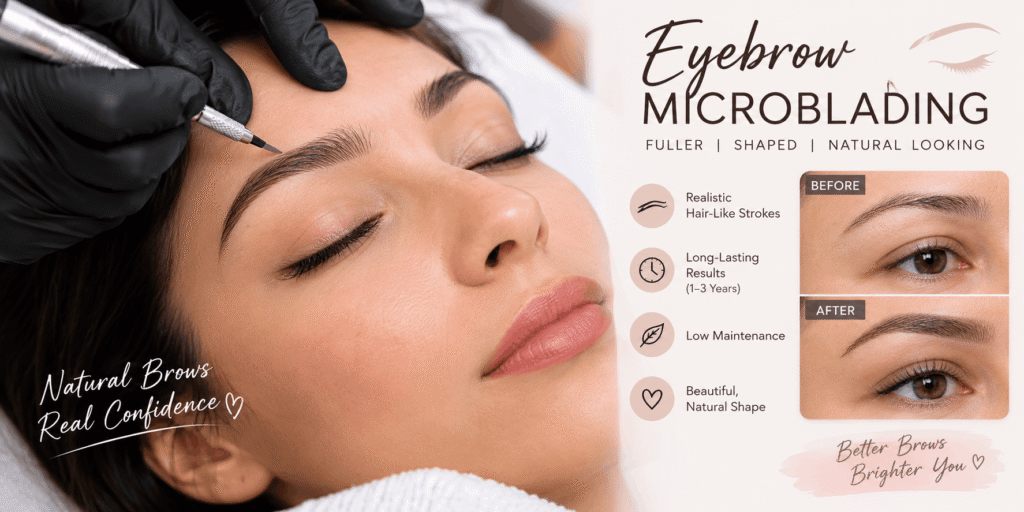
During the procedure, a trained professional uses a specialised handheld tool with tiny needles to deposit pigment into the superficial layers of the skin. The strokes are carefully placed to follow the natural direction of eyebrow growth, helping the finished brows blend with existing hair.
Unlike traditional eyebrow tattoos, microblading generally uses a manual tool rather than a tattoo machine. However, the results are not permanent in the same way as a conventional tattoo, and the pigment gradually fades over time. The exact result depends on factors such as skin type, pigment selection, technique, lifestyle, and aftercare.
Why Is Eyebrow Microblading Popular?
Microblading appeals to people who want a more defined brow shape without relying on pencils, powders, or pomades every day. It can also help create the appearance of symmetry when the eyebrows naturally differ in shape or density.
Some common reasons people choose microblading include:
- Fuller-looking eyebrows: Fine strokes can fill visible gaps and make sparse brows appear denser.
- Improved definition: A carefully designed arch can create a more polished appearance.
- Reduced daily makeup time: The eyebrows may require less filling in during everyday routines.
- A customised shape: Brow mapping allows the professional to design a shape that complements the person’s facial features.
- Natural-looking enhancement: When performed skillfully, individual strokes can resemble real eyebrow hairs.
It is important to remember that microblading enhances the appearance of the brows rather than stimulating new hair growth. If eyebrow thinning is caused by a medical condition, nutritional deficiency, or another underlying issue, microblading will not treat that cause.
Who Is a Suitable Candidate?
Microblading may suit adults who want to improve the shape or fullness of their eyebrow microblading and understand the maintenance involved. However, it is not suitable for everyone.
People with certain skin conditions, a history of problematic scarring, active infections near the eyebrows, or conditions that affect healing may need medical advice before considering the procedure. Those who are pregnant or breastfeeding should discuss the risks and appropriate timing with a qualified healthcare professional.
A consultation with an experienced practitioner is the best starting point. They can examine the skin, discuss expectations, review relevant medical considerations, and determine whether microblading is an appropriate option.
02. The Microblading Process: Step by Step
Understanding the microblading process can make the experience less intimidating, especially for first-time clients. Although the precise procedure varies between professionals, a typical appointment includes consultation, brow design, preparation, pigment application, and aftercare guidance.
The entire appointment may take approximately two hours or longer, depending on the complexity of the brow design and the practitioner’s approach.
1. Consultation and Brow Analysis
The appointment usually begins with a discussion about the client’s preferred eyebrow shape, desired fullness, daily makeup habits, and previous cosmetic procedures.
The practitioner examines the existing eyebrows, including their natural growth pattern, thickness, arch, and any sparse areas. They may also ask about skin sensitivity, allergies, medications, previous reactions to pigments, and medical conditions that could affect healing.
This stage is important because a shape that looks attractive in a photograph may not suit every person’s facial structure or natural brow pattern.
Clients should bring reference photographs if they have a particular style in mind. However, the final design should be adapted to their own features rather than copied exactly from someone else’s eyebrows.
2. Brow Mapping
Brow mapping is the process of planning the eyebrow shape before the pigment is applied. The practitioner measures and marks the intended starting point, arch, and tail of each eyebrow.
They consider facial proportions, the position of the eyes, the natural brow bone, and the existing hair growth. The goal is to create a balanced appearance while respecting the person’s natural features.
The client should review the proposed shape before the procedure begins. This is the time to discuss concerns about thickness, length, arch height, or symmetry.
Perfectly identical eyebrows are not always realistic because natural facial features are rarely perfectly symmetrical. A good design aims for visual balance rather than forcing both brows into an unnatural shape.
3. Numbing
A topical numbing product may be used to reduce discomfort during the procedure. The product should be suitable for the intended use and applied according to the manufacturer’s instructions and the practitioner’s professional standards.
The amount of discomfort experienced varies from person to person. Some people describe the sensation as light scratching, while others find certain areas more sensitive.
Clients should tell the practitioner about known allergies or previous reactions to numbing products. They should not apply their own anaesthetic creams beforehand unless the practitioner and product instructions specifically allow it.
Numbing can improve comfort, but it does not guarantee a completely painless experience.
4. Microblading
Once the brow design is approved and the skin is prepared, the practitioner begins creating fine strokes with a specialised manual tool.
Each stroke is placed carefully to mimic the direction and appearance of natural eyebrow microblading. The professional adjusts the pattern according to the existing hair, the shape of the brow, and the desired level of fullness.
The quality of this stage depends heavily on the practitioner’s training, precision, hygiene practices, and understanding of skin anatomy.
Excessive pressure or poorly controlled technique can cause unnecessary skin trauma, uneven results, and scarring. This is why selecting a qualified and experienced professional is more important than choosing a service based on price alone.
5. Pigment Application
A cosmetic pigment selected to complement the client’s natural colouring is used during the procedure. The practitioner considers the existing eyebrow hair, skin undertone, desired result, and how the colour may heal.
A shade that looks appropriate immediately after treatment may appear darker or more intense than the healed result. Pigment also changes in appearance as the skin recovers and the superficial layers renew.
The final colour cannot be predicted with absolute certainty. Skin characteristics, pigment composition, technique, sun exposure, and individual healing responses can all influence the outcome.
Clients should discuss their preferred shade before treatment and ask to see healed examples of the practitioner’s previous work, particularly examples involving similar skin characteristics.
6. Cleaning and Final Touches
After the strokes and pigment application are complete, the practitioner cleans the treated area according to the procedure’s hygiene protocol and checks the overall appearance of the eyebrows.
They may assess the balance of the shape, the placement of the strokes, and any areas that require attention within the limits of the technique.
The eyebrows may look bold, sharply defined, or darker than expected immediately after the appointment. This does not necessarily represent the final healed appearance.
The practitioner should explain what changes are normal during recovery and what symptoms require medical attention.
7. Aftercare Instructions
Aftercare is an essential part of the microblading process. The skin has been disrupted by the procedure and needs time to recover. Following appropriate hygiene and healing instructions helps reduce avoidable irritation and infection risks.
The practitioner should provide clear, written instructions tailored to the procedure and the products used. These instructions may cover gentle cleansing, whether and how to apply a recommended product, avoiding unnecessary contact, and protecting the area from activities that could interfere with healing.
Clients should not automatically follow every aftercare tip they find online because recommendations can differ depending on the technique and the practitioner’s protocol.
Avoid picking scabs, scratching the eyebrows, or applying unapproved products to the treated skin. Contact the practitioner or a healthcare professional if the instructions are unclear or the skin develops concerning symptoms.
03. Is Microblading Painful?
Microblading involves making tiny incisions in the superficial layers of the skin, so some discomfort is possible. However, the level of pain differs considerably between individuals.
Some clients experience a mild scratching sensation, while others report greater sensitivity around particular parts of the eyebrows. Anxiety, individual pain tolerance, skin sensitivity, and the effectiveness of the numbing product may influence the experience.
What Does Microblading Feel Like?
During the procedure, a person might notice:
- Light scratching or scraping sensations.
- Mild pressure around the eyebrow area.
- Temporary tenderness or sensitivity.
- Slight discomfort when the practitioner works over more sensitive areas.
The experience is not identical for everyone. People who are worried about pain should discuss their concerns during the consultation rather than assuming that the procedure will be completely painless.
How Can You Prepare for a More Comfortable Appointment?
A few sensible steps may help make the appointment more manageable.
Choose a suitable appointment time. Avoid scheduling the procedure when you are rushed, exhausted, or unable to follow the recommended recovery instructions.
Follow the practitioner’s preparation guidance. Ask about alcohol, caffeine, skincare products, medications, and other factors that may affect bleeding or skin sensitivity. Do not stop prescribed medication without advice from the healthcare professional who manages it.
Share relevant medical information. Tell the practitioner about allergies, previous cosmetic reactions, skin conditions, and medicines that may affect healing.
Speak up during the procedure. If the discomfort becomes difficult to tolerate, tell the practitioner. They can assess whether a break or an adjustment is appropriate.
After the appointment, mild tenderness and temporary redness may occur. Severe or increasing pain, spreading redness, significant swelling, pus, or fever should not be dismissed as normal healing. These symptoms warrant prompt medical evaluation.
04. Microblading Before and After: What to Expect
One of the most important things to understand about eyebrow microblading is that the immediate result is not the finished result. The eyebrows change in appearance as the skin heals and the pigment settles.
Before treatment, eyebrows may look uneven, thin, faded, or incomplete. After microblading, fine strokes can create a more structured appearance and make sparse areas look fuller.
However, the final outcome depends on individual skin characteristics, the original eyebrow hair, pigment selection, and the practitioner’s technique.
Immediately After the Procedure
Right after treatment, the eyebrows may look darker, bolder, or more defined than expected. The skin can also appear slightly red or swollen.
This initial intensity is common, but it should not be used to judge the final colour or shape. Pigment that looks very dark immediately after application may soften as healing progresses.
Clients should avoid requesting unnecessary corrective work simply because the brows appear too bold on the first day. Allow the skin to heal according to the professional’s instructions before assessing the result.
During the First Week
As the treated skin recovers, the eyebrows may feel dry, tight, or mildly itchy. Small flakes or scabs may develop, and the colour can appear uneven as the outer skin sheds.
Some areas may look lighter than others during this stage. This temporary variation does not automatically mean the procedure has failed.
Picking at the skin or attempting to remove flakes can interfere with healing and may contribute to pigment loss or scarring. Let the skin recover naturally and follow the recommended aftercare routine.
After the Skin Heals
Once healing is complete, the eyebrows generally look softer than they did immediately after the procedure. The strokes may become less prominent, and the colour may appear more natural.
Some clients retain pigment more evenly than others. Factors such as oily skin, skin texture, exposure to sunlight, and individual healing responses can affect how clearly the strokes remain visible.
A follow-up appointment may be recommended after the initial healing period. If a touch-up is appropriate, it allows the practitioner to assess the healed result and determine whether small adjustments are needed.
What If the Results Are Not What You Expected?
Microblading results cannot always be made perfectly symmetrical or identical to a reference photograph. If the brows heal lighter than expected or contain small gaps, the practitioner may discuss whether a touch-up is suitable.
If the colour or shape is significantly different from what was agreed upon, avoid attempting to correct it at home using acids, bleaching agents, or other harsh products.
Speak with an experienced professional about safe options. Pigment removal or correction can be complicated, and further procedures should not be performed on skin that has not healed.
The best way to set realistic expectations is to review healed photographs, discuss the limitations of the technique, and agree on a suitable design before the procedure begins.
05. Microblading Healing Process
The healing process is an important part of eyebrow microblading because the skin needs time to recover from the tiny incisions created during treatment. Although the eyebrows may look finished immediately after the appointment, their colour, texture, and overall appearance can change over the following weeks.
Healing varies from person to person. Skin type, individual healing responses, aftercare habits, and the technique used can all influence the final result. Understanding the typical stages can help you avoid unnecessary worry and recognise when something requires professional attention.
Days 1–2: Darker and More Defined Brows
During the first couple of days, the eyebrows often appear darker, bolder, and more sharply defined than expected. Mild redness, tenderness, or slight swelling may also occur around the treated area.
This early appearance does not necessarily reflect the final result. The pigment can look more intense while the skin is freshly treated, so it is best to avoid judging the colour immediately.
Follow the practitioner’s cleansing and aftercare instructions, and avoid touching the brows unnecessarily.
Days 3–7: Dryness and Flaking
As the skin begins to recover, small flakes or scabs may develop. The eyebrows may feel dry, tight, or itchy, and the colour may appear uneven.
Some people notice that certain strokes seem to disappear temporarily. This can happen as the outer skin sheds and the pigment settles into the healing skin.
Do not scratch, peel, or pick at the treated area. Removing flakes prematurely can damage healing skin and affect pigment retention.
Days 7–14: Colour Changes
During the second week, the eyebrows may appear lighter or less defined than they did immediately after the procedure. Some areas may look patchy, creating the impression that the pigment has faded significantly.
These changes do not always represent the final result. The skin continues to recover, and the appearance of the pigment may fluctuate during this period.
Continue following the aftercare instructions rather than applying extra pigment, exfoliants, or unapproved skincare products to correct the colour.
Weeks 3–6: The Results Become Clearer
Over the following weeks, the skin generally becomes more settled, allowing the colour and stroke definition to be assessed more reliably.
The final appearance depends on the original skin condition, the pigment used, the professional’s technique, and how well the area has healed.
A follow-up assessment may be recommended once sufficient healing has occurred. The practitioner can determine whether a touch-up is necessary and whether the skin is ready for another procedure.
How Can You Support Healthy Healing?
The most helpful approach is to keep the treated area clean according to professional instructions, avoid picking at the skin, and protect it from activities that could irritate the area.
Do not assume that every product marketed for tattoo healing is suitable for microbladed eyebrows. Use only products recommended for your specific procedure.
If redness spreads, pain worsens, the area becomes increasingly hot or swollen, pus develops, or you experience fever, seek medical attention promptly. These symptoms may indicate an infection rather than ordinary healing.
06. How Long Does Eyebrow Microblading Last?
Eyebrow microblading is a semi-permanent cosmetic treatment. Its results commonly last around 12–24 months, although some people notice fading sooner, while others retain visible pigment for longer.
There is no exact expiry date because the pigment gradually changes within the skin. The longevity of your results depends on several personal and environmental factors.
Factors That Affect Microblading Longevity
Skin type: Oily skin may cause fine strokes to look softer or less distinct over time. People with drier skin sometimes retain crisp-looking strokes for longer, although individual results vary.
Pigment and technique: Pigment composition, application depth, stroke placement, and practitioner skill influence how the colour heals and fades.
Sun exposure: Frequent exposure to ultraviolet radiation can contribute to pigment fading and colour changes. Appropriate sun protection after healing may help preserve the appearance.
Skincare routine: Exfoliating acids, retinoids, and other active skincare products used near the eyebrows may affect the skin and the appearance of pigment. Follow professional guidance about when and how to use them.
Lifestyle: Swimming, frequent sweating, and certain skincare or cosmetic treatments may influence pigment retention, particularly when the skin is still healing.
Aftercare: Picking scabs, irritating the area, or failing to follow hygiene instructions can interfere with healing and affect the final result.
Does Microblading Fade Completely?
Not necessarily. Although microblading is described as semi-permanent, pigment may remain visible beyond the period when the original strokes look sharp.
Some people require maintenance to preserve their preferred appearance, while others decide to let the pigment fade naturally. Residual colour can remain for years in some cases, depending on the pigment, technique, and individual skin characteristics.
It is therefore important not to assume that microblading will disappear completely within a fixed timeframe.
When Should You Get a Touch-Up?
A touch-up may be considered after the initial healing period if the practitioner identifies areas that need refinement. Later maintenance appointments depend on how much pigment remains and whether the client wants to maintain the original appearance.
Avoid scheduling repeated procedures simply because the colour looks lighter during the first two weeks. Wait until the skin has healed sufficiently for the result to be assessed.
Repeatedly treating the same area without allowing adequate recovery can increase skin trauma and the risk of scarring.
07. Aftercare Tips for Microblading
Proper aftercare helps protect the healing skin and supports the best possible cosmetic result. Even when the procedure is performed by a skilled professional, poor aftercare can lead to irritation, infection, or uneven pigment retention.
The instructions provided by your practitioner should take priority because recommendations may differ according to the technique and products used.
1. Keep the Area Clean
Follow the practitioner’s instructions for cleaning the eyebrows. Use only the recommended cleansing method and avoid rubbing the treated area.
Wash your hands before any necessary contact with the brows. Dirty hands, unclean tools, and unnecessary touching can introduce bacteria into healing skin.
2. Avoid Picking and Scratching
Flaking and itching can occur during recovery. Although it may be tempting to remove loose skin, picking at the brows can interfere with healing.
Allow flakes to detach naturally. If itching becomes severe or is accompanied by a rash, increasing redness, or swelling, seek professional advice instead of applying random creams.
3. Be Careful With Water and Moisture
Your practitioner may recommend particular precautions around showering, swimming, and prolonged moisture exposure during early healing.
Avoid swimming pools, hot tubs, and other activities that expose the healing area to potentially contaminated water. Do not scrub the eyebrows while washing your face.
The goal is to protect the treated skin without using unnecessarily harsh cleansing methods.
4. Avoid Heavy Sweating During Early Healing
Intense exercise, steam rooms, and activities that produce heavy sweating may irritate the treated area during the initial recovery period.
Follow the time limits provided by your practitioner before returning to strenuous exercise. The appropriate restriction can vary with the procedure and the individual’s healing progress.
5. Protect Your Brows From Sun Exposure
After the skin has healed, sun protection can help reduce premature fading and colour changes.
Use a suitable broad-spectrum sunscreen around the area once your practitioner confirms that the skin is ready for it. During early healing, avoid applying sunscreen directly to the treated skin unless specifically instructed to do so.
Hats and shade can provide additional protection outdoors.
6. Avoid Harsh Skincare Products
Retinoids, exfoliating acids, chemical peels, and strong exfoliating products can irritate the skin around the eyebrows. These products may also affect the appearance of cosmetic pigment.
Avoid applying active ingredients to the healing area. Once recovery is complete, ask your practitioner how to incorporate your usual skincare products safely.
7. Follow Instructions About Ointments
Some professionals recommend a specific aftercare product, while others use a different healing approach.
Do not automatically apply petroleum jelly, antibiotic ointments, oils, or thick creams without confirming that they are appropriate for your procedure. Excessive or unsuitable products can cause irritation or interfere with the recommended care routine.
8. Avoid Makeup on the Treated Area
Applying eyebrow pencils, powders, concealers, or other makeup directly over healing skin may introduce contaminants or cause irritation.
Wait until the skin has healed and your practitioner confirms that makeup can be safely reapplied.
9. Attend Your Follow-Up Appointment
A follow-up appointment allows the practitioner to assess the healed result and discuss any areas that may need adjustment.
Do not attempt to correct uneven colour at home. Unsupervised pigment application, chemical removal, or aggressive exfoliation can damage the skin.
10. Know When to Seek Medical Advice
Mild temporary tenderness may occur, but worsening symptoms should not be ignored. Seek prompt medical assessment if you experience spreading redness, increasing pain, significant swelling, pus, fever, or other signs of infection.
Breathing difficulty, facial or throat swelling, or another severe allergic reaction requires emergency medical care.
08. Microblading Side Effects
Eyebrow microblading involves breaking the skin, so it carries potential risks even when performed by an experienced professional. Understanding these risks can help you make an informed decision before booking an appointment.
Temporary Redness and Swelling
Mild redness, tenderness, and limited swelling may occur immediately after the procedure. These symptoms should generally improve as the skin recovers.
If the symptoms become more severe, spread beyond the treated area, or continue worsening, seek medical advice.
Infection
Infection can occur if equipment is contaminated, hygiene practices are inadequate, or aftercare is not followed properly.
Warning signs may include increasing pain, spreading redness, warmth, pus, or fever. Professional assessment is important because an infection may require treatment.
Choose a practitioner who uses appropriate infection-control procedures and sterile, single-use equipment where required.
Allergic Reactions to Pigment
Some individuals may develop an allergic reaction to pigment ingredients or other products used during the procedure.
Possible symptoms include persistent itching, a rash, swelling, or unusual skin changes. Reactions can sometimes appear after a delay rather than immediately.
Tell your practitioner about known allergies and previous reactions to cosmetics or tattoo pigments. Ask whether the products used are appropriate for you and discuss the limitations of any preliminary allergy testing.
Scarring
Poor technique, excessive skin trauma, picking at scabs, or complications during healing can contribute to scarring.
People with a history of raised scars or keloids should discuss their history with a qualified healthcare professional before undergoing a cosmetic procedure that breaks the skin.
Uneven Colour or Shape
Pigment may heal unevenly, and the final brows may differ from the original design. Skin characteristics, practitioner technique, and individual healing responses can all affect the outcome.
A qualified professional may recommend a touch-up after healing, but not every uneven result can be corrected easily.
Unsatisfactory Long-Term Results
Microblading can leave residual pigment, and the colour may change as it fades. A result that initially looks natural may become less defined or develop an unwanted appearance over time.
Correction and removal can be complicated and may require multiple sessions. Some treatments can cause scarring or changes in skin pigmentation.
Before proceeding, ask the practitioner to show healed results from previous clients and explain the available options if you are unhappy with the outcome.
How Can You Reduce the Risks?
Consider these precautions before choosing a microblading service:
- Select a properly trained and experienced practitioner who follows local licensing and hygiene requirements.
- Check that the treatment area and equipment are prepared hygienically.
- Ask about pigment ingredients, sterile equipment, and infection-control procedures.
- Disclose relevant allergies, medical conditions, and medications.
- Review the proposed brow shape before pigment application begins.
- Follow the aftercare instructions and seek medical help for concerning symptoms.
No cosmetic procedure is completely risk-free. A careful consultation and responsible provider selection can help you decide whether microblading is suitable for you.
09. Conclusion
Eyebrow microblading offers a way to create fuller-looking, more defined eyebrows through carefully placed, hair-like pigment strokes. It can be a convenient option for people with sparse brows, uneven shapes, or a preference for reducing their daily eyebrow makeup routine.
However, successful results depend on more than the procedure itself. Choosing a qualified practitioner, selecting a suitable brow design, understanding the healing stages, and following appropriate aftercare are all important.
The results generally last around 12–24 months, but longevity varies considerably. Pigment may fade unevenly or remain visible longer than expected, and maintenance or correction may involve additional expense.
Before making a decision, consider your skin characteristics, medical history, desired appearance, and willingness to follow the aftercare instructions. If you have a skin condition or concerns about healing, seek appropriate professional advice before proceeding.
Ultimately, the best eyebrow treatment is one that suits your individual features, meets your expectations, and prioritises skin health and safety.
Final Thoughts
Eyebrow microblading can be an effective way to achieve fuller, more defined, and natural-looking eyebrows without relying on daily makeup. However, the final results depend on your skin type, the practitioner’s expertise, and how well you follow the recommended aftercare routine. Before booking an appointment, research your options, understand the potential risks, and choose a qualified professional. With realistic expectations and proper care, you can make a more informed decision about whether microblading is the right choice for your beauty routine.
Eyebrow microblading is a semi-permanent cosmetic procedure that uses fine, hair-like strokes to create fuller and more defined eyebrows.
Microblading typically lasts around 12–24 months, depending on skin type, pigment, lifestyle, and aftercare.
Some discomfort is possible during the procedure. A topical numbing product may help reduce sensitivity.
Initial healing usually takes around two weeks, while the final colour and appearance may take four to six weeks to settle.


3 Comments