Eye makeup can change the entire appearance of your face, even when the rest of your makeup routine is simple. A touch of color on the eyelids can make your eyes look brighter, complement your outfit, and help you express your personal style. One product that makes experimenting with eye makeup easier is liquid eyeshadow.
Unlike traditional powder formulas, liquid eyeshadow offers a smooth texture that can be applied directly to the eyelids. Depending on the product, it may create a soft wash of color, a subtle glow, or a bold metallic finish. Its convenient packaging and variety of shades make it an appealing option for both beginners and experienced makeup users.
However, choosing the right formula involves more than picking a beautiful color. Understanding the different finishes, application techniques, and product features can help you achieve a result that suits your needs.
This guide explores liquid eyeshadow in detail, from its basic features to choosing suitable shades and creating different makeup looks.
What Makes Liquid Eyeshadow Different?
Liquid eyeshadow is an eye cosmetic with a fluid or creamy consistency. It usually comes in a small tube or container with an applicator that helps distribute the product across the eyelid.
Traditional powder eyeshadow is applied as a dry powder, whereas liquid formulas have a texture that allows them to glide across the skin. Some dry relatively quickly and leave a set finish, while others remain creamy for longer.
The experience depends on the specific formula. Certain products provide sheer color that can be layered gradually, while others deliver intense pigmentation with a small amount.
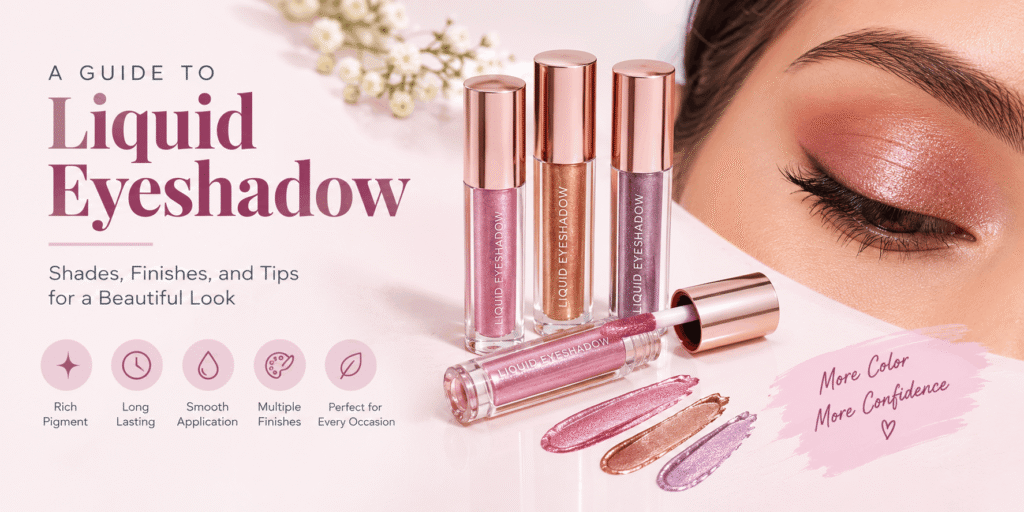
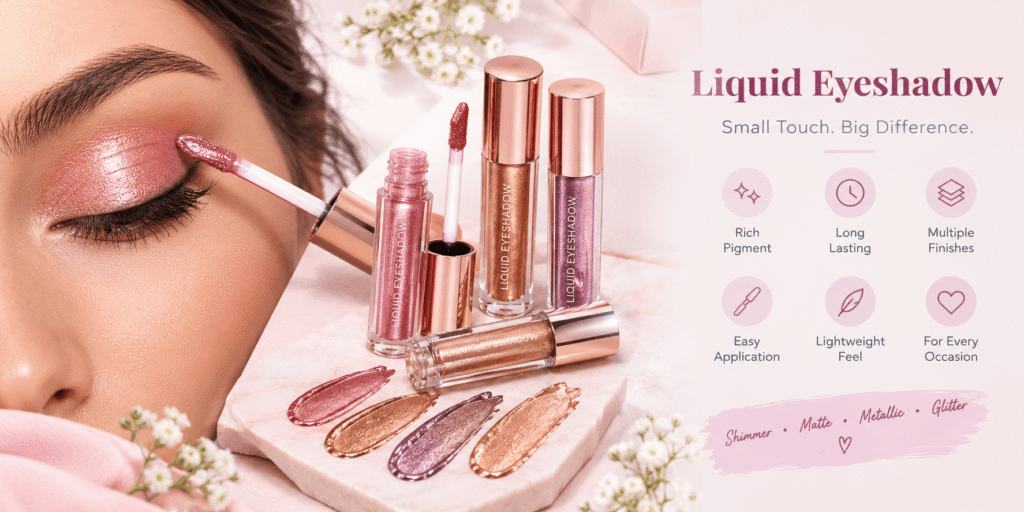
Liquid eyeshadow is available in neutral shades, soft pastels, rich browns, metallic golds, silvers, and vibrant colors. This range makes it suitable for many occasions, including everyday activities, dinners, parties, and celebrations.
A Convenient Option for Modern Makeup Routines
Many people prefer makeup products that do not require complicated techniques. Liquid eyeshadow can be helpful because its applicator allows you to place color directly where you want it.
For a simple look, you may only need one shade and a clean fingertip or small brush. More elaborate styles can involve multiple colors and additional eye makeup products.
The main advantage is flexibility. You can keep your routine minimal or experiment with different finishes depending on your mood and the occasion.
It is important to remember that liquid formulas behave differently. A product that blends easily may not dry as quickly as one designed for extended wear. Reading the instructions before application helps you understand how to use it properly.
Popular Liquid Eyeshadow Finishes
The finish of an eyeshadow influences how your eye makeup looks in natural light, photographs, and indoor lighting. Choosing a suitable finish can help you create a look that feels appropriate for the occasion.
Matte Finish for a Soft Appearance
Matte liquid eyeshadow creates a smooth appearance without obvious shimmer or sparkle. It is often chosen for natural makeup, professional settings, and understated looks.
Neutral colors such as beige, taupe, muted pink, and soft brown are versatile choices. They can add definition to the eyelids without making the makeup appear overly dramatic.
A matte shade can also work as a base for other eye products. If you want to combine it with additional colors, choose formulas that blend well together and follow their application instructions.
Shimmer Finish for a Gentle Glow
Shimmer eyeshadow contains reflective particles that catch the light. Compared with intense metallic shades, many shimmer formulas create a softer and more delicate effect.
Champagne, rose gold, peach, and light bronze are popular color choices for this finish. These shades can brighten the eyelids and add dimension without requiring a complicated makeup routine.
For a balanced appearance, apply shimmer to the eyelid and use a complementary matte shade around the edges if desired.
Metallic Finish for a Glamorous Look
Metallic liquid eyeshadow creates a more reflective appearance, often resembling polished gold, silver, copper, or bronze.
It is particularly useful for evening makeup, festive events, and occasions when you want your eye makeup to stand out.
A metallic shade can be worn alone or paired with neutral colors. Applying a thin layer first allows you to control the intensity and helps avoid an unnecessarily heavy finish.
If the formula dries quickly, work on one eyelid at a time so you have enough opportunity to smooth the product before it sets.
Glitter Finish for Special Occasions
Glitter liquid eyeshadow is designed to add visible sparkle. Depending on the formula, the glitter may appear subtle or create a bold, decorative effect.
This finish can complement party makeup, wedding looks, and festive outfits. However, eye-area safety should always be a priority.
Choose glitter products specifically formulated for use around the eyes. Do not substitute craft glitter or other materials that are not intended for eye makeup.
Apply the product carefully and follow the manufacturer’s directions to reduce the risk of particles entering your eyes.
Satin Finish for Everyday Elegance
Satin liquid eyeshadow offers a finish between matte and shimmer. It usually provides a gentle sheen without the strong reflection of metallic products.
This makes it a useful option for people who want a polished appearance that works for different settings.
Soft brown, dusty rose, muted mauve, and champagne are examples of colors that may work well with a satin finish. The best choice depends on your personal style and the rest of your makeup.
How to Choose a Shade That Suits You
The right eyeshadow shade is not determined by a single beauty rule. Your preferred colors, outfit, occasion, and desired makeup intensity all play a role.
Start With Colors You Already Enjoy
If you are new to liquid eyeshadow, consider beginning with a shade you already wear in powder eyeshadow or other makeup products.
Soft brown, beige, bronze, and muted pink can be versatile starting points. These colors are relatively easy to incorporate into different looks and can be worn with a wide range of outfits.
Once you are comfortable with the formula, you can explore brighter colors and more reflective finishes.
Consider the Occasion
A neutral shade may be suitable for everyday wear, while a metallic or glitter finish can add more drama to an evening look.
For weddings and celebrations, choose a color that complements your clothing without requiring every part of your makeup to compete for attention.
There is no need to follow every trend. A shade that makes you feel comfortable and confident is often a better choice than one selected only because it is popular.
Think About Your Desired Intensity
Some liquid eyeshadows provide sheer color, while others deliver a highly pigmented finish.
If you prefer subtle makeup, look for products that can be applied in a thin layer. If you enjoy bold looks, a more pigmented formula may be suitable.
Always begin with a small amount. Building color gradually gives you more control than applying a thick layer immediately.
What to Look for When Buying Liquid Eyeshadow
Packaging and color are important, but the formula itself deserves attention before you purchase a product.
Texture and Blendability
A comfortable formula should be manageable during application. Some products remain blendable for several seconds, while others set rapidly.
If you are still learning eye makeup techniques, a formula with a longer blending window may be easier to use.
Read product descriptions and reviews carefully, but remember that individual experiences can differ depending on eyelid type, climate, and application technique.
Wear Time and Transfer Resistance
Some liquid eyeshadows are designed to provide extended wear or resist transfer. These features may be useful when you need your makeup to last through a busy day or special event.
However, performance varies between formulas. Waterproof, water-resistant, and long-wearing are not interchangeable claims, so check the product information instead of assuming all liquid eyeshadows offer the same benefits.
Applicator Design
An applicator should make it reasonably easy to place product where you want it.
A doe-foot applicator can cover the eyelid quickly, while a smaller applicator may provide greater precision. You can also use a clean synthetic brush to distribute and soften the color.
The best tool depends on the shape of your eyelids and the makeup effect you want to create.
Ingredients and Eye-Area Suitability
Choose a product intended specifically for use around the eyes. Review its ingredient information and directions, particularly if you have previously experienced reactions to cosmetics.
No product can guarantee that irritation will never occur. Stop using an eyeshadow if it causes discomfort, swelling, unusual redness, or a burning sensation.
Good product selection includes both appearance and suitability for your individual needs.
How to Apply Liquid Eyeshadow for a Smooth Finish
Applying liquid eyeshadow can be straightforward once you understand how the formula behaves. The most useful approach is to begin with a small amount, blend at the right time, and allow the product to set according to its instructions.
Step 1: Prepare Your Eyelids
Begin with clean eyelids and remove any remaining makeup. If you apply skincare around your eyes, allow it to absorb before moving on to your makeup.
A heavy or slippery layer of skincare may affect how certain eyeshadows adhere to the skin. Some people prefer to use an eyeshadow primer, but not every formula requires one.
Follow the product instructions and avoid applying unnecessary layers beneath the eyeshadow.
Step 2: Apply a Small Amount
Use the applicator to place a small quantity of product onto your eyelid.
You do not need to cover the entire area immediately. Starting with a small amount makes it easier to control the color and helps prevent the product from becoming thick.
If your eyeshadow dries quickly, work on one eyelid at a time instead of applying the product to both eyes before blending.
Step 3: Blend Before the Formula Sets
Use a clean fingertip or a suitable makeup brush to spread the eyeshadow gently.
Patting motions can help distribute the color without moving the skin too much. Blend the edges until they appear soft and even.
Some formulas set rapidly, so check how much working time the product provides. Avoid repeatedly rubbing the area after the eyeshadow has dried because this can disturb the finish.
Step 4: Add More Color if Needed
If you want stronger pigmentation, apply another thin layer when the first layer is ready for additional product.
Gradual application provides more control over the final appearance. It can also help you avoid uneven patches caused by applying too much product at once.
Not every formula is designed for multiple layers, so follow the manufacturer’s directions if the finish begins to look heavy or uneven.
Step 5: Complete Your Eye Makeup
Once the eyeshadow has set, finish your look with eyeliner, mascara, or other compatible products.
If you want to use powder eyeshadow alongside your liquid formula, test how the products work together. The best order depends on the textures and the result you want to achieve.
Keeping the crease area relatively light may help reduce the appearance of product buildup, especially if your eyelids naturally fold when you open your eyes.
Makeup Mistakes That Can Affect Your Results
Even a good-quality eyeshadow may not perform as expected when the application technique does not suit the formula.
Using Too Much Product
Applying a thick layer can make the eyeshadow difficult to blend and may lead to creasing or uneven texture.
Instead, begin with a small amount and add more only when necessary. This technique is particularly useful when working with highly pigmented formulas.
Blending at the Wrong Time
Some liquid eyeshadows remain workable for longer than others.
If you wait until a fast-drying formula has completely set, softening the edges may become difficult. On the other hand, moving a product before it is ready may disturb its finish.
Follow the directions and learn how your chosen product behaves.
Skipping Product Instructions
Different formulas have different requirements. Some may be suitable for layering, while others work best when applied in one thin layer.
Instructions can also explain whether the product requires a particular removal method or should be avoided under specific circumstances.
Reading these details before use can help you avoid unnecessary problems.
Neglecting Makeup Hygiene
Eye makeup should be handled carefully because it is applied close to a sensitive area.
Wash your hands before application, keep containers closed when not in use, and avoid sharing eye makeup or applicators.
Do not use a cosmetic that has changed noticeably in smell, texture, or appearance. Follow the packaging guidance regarding storage and replacement.
Liquid Eyeshadow vs. Powder Eyeshadow
Both liquid and powder eyeshadows can create attractive eye makeup, but they offer different textures and application experiences.
Liquid eyeshadow is useful when you want to place color directly onto the eyelid without starting with several powder shades. Depending on the formula, it may provide intense pigmentation and dry into a set finish.
Powder eyeshadow is often convenient for creating gradual color transitions. It can be blended across the crease, combined with several shades, and used to create soft or dramatic effects.
The better choice depends on your preferences rather than a universal rule.
When Liquid Eyeshadow May Be a Better Choice
Liquid eyeshadow may appeal to people who prefer a quick application or want a reflective finish with minimal effort.
A single shade can create a complete look, making it a convenient option for travel or a simplified makeup routine.
However, fast-drying formulas may require practice, and certain products can be more difficult to correct once they have set.
When Powder Eyeshadow May Be More Suitable
Powder eyeshadow may be preferable when you want to blend several colors gradually or create a detailed smoky effect.
It is available in numerous finishes and can provide greater flexibility for some blending techniques.
Powder can also create fallout during application, depending on its texture and pigmentation. Using a suitable brush and applying makeup carefully may help manage this.
Can You Combine Both Formulas?
Yes, liquid and powder eyeshadows can be used together when the formulas are compatible.
For example, you might use a liquid product as the main lid color and a complementary powder shade to add definition around the crease.
Allow the liquid formula to set as directed before applying another product. Test the combination first to ensure it does not become patchy or uneven.
How to Remove Liquid Eyeshadow Without Rubbing
Removing eye makeup carefully helps prevent unnecessary friction around the eyelids.
For regular formulas, use a suitable makeup remover. For water-resistant or long-wearing eyeshadow, choose a remover intended to dissolve that type of product.
Wash your hands before beginning. Apply the remover to a soft cotton pad or reusable cloth according to its instructions, then hold it gently against your closed eyelid to help loosen the makeup.
Wipe softly rather than scrubbing. If product remains, repeat the process carefully instead of pulling at the skin.
Keep the remover out of your eyes, and follow its directions regarding rinsing. If you experience persistent irritation or eye discomfort, stop using the product and seek appropriate medical advice.
Avoid sleeping with eye makeup on, and clean reusable makeup tools regularly according to their care instructions.
Caring for Your Liquid Eyeshadow
Proper storage and handling can help maintain the condition of your makeup.
Store It Correctly
Keep the container tightly closed and follow the storage instructions on the packaging. Avoid exposing the product to excessive heat or direct sunlight when the manufacturer advises against it.
Do not leave the applicator exposed unnecessarily, and never add water or other substances to change the formula.
Pay Attention to Product Changes
Cosmetics can change over time. Noticeable changes in smell, texture, color, or performance may indicate that a product should no longer be used.
Check the expiration date and period-after-opening symbol where provided. Replace the product according to the manufacturer’s guidance.
Keep Your Eye Makeup Personal
Avoid sharing liquid eyeshadow, especially when the applicator comes into direct contact with the eyelids.
If you have an eye infection, stop using eye makeup and follow advice from a healthcare professional. Discard potentially contaminated products when recommended.
Final Thoughts
Liquid eyeshadow provides a convenient way to experiment with color, texture, and different eye makeup styles. Whether you prefer a natural matte finish, a soft shimmer, or a bold metallic effect, the right formula can help you create a look that suits your routine and personal taste.
For the best experience, choose a product designed for the eye area, begin with a small amount, and blend according to its drying time. Careful removal and good makeup hygiene are also essential parts of a responsible beauty routine.
You do not need a large collection to get started. One versatile shade can be enough to practise the technique and discover what works for you. As you become more comfortable, you can experiment with additional finishes and colors to develop your own style.
Liquid eyeshadow is a liquid-based eye makeup product that adds color and shine to the eyelids. It comes in different finishes, including matte, shimmer, metallic, and glitter.
Apply a small amount to your eyelid using the applicator, a clean fingertip, or a makeup brush. Blend the edges quickly before the formula dries, following the product instructions.
Both have their advantages. Liquid eyeshadow offers convenient application and can provide an intense finish, while powder eyeshadow is often easier to blend across multiple shades.
Its wear time depends on the formula, skin type, and application technique. Some products offer long-lasting wear, but performance varies between brands.