
If you are sitting in a barber’s chair wondering whether to ask for a taper or a fade, you are definitely not the only one. These two haircuts can look surprisingly similar, especially in photos, but the way the hair disappears around the sides and back is actually quite different. Choosing between a taper vs fade comes down to how noticeable you want the haircut to be, how much hair you want to keep around the edges, and how often you are willing to maintain it.
A good haircut is not simply about following a trend. The right choice should work with your hair texture, face shape, daily routine, and even the kind of environment you spend most of your time in. A subtle taper can make a hairstyle look cleaner without changing its overall character, while a fade can create a much stronger contrast and make the haircut itself a major part of your appearance.
Taper vs Fade: Understanding the Real Difference
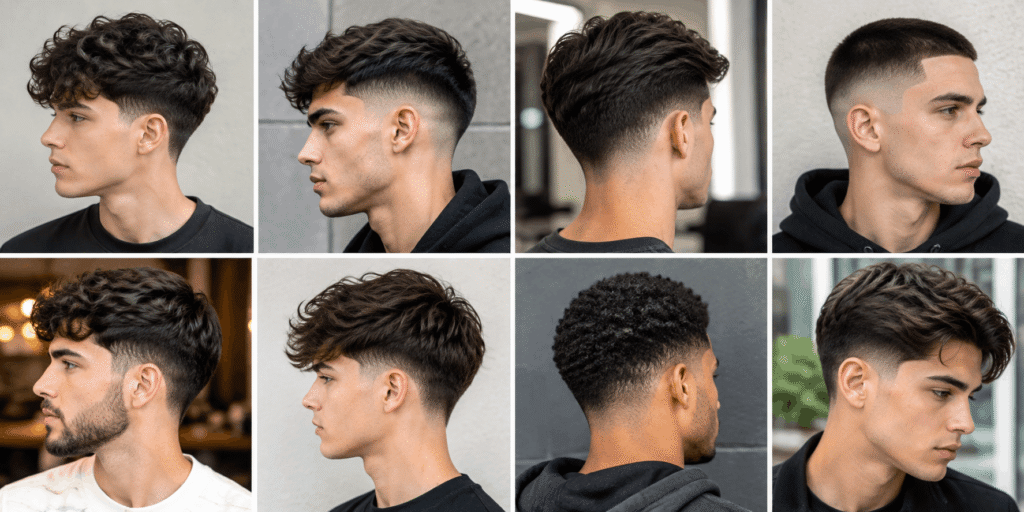
The easiest way to understand a taper vs fade is to look at where the shortening happens and how high it travels.
A taper gradually reduces the length of the hair around specific areas, usually the sideburns, neckline, and sometimes around the temples. Importantly, a taper does not necessarily remove a large amount of hair from the sides. The transition can remain relatively low and subtle, allowing plenty of the original haircut to remain visible.
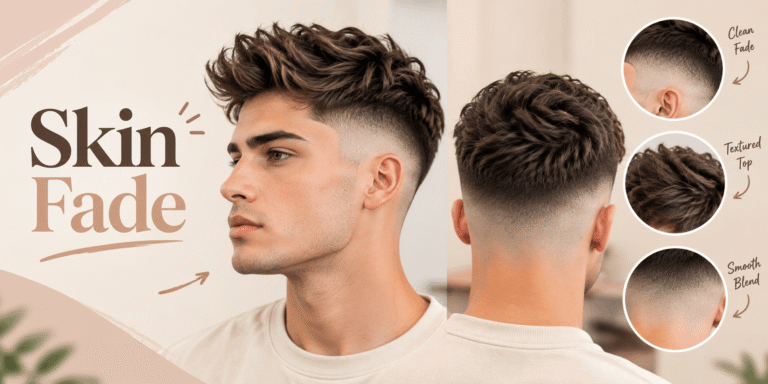
A fade usually creates a much more noticeable transition. The hair becomes progressively shorter as it moves toward the lower sides and back, and the shortest area can reach very close to the skin. Depending on the type of fade, that transition may stop low around the ears or continue much higher toward the temples and upper sides.
That difference changes the entire impression of the haircut.
With a taper, the hair often feels like it has simply been cleaned up and shaped. With a fade, the transition itself becomes part of the design.
Why They Look Similar
The confusion happens because barbers can combine these techniques with many of the same hairstyles. A textured crop can have a taper or a fade. A quiff can be paired with either one. Even a classic side part can be updated using either technique.
The top of the haircut may remain almost identical while the sides create a completely different result.
This is why showing your barber a photo is useful, but it is even better to explain exactly how short you want the sides and where you want the transition to begin.
A picture tells your barber what you like visually. Your words help clarify how much of that look you actually want.
Why a Taper Gives a More Subtle Finish
A taper works especially well when you want your haircut to look polished without making the sides the center of attention.
Instead of dramatically exposing the scalp, the barber gradually reduces the hair around the edges. The result can be clean enough for everyday wear while still retaining a traditional appearance.
This is one reason taper haircuts have remained popular across different generations. They can be paired with short hairstyles, medium-length cuts, textured hair, curls, waves, or longer styles without completely changing the personality of the haircut.
A taper also gives you more flexibility between barber visits. Because the transition is subtle, a little growth around the edges may not immediately make the haircut look completely different.
For someone who prefers a haircut that can move between casual and formal settings, this can be an important advantage.
The Modern Taper Look
A modern taper does not have to look old-fashioned. The difference comes largely from what you pair it with.
A textured top, messy fringe, curly hair, modern crop, or longer swept-back style can make a taper feel contemporary. The clean edges provide structure while the extra length gives the hairstyle room to have personality.
This makes the taper particularly useful when you want the haircut to look intentional without appearing overly sharp.
Why a Fade Creates More Contrast
A fade is designed to make the change in length more obvious.
The hair moves through shorter and shorter lengths until it reaches the desired stopping point. In some versions, the lowest section becomes extremely short, creating a clear contrast between the sides and the longer hair above.
That contrast can make the haircut appear sharper even when the top remains relatively simple.
For example, a person could have a basic textured hairstyle on top, but adding a clean fade underneath can completely change the visual balance. The sides look tighter, the top appears more prominent, and the outline of the haircut becomes easier to notice.
The exact effect depends on how high the fade starts.
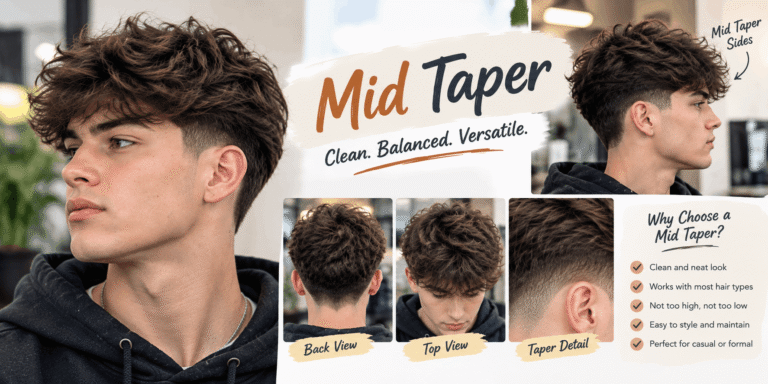
A low fade keeps most of the transition close to the ears and lower sides. A mid fade moves the transition farther upward. A high fade brings the shorter area much closer to the upper sides of the head, producing a stronger contrast.
So when someone says they want a fade, there is still another important question: which fade?
Low Taper vs Low Fade: What Changes?
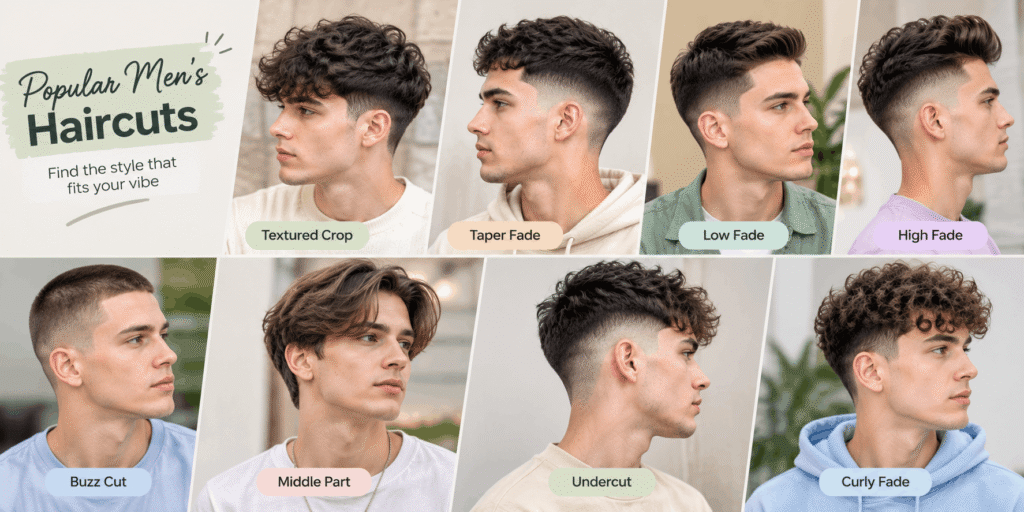
A taper vs fade can initially look almost identical because both keep the shortest area relatively close to the bottom of the haircut.
The key difference is how much of the surrounding hair is affected.
A low taper generally concentrates the shortening around the edges, such as the neckline and sideburn area. The rest of the sides can retain considerably more length.
A low fade usually creates a broader transition, making the side area look more noticeably graduated.
If you prefer a natural-looking haircut that does not drastically change the shape of your sides, a low taper may feel more comfortable. If you want the sides to look tighter and the transition to be easier to notice, a low fade may feel more comfortable. If you want the sides to look tighter and the transition to be easier to notice, a low fade may give you the effect you are looking for.
Neither option is automatically better. They simply create different levels of contrast.
Taper Fade: The Middle Ground Many Men Prefer
The term taper fade can make things confusing because it combines ideas associated with both styles.
In everyday barber language, taper fade is often used for a haircut where the hair gradually becomes shorter around the edges while still maintaining a clean, blended appearance. The exact result can vary significantly depending on what the barber understands by the term.
This is why saying only “give me a taper fade” may not be enough.
You can get a much more predictable result by adding details such as:
- How low you want the transition
- Whether you want the skin exposed
- How much length you want left on the sides
- How short you want the neckline
- Whether you want the temples cleaned up
- How much contrast you want between the top and sides
These small details can turn a vague haircut request into a clear one.
For example, someone asking for a subtle low taper is communicating something very different from someone asking for a high skin fade.
Taper vs Fade for Different Hair Types
Your hair texture can influence which version looks more balanced.
Thick hair often gives you plenty of room to experiment because there is enough density to create a visible contrast between the top and sides. A fade can make thick hair appear more controlled by removing bulk from the sides, while a taper can preserve more of that natural fullness.
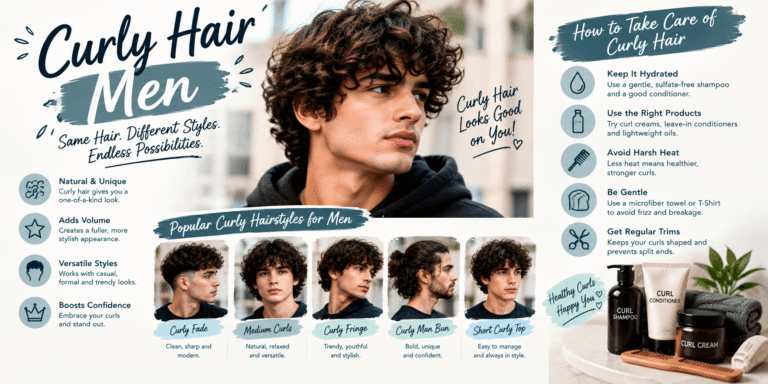
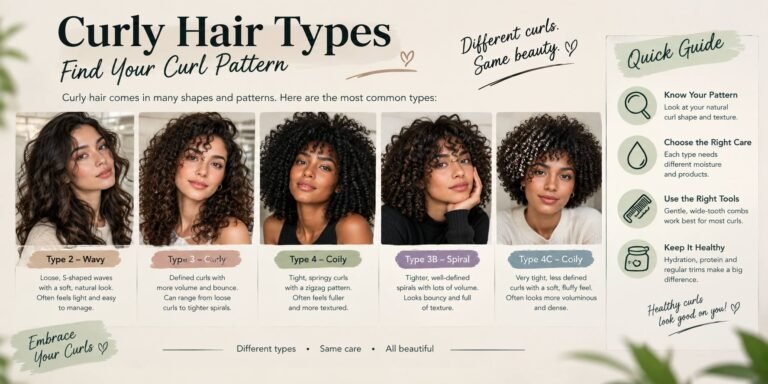
Curly and wavy hair can also work beautifully with both options. The important factor is how the transition interacts with the natural texture. A very tight fade can make curls on top appear much more prominent, while a taper can create a softer connection between the textured top and the sides.
Straight hair offers a different advantage because the transition is usually easy to see. This can make clean fades particularly noticeable, while a taper can create a classic shape without requiring dramatic contrast.
For thinner hair, the decision requires a little more thought. Removing too much from the sides can sometimes make the difference between the top and sides more obvious. A softer taper may therefore create a more connected appearance, although the best result depends on the individual’s natural density and hairstyle.
The goal should not simply be to choose the haircut that is popular. It should be to choose a transition that works with the amount and texture of hair you actually have.
Which One Is Easier to Maintain?
Maintenance is one of the biggest practical differences between a taper and a fade.
A fresh fade can look extremely clean when the transition is sharp, but visible growth may change that appearance fairly quickly. As the shortest areas grow, the contrast becomes less defined.
A taper can be more forgiving because the transition is usually concentrated around smaller areas. When those areas grow out, the haircut may still look relatively natural.
Your styling routine matters too.
If you already spend several minutes each morning shaping your hair, the difference in styling time between the two may not matter much. But if you prefer to wash your hair, run a little product through it, and leave the house, a haircut that naturally keeps its shape can be more convenient.
There is also a difference between looking good and looking freshly barbered. A fade may need more frequent touch-ups to preserve that just-cut appearance, while a taper can often continue looking intentional as it grows.
How to Choose Between a Taper and a Fade
Think about the overall impression you want before deciding.
If you want your haircut to remain versatile, relatively natural, and easy to adapt to different situations, a taper may fit that goal. It keeps the edges controlled without making the sides overwhelmingly short.
If you want stronger definition and a more noticeable transition, a fade may be more suitable. It can make the sides look tighter and give the hairstyle a sharper visual structure.
Your workplace can also influence the decision. A subtle taper can blend easily into conservative environments, while different types of fades can work particularly well in casual or style-focused settings. That does not mean fades are inappropriate for professional environments; the result depends heavily on how high, short, and dramatic the fade is.
In other words, you do not have to choose between “professional” and “modern.” You can adjust either haircut to create the level of sharpness you actually want.
What to Tell Your Barber Before the Cut
The phrase “taper” or “fade” alone leaves room for interpretation.
Instead, describe the haircut from the bottom upward.
Tell your barber whether you want the neckline tapered, how tight you want the sideburns, and where you want the transition to begin. If you dislike exposed skin, say so clearly. If you want a very clean finish around the ears but more length on the sides, mention that too.
You should also explain what you want to keep on top.
For example, if you have curly hair and want to preserve your curls, the barber needs to know that the top should not be treated like a short straight hairstyle. If you want a fringe, quiff, or textured top, the length required for that style should be considered before the sides are cut.
The more specific you are, the less likely you are to leave the barber shop with a haircut that is technically a fade or taper but does not resemble the look you had in mind.
How Face Shape Can Influence Your Choice
Face shape should not be treated like a strict rulebook. Almost any face shape can work with either a taper or a fade when the proportions are adjusted properly. What matters most is how the sides and top work together.
For an oval face, there is generally plenty of flexibility. A taper can preserve a balanced silhouette, while a fade can make the hairstyle look cleaner and more defined. The decision can therefore be based mostly on your preferred level of contrast.
For a rounder face, some people prefer keeping additional height or texture on top while avoiding excessive width around the sides. A tighter fade can help create a cleaner outline, but a taper can also work if the top is styled with enough structure. The goal is to avoid making the haircut look wider than necessary.
A square face already has naturally noticeable angles, so both choices can work well. A taper can soften the overall presentation by keeping more hair around the sides, while a fade can emphasize the strong shape of the head and jaw area.
With a longer or oblong face, the top and sides need to be considered together. Removing too much width from the sides while adding significant height on top can make the overall shape appear longer. A softer taper or a lower fade can sometimes provide a more balanced visual effect.
The important point is that a barber can modify the transition instead of treating every face shape exactly the same.
Taper vs Fade for Different Personal Styles
Your haircut should fit more than your face. It should also make sense with the way you normally dress and style yourself.
Someone who prefers classic shirts, simple outfits, and traditional hairstyles may naturally gravitate toward a taper because it keeps the haircut refined without demanding attention.
Someone who likes streetwear, textured hairstyles, modern clothing, or sharper grooming details may prefer a fade because the stronger contrast can become part of the overall look.
But these are not fixed categories.
A taper can look extremely modern when paired with a textured crop or messy top. Likewise, a low fade can be surprisingly understated when the transition stays close to the ears and the top retains moderate length.
This flexibility is what makes both haircuts useful. You are not choosing an entire personality with the haircut. You are choosing how noticeable you want the side transition to be.
Which Option Works Better for Professional Settings?
There is no universal rule saying that one haircut is professional and the other is not.
A very subtle taper can easily fit conservative workplaces because the sides remain relatively natural and the haircut does not create a dramatic contrast.
A low fade can also work in many professional environments when it is blended cleanly and kept at a moderate height. The issue is usually not the word “fade” itself but how extreme the finished haircut looks.
In a more conservative workplace, keeping the transition low and avoiding an overly exposed scalp may make the haircut easier to integrate with formal clothing.
Creative workplaces often provide more freedom, which means a higher fade, sharper transition, or more experimental top may be an option.
If you are unsure about your workplace rules, consider the most conservative version of the haircut you like. You can always make a future haircut more noticeable, but starting with a subtle version gives you more flexibility.
Low, Mid, or High: The Fade Height Matters More Than You Think
Once you decide on a fade, the next decision is its height.
A low fade keeps the transition near the lower sides of the head. It is often a good choice for someone who wants the clean effect of a fade without taking too much hair away from the sides.
A mid fade moves the transition upward and creates a more visible change between the top and sides. It can provide a balanced middle ground between subtle and dramatic.
A high fade starts much higher. Because more of the side area is shortened, the contrast can be significantly stronger.
This means two people can both say “I want a fade” while imagining completely different results.
If this is your first time getting one, discussing the height with your barber is more useful than simply naming the haircut.
What About Taper vs Fade for Curly and Wavy Hair?
Curly hair can make the difference between these styles particularly noticeable.
A fade can create a strong frame around curls by removing substantial bulk from the sides. The curls on top then become the dominant feature of the haircut.
A taper produces a softer transition and can preserve more fullness around the sides. This may be useful if you want your curls to connect naturally with the rest of the haircut instead of creating a strong contrast.
Wavy hair can work with either option as well. A low taper can complement a relaxed, textured style, while a fade can make the waves on top stand out more clearly.
For both textures, communication is especially important. Tell the barber how much natural volume you want to keep. Cutting the sides too aggressively can change the balance of the hairstyle more than expected.
What About Thin or Fine Hair?
With fine or low-density hair, the main consideration is how the haircut creates visual balance.
A fade can sometimes make the top appear more prominent because the sides become significantly shorter. That can be useful for certain hairstyles, but it can also create a sharper contrast than you wanted.
A taper leaves more surrounding hair and can produce a connected, softer shape.
Neither approach automatically makes hair look thicker. The haircut simply changes how the existing hair is distributed visually.
A barber can also adjust the length gradually rather than immediately removing large amounts from the sides. This is another reason it helps to explain your preferred result instead of requesting a specific clipper number without context.
How Often Should You Maintain a Taper or Fade?
The ideal maintenance schedule depends on how precise you want the haircut to remain.
If you love the freshly blended appearance of a fade, you may notice regrowth sooner because the shortest areas create a strong contrast as they become longer. Regular touch-ups can keep that crisp appearance intact.
A taper generally gives you a little more visual flexibility as it grows because the transition is less extensive.
Your hair growth rate also matters. Someone whose hair grows quickly may feel that either haircut needs frequent attention, while someone with slower growth may be comfortable waiting longer.
There is no single correct schedule. The better question is: How long do you want the haircut to look freshly shaped?
If you are happy with a slightly grown-out appearance, you can usually wait longer. If you want extremely sharp edges and a highly defined transition, you’ll probably notice the need for maintenance sooner.
Can Older Men Wear Fades?
Absolutely. Haircuts do not have an age requirement.
The important consideration is whether the style matches the person’s hair, preferences, and everyday environment. An extremely high or dramatic fade may not be what every older man wants, but a low fade or subtle taper can provide a clean, modern appearance without feeling excessive.
For gray, silver, thinning, or naturally textured hair, the barber can adjust the transition to work with the existing characteristics of the hair.
The same principle applies at every age: the haircut should be adapted to the person rather than assuming that a particular style belongs to a particular generation.
Is a Taper Fade the Same as a Regular Fade?
Not necessarily.
These terms can overlap in casual conversation, which is why asking your barber for clarification can prevent misunderstandings.
A traditional fade generally refers to a graduated reduction in hair length through a specific area of the sides and back. A taper is usually more concentrated around selected edges such as the neckline and sideburns.
“Taper fade” is often used to describe a blended haircut that incorporates tapering around the edges with a more noticeable faded transition. Different barbers and clients may use the phrase differently.
Instead of relying on the label, describe what you want to see.
You can say that you want the transition low, medium, or high; explain whether you want the skin visible; and tell the barber how much length you want to retain around the sides.
That conversation is far more reliable than assuming every barber interprets the name exactly the same way.
Which Haircut Should You Choose?
If you are still stuck between the two, simplify the decision.
Choose a taper if you want a subtle cleanup, more length around the sides, a versatile shape, and a transition that can grow out naturally.
Consider a fade if you want stronger contrast, tighter sides, a more obvious blend, or a haircut where the transition is an important part of the overall design.
If you want something between those extremes, start with a low transition rather than jumping immediately to a high fade. This lets you experience the shorter sides without making the change too dramatic.
You can also bring two or three reference photos showing different versions of what you like. Instead of choosing a picture simply because the hairstyle looks good on someone else, focus on the side profile and transition. Ask yourself whether you actually want that amount of hair removed.
A good haircut is not necessarily the most dramatic one. It is the one whose shape, maintenance, and level of contrast make sense for you.
Final Thoughts
The real difference in the taper vs fade debate comes down to how much of the sides you want transformed.
A taper keeps the change concentrated around the edges and usually gives a softer, more adaptable finish. A fade creates a broader and often stronger transition, allowing the sides to become much tighter and the top to stand out.
Neither style is automatically the right choice for everyone.
Your hair texture, face shape, preferred hairstyle, workplace, maintenance routine, and personal taste all matter. Even within one category, the final result can vary dramatically depending on the height and length of the transition.
If you are unsure, start by explaining the result you want rather than relying only on the haircut name. Tell your barber how short you are comfortable going, where you want the transition to begin, and how much hair you want to keep around the sides.
That small conversation can make the difference between simply getting a taper or fade and getting one that actually suits the way you want to wear your hair.
A taper usually focuses on gradually shortening the hair around areas such as the neckline and sideburns, while a fade generally creates a more extensive transition across the sides and back.
A subtle taper can easily suit conservative professional environments, but a low and neatly blended fade can also work in many workplaces. The height and intensity of the haircut matter more than the name alone.
A fade can require more frequent touch-ups if you want to preserve a very sharp transition. As the shortest areas grow, the contrast can become less defined.

2 Comments