Eye bags can appear for many different reasons, from temporary fluid retention and poor sleep to allergies, genetics, and the natural changes that happen around the eyes over time. They are usually harmless, but their appearance can change from day to day depending on what is causing the puffiness.
The good news is that some simple habits may make eye bags look less noticeable. The most useful approach is to identify what may be contributing to the puffiness rather than expecting one remedy to work for everyone. Cool compresses, better sleep, allergy management, sun protection, and a consistent skin-care routine can all have a role.
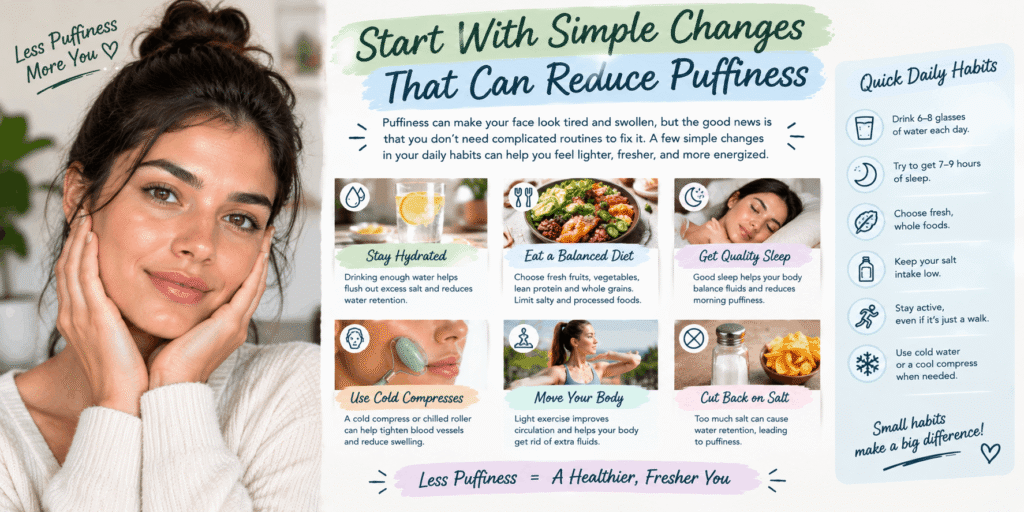
Start With Simple Changes That Can Reduce Puffiness
1. Try a Cool Compress
A cool compress is one of the simplest ways to temporarily reduce the appearance of under-eye puffiness. Cooling the area can help narrow blood vessels and may reduce swelling.
You can wet a clean washcloth with cool water, gently wring it out, and place it over the closed eye area for a few minutes. Keep the pressure light because the skin surrounding the eyes is delicate.
This approach is particularly useful when puffiness is more noticeable after waking up. It will not permanently change the structure of the area beneath the eyes, but it may make temporary swelling look less prominent.
2. Consider Chilled Tea Bags
Chilled tea bags are another commonly used home approach. After making tea, allow the used tea bags to cool completely and then chill them before placing them over closed eyes.
The cooling effect is likely the most useful part of this approach. Because the skin around the eyes can be sensitive, avoid using tea bags that are hot, heavily scented, or likely to irritate your skin.
Do not place anything directly into the eyes, and stop if the skin becomes irritated.
3. Manage Nasal Congestion
Allergies and nasal congestion can contribute to puffiness and dark-looking areas beneath the eyes. When congestion is involved, addressing the underlying nasal symptoms may be more useful than focusing only on the skin beneath the eyes.
Some people use saline nasal irrigation to help with congestion. However, this is one area where water safety matters enormously.
If You Use a Neti Pot, Use Safe Water
Never use ordinary tap water directly in a neti pot or other nasal-rinsing device. The CDC recommends using distilled or sterile water, or tap water that has been boiled and cooled.
The device should also be cleaned according to the manufacturer’s instructions. This precaution is important even when the tap water is considered safe to drink because water that enters the nasal passages needs a different level of safety.
If you have significant nasal symptoms, frequent congestion, or ongoing allergy problems, speaking with a healthcare professional can help identify the underlying cause.
4. Stay Properly Hydrated
Not drinking enough fluids can contribute to a dull or tired-looking appearance, and dehydration may make dark areas around the eyes more noticeable. Keeping up with normal fluid intake is therefore a sensible part of general skin and body care.
Hydration does not mean drinking excessive amounts of water. Instead, aim for regular fluid intake throughout the day and pay attention to signs that you may not be drinking enough.
If you have a medical condition that requires you to limit fluids, follow your healthcare professional’s advice rather than increasing your intake specifically for eye bags.
5. Address Allergies When They Are the Cause
Allergies can contribute to puffy eyelids, watery eyes, nasal congestion, and dark areas under the eyes. If your puffiness appears alongside sneezing, an itchy nose, watery eyes, or seasonal congestion, allergies may be part of the picture.
Reducing exposure to known allergens and managing allergy symptoms can sometimes improve the appearance around the eyes. If you regularly experience allergy symptoms, ask a healthcare professional or pharmacist about appropriate treatment rather than choosing medication solely because of under-eye puffiness.
The key is to treat the allergy itself rather than simply trying to cover its visible effects.
6. Build a Gentle Evening Skin-Care Routine
The skin around the eyes can be more sensitive than other areas of the face, so a complicated routine is not necessarily better. A gentle cleanser, suitable moisturizer, and daytime sun protection can provide a simpler foundation.
Washing your face before bed is especially useful if you wear makeup or use skin-care products during the day. Removing makeup can help reduce exposure to ingredients that may irritate the skin around the eyes.
Avoid aggressively rubbing the eye area while cleansing. Rubbing can irritate sensitive skin and may make swelling or discoloration more noticeable.
Skin-Care Ingredients Can Help With Specific Concerns
Not every product marketed for under-eye concerns is designed to treat actual swelling. Some ingredients are intended to improve the appearance of pigmentation, texture, or fine lines rather than remove structural bags.
Retinol Requires Extra Care
Retinol is a form of retinoid commonly used in skin care for concerns such as uneven tone and texture. However, retinoids can cause irritation, particularly when someone starts using them too frequently or applies them to sensitive areas.
Because the eye area is delicate, do not assume that a regular facial retinol product should automatically be applied close to the eyes. If you are considering a retinoid for the eye area, a dermatologist can help determine whether it is appropriate and how to use it safely.
Retinoids can also increase sensitivity to sunlight, making daytime sun protection especially important.
Look at Products for Uneven Pigmentation
Sometimes what appears to be an eye bag is actually a combination of mild puffiness, shadows, and darker pigmentation. In that situation, a product aimed at pigmentation may address one part of the appearance without changing the underlying puffiness.
This distinction matters because skin color and facial structure can affect how the under-eye area looks. A dark area is not necessarily the same thing as a swollen area.
Choose gentle products designed for the eye area and avoid experimenting with harsh ingredients close to the eyes. If pigmentation is persistent or bothersome, a dermatologist can help identify the likely cause and suggest appropriate options.
Sunscreen Still Matters
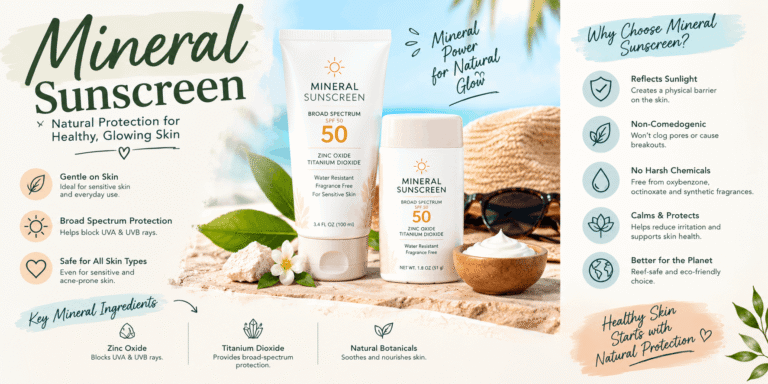
Sun exposure can contribute to changes in pigmentation and premature skin aging. Applying broad-spectrum sunscreen to exposed facial skin can therefore be an important part of protecting the area around the eyes.
Be careful when applying sunscreen close to the eyes. If a product repeatedly stings or causes watering, choose a formula intended to be more comfortable around the eye area and follow its directions.
Sunglasses and shade can also reduce direct sun exposure and provide an additional layer of protection.
Sleep and Evening Habits Matter More Than Quick Fixes
Sleep cannot change genetics or permanently remove structural under-eye bags, but inadequate sleep can make the area look more tired or puffy. Establishing a consistent sleep schedule may therefore help when lack of sleep is contributing to the appearance.
Rather than focusing on one “perfect” bedtime routine, aim for regular sleep and a comfortable environment. Reducing late-night screen use, keeping a consistent schedule, and allowing enough time for sleep may be more useful than relying on an under-eye product alone.
Try Sleeping With Your Head Slightly Raised
Fluid can accumulate around the eyes overnight. Sleeping with your head slightly elevated may help reduce that buildup for some people. Mayo Clinic lists slight head elevation as one of the home measures that may reduce morning puffiness.
The goal is simply a comfortable sleeping position. You do not need an extreme angle or an uncomfortable setup.
What You Eat Can Influence Puffiness
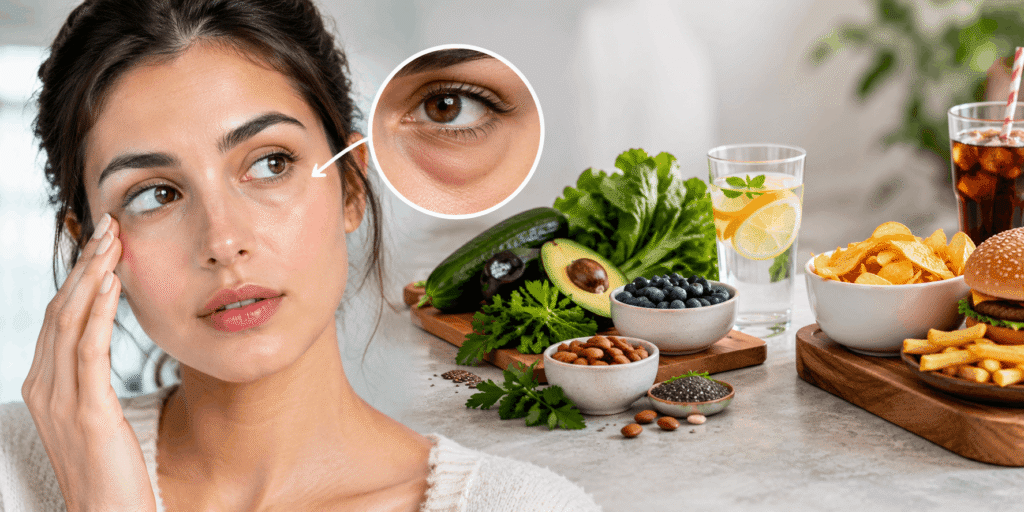
Diet is not a universal cure for eye bags, but certain eating habits can influence fluid retention and overall health.
Include Vitamin C Foods
Vitamin C is an essential nutrient found in foods such as citrus fruits, strawberries, bell peppers, tomatoes, and broccoli. Eating a varied diet that includes vitamin C supports normal health and provides nutrients involved in collagen production.
However, having eye bags does not automatically mean you have a vitamin C deficiency. Under-eye appearance has many possible causes, including genetics, allergies, sleep, fluid retention, and natural anatomy.
Watch Your Salt Intake
Eating a very salty meal can contribute to temporary fluid retention, which may make puffiness more noticeable, including around the eyes.
This does not mean you need to eliminate salt from your diet. Instead, keeping highly salty foods in moderation can be a reasonable part of an overall balanced eating pattern.
When Lifestyle Changes Are Not Enough
Some under-eye bags are strongly influenced by genetics, facial anatomy, skin changes, or the position of fat beneath the lower eyelid. In these situations, home remedies may only provide temporary improvement rather than completely removing the appearance.
If puffiness is persistent, suddenly appears, affects vision, causes significant irritation or pain, or occurs with other unusual symptoms, it is better to speak with a healthcare professional instead of repeatedly trying new cosmetic treatments.
A dermatologist or eye-care professional can help determine whether the issue is mainly swelling, pigmentation, allergies, skin changes, or another condition
Simple Nighttime Habits Can Make a Difference
Wash Your Face Before Bed
A simple nighttime cleansing routine can be helpful when dealing with eye bags, especially if you wear makeup or use skin-care products during the day. Gently washing your face removes makeup, sweat, sunscreen, and other buildup that can contribute to irritation around the eyes.
The skin around the eyes is delicate, so avoid vigorous rubbing or scrubbing. Instead, use a gentle cleanser and lukewarm water, then pat the area dry with a clean towel. If your eyes become irritated easily, keeping your routine simple may be more comfortable than layering many products around them.
It is also worth remembering that cleansing alone will not completely remove eye bags when genetics, aging, allergies, or natural facial structure are the main factors. The goal is to keep the surrounding skin comfortable and healthy rather than expecting one routine to completely change its appearance.
Improve Your Sleep Quality
Not getting enough quality sleep can make puffiness and dark-looking areas beneath the eyes more noticeable. A consistent sleep schedule may help your face look less tired, particularly when temporary puffiness is related to fatigue.
Rather than focusing only on the number of hours you sleep, pay attention to your overall sleep routine. Going to bed and waking up at relatively consistent times, keeping your bedroom comfortable, and reducing distractions before bedtime can make it easier to get restorative sleep.
If you regularly have difficulty sleeping despite having enough time available for rest, it may be worth discussing the problem with a healthcare professional. Persistent sleep problems can have causes that are unrelated to your skin.
Keep Your Head Slightly Elevated
Some under-eye puffiness can be more noticeable after waking because fluid can collect in the area while you are lying down. Sleeping with your head slightly elevated may help reduce this temporary effect.
This does not require an extreme sleeping position. A comfortable setup that provides gentle elevation is generally more practical than trying to sleep in an unusual position. If elevation causes neck discomfort, stop and return to a comfortable sleeping arrangement.
Everyday Choices Can Affect Under-Eye Puffiness
Pay Attention to Salt
Eating very salty foods can contribute to fluid retention, which may make temporary puffiness around the eyes more noticeable. You do not need to eliminate salt completely. Instead, focus on a generally balanced eating pattern and avoid making very salty foods a regular part of your meals.
Packaged snacks, instant meals, and heavily salted foods can contain substantial amounts of sodium. Choosing a variety of ordinary foods and drinking enough fluids can support overall well-being without relying on extreme dietary restrictions.
For teenagers especially, healthy eating should focus on getting enough nourishment for normal growth and daily activity rather than aggressively cutting out foods.
Include Vitamin C Foods
Vitamin C is an important nutrient involved in several normal body functions, including collagen production. Foods such as oranges, strawberries, kiwi, tomatoes, and bell peppers can provide vitamin C as part of a balanced diet.
However, having eye bags does not automatically mean that you are deficient in vitamin C. Under-eye puffiness has many possible causes, including genetics, allergies, sleep, fluid retention, and natural anatomy.
A varied diet is generally a better approach than taking supplements specifically because of under-eye appearance.
Alcohol and Eye Puffiness
Alcohol can contribute to dehydration and may make some people look more tired or puffy. If you are an adult who drinks alcohol, limiting intake may help with these temporary effects.
For teenagers, alcohol is not recommended. There is no need to start drinking or experiment with alcohol to address eye bags or any other appearance concern.
Smoking and the Skin Around Your Eyes
Smoking can affect skin health and is associated with changes that can make the skin look less healthy over time. If you smoke, avoiding tobacco is beneficial for your overall health as well as your skin.
If you are a teenager who has been exposed to smoking or vaping, you do not need to manage this alone. A trusted adult or healthcare professional can help you find appropriate support without judgment.
When It Is Time to See a Dermatologist
Sometimes eye bags are simply a normal feature caused by genetics or the natural structure of the area beneath the eyes. In other cases, allergies, irritation, fluid retention, sleep problems, or another condition may contribute to the appearance.
A dermatologist can help determine what is actually causing persistent puffiness or discoloration and explain which options are appropriate for your skin. This is particularly useful if you have tried simple changes and the concern continues.
You should also seek medical advice if swelling around the eyes is new, persistent, uncomfortable, or accompanied by other symptoms such as significant irritation or vision changes. The purpose of professional evaluation is not simply cosmetic—it can help rule out an underlying problem when the symptoms suggest one.
Be cautious with strong products marketed as instant solutions. The skin around the eyes is sensitive, and using too many active ingredients or applying products that were not designed for the area can cause irritation.
Final thoughts
Eye bags are extremely common and can result from several different factors. Some are temporary, while others are simply part of your natural facial structure. That is why there is no single method that works for everyone.
If your under-eye area looks puffier after a poor night’s sleep, a salty meal, allergies, or temporary congestion, simple habits may make a noticeable difference. A cool compress, gentle cleansing, good sleep habits, appropriate hydration, and managing allergies can all be reasonable places to start.
Skin-care ingredients can sometimes improve the appearance of pigmentation or texture, but the sensitive skin around the eyes needs extra care. Stronger treatments should not be used casually, particularly if you are unsure whether a product is suitable for the eye area.
Most importantly, having eye bags does not mean your face or appearance is unhealthy. Natural differences around the eyes are normal. If swelling is persistent, unusual, painful, or associated with other symptoms, getting advice from a healthcare professional is a better approach than repeatedly trying new products.
The best strategy is to identify what may be contributing to the puffiness and choose gentle, realistic habits rather than expecting an overnight transformation.