
Liquid foundation is one of the most popular makeup products for creating a smooth, balanced, and natural-looking complexion. Whether you prefer light everyday makeup or a more polished appearance for special occasions, liquid foundation can help you achieve the finish you want. Its flexible formulas, different coverage levels, and wide range of shades make it suitable for many makeup styles.
Choosing the right liquid foundation involves more than finding a shade that looks attractive in a bottle. Skin type, undertone, coverage preference, texture, application technique, and the environment in which you wear makeup all influence the final result. A foundation that looks beautiful on one person may feel uncomfortable or appear different on another.
This guide explains how liquid foundation works, how to choose the right formula, how to apply it correctly, and what to consider when comparing popular foundation options. It also covers practical techniques for achieving a comfortable, even, and natural-looking finish without making your makeup routine unnecessarily complicated.
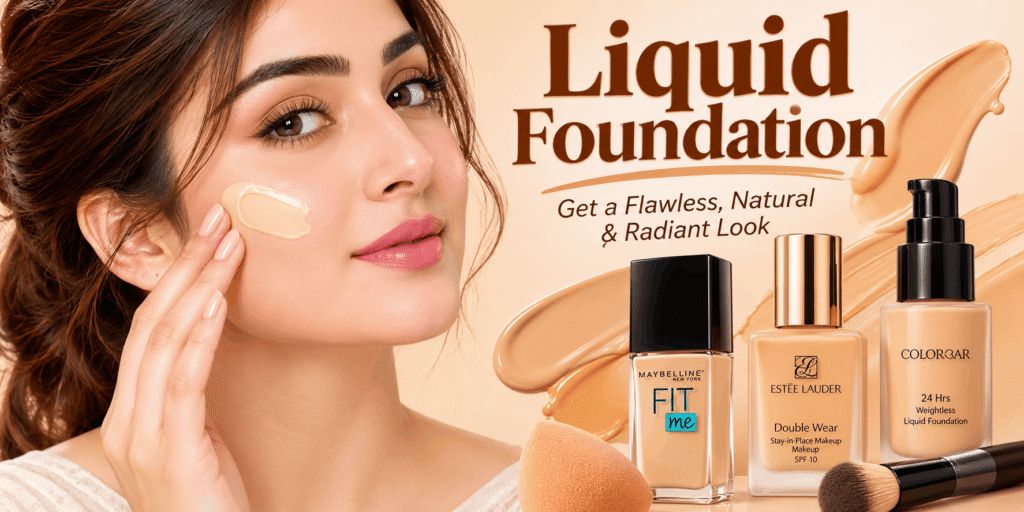
What Is Liquid Foundation?
Liquid foundation is a complexion makeup product designed to create a more even appearance across the skin. It is available in different textures, including lightweight fluid formulas, creamy liquids, matte finishes, and moisturizing foundations.
Unlike powder foundation, liquid foundation spreads across the skin with a fluid texture. This makes it easier to blend, layer, and adjust according to your preferred makeup look. Some formulas provide sheer coverage, while others are designed to cover more visible discoloration, redness, or uneven pigmentation.
Liquid foundation does not change your natural skin permanently. Its purpose is cosmetic, helping you create a consistent appearance while allowing you to choose how much of your natural complexion remains visible.
Why Is Liquid Foundation Popular?
Liquid foundation has become a staple in many makeup routines because it offers flexibility. You can apply a small amount for a subtle finish or build additional coverage where needed.
Another reason people prefer liquid foundation is the variety of finishes available. Depending on the formula, your complexion may look naturally radiant, softly matte, satin-like, or more polished.
The product can also work with different application tools. Brushes, makeup sponges, and clean fingers can all be used, although each method produces a slightly different result.
For beginners, liquid foundation is particularly useful because it allows gradual application. Instead of applying a thick layer immediately, you can start with a small amount and increase coverage only where necessary.
Understanding Different Liquid Foundation Finishes
The finish of your foundation affects how your complexion looks after application. Selecting a finish that matches your skin’s natural characteristics and your personal preference can make your makeup more comfortable and attractive.
Matte Liquid Foundation
Matte liquid foundation creates a finish with less visible shine. It is commonly preferred by people who experience excess oil throughout the day or want a more controlled, polished appearance.
Many matte foundations are designed to help reduce the appearance of surface shine. However, a very matte formula may emphasize dry patches if the skin is not properly moisturized.
Dewy Liquid Foundation
Dewy liquid foundation creates a fresh, luminous appearance. It is often chosen by people who prefer makeup that looks hydrated rather than flat.
This finish can work particularly well for normal or dry skin, although oily skin users can also enjoy it when the formula feels comfortable and wears well.
Satin Liquid Foundation
Satin foundation sits between matte and dewy finishes. It generally offers a balanced appearance without looking excessively shiny or completely flat.
This finish can be a useful choice for everyday makeup because it provides a softer, natural-looking complexion.
How to Choose the Right Liquid Foundation
Choosing a liquid foundation becomes easier when you understand your skin type, shade, undertone, and coverage requirements.
Consider Your Skin Type
Your skin type can influence how a foundation feels and performs throughout the day.
- Oily skin: Lightweight, oil-controlling, or matte formulas may feel more comfortable.
- Dry skin: Hydrating formulas with a creamy or flexible texture may help avoid emphasizing flaky areas.
- Combination skin: A balanced formula can work well, with additional powder applied only to oily areas.
- Normal skin: Many different finishes may suit normal skin, depending on personal preference.
- Sensitive skin: Look for products with ingredients you tolerate and avoid formulas that cause irritation.
Skin type can change with weather, skincare routines, and other factors, so the same foundation may feel different at different times.
Find Your Correct Foundation Shade
A foundation shade should blend naturally into your complexion rather than creating an obvious difference between your face and neck.
When testing liquid foundation, apply a small amount along the jawline and compare how it looks against your surrounding skin. Allow the formula to settle before making your final decision because some products may appear slightly different after drying.
Testing in natural daylight can help you evaluate the shade more accurately.
Understand Skin Undertones
Undertone refers to the subtle color beneath the surface of your skin. Foundation shades commonly fall into three broad undertone categories:
- Warm: Golden, yellow, or peach-like undertones.
- Cool: Pink, rosy, or bluish undertones.
- Neutral: A balance of warm and cool characteristics.
The depth of your complexion and its undertone are separate considerations. A foundation can match your skin depth but still look incorrect if its undertone is unsuitable.
Choose the Right Coverage
Liquid foundation is generally available in different coverage levels.
Sheer coverage offers a light layer that allows most natural skin characteristics to remain visible. Medium coverage provides a more noticeable improvement in the appearance of unevenness. Full coverage creates a more opaque finish and may conceal more visible discoloration.
Your daily makeup preference should guide this decision. A lightweight foundation may be more practical for casual wear, while a fuller-coverage formula can be useful for occasions when you want a more refined appearance.
Your Checklist for the Best Liquid Foundation
The best liquid foundation is not necessarily the most expensive or the most popular product. It is the one that matches your complexion, feels comfortable, and performs according to your expectations.
High Coverage
High-coverage liquid foundation is useful when you want to reduce the appearance of noticeable redness, dark marks, or uneven pigmentation.
However, more coverage does not automatically mean better makeup. Applying too much foundation can make the complexion appear heavy or less natural.
Buildable Coverage
A buildable liquid foundation allows you to increase coverage gradually without immediately creating a thick layer.
This feature is particularly useful for everyday makeup because you can apply a light amount across the face and add more product to selected areas.
Long-Lasting Performance
Long-lasting foundation is designed to maintain its appearance for an extended period. Its performance depends on the formula, preparation of the skin, application technique, and environmental conditions.
Heat, humidity, sweat, and frequent touching can affect how makeup wears throughout the day.
Easy Blending
A foundation should spread comfortably without requiring excessive rubbing. Easy blending helps prevent visible streaks, uneven patches, and harsh makeup edges.
A formula that blends well with your preferred tool can make your routine quicker and more enjoyable.
Even Skin Tone
Liquid foundation can help create a more uniform complexion by reducing the visible contrast between different areas of the skin.
It may soften the appearance of redness, discoloration, and uneven pigmentation, although it does not permanently correct these concerns.
Suitable for Your Skin Type
The best formula should feel comfortable on your skin. A foundation that looks attractive initially but causes tightness, excessive shine, or irritation may not be a suitable everyday choice.
Always consider your skin’s current condition when selecting makeup.
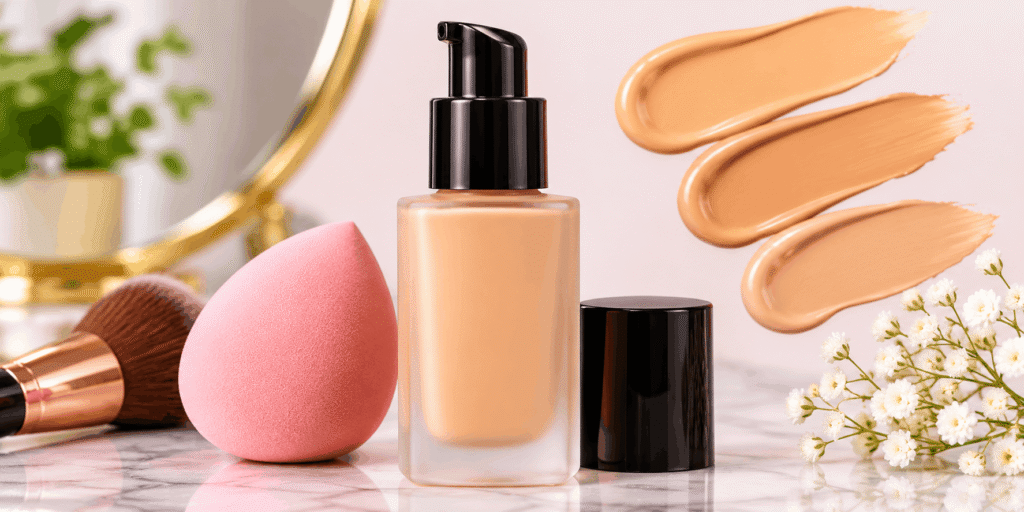
How to Apply Liquid Foundation
Applying liquid foundation correctly can make a significant difference in how your makeup looks and feels. The goal is to create an even finish without unnecessary layers or visible product buildup.
Step 1: Prepare Your Skin
Begin with a clean face. Apply your usual moisturizer and allow it to absorb before moving to makeup.
If you use sunscreen during the day, apply it before foundation and give it enough time to settle. Proper preparation can help foundation spread more evenly and reduce the appearance of dry areas.
Avoid applying makeup over skin that feels uncomfortable or excessively irritated.
Step 2: Choose Your Application Tool
You can apply liquid foundation using a makeup sponge, foundation brush, or clean fingers.
A damp makeup sponge is useful for pressing foundation gently into the skin and creating a softer finish. A brush can provide more coverage and precise application, while fingers may work well with lightweight formulas.
Choose whichever tool gives you the most comfortable and consistent result.
Step 3: Apply a Small Amount
Start with a small quantity of liquid foundation. Apply a few dots across your forehead, cheeks, nose, and chin.
Starting with less product allows you to control the coverage and avoid creating an unnecessarily thick layer.
You can always add more foundation if your complexion needs additional coverage.
Step 4: Blend From the Center Outward
Begin blending around the center of your face and gradually move toward the outer areas.
Pay particular attention to the sides of your nose, hairline, jawline, and areas around your mouth. These areas can easily reveal visible foundation lines if they are not blended properly.
Use gentle pressing or sweeping movements depending on your application tool.
Step 5: Build Coverage Where Needed
After blending the first layer, examine your complexion in natural light.
If certain areas still require additional coverage, apply a small amount of liquid foundation directly to those spots.
This technique helps maintain a lightweight appearance while providing more coverage where you actually need it.
Step 6: Finish Your Makeup
Allow your foundation to settle before applying the remaining complexion products.
You can use concealer to address specific areas, followed by powder where additional shine control is desired. Blush, bronzer, and other makeup products can then be applied according to your preferred routine.
Avoid applying too many products at once because excessive layering may affect the final texture.
Popular Liquid Foundation Options to Consider
Different liquid foundations offer different experiences depending on their formula, finish, coverage, and price. The following products are examples of well-known options that shoppers may compare when selecting makeup.
Colorbar 24Hrs Weightless Liquid Foundation
Colorbar 24Hrs Weightless Liquid Foundation
The Colorbar 24Hrs Weightless Liquid Foundation is an option for people exploring foundation products with a lightweight makeup feel.
When considering this foundation, pay attention to its available shades and the finish you prefer. A suitable shade should blend naturally into your complexion without creating a noticeable difference between your face and neck.
Before purchasing, check the current packaging and product information to confirm the coverage, finish, and suitability details for the specific version available in your market.
Maybelline New York Fit Me Matte+Poreless Liquid Foundation
Maybelline New York Fit Me Matte+Poreless Liquid Foundation
The Maybelline New York Fit Me Matte+Poreless Liquid Foundation is a familiar option for people interested in a matte complexion.
Its name highlights the matte and poreless appearance associated with this product range. It may appeal to shoppers who prefer a less shiny finish rather than a strongly luminous look.
When selecting a shade, compare the available colors carefully. A suitable match is important because even a well-blended matte foundation can look unnatural when its shade is too light, too dark, or too different in undertone.
The finish you achieve can also depend on skin preparation, application amount, and the other products used in your makeup routine.
Estée Lauder Double Wear Stay-In-Place Makeup Foundation SPF 10
Estée Lauder Double Wear Stay-In-Place Makeup Foundation SPF 10
Estée Lauder Double Wear Stay-In-Place Makeup is a foundation option often considered by shoppers looking for a more polished and long-wearing makeup appearance.
It is particularly relevant when comparing foundations intended for occasions, extended wear, or makeup routines that prioritize coverage and a more controlled finish.
The SPF 10 designation refers to the sun protection factor stated for the product version named here. However, foundation should not be your only source of sun protection because makeup is generally applied in smaller quantities than sunscreen.
Check the current product label for shade availability, ingredients, and any updated product specifications before buying.
Liquid Foundation vs. Other Foundation Types
Liquid foundation is not the only option available for complexion makeup. Comparing different foundation formats can help you decide which one fits your routine.
Liquid Foundation vs. Powder Foundation
Liquid foundation has a fluid texture that can be spread and blended across the skin. Powder foundation comes in a dry format and is often convenient for quick application or touch-ups.
Liquid formulas may offer more flexibility when building coverage, while powder products can be useful for people who prefer a lightweight powder-based routine.
Some makeup users combine both products, applying liquid foundation first and using powder selectively to finish the complexion.
Liquid Foundation vs. Cream Foundation
Cream foundation usually has a thicker texture than many liquid formulas.
Depending on the product, cream foundation may provide a rich feel or more concentrated coverage. Liquid foundation often offers greater flexibility in texture, ranging from very fluid to creamy formulations.
The choice between these formats depends on how the product feels on your skin and the finish you want to achieve.
Liquid Foundation vs. Tinted Moisturizer
Tinted moisturizer generally combines moisturizing ingredients with a small amount of color.
It may be suitable for people who prefer a subtle complexion adjustment rather than the more noticeable coverage offered by many foundations.
Liquid foundation is usually the more flexible option when you want to choose between different coverage levels and makeup finishes.
Common Liquid Foundation Mistakes to Avoid
Even a good liquid foundation can produce disappointing results if it is applied incorrectly.
Applying Too Much Product
One of the most common mistakes is applying a thick layer immediately.
Heavy application can make makeup appear cakey, especially around the nose, mouth, and areas with visible texture.
Start with a small amount and build coverage gradually.
Choosing the Wrong Shade
A foundation that does not match your complexion can create an unnatural appearance.
Avoid choosing a shade solely because it looks attractive in the bottle or because it is popular online.
Test the shade carefully and evaluate it in natural lighting.
Ignoring Skin Preparation
Applying liquid foundation over dry, flaky, or poorly prepared skin may result in uneven texture.
A comfortable skincare routine can help create a smoother surface for makeup application.
Using Too Many Layers
Applying foundation, concealer, powder, and other complexion products excessively may create unnecessary buildup.
Use each product where it provides a clear benefit rather than covering the entire face with every makeup item.
Not Blending the Jawline
Visible foundation lines around the jawline can make your makeup look incomplete.
Blend the product carefully toward the neck while maintaining a natural shade match.
How to Make Liquid Foundation Look Natural
A natural-looking foundation finish is often achieved through careful application rather than the amount of product used.
Choose a shade that matches your skin and use a formula that feels comfortable. Apply a thin layer first, then add coverage only where necessary.
A damp sponge can help soften the appearance of foundation by pressing the product into the skin. If you prefer a brush, use gentle movements and avoid repeatedly dragging the product across areas that have already been blended.
Natural makeup does not necessarily mean using the lightest coverage. It means choosing a finish and application method that complement your complexion without making the makeup appear unnecessarily heavy.
Liquid Foundation for Everyday Makeup
For everyday makeup, comfort and simplicity are often more important than maximum coverage.
A lightweight liquid foundation can be useful for work, classes, casual outings, or daily activities. Depending on your preferences, you may only need foundation on the areas where you notice unevenness.
You can also mix your makeup routine with other complexion products. Some people prefer using foundation only on the cheeks and around the nose, while leaving other areas uncovered.
This approach can reduce the amount of makeup used and make your routine quicker.
Liquid Foundation for Special Occasions
For weddings, parties, photographs, and other special occasions, some people prefer a more refined foundation finish.
A medium or full-coverage liquid foundation may help create a more uniform complexion when that is the desired look.
However, the best results still depend on appropriate skin preparation, shade matching, and careful blending. A foundation that looks comfortable and balanced in person is often preferable to one that appears excessively thick.
If you are using a new foundation for an important event, testing it beforehand can help you understand how it looks after several hours.
How to Remove Liquid Foundation Properly
Removing liquid foundation at the end of the day is an important part of your makeup routine.
Use a makeup remover, cleansing balm, micellar water, or another suitable cleansing product to loosen makeup. Follow with a gentle cleanser if needed to remove remaining residue.
Avoid scrubbing your face aggressively, particularly around the eyes and other delicate areas.
After cleansing, apply your regular moisturizer to help maintain skin comfort.
Final Thoughts
Liquid foundation remains a versatile makeup product because it offers different coverage levels, textures, and finishes for a wide range of preferences. Whether you enjoy a soft everyday complexion or a more polished makeup look, selecting the right formula can make your routine easier and more enjoyable.
The most important factors are finding a suitable shade, understanding your skin type, choosing comfortable coverage, and applying the product gradually. Popular options such as Colorbar 24Hrs Weightless Liquid Foundation, Maybelline New York Fit Me Matte+Poreless Liquid Foundation, and Estée Lauder Double Wear Stay-In-Place Makeup Foundation SPF 10 provide different choices to explore.
Ultimately, the best liquid foundation is the one that blends naturally, feels comfortable, and helps you achieve the complexion appearance you prefer.
Liquid foundation is used to create a more even-looking complexion by reducing the appearance of redness, discoloration, and uneven skin tone.
Matte liquid foundations are often suitable for oily skin because they help create a less shiny finish. Maybelline Fit Me Matte+Poreless is one option to consider.
Test foundation along your jawline and compare it with your neck in natural daylight. Choose a shade that blends naturally without leaving visible lines.
Yes, liquid foundation can be used daily if it feels comfortable on your skin. Remove it properly before sleeping to keep your skincare routine clean.



One Comment