
“Ozempic face” is a popular term for facial changes that can appear after significant or rapid weight loss, including less facial fullness, more noticeable wrinkles, and looser-looking skin. But is Ozempic itself responsible, or is there something else happening beneath the surface?
The term has become widely discussed alongside GLP-1 medications, but the underlying change is usually connected to loss of facial fat during weight loss rather than the medication directly damaging the face. Similar changes can happen after significant weight loss from other causes as well.
What Is Ozempic Face?
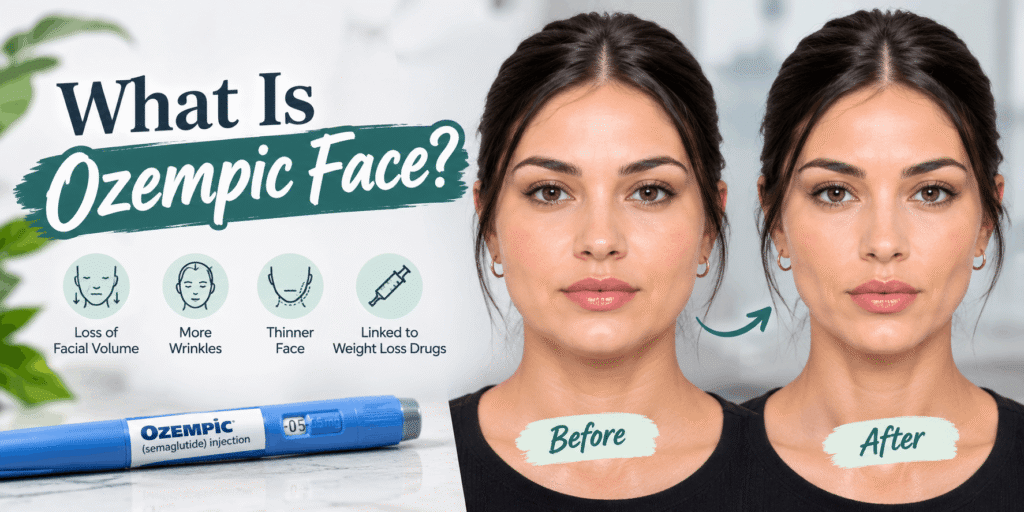
“Ozempic face” is not an official medical diagnosis. It is an informal phrase used to describe changes in facial appearance that some people notice while losing a substantial amount of weight.
The face naturally contains subcutaneous fat, which contributes to fullness and helps support the appearance of the cheeks, temples, lips and areas around the eyes. When someone loses a significant amount of weight, some of that facial fat may also decrease.
That can make the face look thinner or more angular. In some people, the skin may also appear looser because there is less underlying volume supporting it.
Importantly, these changes are not unique to Ozempic. Similar facial changes can occur after significant weight loss from lifestyle changes, bariatric surgery or other weight-management approaches.
What Does Ozempic Face Look Like?
The appearance can vary considerably from person to person. Someone may simply notice that their cheeks look less full, while another person may notice more visible lines or changes around the eyes and jaw.
Commonly discussed changes include reduced cheek fullness, a more hollow appearance around certain areas of the face, more noticeable wrinkles and looser-looking skin around the face or neck.
These changes can be particularly noticeable when a person’s face previously had more fullness. The difference may become apparent when comparing photographs taken before and after substantial weight loss.
However, a thinner face does not automatically mean someone has “Ozempic face.” Facial appearance naturally changes with age, genetics, hydration, skin elasticity and normal fluctuations in body weight.
Why Does Ozempic Face Happen?
The biggest factor is facial volume loss during weight loss.
When the body loses fat, it cannot choose to remove it only from one particular area. Fat can be lost from many parts of the body, including areas of the face where it contributes to natural fullness.
Rapid weight loss can make these changes more noticeable because the skin and underlying tissues have less time to adapt to the change in volume. Cleveland Clinic notes that rapid weight loss can reduce facial subcutaneous fat and make signs such as hollowing, wrinkles and sagging more noticeable.
How Rapid Weight Loss Can Change Facial Appearance
Facial fat plays an important structural role. It helps create the rounded appearance associated with fuller cheeks and provides some support beneath the skin.
When that volume decreases, facial contours can become more defined. Cheekbones or the jawline may appear more prominent, while cheeks can look less rounded.
The change isn’t necessarily harmful. In many cases, it is simply one of the visible effects of losing a significant amount of body weight.
Another factor is skin elasticity. Collagen and elastin help the skin maintain structure and flexibility, and rapid weight loss can make existing changes in skin elasticity more noticeable.
Why the Face May Lose Volume
Everyone stores and loses body fat differently. Genetics, age, starting body composition and the amount of weight lost can all influence where changes become noticeable.
This is why two people can lose a similar amount of weight but see very different changes in their faces.
One person may notice mostly slimmer cheeks, while another may notice changes around the eyes, jawline or neck. There is no single appearance that defines “Ozempic face.”
Age can also influence the result because facial fat and skin elasticity naturally change over time. People with less facial volume before weight loss may notice changes more easily.
When Does Ozempic Face Become Noticeable?
There is no exact point at which Ozempic face suddenly appears.
For some people, facial changes may become noticeable gradually as weight decreases. For others, the difference may only become obvious when they compare current photographs with older ones.
The amount and speed of weight loss can influence how noticeable the change becomes, but individual differences matter just as much.
Changes You May Notice During Weight Loss
A person might first notice that their cheeks look less full or that their face appears slimmer overall.
Later, areas that were already prone to fine lines may appear more defined because there is less volume underneath the skin. Some people may also notice changes around the jaw or neck.
It is important not to assume that every new facial change is caused by a GLP-1 medication. Skin aging, sun exposure, genetics and ordinary changes in body weight can all influence facial appearance.
Why Facial Changes Can Vary From Person to Person
There is no universal “Ozempic face.” Facial changes depend on how much weight someone loses, where their body naturally stores fat and how their skin responds to changes in volume.
A person’s age and genetics can also influence skin elasticity and the way facial volume is distributed.
This is one reason before-and-after photographs can be misleading when viewed without context. Two people may experience completely different changes even if their weight loss appears similar.
Can Ozempic Face Be Prevented or Reduced?
There is no guaranteed way to completely prevent facial volume loss during significant weight loss.
However, medical experts emphasize that gradual, sustainable weight loss may reduce the likelihood of dramatic appearance changes compared with losing a large amount of weight very quickly.
This does not mean someone should change their medication or weight-loss plan independently. Anyone taking a prescription medication should discuss concerns about the pace of weight loss with the healthcare professional managing their treatment.
The Importance of Gradual, Sustainable Weight Loss
Rapid changes in body weight can be accompanied by noticeable changes in facial volume. A slower approach gives the body more time to adjust as weight changes.
Cleveland Clinic recommends discussing a gradual approach with a healthcare provider rather than attempting to accelerate weight loss.
The goal should not simply be to prevent a cosmetic change. Maintaining adequate nutrition, supporting muscle and following a medically appropriate weight-management plan are important parts of overall health.
Maintaining Good Nutrition and Hydration
Nutrition matters during significant weight loss because the body still needs adequate nutrients to support normal body functions, skin health and muscle maintenance.
Protein is particularly important for maintaining muscle, while adequate fluid intake helps support normal hydration.
The American Academy of Dermatology also recommends paying attention to skin hydration and sun protection for people experiencing skin changes while taking GLP-1 medications.
A basic skincare routine can also help the skin feel more comfortable as the body changes. Gentle cleansing, moisturizer and daily sun protection can support general skin health without promising to restore lost facial volume.
Why Healthy Habits Matter During Weight Loss
Weight loss affects much more than the number on a scale. Changes in body composition can influence muscle, skin and facial volume as well.
Regular physical activity can support muscle maintenance, while balanced nutrition helps provide the nutrients needed during weight loss.
The American Academy of Dermatology notes that some people using GLP-1 medications experience changes involving their skin, hair and nails, and recommends discussing persistent concerns with an appropriate healthcare professional.
Can Ozempic Face Be Reversed?
Whether facial volume returns depends on the individual and what caused the change.
If someone regains some of the weight they lost, their face may become fuller again. However, maintaining weight loss can mean that some facial volume changes remain. Cleveland Clinic notes that these changes do not necessarily disappear simply with time.
That does not mean someone needs cosmetic treatment. “Ozempic face” is generally considered an appearance concern rather than a medical condition requiring treatment.
Does Facial Volume Return After Weight Stabilizes?
After weight stabilizes, facial appearance may also become more stable. Some people may notice that their face looks somewhat fuller over time, while others may retain much of the change.
The result depends on factors such as age, genetics, amount of weight lost and how much facial volume was lost.
Rather than assuming a particular outcome, it is better to give the body time to adjust and discuss unexpected or concerning changes with a healthcare professional.
What Can Help With the Appearance of Facial Volume Loss?
Skincare can help support healthy skin, but creams and moisturizers cannot simply replace facial fat that has been lost.
For people who are concerned about significant changes in facial appearance, a qualified dermatologist or other appropriate medical professional can explain which options may be suitable.
Depending on the individual, dermatologists may discuss cosmetic approaches for wrinkles, skin laxity or lost facial volume. The American Academy of Dermatology lists options such as fillers, fat transfer and certain laser treatments among cosmetic approaches that may be considered for facial changes after GLP-1-associated weight loss.
These are medical or cosmetic procedures and should only be considered with an appropriately qualified professional.
Do Other GLP-1 Medications Cause Ozempic Face?
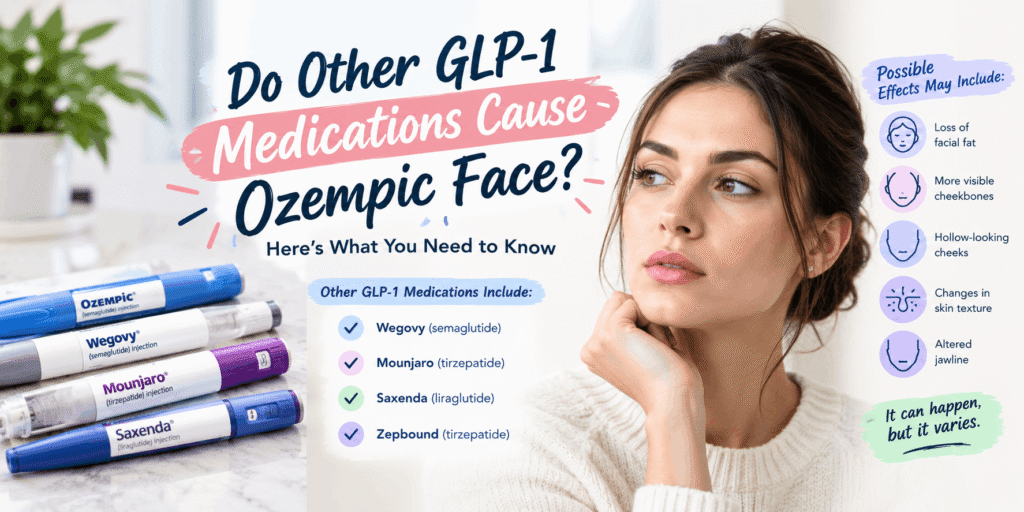
The phrase “Ozempic face” can make it sound as though the phenomenon is unique to Ozempic, but that is not the case. Similar facial changes can occur with other weight-loss medications when they lead to significant or rapid weight loss.
GLP-1 medications and related treatments can help people lose substantial amounts of weight. As body fat decreases, however, the face can lose some of its natural volume as well. This can make the cheeks appear less full and may make wrinkles, folds or loose skin more noticeable.
The American Academy of Dermatology notes that people using GLP-1 medications have reported changes such as reduced facial fullness, sagging skin and wrinkles. Dermatologists generally associate these appearance changes partly with weight loss itself.
Wegovy and Other GLP-1 Medications
Wegovy, Ozempic and other GLP-1-related medications are different prescription treatments with different approved uses, but they can all be associated with substantial weight loss.
That means a person may notice facial volume changes while using a medication other than Ozempic. The term “Ozempic face” has simply become the most recognizable phrase for this type of appearance change.
It is therefore more accurate to think of it as facial changes associated with significant weight loss rather than assuming that Ozempic directly causes a unique facial condition. Cleveland Clinic similarly explains that these changes can occur after significant weight loss from different causes, including lifestyle changes and bariatric surgery.
Why the Effect Is More About Weight Loss Than One Specific Drug
The face contains subcutaneous fat that contributes to its shape and fullness. When that volume decreases, the contours of the face can change.
This can happen whether weight loss comes from medication, dietary changes, increased physical activity or another weight-management approach.
How noticeable the result becomes depends on factors such as the amount and speed of weight loss, age, genetics, existing facial volume and skin elasticity.
Should You Stop Ozempic If You Notice Facial Changes?
Noticing a change in facial appearance does not automatically mean that a medication needs to be stopped.
“Ozempic face” is generally considered an appearance-related consequence of weight loss rather than a dangerous condition by itself. Cleveland Clinic notes that facial changes associated with rapid weight loss generally do not require treatment unless a person wants to address their appearance.
If facial changes are worrying you, the appropriate step is to discuss them with the healthcare professional who manages your treatment. They can consider your overall health, weight-loss progress and treatment goals rather than focusing on appearance alone.
Why You Should Not Change Medication on Your Own
Prescription medications should not be stopped, reduced or changed without guidance from the healthcare professional who prescribed them.
A person’s reason for taking Ozempic also matters. Ozempic is approved for specific medical uses, including treatment of type 2 diabetes and reducing certain cardiovascular risks in eligible adults with type 2 diabetes.
If facial changes occur alongside other concerning symptoms, mention those symptoms to your healthcare professional as well. This gives them a clearer picture of what is happening and whether anything other than ordinary weight-loss-related changes could be involved.
When to Discuss Changes With Your Healthcare Provider
Consider bringing up facial changes if they are bothering you, if your weight is changing very quickly, or if you have concerns about your nutrition, hydration or overall treatment.
A dermatologist can also help distinguish ordinary changes associated with weight loss from other skin concerns. The American Academy of Dermatology recommends working with a dermatologist when people experience persistent skin, hair or nail concerns while taking GLP-1 medications.
What Can You Do About the Appearance of Ozempic Face?
There is no single solution that works for everyone because the underlying change can involve both loss of facial fat and changes in the skin.
Basic skin care can support healthy-looking skin, but it cannot completely replace facial volume that has been lost during weight loss.
Keeping the skin moisturized, protecting it from excessive sun exposure and maintaining adequate hydration can support general skin health. The American Academy of Dermatology recommends gentle skin care, moisturizer and daily sun protection for people experiencing skin changes while using GLP-1 medications.
When Professional Treatment May Be Considered
Some adults who are unhappy with facial volume loss may discuss cosmetic options with a qualified dermatologist or other appropriate medical professional.
Depending on the person’s individual situation, professionals may discuss treatments designed to address volume loss, wrinkles or skin laxity. Options can include certain injectable treatments, energy-based procedures or other cosmetic approaches.
These treatments are not necessary for everyone, and they are not a way to “cure” Ozempic face. They are cosmetic options that should be assessed individually by a qualified professional.
Cleveland Clinic and the American Academy of Dermatology both describe procedures such as fillers, fat transfer and certain skin treatments as possible approaches for people who want to address appearance changes after significant weight loss.
How to Tell If Facial Changes Are Related to Weight Loss
Not every change in your face while taking a GLP-1 medication is necessarily “Ozempic face.” Facial appearance can change for many reasons, so looking at the bigger picture is important before assuming that a medication is responsible.
One useful factor is the timing of the change. If facial fullness begins decreasing around the same period that significant weight loss is occurring, the two may be connected. Losing fat from the cheeks and other areas of the face can make existing facial features appear more defined.
Look at the Overall Change
Changes in facial volume often happen alongside changes elsewhere in the body. You may notice that clothing fits differently, your overall body shape has changed, and your face appears slimmer at the same time.
However, facial changes can also be influenced by factors such as age, genetics, sun exposure and natural variations in skin elasticity. This makes it difficult to identify one single cause simply by looking in the mirror.
Comparing photographs taken at different points in time may make gradual changes easier to notice, although photographs can also be affected by lighting, facial expression and camera angle.
Don’t Focus Only on Appearance
If you are experiencing weight loss while taking a prescription medication, facial appearance is only one part of the overall picture. Your healthcare provider can consider whether your weight is changing as expected and whether your nutrition and general health are being adequately supported.
It is also worth remembering that facial fullness is not automatically a sign of better health. A slimmer face can simply reflect a change in facial fat distribution.
If facial changes are accompanied by symptoms that concern you or you have questions about your medication, discuss them with your healthcare provider rather than making medication changes yourself.
Give Your Appearance Time to Adjust
Facial changes may continue to evolve as weight changes and eventually stabilizes. This means it can be difficult to judge the final appearance while someone is still actively losing weight.
Rather than rushing toward cosmetic solutions, allowing weight to stabilize and maintaining healthy habits can provide a clearer picture of what has actually changed. If concerns remain afterward, a qualified dermatologist can explain appropriate options based on your individual situation.
Final Thoughts
Ozempic face can sound alarming because the name makes it seem like a specific side effect of one medication. In reality, it is better understood as a description of facial changes that can accompany significant weight loss.
Losing facial fat can change the way the cheeks, jawline, eyes and skin appear, and rapid weight loss may make those changes more noticeable. But everyone’s experience is different, and having a slimmer or less full face does not necessarily mean something is wrong.
If you are concerned about facial changes while using a GLP-1 medication, focus on the bigger picture rather than trying to change treatment on your own. Your healthcare provider can help evaluate your overall progress and determine whether anything needs attention.
For appearance-related concerns that remain after weight has stabilized, a qualified dermatologist can explain appropriate options. Most importantly, the goal of weight-management treatment should remain overall health and well-being rather than trying to prevent every possible change in appearance.
2 Comments