
Getting well-defined waves is not just about using the right hair products. The brush you choose, the direction in which you brush, and the consistency of your routine all influence how your hair looks. A wave brush is a popular grooming tool for people who want to develop a smooth, rippled pattern in their hair, particularly those working toward the classic 360-wave hairstyle.
Unlike an ordinary hairbrush, a wave brush is designed to help guide hair in a consistent direction while encouraging strands to lie closer to the scalp. With the right technique, it can help improve the appearance of your wave pattern, distribute natural oils, and keep your hairstyle looking more organized between haircuts.
However, not every wave brush is the same. Bristle firmness, brush shape, handle design, and hair length all affect how a brush performs. Choosing a suitable option can make your grooming routine more comfortable and help you avoid unnecessary pulling, irritation, or breakage.
Whether you are starting your first wave journey or trying to improve an existing pattern, understanding how a wave brush works will help you make better choices for your hair.
What Is a Wave Brush and Why Does It Matter?
A wave brush is a grooming brush commonly used to train short, textured hair into a repeated wave pattern. It is especially associated with 360 waves, a hairstyle in which curved lines appear to travel around the head from the crown toward the hairline.
The purpose of the brush is to guide the hair in the direction you want it to lie. Repeated, controlled brushing helps keep the strands aligned as your hair grows. When combined with an appropriate haircut, consistent grooming, and suitable hair care, this process can help make the wave pattern more visible.
A wave brush does not permanently change your hair’s natural growth pattern. Instead, it helps manage the direction and arrangement of your hair. Results depend on factors such as natural texture, hair length, curl pattern, brushing technique, and consistency.
Wave brushes can also be useful for people who do not wear 360 waves. Depending on the design, they may help smooth short hairstyles, guide textured hair into place, or create a neat finish around the sides and back of the head.
How a Wave Brush Differs From a Regular Hairbrush
A regular hairbrush is often designed to detangle longer hair, separate strands, or create volume. A wave brush usually has a flatter brushing surface and bristles arranged to help guide short hair in a particular direction.
The bristles are important because they make contact with the hair and scalp while you brush. Depending on their material and firmness, they may provide gentle smoothing or firmer control. A brush with an appropriate level of stiffness can help you maintain a routine without applying excessive pressure.
Another difference is how the brush is used. People with longer hairstyles may brush mainly to remove tangles, while wave training involves repeated strokes that follow a planned pattern around the head.
For example, hair at the front is generally brushed forward and diagonally, while the sides and back require strokes that follow their own natural directions. This coordinated movement helps create the curved appearance associated with 360 waves.
Who Can Benefit From Using a Wave Brush?
Wave brushes are especially useful for people with short, textured hair who want to develop or maintain waves. They can also suit individuals who prefer a close-cropped hairstyle with a smooth, controlled finish.
Beginners may find a wave brush helpful because it provides a consistent tool for learning brushing directions. People who already have waves can use one to maintain their pattern between washes and haircuts.
The best brush depends on your hair rather than simply the hairstyle you want. Very short hair may need a softer brush, while slightly longer hair may benefit from a medium-bristle option. A firm brush is not automatically better, and excessive stiffness can irritate the scalp or damage fragile strands.
If your scalp is sensitive, your hairline is thinning, or your hair breaks easily, prioritize a gentle brush and avoid forceful, repetitive strokes. Brushing should help manage your hairstyle, not cause pain or visible damage.
Types of Wave Brushes and How to Choose One
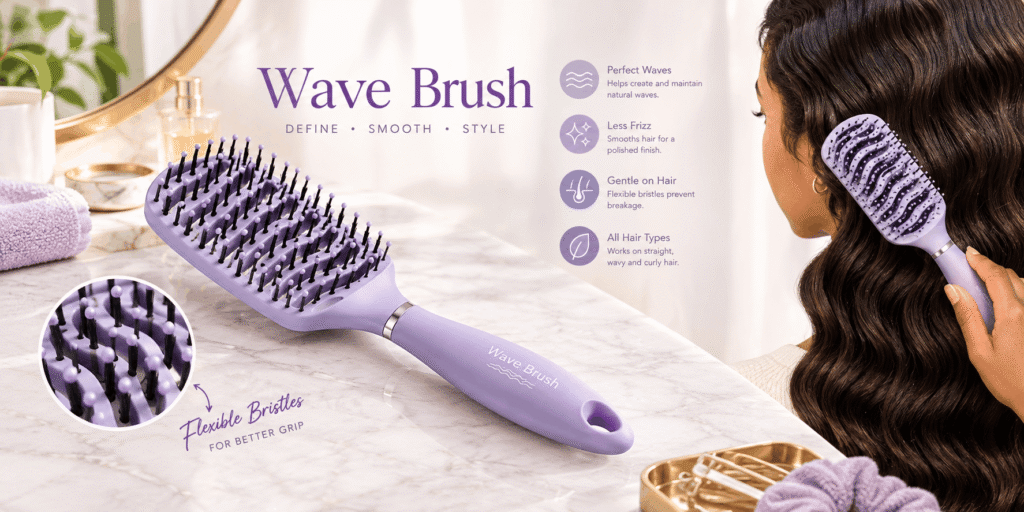
Wave brushes are available in several designs, and each offers different benefits. The most useful choice depends on your hair length, scalp sensitivity, and stage of wave training.
Instead of selecting a brush based only on its appearance or popularity, consider how its bristles feel against your scalp and whether you can maintain control during repeated strokes.
Soft-Bristle Wave Brushes
Soft-bristle brushes are generally a practical starting point for beginners, especially those with very short hair or a sensitive scalp. Their flexible bristles can smooth the hair without requiring much pressure.
They are particularly useful when your hair has been cut close to the scalp. At this length, the hair may be too short for a firm brush to provide any meaningful advantage, while aggressive brushing can leave the scalp uncomfortable.
A soft brush can also help maintain a developing wave pattern after washing, when your hair is being arranged back into its preferred direction.
However, softness does not mean that you should brush without a plan. Use controlled strokes and follow the direction of your wave pattern. Repeatedly brushing in random directions can make it more difficult to maintain a consistent appearance.
Medium-Bristle Wave Brushes
Medium-bristle brushes offer a balance between flexibility and control. They are often suitable for people whose hair has grown enough to require more guidance but who do not need the firmness of a hard brush.
This type can be useful during regular wave maintenance, particularly when your hair is not extremely short. The bristles may reach through the hair more effectively than very soft bristles, depending on the brush’s construction and your hair density.
Medium brushes are not universally suitable for every stage of wave development. If the bristles feel scratchy, leave your scalp red, or pull at your hair, choose a softer option instead.
Hard-Bristle Wave Brushes
Hard-bristle brushes have firmer bristles that can provide stronger contact with short, dense hair. Some experienced wave enthusiasts use them when their hair is long enough to benefit from firmer brushing.
However, a hard brush is not a shortcut to faster waves. Applying too much pressure can irritate the scalp, damage fragile hair, and contribute to breakage around the hairline.
If you choose a firm brush, use light pressure and pay attention to how your scalp responds. Avoid aggressive brushing over irritated skin, cuts, or areas experiencing unusual hair loss.
People with fine hair, sensitive scalps, or very short cuts may find softer bristles more comfortable and effective.
Choosing Between Natural and Synthetic Bristles
Wave brushes may use natural bristles, synthetic fibers, or a combination of materials. Neither category is automatically superior for every hair type.
Natural bristles are often associated with smoothing and distributing oils along the hair. Synthetic bristles can vary widely in flexibility, firmness, and durability, so their performance depends on the specific design.
When shopping, look for bristles that are securely attached, evenly arranged, and comfortable against your scalp. Avoid brushes with rough edges, broken bristles, or sharp seams that could scratch the skin.
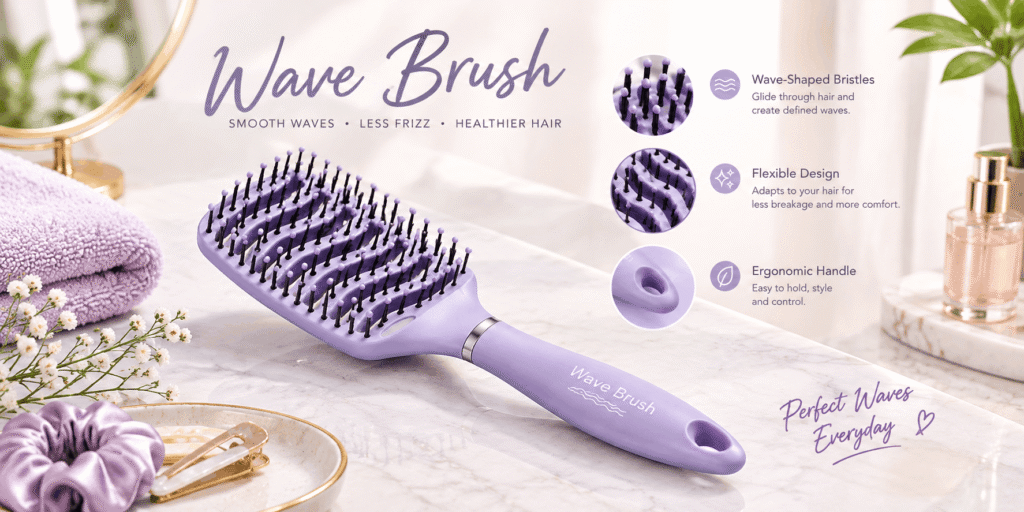
The handle matters as well. A comfortable grip makes it easier to control the direction of each stroke, especially when brushing the back of your head.
How to Use a Wave Brush Correctly
Developing a wave pattern requires consistency rather than excessive force. Your aim is to guide the hair in a repeatable direction while keeping your scalp and hair in good condition.
Before starting, make sure your hair is clean enough for your routine and free from excessive product buildup. If your hair is tangled or your scalp is irritated, address those issues before increasing your brushing frequency.
Start by Understanding Your Natural Hair Direction
The crown is the starting point for many 360-wave patterns. Hair grows outward from this area in different directions, so brushing every section the same way will not produce an even pattern.
Stand in front of a mirror and identify the location of your crown. Then observe how your hair naturally grows around it. You may find that some sections move forward, others angle toward the sides, and the hair at the back moves downward.
Your brushing strokes should follow these directions gradually, creating a consistent path from the crown toward the edges of your head.
There is no single stroke pattern that works perfectly for everyone. The location of your crown, your haircut, and your natural growth pattern all affect the directions you should follow.
Follow a Consistent Brushing Pattern
Once you understand your hair’s direction, use steady strokes that follow the same paths each time you brush.
For a typical 360-wave routine, the front section is brushed away from the crown toward the front hairline. The side sections are guided diagonally toward the sides, while the back is brushed downward toward the neckline.
Keep the brush close to the scalp without pressing hard. Smooth, controlled movements are more useful than fast strokes performed with excessive force.
Try to give attention to every section rather than repeatedly brushing only the areas you can see easily in the mirror. A handheld mirror can help you check the sides and back, although you should prioritize comfortable technique over achieving a perfect angle.
Consistency helps you notice whether your pattern is becoming more organized. If you frequently change brushing directions, it becomes harder to determine which routine is working for your hair.
How Long Should You Brush Your Hair?
There is no universally required brushing duration for developing waves. Hair texture, length, scalp sensitivity, and individual routines vary, so a fixed number of minutes cannot guarantee results.
A practical approach is to begin with short, manageable sessions and distribute your attention across the different sections of your head. If your scalp becomes sore, irritated, or unusually sensitive, stop and reassess your technique.
More brushing is not always better. Spending a long time brushing with a stiff brush can create friction and stress the hair, particularly when the strands are dry or fragile.
Rather than focusing entirely on the clock, concentrate on maintaining even strokes, following your natural growth pattern, and keeping the brush clean.
Preparing Your Hair Before Brushing
Your hair’s condition can influence how comfortably you brush and how neat your waves appear. A simple preparation routine helps you avoid unnecessary friction and makes it easier to manage short, textured hair.
Start by checking your scalp. If you notice persistent itching, flaking, redness, or painful bumps, avoid aggressive brushing until you understand what is causing the problem. Brushing harder will not solve scalp irritation and may make it worse.
If your hair is dirty or contains heavy product buildup, wash it with a suitable shampoo. Rinse thoroughly so that residue does not remain around the roots. Follow with a conditioner if needed, particularly if your hair tends to feel dry.
After washing, handle your hair gently. Use a clean towel to absorb excess water without rubbing aggressively. Then arrange your hair in its natural wave direction using light, controlled strokes.
Using Moisturizer Without Making Hair Greasy
A small amount of suitable moisturizer can help keep hair manageable, especially if it feels dry after washing. However, applying too much product can leave the scalp and hair coated with residue.
Choose products according to your hair’s needs. A lightweight leave-in conditioner may suit hair that needs extra softness, while a small amount of a suitable styling product may help you control the finished appearance.
Oils and pomades are optional rather than essential. They do not create waves on their own, and heavy application can make it harder to keep the scalp clean.
Apply products sparingly and distribute them evenly. If your hair becomes greasy quickly, reduce the amount you use instead of repeatedly adding more product throughout the day.
A well-maintained wave brush, consistent brushing direction, and a comfortable grooming routine provide a stronger foundation than relying on styling products alone.
Final Thoughts
A wave brush can be a valuable part of your grooming routine when you want smoother hair, a more defined wave pattern, or a neat, well-maintained hairstyle. However, getting the results you want depends on more than the brush itself. Choosing the right bristle firmness, following your natural hair direction, and brushing consistently all play important roles.
If you are a beginner, start with a soft or medium-bristle brush that feels comfortable against your scalp. Focus on controlled strokes rather than applying excessive pressure, and adjust your routine as your hair grows. Keeping your brush clean and your scalp healthy can also make regular grooming more comfortable.
Remember that every hair type is different, so your wave pattern may develop at its own pace. Avoid comparing your progress with someone else’s results or assuming that harder brushing will make waves appear faster. With patience, proper hair care, and a suitable wave brush, you can build a routine that supports your hairstyle while keeping your hair and scalp in good condition.

One Comment