
A hair color chart helps you understand the difference between black, brown, blonde, red, and other hair shades so you can choose a color that suits your style. It also explains how hair color levels, numbers, and undertones work, making it easier to compare shades before coloring your hair at home or visiting a salon.
However, selecting the right color involves more than choosing a pretty shade from a picture. Your current hair color, previous dye treatments, natural undertones, and desired result all affect how a color develops. A shade that looks like creamy blonde on a chart, for example, may turn out warmer or darker on hair that has not been lightened enough.
Understanding the basics of a hair color chart can help you narrow down your options, avoid common coloring mistakes, and communicate more clearly with a hairstylist. Whether you prefer rich brunette tones, bright blonde shades, natural-looking black, or vibrant red, knowing how levels and tones work gives you a better starting point.
Understanding Hair Color Levels
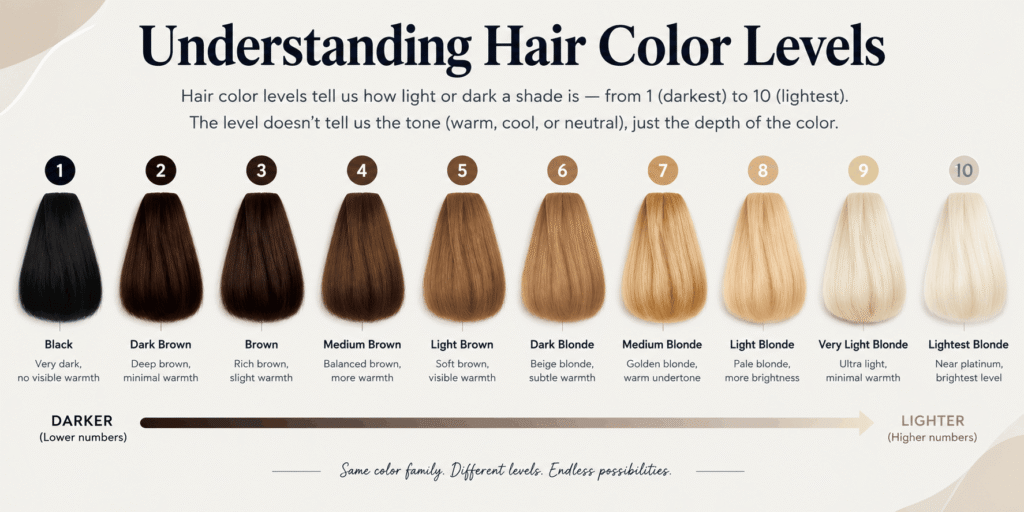
Hair color levels describe how light or dark a shade is. Most professional color charts use a scale that starts with black at the darker end and progresses toward very light blonde. Some brands use additional levels or slightly different numbering systems, so the chart provided by the manufacturer should always be your final reference.
Here is a general guide to the commonly used levels:
- Level 1 — Black: A very deep shade with little visible lightness.
- Level 2 — Very Dark Brown: A shade close to black that reveals more brown in brighter lighting.
- Level 3 — Dark Brown: A deep, rich brown that creates a softer effect than black.
- Level 4 — Medium Dark Brown: A noticeable brown shade that can look chocolatey, neutral, or cool.
- Level 5 — Light Brown: A versatile brown that may have golden, ash, or neutral undertones.
- Level 6 — Dark Blonde: A shade between light brown and blonde.
- Level 7 — Medium Blonde: A familiar blonde depth that can be warm, cool, or neutral.
- Level 8 — Light Blonde: A lighter blonde that may look creamy, golden, or beige.
- Level 9 — Very Light Blonde: A pale blonde shade that generally requires a sufficiently light starting base.
- Level 10 — Lightest Blonde: One of the palest common levels, often associated with very light blonde or platinum results.
These levels describe depth rather than the exact color you will see. For example, two level 6 shades may have completely different appearances if one has golden undertones and the other has an ash finish. Similarly, a dark brown shade may look warmer in sunlight than it does indoors.
Your starting color also matters. If your natural hair is dark brown, applying a light blonde box dye will not automatically give you level 9 or 10 hair. Achieving a much lighter shade usually requires a controlled lightening process. On the other hand, going darker may be more straightforward, although previously bleached or unevenly colored hair can still produce unpredictable results.
If your hair has already been dyed, remember that permanent hair color generally cannot reliably lighten previously colored hair. A lighter dye applied over an older dark dye may not create the result shown on the packaging. Depending on your hair’s history, you may need professional color correction instead of another box color.
What Hair Color Numbers and Letters Mean
Many hair color charts use a combination of numbers, decimal points, slashes, or letters to identify individual shades. In many professional systems, the first number represents the level, while the additional numbers or letters describe the undertone or tonal reflect.
For example, a shade code might look like 6.3 or 7A. In some systems, the first code could indicate a dark blonde or light brown shade with a golden tone, while the second could represent a blonde shade with an ash reflect. These are only examples because each brand may use its own coding system.
Common tonal descriptions include:
- Natural or neutral: Designed to provide a balanced, natural-looking result.
- Ash: Usually indicates a cooler tone that can look smoky or muted.
- Golden: Adds a warm, yellow or golden reflection.
- Copper: Creates an orange or coppery appearance.
- Red: Adds red tones that can range from subtle auburn to more noticeable red.
- Violet: Introduces a purple-toned reflect, often used in certain blonde and fashion shades.
- Mocha or chocolate: Describes brown shades that may have warm, cool, or balanced undertones, depending on the formula.
Not every brand uses the same letters. One manufacturer might use A for ash, while another may use a different abbreviation. Even when two products share a similar shade name, their formulas and finished colors may differ.
Always read the complete shade name alongside the code. If you’re switching brands, compare their individual charts instead of assuming that a number will produce the same result everywhere. This is especially important when choosing ash blonde, copper red, burgundy, or very dark brown shades, where small tonal differences can noticeably change the final appearance.
Choosing Between Warm, Cool, and Neutral Shades
Once you understand the level you want, consider the undertone. Undertones influence whether hair appears golden, reddish, coppery, smoky, or balanced. They can make a major difference even when two shades have the same depth.
Warm hair colors include golden blonde, honey blonde, caramel brown, copper, auburn, and many chocolate shades. They can create a sunlit appearance, add visible warmth, or make a brunette shade look richer. If you enjoy golden or reddish reflections, warm colors may be worth exploring.
Cool hair colors include many ash blondes, cool browns, smoky brunettes, and selected violet-based shades. They can create a more muted finish and may help counter certain unwanted warm tones. However, choosing an extremely cool shade does not automatically guarantee a natural result. The formula must suit your starting color and the amount of warmth present in your hair.
Neutral shades aim for a more balanced appearance without an obvious golden, red, or ash effect. Neutral brown and neutral blonde can be useful options if you prefer an understated color. Still, neutral does not mean that a shade has no undertone; it simply describes the tonal direction of that particular formula.
Your personal preference should guide the final choice. You do not have to choose ash brown because someone says cool colors suit your complexion, nor do you need golden blonde because your skin has warm undertones. These guidelines can help you compare options, but the most suitable shade is one you like and can achieve safely.
If you’re correcting unwanted warmth, identify the tone you’re seeing first. Purple pigments are commonly used to counter yellow tones, while blue pigments may help counter orange tones. These products have limitations, however, and the right choice depends on the starting color and formula. A toner or color depositing conditioner cannot reliably correct every uneven or overly dark result.
Finding a Hair Color That Suits Your Skin Tone
Your skin tone can help you visualize how different hair colors might look, but it should not limit your choices. Hair color creates contrast with your complexion, eyebrows, and eyes, and that contrast contributes to the overall effect.
For fair skin, shades such as beige blonde, light brown, soft copper, and neutral brunette can create different looks. Pale blonde may give you a light, delicate appearance, while dark brown creates more contrast. If you want a noticeable change without going extremely light or dark, a medium blonde or light brown may be a useful starting point.
For light to medium skin, consider honey blonde, caramel brown, chestnut, copper, and balanced brunette shades. Warm colors can add golden richness, while cooler brown shades offer a more muted effect. If your current hair color is already close to your preferred shade, a small tonal adjustment may be easier to maintain than a dramatic transformation.
For olive skin, espresso brown, chocolate, neutral brown, caramel, and selected blonde shades may all be worth considering. Some people prefer cool brunette tones, while others enjoy warm highlights that add contrast. The result depends on your preferred style, the natural color of your hair, and how much maintenance you’re willing to manage.
For medium-deep and deep skin tones, rich brown, soft black, burgundy, auburn, copper, and many blonde shades can create attractive results. Dark shades may provide a subtle, low-maintenance appearance, while lighter shades or vivid colors can create stronger contrast. There is no single correct hair color for a particular complexion.
Your skin’s undertone may offer another clue. People who prefer warm styling effects may gravitate toward golden or copper shades, while those who like cooler effects may explore ash or smoky tones. Neutral colors offer another option. These are preferences rather than strict rules, so use them as a starting point rather than a restriction.
Before committing to a shade, compare examples in natural lighting. Digital images can be helpful, but filters, lighting, screen settings, and the model’s starting hair color can change how a shade appears. If possible, use a temporary try-on tool or consult a colorist to discuss what is realistic for your current hair.
Popular Hair Color Shades to Consider
A hair color chart becomes more useful when you connect the levels and undertones with actual shade names. The following options can help you identify the general look you’re interested in before narrowing down a specific product.
Black and dark brown: Natural black, soft black, espresso brown, and deep chocolate brown offer rich, dark results. Soft black may look less intense than a very deep black, while espresso brown can reveal more brown in sunlight. These shades may suit people who prefer darker hair, but very dark permanent colors can be difficult to remove later.
Medium and light brown: Chocolate brown, chestnut brown, mocha brown, ash brown, and caramel brown provide several ways to customize brunette hair. Chocolate and chestnut often have a rich appearance, while ash brown tends to look cooler. Caramel can introduce warmer reflections, especially when used as highlights.
Blonde: Dark blonde, honey blonde, beige blonde, golden blonde, ash blonde, and platinum blonde vary in both depth and undertone. Honey and golden blonde create warmth, beige blonde offers a more balanced look, and ash blonde usually appears cooler. Platinum blonde is a major lightening goal rather than a simple shade change for most people with dark hair.
Red and copper: Copper, strawberry blonde, auburn, cherry red, and burgundy create different levels of warmth and intensity. Copper often looks orange-red, auburn blends red with brown, and burgundy has a deeper red-violet appearance. These shades can be beautiful, but some red pigments fade noticeably with repeated washing.
Fashion colors: Pastel pink, violet, blue, green, and vivid red offer more expressive options. Many bright or pastel results require a light starting base, especially when the desired shade is pale or highly saturated. Applying a fashion color over dark hair may produce a subtle reflection rather than the vivid result shown on the packaging.
The shade name alone does not tell you everything. A “caramel brown” formula from one brand may appear warmer or lighter than another brand’s version. Check the level, tonal description, starting-color guidance, and sample results before deciding.
How to Match Your Shade Before Coloring at Home
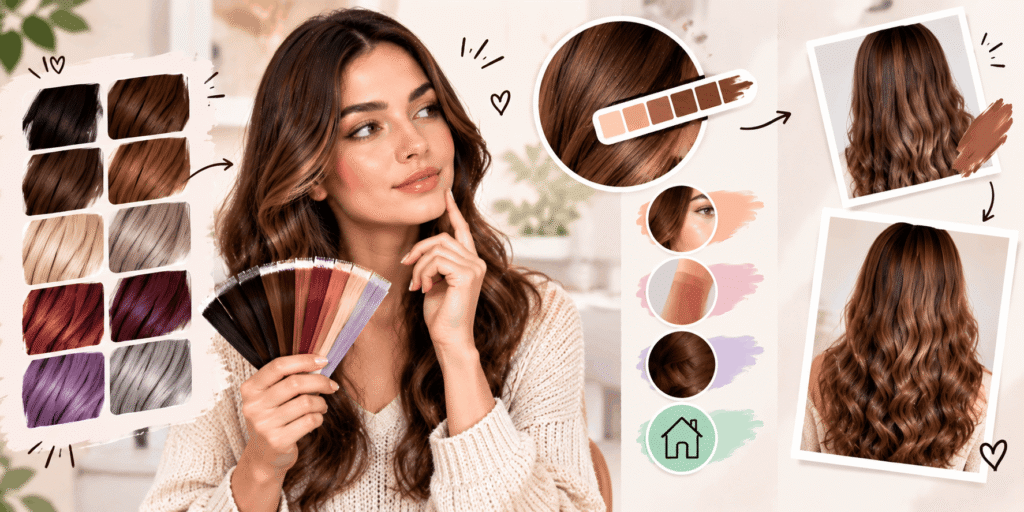
Before purchasing a hair dye, compare the chart with your current hair rather than focusing only on your desired result. Identify your natural root color, the color through the middle lengths, and the appearance of your ends. If you’ve previously dyed or highlighted your hair, these areas may be different.
Next, decide how much change you want. Staying close to your current level can make the transition easier to manage. Going several levels lighter may require professional lightening, while going substantially darker can create a result that is difficult to reverse. If you want a major transformation, seek advice before applying a permanent formula.
Use the manufacturer’s shade chart and starting-color examples. Packaging photographs can provide a general idea, but they cannot account for every hair type or coloring history. If your hair has existing dye, highlights, gray strands, or uneven bands of color, the result may differ from the example shown.
Perform a strand test according to the product instructions, especially if you’re trying a new shade or have chemically treated hair. This allows you to observe the color and check how your hair responds before applying the product everywhere. Follow the product’s allergy-alert testing instructions as well; a strand test does not replace a required skin allergy test.
If you’re matching a salon color, ask your colorist for the shade name, formula information where appropriate, and an explanation of the maintenance required. A salon result may involve multiple shades, highlights, toning, or lightening techniques that cannot be recreated by applying a single box dye.
For a first-time color change, choose a realistic goal and understand the limitations of the product. Permanent dye, demi-permanent color, semi-permanent color, toners, and color depositing conditioners do not work in exactly the same way. Selecting the right type is as important as choosing the right shade.
Permanent, Demi-Permanent, and Semi-Permanent Hair Color
Permanent hair color is designed to create a longer-lasting change. Depending on the formula, it can alter natural pigment, deposit color, and help cover gray hair. It generally requires more commitment because the color remains in the treated hair as it grows out and fades. Root regrowth may become visible, and major color changes can be difficult to reverse.
Demi-permanent color typically deposits pigment with less lifting power than permanent color. It can be used for tonal adjustments, refreshing certain shades, or blending some gray hair, depending on the formula. It gradually fades, although the amount of fading and the final result depend on the product and hair condition.
Semi-permanent color generally adds pigment without the same permanent oxidative process used by many permanent dyes. It can be useful for temporary tonal changes or experimenting with certain colors. However, “temporary” does not always mean the pigment will disappear completely after a specific number of washes, especially on porous or lightened hair.
Color depositing conditioners and masks offer another option for maintaining or temporarily enhancing an existing shade. Their main purpose is usually to add pigment while conditioning the hair, not to lighten it or replace a full permanent coloring service.
Choose the category according to your goal. For substantial lightening, gray coverage, or a major transformation, you may need a permanent formula or a professional service. For a subtle refresh, a demi-permanent product or depositing conditioner may be more appropriate. Always read the product directions and consider your previous color treatments before deciding.
Gray Coverage and Common Coloring Mistakes
Gray hair can respond differently to color because its texture, porosity, and percentage of unpigmented strands vary from person to person. Some people want complete coverage, while others prefer a softer blend that allows some silver strands to remain visible.
If you need reliable gray coverage, look for a product specifically formulated and labeled for that purpose. The selected shade, application instructions, and recommended processing time all matter. A color depositing conditioner may tint gray strands, but it should not be assumed to provide the same coverage as permanent hair dye.
One common mistake is choosing a color based only on the photograph on the box. The image may represent a specific starting color, lighting condition, and application process. Your own result can be different, particularly if your hair is darker, lighter, previously colored, or more porous than the example.
Another mistake is expecting hair dye to lighten old permanent color. If your hair is already dyed dark brown, a lighter shade applied over it may not create a light brown or blonde result. Attempting repeated applications can leave the hair uneven or stressed. Professional advice is safer when you want to remove or substantially change an existing artificial color.
Using the wrong undertone can also lead to disappointment. A warm brown may look too golden if you prefer a cool finish, while an ash shade may appear dull on a base that needs a different tonal balance. Compare the chart carefully and choose a formula that matches both your desired depth and undertone.
Finally, don’t ignore the condition of your hair. If your strands are brittle, breaking, or heavily processed, another chemical service may worsen the problem. A color chart helps with shade selection, but it cannot determine whether your hair is strong enough for a particular treatment. A qualified colorist can assess your hair history and suggest a safer plan.
Final Thoughts
A hair color chart is a practical starting point for finding a shade that matches your preferences and your hair’s current condition. Understanding levels helps you choose the right depth, while numbers, letters, and undertones help you compare variations such as ash brown, golden blonde, copper red, and neutral brunette.
Before coloring, consider your starting shade, previous treatments, desired result, and the amount of maintenance you are comfortable with. Use the manufacturer’s chart, read the instructions, and perform the recommended tests. If you’re planning a major lightening process, correcting an uneven color, or changing previously dyed dark hair, professional guidance can help you avoid unnecessary damage.
The right hair color is not simply the shade that looks best in a photograph. It is a shade you enjoy, can achieve realistically, and can maintain in a way that works for your hair.
A hair color chart helps you compare color levels, undertones, and shade families. It can guide you toward a suitable black, brown, blonde, red, or fashion color and help you understand the difference between warm, cool, and neutral shades. It is a reference rather than a guarantee of your final result.
Look at your natural roots in neutral daylight and compare them with a professional level chart. Avoid judging your hair under very warm indoor lighting because it can make the color appear different. If you have dyed roots or highlights, a stylist can help identify your natural level more accurately.
Your skin tone can help you compare colors, but it doesn’t limit you to one shade family. Golden blonde, ash brown, copper, burgundy, and black can all work for different people. Consider the contrast you want, your personal style, your current hair color, and the maintenance required.

2 Comments