
Temporary hair dye makes it easier to experiment with a different look without committing to a permanent color change. Whether you want to try a bold pink shade, add a hint of copper, refresh your existing color, or create a playful look for a special occasion, there are several formulas to explore. Depending on the product, the color may wash out after one shampoo or gradually fade over several washes.
The right option depends on your natural hair color, texture, condition, and how long you want the result to last. Some products coat the hair with visible color, while others deposit pigments that create a richer finish or enhance an existing shade. Understanding these differences can help you choose a temporary hair dye that suits your style and routine.
What Is Temporary Hair Dye and How Does It Work?
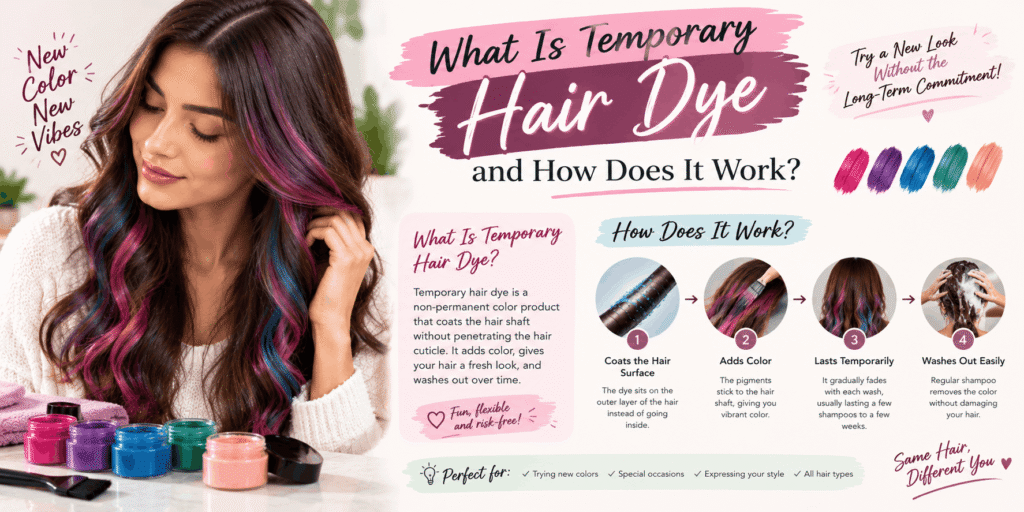
Temporary hair dye adds color to the hair without the same long-term commitment associated with permanent coloring. Many temporary formulas primarily deposit pigments on the outside of the hair strand. Because they generally do not rely on the same permanent color-changing process, their results often fade as the hair is washed.
However, the term temporary hair dye is sometimes used broadly to describe several different types of color products. Traditional wash-out sprays, color gels, hair mascaras, and some color-depositing conditioners can behave quite differently. Semi-permanent dyes are also frequently grouped with temporary options, even though they may remain visible for multiple washes or longer.
A simple color spray may be suitable for a party, costume, or one-day experiment. A colored styling gel can add a noticeable tint while helping define curls. A semi-permanent dye may be more appropriate when you want a stronger color that gradually fades rather than disappearing after a single wash.
Your starting hair color also affects the result. Bright pink, blue, purple, and green shades are generally easier to see on light or pre-lightened hair. On dark brown or black hair, a temporary product may produce a subtle reflection rather than a vivid color unless it is specifically formulated to show up on darker strands.
Temporary, Semi-Permanent, and Permanent Color: The Difference
Temporary hair color usually provides the shortest-lasting result. It may sit mainly on the hair’s surface and disappear after washing, although some pigments can leave a slight stain depending on the formula and hair condition.
Semi-permanent color typically lasts longer. It deposits color without necessarily using the same oxidative process as permanent dye, but the color can fade unevenly or remain visible longer than expected. Porous, bleached, or damaged hair may absorb pigments more readily, which can make some shades harder to remove.
Permanent hair dye is designed to produce a longer-lasting color change. Depending on the product, it can alter the hair’s natural pigment and create a result that does not simply wash away. It may also require more maintenance as the roots grow.
If you want to experiment without a major commitment, begin by checking how the product is classified and how many washes the manufacturer says it should last. Marketing terms alone do not guarantee that a shade will disappear completely after a specific number of shampoos.
Different Types of Temporary Hair Dye Worth Considering
Not every temporary hair dye color product is designed to achieve the same finish. Choosing the right format can make a significant difference in how the color looks, how easy it is to apply, and how much effort removal requires.
1. Temporary Hair Color Sprays
Color sprays are useful when you want a noticeable change for a short period. They are often chosen for themed events, parties, festivals, photographs, or costumes because they can add color without requiring a full coloring session.
These sprays can work well for adding visible streaks or coloring selected sections. Some formulas are designed for lighter hair, while others offer shades intended to show on darker bases. Check the label before purchasing, especially if your natural hair color is very dark.
Application can be messy if you spray too much product in one area. Protect your clothing and nearby surfaces, follow the directions, and avoid spraying near your eyes or inhaling the mist. Allow the product to dry as directed before touching your hair or putting on light-colored clothing.
2. Temporary Color Gels
Color gels combine pigment with a styling formula. They can be particularly appealing for textured hairstyles because they may provide color and hold in the same application.
For curly and coily hair, a suitable color gel can highlight individual curls while helping define their shape. The finished effect depends on the formula, the amount used, and whether the product is applied to damp or dry hair.
Before applying a colored gel throughout your hair, test a small section. Some formulas can feel stiff, leave residue, or transfer onto clothing and pillowcases. Use the product according to its instructions, and avoid applying excessive amounts simply to intensify the color.
3. Semi-Permanent Hair Color
Semi-permanent dye is a useful option for people who want a more noticeable shade than a typical one-wash product can provide. Available colors range from natural-looking browns and reds to vivid pinks, purples, blues, and other fashion shades.
The final result depends on your starting color. A bright shade may look dramatic on pre-lightened hair but much more subtle on a dark base. Certain pigments may also linger after the rest of the color has faded, so do not assume every shade will disappear evenly.
If you are trying a bold color for the first time, consider testing it on a hidden section. This gives you a better idea of the finished shade and how your hair responds before you apply it everywhere.
4. Color-Depositing Glosses and Masks
Color-depositing glosses and masks are often used to refresh a shade, add tonal depth, or create a temporary color effect while conditioning the hair. Some are intended to enhance an existing color rather than transform the hair into a completely different shade.
A gloss may help create a shiny finish while depositing pigment. A color mask combines color with conditioning ingredients and may be useful when you want to maintain or adjust your shade between coloring sessions.
These products are not automatically suitable for every hair type. The pigment can build up with repeated use, and some formulas may affect lighter or more porous sections more strongly than others. Check whether the product is intended for natural hair, color-treated hair, or both.
How to Choose the Right Temporary Hair Dye
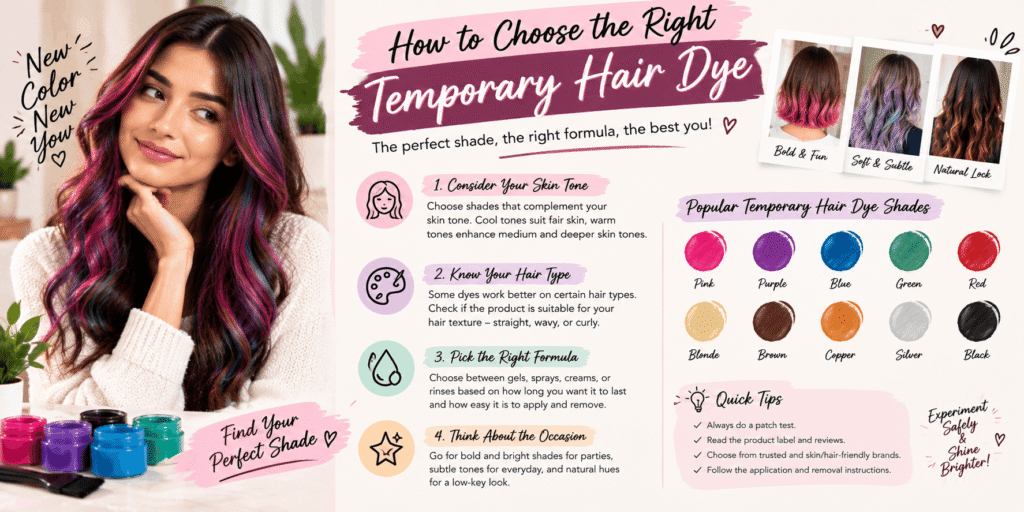
The most suitable temporary hair dye is not necessarily the brightest or most popular option. It is the one that provides the color effect you want while fitting your hair’s condition, your styling habits, and the amount of maintenance you are comfortable with.
Consider Your Natural Hair Color
Your base color plays a major role in the final result. Light blonde, gray, or pre-lightened hair may show vivid pigments more clearly. Medium brown hair may display deeper reds, purples, and certain warmer tones, while very dark hair may show only a slight colored sheen with products that lack strong visible pigments.
If you want a noticeable change on dark hair, look for a product that explicitly states it can be seen on darker shades. Even then, the result may differ from the color shown on the packaging because photographs are often taken under controlled lighting or on a lighter base.
Do not bleach your hair simply to make a temporary color more visible without carefully considering the potential damage. If lightening is necessary for your desired result, seek professional advice, particularly if your hair is already fragile or chemically treated.
Match the Formula to Your Hair Texture
Straight, wavy, curly, and coily hair can all be colored with suitable temporary products, but application and finish may differ.
Fine hair may become weighed down by rich masks or heavy styling formulas. A lightweight spray or targeted color product may be easier to manage. Thick hair may require more product for even coverage, although using more than the label recommends can create buildup.
Curly and coily hair users may prefer a color gel that works with their normal styling routine. Those with dry hair may want to explore conditioning color masks, provided the ingredients and directions suit their needs. However, a conditioning formula should not be assumed to repair all damage or prevent every form of color-related dryness.
Decide How Long You Want the Color to Last
Think about when you need the color to disappear. For a single event, a wash-out spray or another clearly labeled one-day product may be sufficient. For a weekend look, you might prefer a formula that can withstand ordinary handling but still washes out relatively quickly. If you want to keep the shade for several weeks, a semi-permanent product may be more appropriate.
Read the manufacturer’s removal instructions before applying the dye. Some pigments can cling to porous hair and last longer than expected. If you have an important event, job interview, or other occasion coming up, test the product well in advance instead of experimenting at the last minute.
Check the Ingredients and Safety Instructions
Always read the packaging before using a temporary color product. Follow the instructions about patch testing, gloves, ventilation, application, and removal. A product labeled temporary can still cause an allergic reaction or irritation.
Do not use hair dye on an irritated or injured scalp. Avoid contact with the eyes, and never use a product in a way that contradicts its label. If you have a history of reactions to hair color, consult a qualified professional or healthcare provider before trying another formula.
It is also sensible to protect towels, clothing, and bedding until you know whether the color transfers. Some pigments may stain fabric, bathroom surfaces, or porous materials. A small test can help you understand how much transfer to expect.
Temporary Hair Dye Options for Different Needs
Once you understand the different types of temporary hair color, choosing a product becomes easier. Instead of selecting a dye simply because its shade looks attractive, consider the finish you want, how much time you have for application, and how easily you need the color to wash out.
The following options represent different product categories and uses. They are not a universal ranking, and individual results depend on the formula, your starting hair color, and your hair’s condition.
Best for Bold, Creative Colors
If you want to experiment with bright pink, purple, blue, or other vivid shades, a highly pigmented semi-permanent color may be worth considering. These formulas are often available in a wide range of fashion colors and can create a more noticeable result than a lightweight color spray.
For example, Lime Crime offers its Unicorn Hair range, which includes colorful hair dyes. These products are generally associated with creative shades rather than subtle, natural-looking color changes. Before choosing one, check the specific product’s current instructions, expected longevity, and suitability for your starting hair color.
Bright colors may appear especially vivid on pre-lightened hair. On darker hair, the result may be less noticeable unless the product is designed to show on a dark base. Keep in mind that fashion shades can fade unevenly, and certain pigments may remain visible after repeated washing.
Best for Longer-Lasting Fashion Shades
If you want a vivid shade that stays visible beyond a single wash, look for a semi-permanent dye formulated for your preferred color and hair type.
Arctic Fox is known for its range of semi-permanent fashion hair colors. Its products may appeal to people who want to experiment with bold shades without using a traditional permanent dye. However, semi-permanent color should not be confused with a one-wash temporary product.
The amount of time the color remains visible depends on several factors, including the shade, hair porosity, washing frequency, and starting color. Some pigments may last longer than expected, so consider a strand test before applying a strong color throughout your hair.
Best for Curly Hair and Styling
Curly and coily hair users may prefer a product that adds color while fitting into their regular styling routine. A colored styling gel can be particularly useful when the goal is to highlight curls without applying a conventional dye.
Curlsmith offers Hair Makeup, a temporary color styling product designed for textured hairstyles. A product in this category may suit someone who wants to experiment with colored curls while styling them.
For the most even result, follow the product’s instructions for application and drying. Test a small section first to see how the formula affects your curl definition, softness, and styling hold. Be aware that some colored styling products may transfer before they are completely dry or leave residue if too much is applied.
Best for Glossy Color Refreshing
If your goal is to enhance your existing shade rather than introduce a dramatic new color, a color-depositing gloss may be worth exploring.
dpHUE offers Gloss+, a product designed to refresh hair color while adding shine. Products in this category can be useful for maintaining a tonal effect between coloring appointments, depending on the selected shade and the condition of your hair.
A gloss will not necessarily create a dramatic transformation on hair that is much darker than the desired color. Instead, its main appeal is often a refreshed appearance, added tonal depth, or a more polished finish.
Choose a shade that complements your current color, and read the instructions carefully. If your hair contains highlights or lighter sections, test the gloss on a small area first because those sections may absorb pigment differently.
Best for Conditioning While Adding Color
A color-depositing mask combines pigment with conditioning ingredients. This format may appeal to people who want to refresh an existing shade while making their hair feel softer and easier to manage.
IGK offers color-depositing hair products, including its Color Depositing Mask range. When considering a product like this, check the available shades and determine whether the formula is designed for your natural or color-treated hair.
Remember that conditioning ingredients do not guarantee that a product will suit every hair type. A rich mask may feel heavy on fine strands, while damaged or porous hair may absorb pigment more strongly. Follow the directions and avoid leaving the formula on longer than recommended.
How to Apply Temporary Hair Dye for a More Even Result
Correct application can make the difference between a polished color effect and patchy coverage. Before beginning, read the instructions for your particular product because sprays, gels, masks, and semi-permanent dyes can require different techniques.
Start with clean or prepared hair as directed by the manufacturer. Some products work best on dry hair, while others require damp strands. Do not assume that one application method is suitable for every temporary dye.
Prepare Your Hair and Workspace
Wear clothing you do not mind staining, and protect nearby surfaces with old towels or another suitable covering. Use gloves if the product recommends them. Keep the dye away from your eyes and follow any ventilation precautions on the label.
Detangle your hair gently before applying the product if the instructions permit it. This can make it easier to work through individual sections without pulling or breaking strands.
If you are using a new shade, test it on a small, inconspicuous section before applying it everywhere. This is especially important when working with bright pigments, bleached hair, or previously colored strands.
Work in Small Sections
For products that require section-by-section application, divide your hair into manageable parts. Apply the product in the manner described on its packaging, paying attention to the recommended amount and coverage.
Avoid saturating your hair unnecessarily. Excess product can make strands feel stiff, sticky, or heavy and may increase transfer onto clothes or furniture.
If you are using a color spray, hold it at the distance recommended by the manufacturer and apply it gradually. For a gel, mask, or semi-permanent formula, use the appropriate application technique rather than treating it like a spray.
Allow the Product to Dry or Process Properly
Follow the manufacturer’s directions for drying, rinsing, or processing time. Do not use extra heat or extend the processing time unless the instructions explicitly permit it.
Before dressing or touching your hair extensively, check whether the product needs to dry completely. This can help reduce color transfer, although some formulas may still transfer when rubbed or exposed to moisture.
Once the process is complete, inspect the result in natural light. Remember that indoor lighting and camera filters can make shades look different from their actual appearance.
How to Remove Temporary Hair Dye Safely
Removal depends on the type of color product you used. Some sprays and styling products are designed to wash out with shampoo, while semi-permanent dyes may require repeated washing over time. There is no single removal method that works equally well for every formula.
Start With the Recommended Washing Method
Check the label before trying to remove the color. If the product is designed to wash out with shampoo, begin with the recommended cleansing method and rinse thoroughly.
Use lukewarm water unless the instructions specify otherwise. Avoid scrubbing aggressively, as rough handling can cause tangling and increase breakage. Apply conditioner afterward if appropriate for your hair type and the product’s directions.
If the color does not disappear completely, do not panic or immediately apply several strong cleansing products. Some pigments need multiple washes to fade, especially when the hair is porous or previously lightened.
Avoid Harsh DIY Color-Removal Methods
Household bleach, cleaning products, and untested mixtures should never be used to remove hair dye. These methods can damage the hair or irritate the scalp and skin.
Repeated use of strong clarifying products may also leave the hair feeling dry or rough. If the color persists longer than expected, seek advice from a qualified stylist, particularly if you want to remove a vivid shade from bleached or chemically treated hair.
A temporary product is not guaranteed to disappear completely after a predetermined number of washes. Testing the color beforehand and checking the manufacturer’s removal guidance can help prevent unpleasant surprises.
Common Temporary Hair Dye Mistakes to Avoid
Even products designed for short-term use can produce disappointing results when chosen or applied incorrectly. Avoiding a few common mistakes can help you get a more predictable finish.
Choosing a shade without considering your base color: A color that appears vivid on blonde hair may be barely visible on dark brown hair. Check whether the product is designed for your natural shade.
Skipping the strand test: A small test can reveal whether the pigment looks right and whether it stains or behaves differently on your hair. It is particularly useful for porous or previously colored strands.
Using too much product: Applying excessive color may leave the hair sticky, stiff, or uneven. Follow the recommended amount rather than assuming that more product means better coverage.
Ignoring drying instructions: Touching or styling hair before a product has dried may increase transfer. Follow the manufacturer’s directions and allow sufficient drying time when required.
Expecting every product to wash out immediately: Temporary and semi-permanent formulas behave differently. Some pigments may remain visible for several washes or longer.
Overwashing to force the color out: Repeated aggressive cleansing can leave hair feeling dry and difficult to manage. Use the recommended removal method and ask a professional for advice if the pigment persists.
Ignoring product warnings: Temporary hair color can still cause irritation or allergic reactions. Follow the safety instructions, avoid contact with the eyes, and discontinue use if you experience a concerning reaction.
Final Thoughts
Temporary hair dye offers a flexible way to explore new colors without immediately committing to a permanent change. From one-day sprays and colored styling gels to semi-permanent dyes, glosses, and color-depositing masks, different formulas serve different purposes.
Before choosing a product, consider your natural hair color, texture, desired finish, and how long you want the result to last. Read the instructions, test the shade on a small section, and take precautions against staining and irritation. If you are experimenting with vivid colors on bleached or chemically treated hair, remember that some pigments may last longer than expected.
The best temporary hair color is one that fits your style and routine while allowing you to experiment thoughtfully. Start with a shade you feel comfortable trying, follow the product’s safety guidance, and enjoy discovering a new look without rushing into a long-term color commitment.
It depends on the formula. Some products wash out after one shampoo, while others remain visible for several washes. Semi-permanent dyes may last considerably longer, depending on the shade, hair condition, and washing routine.
Some products can create visible color on dark hair, but the result depends on the formula and shade. A color spray designed for dark hair may provide a noticeable effect, while a lightly pigmented product may create only a subtle reflection.
Many temporary products do not use the same chemical process as permanent dyes, but that does not make every formula completely risk-free. Drying ingredients, repeated washing, improper application, or irritating components may cause problems. Follow the instructions and choose products suited to your hair.

2 Comments