
A makeup routine does not always need another foundation, concealer, or finishing product to look better. Sometimes, a small change in application technique can make a bigger difference than adding something new to your collection. Powder is a good example. The same formula can look soft and natural on one person but heavy or patchy on another, partly because of how it is applied. Choosing the right powder brush can help you distribute product more evenly and create a finish that suits your skin rather than covering it unnecessarily.
Powder is often used to reduce excess shine, help certain makeup products stay in place, and soften the appearance of the complexion. However, applying it successfully involves more than sweeping a brush across the face. The amount of product picked up, the pressure applied, and the areas receiving the most attention all affect the final result. Once you understand these details, you can make better use of the makeup tools you already own and avoid buying several brushes that perform almost the same job.
Understanding What Your Makeup Actually Needs
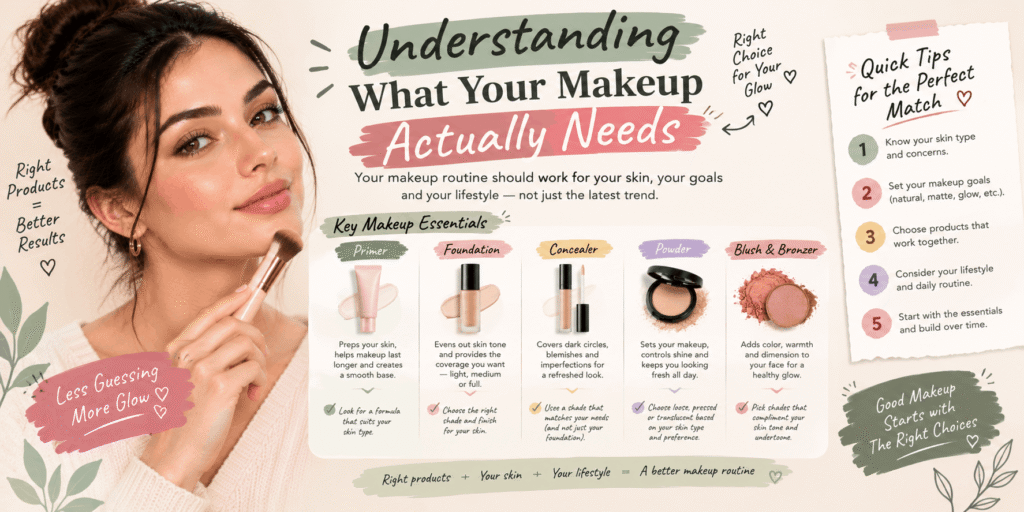
Before choosing a powder brush, think about the problem you want to solve. Someone who experiences shine around the forehead and nose may need a different application method from someone who wants a barely visible finishing layer across the cheeks. The best tool is not necessarily the largest, softest, or most expensive one. It is the one that makes your particular routine easier.
When You Want a Light, Natural Finish
A natural finish usually depends on keeping the powder layer thin. If your foundation already provides the coverage you want, there may be no reason to apply a thick layer over your entire face. A fluffy brush can help distribute a small quantity of product over a wider area without depositing too much in one spot.
Start by collecting a little powder on the bristles and tapping away the excess. Move the brush gently across the areas where you want to reduce shine or soften the finish. You can leave parts of your face with very little powder when they do not need additional setting. This technique helps preserve the appearance of your base makeup instead of making every area look equally matte.
The shape of the brush influences how easily you can control this process. A rounded, airy head works well for broad movements, while a slightly tapered head can help you reach narrower areas. Neither shape guarantees a perfect finish on its own; the amount of powder and your hand movements remain important.
When Your Makeup Needs More Staying Power
If foundation tends to move around your nose, chin, or forehead, a light dusting may not provide enough setting. In this situation, a denser powder brush can offer greater control over where the product is deposited. You can use small pressing motions in the areas that need extra support rather than repeatedly sweeping powder over the entire face.
This does not mean you should automatically apply more product whenever makeup starts to move. Skin preparation, the formula of your foundation, humidity, and natural oil production can all affect how makeup wears throughout the day. Applying excessive powder may make the surface look dry without solving the underlying problem.
A practical approach is to begin with a thin layer and inspect the result in natural light. If a particular area still looks shiny or feels insufficiently set, add a small amount there. This gradual method is often easier to control than applying a heavy layer at the beginning.
The Features That Matter When Choosing a Brush
Powder brush shopping becomes confusing when product descriptions use similar words to describe different designs. Terms such as fluffy, tapered, dense, rounded, and angled refer to features that influence application in different ways. Understanding them helps you choose a tool based on function rather than appearance alone.
Bristle Shape, Density, and Flexibility
A fluffy brush generally has more space between its bristles, allowing powder to spread over a larger area. This design can be useful for a finishing dusting, especially when you prefer a soft appearance rather than noticeable coverage. It can also help reduce the chance of depositing too much product in one small area, although technique still matters.
A dense brush contains more tightly packed bristles. Depending on its shape and material, it may pick up more powder and transfer it with greater intensity. This can be useful when you want to set selected areas carefully. However, a dense brush can also create a heavier result if you load it with too much product or press too firmly.
Flexibility matters because bristles need to move comfortably against the contours of your face. Very stiff bristles may feel uncomfortable or create uneven pressure, while extremely loose bristles might offer less precision for detailed work. Look for a balance between softness and control that suits the way you apply makeup.
Why the Brush Head Should Match the Area
Large facial areas generally allow broader movements, so a wide brush head can save time when applying a light layer. Smaller areas, such as the sides of the nose, require more careful placement. Trying to reach every narrow space with an oversized brush can make application awkward and may deposit powder where it is not needed.
You do not necessarily need a separate brush for every part of your face. A versatile medium-sized design can handle several tasks if you adjust your technique. A second, smaller brush may be worthwhile when you regularly use powder beneath the eyes or around detailed areas of your makeup.
Natural or Synthetic Bristles?
Both natural and synthetic bristles can work for powder products, and the better choice depends on construction, personal preference, and maintenance needs. Synthetic brushes are widely available in different shapes and levels of softness. Many are designed to work with loose or pressed powder, and they can be a practical choice for people who prefer straightforward cleaning.
Natural-hair brushes have traditionally been used for powder application because some designs pick up and release dry products in a particular way. Their performance varies according to the hair type, construction, and overall quality. They may also require more careful maintenance, and animal-derived materials are not suitable for everyone.
Do not assume that a brush must use natural hair to deliver a smooth result. A well-made synthetic option can be entirely suitable for an everyday makeup routine. Instead of focusing on the label alone, consider how evenly the bristles are arranged, whether the head feels comfortable, and whether the tool is easy to keep clean.
A Better Way to Apply Powder
Even a high-quality brush cannot compensate for an application method that uses too much product. The aim is to apply enough powder to achieve the desired finish while allowing the rest of your makeup to remain visible. Small adjustments to preparation and technique can make this process more consistent.
Prepare Your Skin and Base Makeup
Begin with skincare products that suit your skin and give them time to settle before applying makeup. If moisturizer or sunscreen is still sitting heavily on the surface, powder may cling unevenly. Allowing each layer to settle can help create a more consistent base, although the ideal waiting time varies according to the formulas you use.
After applying foundation or concealer, check whether the areas you intend to powder actually need it. Some formulas dry down naturally, while others remain creamy or transfer easily. You may only need powder on the areas where makeup moves, creases, or becomes shiny during the day.
Pick Up Less Product Than You Think You Need
Dip the brush lightly into the powder instead of pushing the entire head into the product. If you are using loose powder, avoid creating a cloud by moving the brush too quickly. Tap the handle gently to remove excess powder before bringing it to your face.
For pressed formulas, use a few controlled movements to collect product rather than repeatedly rubbing the bristles across the pan. This helps you judge how much you are picking up and may reduce unnecessary product waste. If the brush is leaving visible marks or concentrated patches, pause and remove some excess before continuing.
Use Different Movements for Different Results
For a soft finish, sweep the brush lightly over the skin with short, controlled movements. Avoid pressing hard or repeatedly brushing the same area when a small amount of powder is enough. On areas that need more setting, use a gentle pressing motion and lift the brush away rather than dragging it across the makeup.
The under-eye area requires particular care because powder can emphasize texture when applied too heavily. Use a small quantity and avoid automatically setting the area with the same amount you would use on the forehead. If your concealer already looks smooth and comfortable, a minimal application may be all you need.
After finishing, look at your makeup from different angles and in natural light if possible. Check the sides of your nose, the edges of your hairline, and the area around your mouth for visible buildup. A clean, lightly used brush can help soften small areas where powder has collected, provided you use gentle movements.
Make Your Powder Routine Work in Real Life
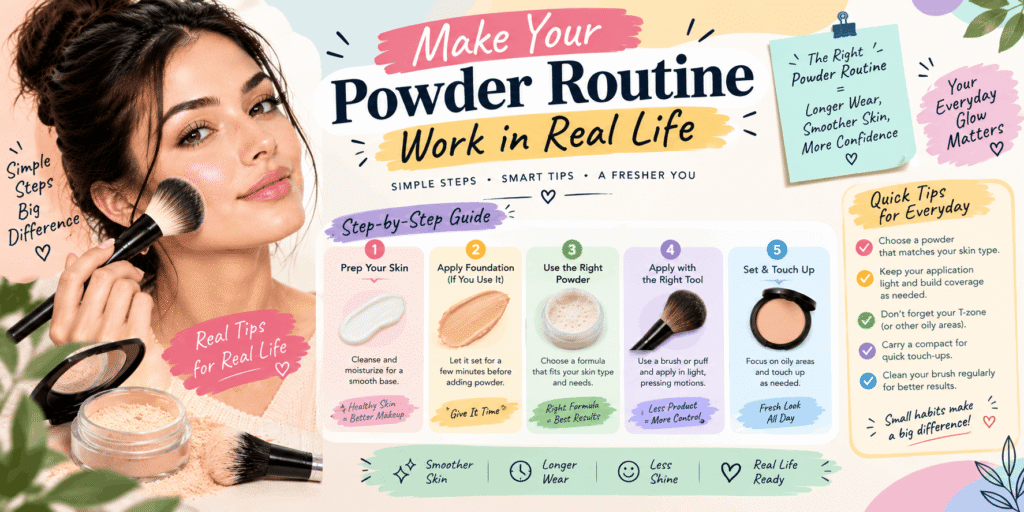
A makeup routine should remain useful outside the mirror. Your face moves when you speak, smile, eat, and spend time outdoors, so the finish you create at the beginning of the day will not remain exactly the same for hours. Rather than trying to keep every part of your complexion perfectly unchanged, focus on maintaining a comfortable appearance with as few unnecessary touch-ups as possible.
A powder brush can help you do this by giving you more control over small adjustments. Instead of adding product across your entire face, you can focus on the areas where makeup needs attention. This approach also makes it easier to avoid building up several layers that may eventually look heavy.
Adjust Your Technique to the Time of Day
Morning makeup often begins with a clean face and freshly applied products. At this stage, a light application may be enough to create the finish you want. Later in the day, your skin may have developed shine, and some makeup may have faded around areas that move frequently. These situations call for different approaches.
When preparing for a long day, think about where your makeup usually changes first. If the area around your nose becomes shiny before anything else, you can give it slightly more attention during the initial application. If your cheeks remain comfortable throughout the day, there may be little reason to apply the same amount of powder there.
For touch-ups, first examine the condition of the existing makeup. If the base remains intact, a small amount of product may be sufficient. If the makeup has begun to separate, adding powder without addressing the uneven surface may make the problem more noticeable. A quick assessment helps you choose the right response instead of repeating the same step automatically.
Create a Consistent Result Without Rushing
Rushing often leads to uneven pressure, excessive product, and missed areas. You do not need a complicated technique to avoid these problems. Work in manageable sections, use small quantities, and pause briefly to check the finish before moving on.
Try following the same general order each time you apply makeup. You might begin with the center of your face, where shine is more noticeable for you, and then move outward only if additional setting is needed. The exact order is less important than having a method that feels natural and produces predictable results.
Consistency also makes it easier to notice changes. If your makeup suddenly begins looking patchy, you can consider whether something about your skincare, foundation, or application technique has changed. Without a consistent routine, it can be difficult to identify why one day’s makeup looks different from the next.
Final Thoughts
A polished complexion does not require every area of the face to look identical. The most useful makeup routine is one that responds to what your skin needs, whether that means reducing shine around the nose, keeping the cheeks fresh-looking, or setting concealer with a lighter touch.
Choosing a powder brush becomes easier when you focus on the result you want instead of following trends or purchasing tools simply because they are popular. Think about the size of the areas you usually powder, the amount of control you prefer, and how comfortably the bristles move across your skin. These details will tell you more about a brush’s usefulness than its appearance or price.
Give yourself time to learn how your chosen tool behaves with your own products. Start with less powder than you think you need, use deliberate movements, and examine the result before adding another layer. When your technique is consistent, small adjustments become easier and unnecessary corrections become less common.
Most importantly, allow your natural skin texture to remain part of the finished look. Makeup can soften shine and create a more even appearance without completely hiding the characteristics that make your complexion yours. A thoughtful approach to powder application can help you achieve a result that feels comfortable, looks balanced, and fits naturally into your everyday routine.
Yes. Use a small amount of powder, choose a brush that suits the area, and apply it with light, controlled movements. Leaving areas that already look smooth untouched can help preserve your skin’s natural-looking finish.
A fluffy brush can help distribute a light layer of powder, while a denser brush may deposit product more firmly and provide more concentrated coverage. Neither is universally better; choose according to your preferred finish and application needs.
If your skin becomes shiny, gently blot excess oil with a clean blotting sheet before applying a small amount of powder. This can help prevent additional layers from building up and making your makeup look heavy.


2 Comments